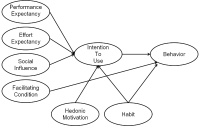
Purpose The purpose of this study was to investigate the factor that influence the using behavior of online sport media by university students applying Unified theory of acceptance and use of technology 2(UTAUT 2). Methods The study performed a research survey using convenient sampling method. The sample was 235 university students who had experience with online sport media. The data were analyzed through frequency analysis, reliability analysis, correlation analysis, confirmatory factor analysis, and structural equation model using SPSS Windows ver . 20.0 and AMOS 20.0. Results The results showed that, firstly, performance expectancy and effort expectancy had a positive effect on intention to use, however, no significant influence on social effect on intention to use. Secondly, facilitating condition had positive effect on usage behavior. Thirdly, hedonic motivation had positive effect on intention to use. Fourthly, Habit had positive effect on the intention to use and usage behavior. Lastly, intention to use had positive effect on usage behavior. Conclusion Based on the conclusion of this study, online sports media companies should provide useful and convenient viewing experience by providing personalized services, and should apply various attraction strategies to habitually use sports online media.

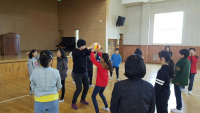
Purpose The purpose of this study was (1) to develop and to apply flipped learning strategies in Physical Education(PE) classes based on Sportscasting Model and (2) to examine the responses of students after PE lesson. Methods Participants were 10th high school students(N=216, male=115, female=101) in high school. Instruction strategies of flipped learning was developed after theoretical investigation, and the unit plans for curling and instructional materials were developed and applied. Open-ended questionnaires and in-depth interviews were used to collect the data. Qualitative content analysis combined with of structures in lesson was used to analyze the data. Results Results showed that (1) 11 instruction strategies of flipped learning were developed, (2) and the unit plan combining out-of class activities and in-class activities organically based on Sportscasting Model and instructional materials for unit of curling were developed and applied. In step of sportscasting, forcing relationship method-sportscasting based on the survey of students was developed and applied. (3) And 31 factors of Sportscasting Model and 15 factors of flipped learning were drawn from the analysis of questionnaires and interviews. Conclusion And to conclude, this research has a value of early study to develop and apply instruction strategies of flipped learning, the unit plan and instructional materials for combining Sportscasting Model with flipped learning organically. Discussions were provided in terms of the development of flipped learning applied in PE classes and responses of students.

Purpose This study aimed to investigate the psychological capitals created by the experience of winning an Olympic medal by using the photovoice method. Methods Data were collected on the way the participants-five Bronze medalists in the Women's volleyball in 1976 Montreal Olympics-take and send photographs. The interviews were conducted by phone based on the collected data. The photographs were placed into the parent category after conducting inductive content analysis, and their validity was confirmed from the expert meetings. Results The results of the study, indicate that the participants have earned psychological capitals such as my matter volleyball for diligence, the gift of a Bronze medal to gratitude, the source of achievement, challenges, and key of relationship tenderness from the experience of winning an Olympic medal. Conclusion In this regard, this study provides an opportunity to extend the study on the lives of retired athletes who won an Olympic medal to various perspectives, as well as the impact of sports experience on everyday life.







Purpose This study has been conducted to explore the factors that ignite the mental toughness of Taekwondo players and to compare report ratios concerning the explored factors between training and competition. Methods An open-ended questionnaire conducted 123 Taekwondo players offered raw data that stemmed the from 379 training and 369 competition situation. The raw data was categorized by an inductive approach, and the report ratios of both general and specific domain mental toughness in training and competition were compared. Results The results of this categorization were as follows. First, the mental toughness ignition factors of Taekwondo players are commonly categorized as willing to goal, external pressure, reward expectation, challenge, and social support. Second, factors were prioritized into reward expectation, challenge, willing to goal, social support, and external pressure. Third, willing to goal and external pressure were often reported in training, while reward expectation and challenge were more often reported in a competition. Social support showed similar ratios in both settings. Conclusion This study is expected to offer interesting results in the context of the ignition of mental toughness, while being utilized as a fundamental database for the development of mental social support strategies the help Taekwondo players ignite their mental toughness in competition.


Purpose Incidence and prevalence of Korean teenager cheerleading injuries were surveyed. Methods A total of 769 junior cheerleaders who participated in National Sport Cheerleading Competitions responded to a questionnaire, and 435 reported experiences of injuries. Results Risk factors for injury included older age (p<0.001), increased experience (p<0.001), and higher BMI (p<0.05). The most frequent injury occurred at wrist, ankle, knee, shoulder and waist. And the most responded types of injury were muscular pain and contusion. Cheerleading experience affected on injury prevalence. They were injured when they perform Elevator (<0.5 yrs), Cradle (0.5-1 yrs), Cradle and Basket toss (1-2 yrs), Cradle and Pyramid (2-3 yrs). These techniques involved in bodily movements of going up and cradle. About 56% of injury was treated at home or not treated at all, and 60% of injury was either self-treated or not intervened. And only 32% of cheerleaders practiced on a formal mattress. Conclusion Safety measures for these youth cheerleaders are necessary and guidelines for securing safety and preventing and treating injuries for these population are urgent.

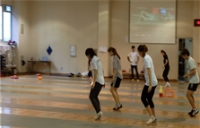
Purpose The purpose of this study was to investigate the effects of 3 weeks of fencing specific training on physical fitness in elite fencers. Methods Forty eight elite fencers participated in this program (Male= 24, Female= 24). Training program consists of dynamic stretching, step and agility training, and it was conducted with the general fencing practice during 3 weeks. Body composition and physical fitness (muscle strength/power, agility, anaerobic power and flexibility) were measured before and after training. Data were analyzed using IBM SPSS Statistics ver. 23.0 (IBM Co., Armonk, NY, USA). Paired t-test (pre vs. post) was used for comparison between groups. Results Muscle mass and body fat(%) were significantly changed after training in male group. Agility was significantly improved in change-step jump and reaction time after training both in male and female group. In Anaerobic power, peak power (relative power, absolute power) was significantly increased after training in female group. Flexibility was also significantly improved after training in left ankle ROM of female group. Conclusion Application of fencing specific training program focused on fencing movement seems to be effective on agility in both groups, muscle mass and body fat(%) in male group, and anaerobic power and flexibility in female group.


Purpose The purpose of this study is to calculate the ranking of vault players in artistic gymnastics by individual and by country using the PageRank algorithm. The purpose of this study is to provide basic data that can be used in gymnastics events by comparing the performances of historical vault players with those of previous Olympic competitions. Methods The data collected for this purpose is a score of 117 vault players based on the results of the Olympic final event published in the International Gymnastics Federation (FIG). For data analysis, PegeRnak algorithm was used for calculating the ranking of vault players using MS-Excel and NetMiner. Results The results are as follows that. First, the PageRank algorithm is possible to calculate for historical vault players' rankings. Specifically, the ranking of vault players for historical Olympic calculated by PageRank ranked as Gervasio Deferr from Spain (ESP) at 1st, Alexei Nemov from Russia (RUS) at 2nd, and Klaus Koste from Germany (GDR) at 3rd. Second, Network of vault players' ranking is separated by each generation of Olympic games. Conclusions As a conclusions, it is possible to calculate national ranking of vault games of gymnastics by using PageRank algorithm.


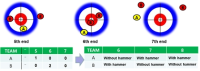
Purpose The purpose of this study is to investigate the characteristics of the winners and the losers of curling games to provide the winner strategies for the curling stakeholder. Methods For this study, data was collected from 2014 Sochi Winter Olympics web-site(http://sochi2014.curlingevents.com), which covers 199 games in total. Using the collected data, we extracted additional data such as the shot types and accuracy per players, team average score per end, whether or not with hammer per end and so on. and then a Chi-square test in statistic package SPSS 23.0 was used. The statistical significance was considered with p< 0.05. Results As a result, it was found that there were statistically significant difference between winners and losers of curling game on the shot type and accuracy(Draw, Front and Clearing). It was also found that there was not statistically significant between winners and losers about the number of blank end per end. It was found that 9th end average score was relatively lower than the other end in both the winners and the losers. It was found that the characteristics of the winners tends to be successful in more point from 5th end to 8th end with hammer and steal without hammer. Conclusion In conclusion, the strategies to win the curling game is to improve the shot performance of Lead and Skip, to organize the operation sequence for the successful blank end, and to develop the database and software in curling.

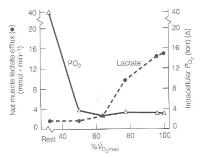
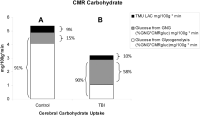
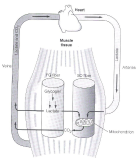
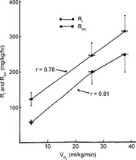
Lactate was considered a dead-end waste product of glycolysis due to lack of oxygen. Accumulating lactate in the muscle and blood was viewed only as a major cause of muscle fatigue and tissue damage. Furthermore, buildup of lactate due to glycogen re-synthesis is thought to cause excess oxygen consumption (oxygen debt) after exercise. However, research has also shown lactate to be an important mediator in numerous metabolic processes and a fuel for aerobic metabolism. Lactate is not metabolic waste, but a major player in cellular and whole body metabolism. Lactate can be used within the cell (intracellular lactate shuttle) or be transported through the cytoplasm or blood to be used by other cells (cell-cell lactate shuttle). Lactate shuttle hypothesis has helped in identifying and understanding the link between the glyoclyic and oxidative pathways, and identified lactate as a major energy source and gluconeogenic precursor. Therefore, the purpose of this review was to better understand the physiological roles of lactate at rest and during exercise, and the concept of lactate shuttle with implications for clinical practice.


Purpose This study was designed to examine the effects of 8 weeks of circuit exercise training on blood lipids, insulin resistance, cardiovascular function, and metabolic syndrome risk factors in 40~50s male bus drivers. Methods Twenty-nine bus drivers were randomly assigned to one of two groups, i.e., circuit exercise training group (TR: n=14) and control group (CON: n=15). Subjects in TR participated in circuit exercise training 30-40 min per session, three sessions per week for 8 weeks, whereas subjects in CON were asked to maintain their normal life pattern for same intervention period. The variables regarding body composition, blood lipids, insulin resistance, cardiovascular function, and number of metabolic syndrome risk factors were measured and compared between two groups as well as between pre- and post-test. Data were analyzed using repeated two-way ANOVA with post hoc test. Results Main results of the present study were as follows: 1) Waist circumference, waist-hip ratio, body mass index, and percent body fat decreased significantly in TR. 2) LDL-C decreased and HDL-C increased significantly in TR. 3) Fasting plasma insulin and HOMA-IR decreased significantly in TR. 4) Regarding cardiovascular function, diastolic blood pressure and mean arterial pressure decreased significantly in both TR and CON. hs-CRP were not changed significantly; however, it tended to be decreased TR. 5) Number of metabolic syndrome risk factors decreased significantly in TR(2.86±0.86 to 1.50±0.76). Conclusions It was concluded that 8 weeks of circuit exercise training would be beneficial for improvement of blood lipid profiles and insulin resistance, resulting in preventing metabolic syndrome. In particular, it would be very clinically meaningful that number of metabolic syndrome risk factors decreased from 2.86±0.86 to 1.50±0.76 by the circuit exercise training.
