
Purpose The purpose of this study was to provide useful information on the improvement of performance by measured the psychological-physiological stresses experienced by elite shooters during a competition. Methods Thirty-eight elite shooters participated in this study (Male = 13, Female = 25). Psychological stress was measured and used for this study based on the stress factors found in the elite target stress study by Park(2015). The cortisol, a physiological stress hormone, was measured using saliva. Results The reliability of the psychological stress sub-factor pre-post analysis results showed no statistically significant. The concentration of cortisol measured on the day before the competition (0.1704 µg/dL) significantly increased immediately before the competition (0.3558 µg/dL). Cortisol immediately before the competition showed negative correlation (r=-.361, p=.036) with the competition score, and the regression variable of cortisol was 13%. Conclusions In this study, physiological stress had a negative effect on elite shooters performance compared to psychological stress.
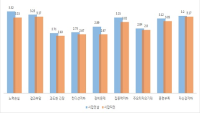

Purpose The purpose of this study was to find out the physical characteristics of Wushu athletes by comparing the differences on the results of physical fitness between the male athletes of the Wushu national team Taolu and the Sanda group. Methods Measurement of basic and professional fitness based on muscle function, targeting 37 men Wushu national team players (24 taolu, 13 Sanda) in the selection and evaluation contests twice in 2018 and 2019. Body composition, isometric muscle strength, flexibility and equilibrium, anaerobic power, and isokinetic muscle strength. The fitness factors were divided into two groups, Taolu and Sanda. Results First, body fat rate of the Sanda athlete group was significantly lower than that of the taolu athlete group (p<.01). Second, in the isometric muscle strength category(back muscle strength, grip strength), the Sanda athlete group had higher muscle strength than Taolu athlete group, but there was a statistically significant difference only in the left grip strength (p<.01). Third, in terms of flexibility and equilibrium, the taolu players were significantly higher in all items(p<.001). Fourth, in the anaerobic power, the taolu athlete group had higher both the peak power and the mean power, and there were a significant differences(peak power: p<.01, mean power: p<.001). Fifth, isokinetic muscle strength was significantly higher in the right knee flexion of the taolu athlete group (p<.01), and lumbar extensor muscle was significantly higher in the Sanda athlete group (p<.05). Sixth, in the isokinetic strength ratio, the knee flexion ratio of the Sanda athlete group were significantly higher on the left and right knee flexion and extensor ratios (p<.05). In addition, in the lumbar flexor and extensor ratios, the group of Sanda athlete group were significantly higher on the lumbar extensor(p<.05). Seventh, there was no significant difference between two groups in isokinetic muscle power. Conclusions The results of this study can be used as basic data to improve the efficiency of technical and physical training through the analysis of the characteristics of Taolu and Sanda. The effectiveness of this training will help to improve the performance.
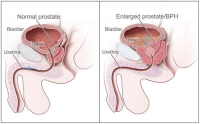
Purpose Prostate problems, such as prostate cancer, and benign prostate hyperplasia have been recognized as problems largely related to androgens and genetic factors. They affect a large fraction of the elderly population, contributing significantly to morbidity and mortality. Therefore, the purpose of this review paper was to investigate a therapeutic strategies for prostate cancer and benign prostate hyperplasia. Methods In order to determine the therapeutic exercise strategies for prostate cancer and benign prostate hyperplasia, previous literature was reviewed with MEDLINE, PubMed, and Scopus databases. Results Prostate cancer and its associated treatments can cause significant and lasting morbidities, such as cardiovascular and sexual dysfunctions. Various interventions have attempted to prevent or mitigate these dysfunctions. This review summarizes the available evidence concerning the effects of exercise training on male sexual health in the cancer prevalent population. Smoking cessation, regular exercise, and maintaining healthy weight are important public health targets for intervention. Importantly, several lifestyle modifications may lower the risk of developing more aggressive cancer or offer survival benefits to prostate cancer patients. Conclusions In this review article, physical exercise training can increase apoptosis markers in the prostate, suggesting exercise training as a potential novel therapeutic strategies for treating prostate cancer and benign prostate hyperplasia. Future studies in more advanced and varied prostate cancer populations are required to ascertain the duration, intensity and frequency of exercise that optimizes the effects of exercise training on prostate cancer and benign prostate hyperplasia.
Purpose The purpose of this study was to investigate the effects of regular vigorous- and moderate-intensity aerobic exercise on serum brain-derived neurotrophic factor (BDNF) level, aging- and lifestyle disease-related blood components in middle-aged women. Methods The participants were recruited from a total of 19 physically healthy people aged 50-59 years, and were randomly divided into vigorous-intensity aerobic exercise (VIAE, n = 10) and moderate-intensity aerobic exercise (MIAE, n = 9) group. The participants were performed vigorous- and moderate-intensity aerobic exercise three times a week for eight weeks, and body composition measurement, graded exercise test, blood collection were performed before and after. Results Mean exercise time was significantly longer in the MIAE group than in the VIAE group. The V̇O2max was significantly higher in the VIAE group than in the MIAE group. Body weight, BMI, and body fat percentage were significantly lower than pre both groups. The BDNF concentration was significantly higher in the VIAE group than in the MIAE group. The dehydroepiandrosterone sulfate (DHEA-s) and insulin-like growth factor-1 (IGF-1) concentration were significantly higher than pre both groups. The free fatty acid and triglyceride concentrations were significantly lower than pre both groups, and HDL-C concentrations were significantly higher than pre both groups. Conclusions Vigorous-intensity aerobic exercise not only increases maximal oxygen uptake and blood BDNF level in middle-aged women, but also induces positive changes in aging-related hormones and lifestyle-related blood variables.
Purpose The purpose of this study was to investigate the relationship between physical activity and depression according to the presence of disease. Methods A survey and basic assessment were conducted for 2,754 (Male=1,025 and Female=1,729) aged 40 and over who participated in the rural-based cohort study. The survey included physical activity, depression scale and disease preservation. The basic assessment measured height, weight, and body fat percentage. The measured data were analyzed by using logistic regression to examine the relationship between physical activity and depression prevalence. Results First, physical activity reduced the prevalence of depression by 33% and 51%, respectively, in the general population and in patients with the disease. Second, physical activity once or twice per week reduced the prevalence of depression in patients with disease by 51%, and at least three physical activities reduced the prevalence of depression by 37% in the general population and 33% of patients with disease. Third, physical activity less than 150 minutes per week reduced the prevalence of depression in patients with disease by 43%, and physical activity of more than 150 minutes and less than 300 minutes per week reduced the prevalence of 43% of the general population and 52% of patients with disease. Physical activity over 300 minutes per week had a 38% reduction in the prevalence of depression in the general population. Conclusions This study suggests that the level of physical activity suggested by the ACSM guidelines is appropriate to reduce the prevalence of depression. In addition, the patients with the disease was found to be effective with less frequency and amount of physical activity than the general person.
Purpose The purpose of this study was to investigate the effects of aerobic exercise intensity on body composition, health related fitness, and quality of life in elderly women. Methods 48 elderly women over 65 years of age without physical and mental problems were assigned to four groups: control group, low intensity, moderate intensity, and high intensity aerobic training group. The aerobic exercise group applied a heart rate reserve (HRR) to low-intensity group (HRR 40-55%), moderate intensity group (HRR 55-70%), high intensity group (HRR> 70%) for 12 weeks, 3 times a week for 20 minutes a day. Subjects of the control group were to maintain their usual lifestyles during the same intervention period. Body composition, health related fitness, and quality of life were measured and analyzed using repeated two-way ANOVA. Results The main results obtained in this study are as follows. 1) There was a significant decrease in sitting forward bending in the low intensity group and a significant increase in EQ-VAS. 2) There was a significant decrease in body weight, BMI, and 6 minutes walking in the moderate intensity group, and a significant increase in grip strength and EQ-VAS. 3) The high intensity group showed a significant decrease in weight, BMI, waist circumference, sitting forward bending, and 6 minutes walking, and a significant increase in grip strength, sit and stand, functional reach, and VO2max. On the other hand, there was no significant change in all variables in the control group. Conclusions In conclusion, aerobic training was found to be effective for body composition, health related fitness and quality of life in elderly women. In particular, it can be concluded that high intensity aerobic training is effective for health related fitness, and low and moderate intensity aerobic exercise is effective for improving quality of life.

Purpose The purpose of this study was to examine the relationship between the track records and physical abilities in elite cyclists(keirin). Methods Twenty three elite cyclists were measured height, weight, lower body circumference(thigh, calf, and ankle), basal physical abilities(grip/back muscle strength, 25m sprint, Sargent jump test, Burpee test, shuttle run test), one-repetition maximum(1RM) strength(back squat, bench press, leg curl, power clean, dead-lift, leg press), aerobic capacity(V̇O2max, METs, HRmax), and track records(200m and 500m). Stepwise multiple regression analyses were performed to investigate which physical abilities related to track records. Results A statistically significant relationship was found between 200m track records and 2 variables which were the thigh circumference and 1RM leg press(p<.05). Also, the thigh circumference and 1RM leg press were significantly related to 500m track records(p<.05). Conclusions The results showed that the thigh circumference and maximal strength were associated with the track records in elite cyclists(keirin).

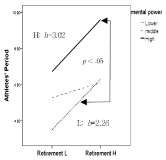
Purpose The purpose of this study was to compare the differences between the three simple control models of Hayes (2012) and to determine whether there were Moderating Effects depending on the level of self-esteem, willpower and belief that are psychological factors in the relationship between athlete's retirement and Athlete's period. Methods To achieve this objective, a total of 259 retirees were collected from data on retirement and psychological factors. The data processing method presented the reliability and feasibility of the measuring instrument through technical statistics, frequency analysis, confirmation factor analysis, and reliability analysis. In addition, we conducted a hierarchical regression analysis using the PROCESS command statement in IBM 20 to examine the regulatory effects. Results The results of the study are as follows: The first was the significant model of Hayes (2012)'s three simple control models. It is up to the researcher to choose which model to choose, but when selecting the model, the justification of the variables must be established on the basis of theoretical basis, and the reliability of the variables must be put in to produce reliable and reasonable results. The second was to verify that the relationship between the retirement factor(10) and the Athlete's period has an adjustment effect based on self-esteem, willpower and belief. Among the psychological factors, the Moderating Effects was greatest in the influence of belief on the Athletes' period, and the more reasons for retirement, the longer the Athletes' period than the weaker. The combined mental strength of all three psychological factors combined shows that the combined effect of control also significantly increases the player's ability to survive by combining with the retirement factor. In particular, sportsmanship has resulted in a better mix of retirement factors than the sense of Self-esteem and will, resulting in a longer increase in the capacity. Conclusions Therefore, players who long for a player always keep their dreams of becoming a big star in mind, and ask me to always keep the belief in hope that I will enjoy my career for a long time.


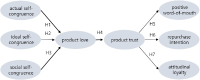
Purpose The purpose of this study was to analyze the relationships among sport-products self-congruence, product love, product trust, and purchase behavior of sports-for-all club members through structural equation model analysis. Methods A survey was conducted targetting 227, men & women in their twenties who are members of MTB, Tennis, Badminton, Golf in at the 8 in Seoul metropolitan area. For sampling method, convenience sampling method was used, while the questionnaire was self-administered. In an effort to verify the proposed structural model, this study used IBM SPSSWIN Ver. 21.0 and AMOS 18.0. Results First, actual self-congruence has positive influence on the product love. Second, ideal self-congruence didn't have positive influence on the product love. Third, social self-congruence has positive influence on the product love. Fourth, product love has positive influence on the product trust. Fifth, product trust has positive influence on the positive word-of-mouth. Sixth, product trust has positive influence on the repurchase intention. Seventh, product trust has positive influence on the attitudinal loyalty.

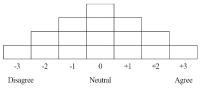
Purpose The purpose of this study is to classify the subjectivity of re-socialization barriers among retired footballers. Methods Q methodology was conducted to identify constraint factors contributing to social adjustment and reemployment perceived by 28 P-samples. Results Re-socialization barriers were classified as ‘Type I: Internal-constraint’, ‘Type II: External-constraint’, ‘Type III: Internal-conflict’, and ‘Type IV: External-conflict’. These types provided a variety of academic and practical discussions, depending on where the barriers are taken from (internal and external) and what depends on them (objective conditions and subjective ideas). Conclusions This study focused on the subjective structure of retired footballers and complemented traditional methodology focusing on hypothesis testing. Therefore, each type found in this study provides useful information not only in follow-up study on retired athletes, but also in policy-making decision such as support projects.

