PURPOSE The purpose of this study was to investigate the characteristics of field and on-ice performances of ice-hockey players and the relationship of performance with subjective joint pain and dysfunction. METHODS A total of 25 male college icehockey players were evaluated for 19 items of performance. Pain and dysfunctions in the lower extremities and lower back were confirmed through the Foot and Ankle Outcome Score, Knee Injury and Osteoarthritis Outcome Score, Hip Dysfunction and Osteoarthritis Outcome Score, and Osweatry Disability Index questionnaire. Players with similar performance characteristics were classified through a cluster analysis, and differences in performance and patient-reported outcomes between clusters were analyzed with a one-way analysis of variance. RESULTS The ice-hockey players were classified into “lower muscular strength and performance (cluster 1),” “lower cardiorespiratory endurance (cluster 2),” and “high muscular strength and performance (cluster 3).” Players in cluster 1 had more frequent ankle and knee joint dysfunctions and pain compared to those in cluster 3. Several performance test items affected the subjective joint score, and the related performance items were more in the proximal joint than in the distal joint. CONCLUSIONS Ice hockey players should perform training to supplement their individual lack of on-ice and field performance. Since performance may be limited because of joint dysfunction and pain, a joint-specific intervention strategy should be applied to improve physical and athletic performances.
PURPOSE This study aimed to examine contemporary sports reality and its problems through the feature-length independent film <Not Out>, which focused on baseball, a popular sport, and highlighted its rather dark side. METHODS The researcher performed a textual analysis using the perspective of critical theory. RESULTS Gwang-ho was the hero of a walk-off hit in the national baseball competition final, who suffered from three career strikes during his third year of high school and thought that he had bright future ahead of him. Before the amateur draft, Gwang-ho boldly rejected the proposal of a trainee contract from a professional team (strike 1), then he was subsequently not selected in the amateur draft (strike 2), before he applied for the college entrance examination for baseball specialties, and was eventually rejected. (strike 3) In the end, he was able to enter college through a bribe given by his father (not-out situation). CONCLUSIONS <Not Out> is a film based on a true story, and it showcased the realities of elite sports by revealing the dynamics of society and school, where the main character responded with reluctance and indifference. This movie highlighted the realities of delinquency, violence, abusive language, bribe, and violations of the right to learn and how these have continued to evade the law despite being thought to be gone.
PURPOSE Neuromarketing measures and analyzes the unconscious response of consumer brain waves to marketing stimuli in real time. This study examined how a sensational scene (accident) in a sport game influences the sponsorship effects through electroencephalography (EEG) analysis. METHODS The current study uses an experimental method. First, as an experimental stimulus, a video of F1 racing edited in a total of 9 min and 39 s was used, and an accident scene was inserted in the middle of the video. A total of 46 people participated in the experiment, and all participants watched the F1 video, including the accident scene. Participants' brain waves were observed in two prefrontal and two occipital lobes. The relationship between scene sensation and sponsorship effect was analyzed based on alpha waves and the sponsor brand recall measured by questionnaires. RESULTS First, the accident scene of the race caused the power of alpha wave to be abruptly reduced (i.e., alpha blocking). Second, the difference between the alpha power level of the group that recalled the sponsor brand and that of the group that did not recall was statistically insignificant; hence, the hypothesis was rejected. Third, the right-brain dominance (negative emotion) in the accident scene of the race was statistically insignificant; therefore, the hypothesis was rejected. Finally, the group that recalled the sponsor brand showed a left-brain dominance (positive emotion), which was statistically significant. CONCLUSIONS This study confirmed the marketing communication and neuromarketing theories on the sponsorship effects created by stimulation, attention, and memory in a sport sponsorship setting, observing alpha blocking phenomena in a sensational scene (accidents). In addition, it was revealed that the group that watched the same accident scene relatively positively and exited remembered the sponsor brand better than the group that did not watch it. The result implied that sport fan’s personal trait (e.g., sensation seeking) to sensation in sponsorship activities affects the sponsorship effect. The results also emphasized the importance of selecting target customers of sports fans in sponsorship to maximize sponsorship effects.
PURPOSE This study aimed to investigate user perceptions regarding the mobile healthcare application of public health centers by using big data. METHODS The study data included 1,089 users’ reviews (from September 27, 2016 to December 23, 2021), which were analyzed using Python, Textom, KrKwic, UCINET 6, and the Net-draw program. RESULTS First, the evaluation of the application showed a higher number of “Good” responses (677 times) compared to “Bad” (329 times) and “Normal” responses (83 times). Second, network structures related to “Good” were “Like,” “Health care,” “Help,” “A sense of purpose,” “Grateful,” “Diet management,” “Exercise management,” “Easy,” “Recommendation,” “Satisfaction,” “Diet,” “Useful,” and so on. Third, network structures related to “Bad” were “Execution error,” “Request improvement,” “Question,” “Slow speed,” “Interlocking error,” “Lack of food type,” “Login error,” “Inconvenience,” “Delete and reinstall,” “Update error,” “Irritation,” “Connection error,” “Problem occurred,” “Direct input request,” “Not available,” “Waste of stars,” “Lack of function,” “Not enough,” “Stuffy,” “Lack of exercise,” and so on. Fourth, as a result of structural equivalence analysis, four clusters appeared: cluster 1 (negative function), cluster 2 (negative emotion), cluster 3 (positive function), and cluster 4 (positive emotion). CONCLUSIONS It is necessary to respond quickly in order to reflect on the users’ reviews, and active efforts are required to improve the program quality so that users can use it conveniently.
PURPOSE This study aimed to apply a capacity building program to sport life skill leaders and to provide cases of this process. METHODS The study participants included four leaders (male=2, female= 2, Mage=37.5) who were managing a sport life skills program at a university. They participated in a capacity building program, which consisted of (a) understanding (leader seminar), (b) application (managing the sport life skills program), and (c) evaluation (leader’s self-reflection), which were conducted in eight sessions. Four leaders conducted self-evaluations using program quality assessment (PQA) during every session, and quantitative and qualitative data were collected. Qualitative data were derived using a cross-case analysis, and quantitative data were used for calculating the effect size after performing the paired t-test. RESULTS Analyzing the reported cases of sport life skill leaders, the use value of the capacity building program was identified. Furthermore, the cases reported by the four leaders enabled observation of how the leader’s capabilities were strengthened. In the paired t-test, the effect size of physical and psychological safety, appropriate structure, supportive relationship, opportunities to belong, support for efficacy mattering, opportunities for life skill building, excluding integration of family, school, and community effort, were all significant. All effect sizes were found to have “very large effects.” CONCLUSIONS The capacity building program played a positive role in strengthening the leaders’ life skill coaching capabilities. These findings have practical implications—chiefly, it is important to strengthen leaders’ or coaches’ capabilities in order to foster life skill development and transfer of student-athletes.
PURPOSE This study aims to examine how widespread disclosures of sports violence in South Korea (2018–2021) were culturally internalized by current universitylevel elite athletes who were adolescents at the time. Drawing on Richard Dawkins’ concept of memes, this study examines the cultural transmission and internalization of sports violence as a meme and explores how such violent memes may have ttransformed into ethical ones. METHODS This study employed Giorgi’s descriptive phenomenological method and conducted semi-structured interviews with ten collegiate elite athletes recruited through snowball sampling. Data were analyzed through a four-step process to identify the cultural perception structures underlying sports violence. RESULTS Participants initially normalized violence as part of athletic training but later critically reinterpreted it in response to shifting public discourse and ethics education. They identified performance-driven ideologies and hierarchical structures as key cultural factors that legitimize violence. Consequently, many participants rejected such norms and repositioned themselves as ethical agents. Ethical memes were found to propagate primarily through the practices of coaches and senior athletes rather than through formal institutional systems. Some participants demonstrated posttraumatic growth by committing not to reproduce violent behaviors. CONCLUSIONS Sports violence persists through cultural repetition and imitation but is increasingly challenged by emerging ethical memes. This shift necessitates perceptual change and structural transformation within sports organizations, highlighting the importance of promoting ethical practices through education, leadership, and policy interventions.
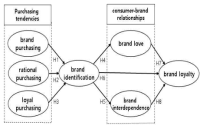
The purpose of this study was to investigate the relationships among purchasing tendencies, brand identification, consumer-brand relationships, and brand loyalty by analyzing structural equation model. A survey was conducted by using members(n=220) of 8 sport clubs located in Chungcheong Province. The data were recorded and analyzed using the SPSSWIN Ver. 21.0 and AMOS 18.0 to analyze the structural equation model. The findings of this study were as follows: First, brand purchasing had a significantly negative effect on brand identification. Second, rational purchasing was found to impact significantly on brand identification. Third, loyal purchasing did not show significant impact on brand identification. Firth, brand identification was found to significantly influence on brand love, brand interdependence, and brand loyalty. Fifth, brand love had no positive impact on brand loyalty. Finally, interdependence was found to impact significantly and positively on brand loyalty.
PURPOSE This study explored foot angle control’s influence on lower extremity joints’ kinematic variables during bodyweight squats in adult women. The study compared correlation variances among kinematic variables to evaluate foot angle control’s impact on knee stability and movement performance. METHODS Participants included 29 healthy adult women over 20 years old. Each participant completed three sets of five repetitions under two conditions: foot angles of 0° and foot external rotation angle of 30°. Data analysis used Cortex 8.0 software. A paired sample t-test compared lower limb joint angles and center of mass (COM) height of the pelvic region based on foot angle. The Pearson correlation coefficient was calculated to assess correlations between each dependent variable; to analyze differences, Fisher’s Z transformation was applied to significantly correlated pairs. Statistical significance was set at p < 0.05. RESULTS Findings indicated that, compared to 0° (p < 0.05), at a foot external rotation angle of 30°, hip joint abduction, knee joint flexion, and ankle external rotation angles significantly increased, whereas the knee valgus angle significantly decreased (p < 0.05). Moreover, at the foot external rotation angle of 30° (p < 0.01), pelvic COM’s vertical movement range increased, resulting in deeper squats. Correlation analysis among lower extremity joint kinematic variables under different foot angle conditions showed no significant differences. CONCLUSIONS At a foot external rotation angle of 30°, adult women performed bodyweight squats with reduced knee valgus angle and potentially decreased knee joint loading, indicating lower risk of injury and increased squat depth due to enhanced lower extremity joint freedom. Thus, adjusting the foot angle to 30° during adult women’s bodyweight squats can be recommended to enhance knee stability and movement performance.
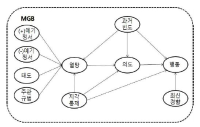
The current study aimed to examine behavioral intentions of online sports products consumers using the Extended Goal-directed Behavior Model. The questionnaires were distributed to consumers who had experience of purchasing sports products online. Data collected from 282 respondents were analyzed mainly using structural equation modeling. The results were as follows: First, attitude and subjective norm had a positive effect on desire. Second, perceived behavior control did not affect desire but had a positive effect on behavior intention. Third, positive anticipated emotions had a positive effect on desire and negative anticipated emotions had a negative effect on desire. Fourth, prior knowledge did not affect desire and behavior intention. Fifth, frequency of past purchase behavior did not affect desire, but had a positive effect on behavior intention. Lastly, desire had a positive effect on behavior intention.


PURPOSE This study aimed to examine the effectiveness of corporate social responsibility PR message appeals employed by professional sports teams. METHODS The authors categorized message appeals into self-benefit inclusion and self-benefit exclusion, and evaluated their impact in both public and private evaluation contexts. A 2 (beneficiary message appeal: self-benefit inclusion vs. selfbenefit exclusion) × 2 (message evaluation: public vs private) design model was employed. Data were collected from 165 respondents at a major university in Korea and analyzed using SPSS version 20.0. RESULTS The findings revealed that team loyalty was higher among individuals exposed to self-benefit inclusion messages than those exposed to self-benefit exclusion messages. Additionally, an interaction effect was observed between beneficiary message appeal and message evaluation. Specifically, the self-benefit appeal message was more effective when individuals had lower public self-image concern, while the self-benefit exclusion message was more effective when public self-image concerns were higher. CONCLUSIONS Team loyalty was found to be significantly higher in private evaluation situations for self-benefit inclusion messages, whereas, for self-benefit exclusion messages, the impact of public evaluation situations on team loyalty was greater than in private evaluations.
