Purpose The purpose of this study was to examine students’ perceptions of girls’ participation in physical education(PE) in elementary schools and examine the impacts of a girl-friendly integrated program on children’s participation in PE classes. Methods The participants were 10 fifth graders (5 girls and 5 boys) and their teacher in an elementary school. Data which were collected from in-depth interviews with students, students’ journal entries, field observation, and teacher’s reflective journal entries were analyzed inductively. Results Findings revealed that boys perceived girls’ participation as passive, possessing a low level of skills, and staying at the peripheral position. Meanwhile girls expressed their desire to demonstrate their strengths in PE classes and were afraid of boys’ criticism regarding their lack of skills. There were also misconceptions and misunderstanding on girls’ PE participation between boys and girls. In order to resolve these issues, a girls-friendly integrative program was designed. based on the four guiding principles drawn from students’ perception: (1) from ignorance to interest, (2) from misunderstanding to understanding, (3) from sport skills to sport values, and (4) from competition to cooperation. The program integrated boys and girls for promoting active interaction and also integrated competence, knowledge, and dispositions to accommodate students’ various ways of PE participation. Findings revealed that the program had: (1) diversified students’ perceptions of PE participation, (2) promoted students’ diverse and active participation, and (3) established classroom atmosphere which emphasized positive values.

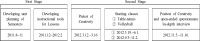
Purpose The purpose of this study was (1) to develop and to apply the PE classes based on Sportscasting Model on Creativity and Character and (2) to analyze the effects of PE classes on Creativity and Character. Methods Participants were 10th high school students(N=172) who had not experienced PE classes on Sportsasting Model. Data were collected using An Integrated Creativity Test(Lee & Lew, 2012), open-ended questionnaires and in-depth interviews with students. The data were analyzed through paired samples t-test and qualitative content analysis. Results Results showed that (1) Table-tennis and volleyball lessons on Sportscasting Model were developed and applied, and (2) significant differences were observed in creative thinking and creative personality of students’ creativity scores after lessons. And 14 creativity factors and 10 character factors were drawn from the analysis of questionnaires and interviews. Conclusion And to conclude, Sportcasting Model is efficient in developing creativity and character. Discussions were provided in terms of the development and application of PE classes based on Sportsasting Model and the effectiveness of Sportscasting Model.



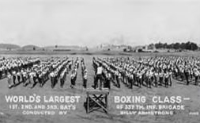
Purpose This study confirmed the historical significance of the First World War US Combat Strength Training Fitness System for contributing in the ROK military sports development. Methods This research method is literature analysis to be focused by the previous US Army Field Manuals. Results Concretely, The meaning of US Army fitness training was divided into four stages. First, this study confirmed the actual condition of the US Army fitness before First World War. Since 1916, US Army has developed a group physical training program applied the items suitable for the war and has systematically reflected the program in the recruitment training. Second, this study confirmed the process of operating military fitness program during the First World War. US Army physical fitness program provided an effective method to suit soldier fitness for war. Third, this study observed the fitness training changes of US Army after the First World War. At that time, US Army focused on maintaining health and basic physical strength for civilians and reserve forces, but US Army ran parallel with basal physical fitness and combat physical fitness after the Korean War. Fourth, this study compared military strength training between First World War and current US Army. Since First World War, the training of US Army has been developed around doctrine and manuals to be maintained the consistency of the system. In conclusion, US Army physical training system of First World War meant to be provided the basis of current military physical education and physical training. In other words, current fitness training is not dogmatic but has evolved, and it accommodated the basics of soldier physical training course from the past.



Purpose The purpose of this study was to examine athletes’ psychological competition experiences. Methods For this study, 64 student athletes, attending universities located in Seoul and Chungcheongbuk-do, participated in the study by completing an unconstructed questionnaire. The data were analysed through content analysis method. Results As a result, 15 themes, such as morale loss, comparable performance levels, opponent irritation were collected and the themes were classified into three categories including objectives of psychological competition, requirements of psychological competition, and psychological battle. In match situations, athletes attempt to psychologically compete in order to achieve objectives such as opponent’s morale loss, induce carelessness, trigger agitation and anger, dispersion of attention, and distraction. Psychological competition among rivals is valid when the requirements, such as comparable performance levels, sensitivity to match situations, strong tenacity and confidence, understanding of opponent and oneself, mutual checks and balances, are met. Athletes attack and defend to win the psychological competition by utilizing opponents irritation, information distortion, unexpected behaviors, predicting and coping, pulling a poker face, exclusion of opponents, and self-focusing. Conclusion This study created a theoretical foundation for a profound understanding of athletes’ psychological competition, which is often found in sport fields. Furthermore, this study is meaningful in that it has raised a chance of interest concerning psychological interaction between players in match situations.

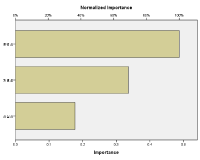
Purpose This study was to examine the effect of athletes’ personality on coach-athlete maintenance of relationship. Methods For this purpose, the data was collected by 284 athletes using personality five factor questionnaire and Coach-Athlete Relationship Maintenance Questionnaire(CARM-Q). correlation and multiple regression analysis were conducted to verify the relationship between five personality factors and maintaining coach-athlete relationship. Results The results were as follows: Personality had a significant effect on the maintenance of coach-athlete’s relationship. Firstly, the artificial neural network was analyzed to find the influence of personality that determine positive relationships with coaches. Conclusion As a result, it was confirmed that the favor was the main discriminant factor in maintaining the relationship of coach-athlete. Finally, openness and sincerity were found to maintain and develop the positive relationship with coaches.
Purpose The purpose of this study was to determine the effectiveness of six-weeks intermittent hypoxic training at 3,000 m hypobaric hypoxic condition on aerobic and anaerobic exercise capacity in competitive swimmers. Methods South Korean swimmers (n=20) were randomly assigned into training at sea-level (n=10, intermittent normoxic training group; INT) and training at 526 torr corresponding to 3,000 m hypobaric hypoxic condition (n=10, intermittent hypoxic training group; IHT). The participants completed an aerobic continuous treadmill training (30 min) within 80%HRmax and anaerobic interval bicycle training (10 times; 2 min of exercise and 1 min of rest) for 30min within 90%HRmax in each environment. We compared their aerobic and anaerobic exercise capacity before and after six-weeks of training. Exercise frequency was 1 hour, 3 days per a week, and during 6 week. Results In aerobic exercise capacity, PWC at 75%HRmax, estimated VO2 max, and exercise time were increased by training in only the IHT group. Estimated VO2 at 75%HRmax was increased by training in both groups, but presented a larger increase tendency in the IHT group compared with the INT group. In anaerobic exercise capacity, peak anaerobic power and fatigue index were increased by training in only the IHT group. Blood lactate level after wingate test were decreased by training in both groups, but the IHT group have a lower blood lactate level in after training compared with the INT group. Conclusion In our study, we did not measure to various dependent variables for support to enhancement of aerobic and anaerobic exercise performance. However, these results showed that the IHT method may be effective in improvement of exercise performance in competitive swimmers who participates in a variety of events from short to long distance.
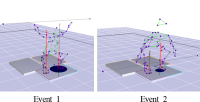
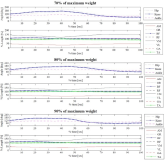
Purpose The purpose of this study was to identify the lower extremity muscles length change according to the increase of the weight during snatch. Also, through the muscle contraction velocity analysis, it is necessary to identify muscles that require rapid muscle contraction. Methods The subjects were 10 national weight-lifters. Their mean age was 29 ± 3.84 yrs, body weight 71.3 ± 16.04 kg, height 1.63 ± 0.07 m, and the highest recorded height 128 ± 36.30 kg. Experiments were performed during the snatch to 70%, 80%, and 90% of the individual highest records. The analysis variables were the lower extremity angle, angular velocity, muscle length and muscle contraction velocity and were calculated by biomechanical modeling. Statistical analysis was performed with a repeated measure with one-way ANOVA to analyze the difference between the increase weight (70%, 80%, 90% of peak) and the dependent variable (angel, angular velocity, muscle length and muscle contraction velocity). Results According to the results of the study, there was no statistical difference in angle, angular velocity and muscle length with increasing weight. However, in the comparison of the muscle length, muscle length of the vastus medialis, vastus lateralis, biceps femoris, rectus femoris were statistically higher than other muscles. Also muscle contraction velocity of the rectus femoris, biceps femoris, vastus medialis, vastus lateralis, rectus femoris were statistically higher than other muscles. Conclusion In the snatch, the dominant muscles were the muscles around the femur, and the co-contraction of biceps femoris and great adductor muscles would contribute to improve the performance.