PURPOSE This study aimed to develop an evidence-based content framework for physical education to substantiate the educational rationale for establishing a physical activity–centered integrated curriculum for Grades 1 and 2 in Korea. The study also sought to provide concrete foundational data to inform future curriculum revisions and instructional practice. METHODS To ensure educational validity and practical applicability, a multi-layered evidence-based approach was employed. This included a comparative analysis of domestic and international curricula, a systematic review of relevant literature, and a synthesis of key theoretical perspectives. RESULTS The analysis identified four core content areas appropriate for Grades 1 and 2: (1) fundamental movement skills, (2) game-based activities, (3) movement expression, and (4) health and safety. These areas are grounded in the theoretical frameworks of Physical Literacy and Fundamental Movement Skills, and are consistent with the developmental characteristics of early childhood, the national Nuri Curriculum, and the revised Korean physical education curriculum for Grades 3–4. The proposed framework also reflects international curricular trends and contemporary academic discourses, thereby ensuring both structural coherence and practical applicability. CONCLUSIONS To maximize the effectiveness of this initiative, it is necessary to challenge the prevailing perception that “physical education equals play,” strengthen teacher expertise through practice-oriented training and cueing systems, secure adequate instructional time (at least three sessions per week), and build collaborative networks linking schools with local communities. With these support mechanisms in place, physical education in Grades 1 and 2 can serve as a foundational platform for fostering children’s holistic development and lifelong well-being through meaningful movement experiences.
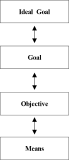
Purpose This study aims at investing the educational meanings of school physical education policy by analyzing the direction (ideal goal, goal, objective and program) of the policy in Korea and England. Methods The comparative research design was conducted by the policy literature analysis. In order to clarify the significance of the main discourse embedded the school physical education policy to the educational practice, I used qualitative content analysis based on the interpretive paradigm. Results The school physical education policy in Korea is divided into goal for general students and student athletes for 'happy students and school life', while the policy in England seeks to promote participation of competitive sports through school-community linkage for lifelong sports participation. As a result of the discourse analysis, the ambiguity of school physical education policy due to the complexity of various discourses (e.g. moral development, health, sports) diminishes the effectiveness of policy implementation as well as the teachers’ educational practice. In addition, competition sports discourse has been analyzed to limit the participation of many students in sports and to adversely affect lifelong participation in sports. Conclusions In conclusion, It is necessary to activate theoretical and empirical research that is the basis of building the school physical education policy direction and to establish cooperative governance for the policy implementation. In addition, student participation in lifelong sports and evidence-based policy making and practice are required.
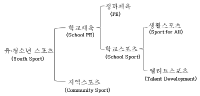
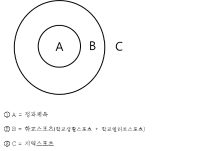
Purpose and Methods The purpose of this study is to clarify the concepts of ‘youth sport policy’ and policy areas as an alternative to school physical education concept and to provide a core conceptual framework for the development and implementation of youth sports policy in the future. Results The notion of youth sport policy is a process of seeking rational decision-making and optimal alternatives to solve the social problems associated with sports participation of youth in elementary school(aged 6 years) to high school(aged 18 years). The concept of 'youth sport' can reflect modern culture rather than 'school physical education' and it can be seen as more future oriented for lifelong participation in sports. The areas of youth sport policy are classified into physical education, school sport, and community sport. Physical education refer to the physical education classes operated by the Ministry of Education, and the school sport refers to the sports activities that take place throughout the school. Community sport is sports activities that are carried out outside the school by the choice of youth, which is the area where cooperation between the public sector and the private sector is needed. Conclusion In conclusion, healthy and active life for youth is required to establish cooperative governance of related organizations in order to ensure proper linkage between youth sport policy areas. Through this, it is necessary to solve the social problems of youth and promote their lifelong enjoyment of sport more consistently, efficiently and effectively.
Drawing on the studies of implicit ways of teaching (Choi, 2002; Fenstermacher, 1990; Hasen, 2001; Oakeshott, 1989; van Manen, 1991), the aim of this study is to examine the educational effects of indirect teaching behavior (ITB), a new approach of researching teacher behavior, in order to better understand well-rounded education in the field of physical education. An ethnographically informed case study based on participant observation (eight months, 8th grade two co-ed physical education classes) was employed to produce a thick description of the ITB. Participant observation was supported by video recordings of classes, photos of students, questionnaires and interview, and teacher's self-report. Through inductive analysis of the data, we found that ITB had a powerful influence on forming a positive classroom atmosphere in relation to fun, active and moral. The positive atmosphere played a pivotal role in encouraging students' social and moral development including respecting their teacher, cooperating with other friends, learning the intrinsic value of physical education, and reflecting themselves. An understanding of ITB will help expand the way in which educators view teaching methods and studies in physical education beyond the dominant approach to techniques-oriented teaching in that ITB can be seen as essential content for holistic development of students. In this sense, this paper suggested that researchers and teacher educators need to re-examine the power of ITB in regard to teacher's professional competence in physical education and teacher education (PETE). For future research of ITB, it is necessary to explore what and how key personal and social-cultural factors impact teachers' ITB as is currently being conducted in the realm of teaching.
Purpose The purpose of this study was to explore cultural meanings of the concept of ‘Che-Yuk-In’ through a critical examination of how it was described, portrayed, and represented in the narratives of the mainstream newspapers in the early days of the nation(1945-1961). Methods As for the data collection and method, a total of 338 articles were collected by searching of "Che-Yuk-In" through the database provided by the Naver News Library. Sorting out them with the point of whether the concept simply denotes the number of players or the majority of athletes, for example, we select 140 column-type articles and analyzed how it serves as a linguistic element and what discourses were involved in the narratives. Results Our argument is twofold: 1) the concept of ‘Che-Yuk-In’ is a kind of self-representative terminology with which a particular group of people, who call themselves ‘Che-Yuk-In’, construct their collective identity into a particular type of the idealized subject, so-called sporting citizen, and 2) this construction consists of two functions: one is to share the emotion of pride by celebrating success and achievements of the sporting figures, and the other is to collectively reflect shame by criticizing negative incidents and controversies such as corruption, factional disputes, violent behaviors, which broke in the sporting practices. Conclusions With a brief summary, this paper concludes with some suggestions for future studies, in terms of how the shameful past should be embraced within the field of Korean sport history, and why a conceptual history of the ‘Che-Yuk-In’ might need to be further expanded.
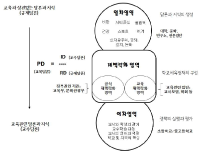
Drawing on Bernstein theory (1990, 1996) of pedagogic discourse, this study is aimed at exploring the construction of pedagogical meaning in physical education policy in Korea and providing critical implications for the development of policies for physical education and school sport. Both open-ended questionnaires (n=22) and in-depth interviews (n=9) were conducted. The collected data was commissioned by an inductive data analysis to look at patterns of regulative discourses embedded with physical education policy influencing on teachers’ educational practice. This study identified three main discourses constructing and constituting policies; sport, moral, and health. Sport discourse was the most dominant through the policy, in which two sub-discourses were central: ‘competition’ and ‘exclusion.’ Moral discourse had a strong connection with ‘crime reduction’ and ‘academic achievement.’ The structure of health discourse alleged increase in youth physical inactivity associated with sedentary living leads to an obesity epidemic. This study argued that there were significant dangers which dominant regulative discourses created a limited universe of possibilities for physical education. Therefore, we must not lose sight of the powerful discourses produced in the primary field, which have an impact on shaping forms of policy and practice in physical education. Furthermore, we need to examine in detail forms of physical education practice in order to achieve alignment in the school practice with current dominant discourses.
There has been a growing advocacy for a critical approach to physical education teacher education(PETE) in the era of globalization and ubiquitous society. Drawing on critical pedagogy, the purpose of this paper was to explore the meanings and methods for developing critical professionalism in PETE through identifying the definitions and features of critical professionalism. The notion of critical professionalism includes four crucial components: critical reflection, social sensitivity, critical thinking, and practicability. This paper suggests an inquiry-oriented physical education teacher education to develop per-service teachers’ critical professionalism in terms of providing a range of teaching methods centered on microteaching, discussion-based lessons, critical reading and writing, and using media materials. Building on findings, it was concluded that there is a need of programs for the development of policy literacy understanding complex social and cultural contexts of school physical education. Furthermore, PETE should focus on the processes of critical reflection on the teaching and learning act itself within wider social contexts, by using an inquiry-oriented approach to PETE, which will contribute to fostering teachers’ critical capacities needed to guard the educational aims of physical education against political interference.
