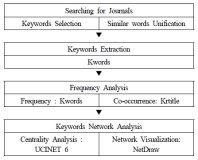
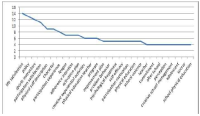
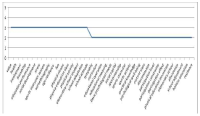
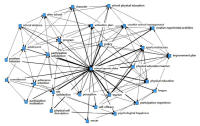
PURPOSE This study aims to analyze research trends on the social capital in sports. METHODS A total of 69 papers published until December 2020 were selected as research subjects. Further, Excel, KrKwic software, and NetDraw function of the UCINET 6 program were used for analysis. RESULTS First, social capital research on sports has shown quantitative growth since 2010. Second, the studies were conducted on sports participants such as general, elderly, college students, adolescents, foreigners, and the disabled, showing the highest frequency of research subjects. Third, quantitative research conducted based on the research method were several. Fourth, single-author studies were the highest. Fifth, as the result of the analysis on the publication journal, the Journal of the Korean Physical Education Association was shown the highest. Sixth, due to frequency analysis of the thesis keywords, “social capital,” “sports participation,” “action intention,” “social capital type,” “living sports participation,” and “youth” were shown the highest. Seventh, as a result of centrality analysis between keywords through the network analysis, “sports participation” in connection centrality, “health-promoting lifestyle” in proximity centrality, and “sports participation” in mediation centrality were found as the highest. CONCLUSIONS The significance of social capital in sports is more important than others because it is a fundamental element for creating a culture where more people can enjoy sports moderately in Korea, where capitalism and liberal democracy were adopted as the governing system. Therefore, this study can be a vital resource significantly contributing to the understanding and active use of social capital, a significant factor in developing sports in Korea.
PURPOSE This study aimed to investigate user perceptions regarding the mobile healthcare application of public health centers by using big data. METHODS The study data included 1,089 users’ reviews (from September 27, 2016 to December 23, 2021), which were analyzed using Python, Textom, KrKwic, UCINET 6, and the Net-draw program. RESULTS First, the evaluation of the application showed a higher number of “Good” responses (677 times) compared to “Bad” (329 times) and “Normal” responses (83 times). Second, network structures related to “Good” were “Like,” “Health care,” “Help,” “A sense of purpose,” “Grateful,” “Diet management,” “Exercise management,” “Easy,” “Recommendation,” “Satisfaction,” “Diet,” “Useful,” and so on. Third, network structures related to “Bad” were “Execution error,” “Request improvement,” “Question,” “Slow speed,” “Interlocking error,” “Lack of food type,” “Login error,” “Inconvenience,” “Delete and reinstall,” “Update error,” “Irritation,” “Connection error,” “Problem occurred,” “Direct input request,” “Not available,” “Waste of stars,” “Lack of function,” “Not enough,” “Stuffy,” “Lack of exercise,” and so on. Fourth, as a result of structural equivalence analysis, four clusters appeared: cluster 1 (negative function), cluster 2 (negative emotion), cluster 3 (positive function), and cluster 4 (positive emotion). CONCLUSIONS It is necessary to respond quickly in order to reflect on the users’ reviews, and active efforts are required to improve the program quality so that users can use it conveniently.

[Purpose] The purpose of this study was to examine acceptance intentions of Sports O2O Service Potential consumers using the revised model of goal-directed behavior. [Methods] The 330 surveys were distributed to potential consumers through convenience sampling method for pilot study. Due to the reliability of data, 42 samples were discarded and 288 samples were put to actual analysis. Then data were analyzed for frequency analysis, reliability analysis, correlation analysis and structural equation modeling technique via SPSS 23.0 and AMOS 22.0. [Results] The results of this study were as follows. First, attitude and subjective norm had a positive effect on desire. Second, perceived behavior control did not affect on desire but had a positive affect on acceptance intention. Third, positive anticipated emotions had a positive effect on desire but negative anticipated emotions did not effect on desire. Fourth, desire had a effect on acceptance intention. [Conclusions] According to the result, sports O2O service operators should do best to improve consumers positive attitude. Especially, they have to establish marketing strategies of introducing strong aspects of sports O2O services. Also, providing easy processes and intuitive interface are needed to consumers. To promote sports O2O services to potential consumers which is unfamiliar to that services, it is important to induce easy ways for potential consumers to experience sports O2O services.


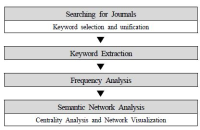
[Purpose] The purpose of this study was to identify research trend regarding pro-sports and visualize keyword network by using semantic network analysis. [Methods] After searching researches about pro-sports from 1994 to 2016, total 686 researches selected. In this process, inappropriate researches were excluded by 2 researchers’ consensus. [Results] First, the distribution of the number of researches were arranged on pro-baseball, pro-football, pro-basketball, and pro-volleyball in that order. Second, fan, team, and athletes were main research subject. Third, quantitative researches were dramatically more than qualitative researches and mixed method researches. Forth, the proportion of co-working have increased with the course of time. Fifth, the number of keyword which are appeared in researches has increased with the course of time, it dramatically was increased at 2010. [Conclusion] Through these results, researches regarding pro-sports have been broaden with the course of time and interdisciplinary convergence researches with adjacent fields were performed. However, some keyboards were repeated and academic interest about rare keywords was decreased with the course of time. Therefore, scholars in sports field need to have a inquiring stance about novel variables and phenomenons
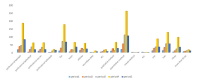
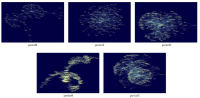
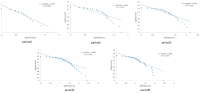
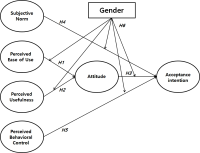
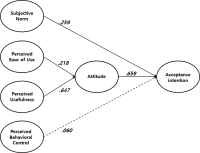
Purpose The current study was aimed to examine acceptance intention of sports wearable smart device using the Technology Acceptance Model and Theory of Planned Behavior. Methods Data were drawn from 357 consumers who had experience purchasing sports products. Data were analyzed through frequency analysis, reliability analysis, confirmatory factor analysis, correlation analysis, and structural equation modeling using SPSS 20.0 and AMOS 20.0 program. Results First, perceived ease of use had a positive effect on attitude. Second, perceived usefulness had a positive effect on attitude. Third, attitude had a positive effect on acceptance intention. Fourth, subjective norm had a positive effect on acceptance intention. Fifth, perceived behavioral control did not affect acceptance intention. Sixth, differences of path coefficients between attitude and acceptance intention, subjective norm and acceptance intention were significant according to gender. Conclusion The significance of this research is to provide the basis of positioning strategy for domestic companies of sports wearable smart device.
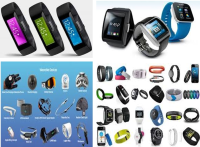
PURPOSE The purpose of this study was to analyze the effect size of the unified theory of acceptance and use of technology (UTAUT) in the sports field using a meta-analysis. METHODS After identifying related studies by using RISS, 22 articles were selected and used to analyze the relationship between UTAUT sub-factors (performance expectancy [PE], effort expectancy [EE], social influence [SI], and facilitating conditions [FC]) and intention to use via the comprehensive meta-analysis program. RESULTS The results are as follows: First, the effect size between PE and intention to use was 0.521. Second, the effect size between FC and intention to use was 0.514. Third, the effect size between EE and intention to use was 0.500. Finally, the effect size between SI and intention to use was 0.475. CONCLUSIONS Diverse strategies can be derived to increase consumers' intention to use in the sports field using the UTAUT model.
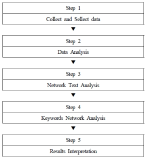
The purpose of this study was to investigate the research trends on school sports clubs using the Content Analysis and Network Text Analysis. Data included 137 journal articles published from 2007 to 2016 and were analysed using SPSS 20.0, KrKwic software and the NetDraw of UCINET 6 program.The results were as follows. First, the number of research articles on school sports clubs were increased since 2012. Second, research studies using mixed subjects were most popular in comparison to more narrow target population. Third, the mixed methods approach was less utilised in comparison to quantitative and qualitative research methods. Fourth, correlational studies were more frequently used while multivariate analyses were less common in terms of statistical methods. Fifth, satisfaction, policy, and leader were the most frequently used keywords among the keywords provided by journal articles. Lastly, the results of Network Text Analysis indicated that school sports clubs and user satisfaction showed the highest degree centrality, closeness centrality, and betweenness centrality.