The objective of this study was to examine the relationships among preferred and perceived leadership behavior, their congruence, and satisfaction with leadership based on Chelladurai's(1978) Multidimensional Model of Leadership(MML). To achieve the study objective, 210 professional dancers from 6 professional dance teams located in Seoul and the suburbs participated in this study. For hypotheses testing, descriptive statistics, hierarchical multiple regression analyses, and a confirmatory factor analysis using SPSS and AMOS were used. Results showed that the congruence between preferred and perceived leadership behavior did not have statistically significant influence on dancers satisfaction. The results of the study were inconsistent with what MML suggested. However, the results were quite consistent with empirical evidences of previous studies that investigated the influence of the congruence between preferred and perceived leadership on satisfaction.
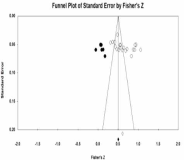
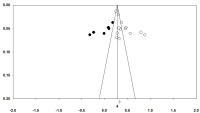
[Purpose] The purpose of this study is to analyze the effect size of the relationship between team identification and their intention to attend sport events and intention to purchase licensed team merchandise using a Meta-analysis. [Methods] To accomplish the purpose of the study, multiple databases were visited (e.g., RISS, KISS, Library of National Assembly) and studies were collected using the keyword of team identification. Through the search process, total of 92 studies were identified, among which 20 studies provided Pearson correlation coefficients between team identification and intention to attend and 13 studies between team identification and intention to purchase licensed team merchandise. The 33 studies were analyzed using Comprehensive a Meta Analysis(CMA) program. The analyses were done using random effect model assuming there were significant heterogeneity among the studies included. [Results] The overall effect size between team identification and intention to attend sport games was .567 and .403 for between team identification and intention to purchase licensed team merchandise, which can be classified as large effect size(Cohen, 2013). Sub-group analyses were done using types of publication(journal article vs. thesis). The results of the sub-group analyses indicated that the effect size differences were statistically insignificant. [Conclusions] As indicated in many previous studies, team identification was found to be a significant predictor of sport consumers’ behaviors. However, future studies need to find the reasons of heterogeneity in effect sizes.
Purpose Lock and Heere (2017) argued that two different theories of social identity theory(SIT) and role identity theory have been used in previous studies of team identification. However, they failed to provide why such phenomenon existed in the literature of team identification. Thus, the first purpose of the study is to provide the possible reasons why the two theories were used as the ground of team identification in the previous literature. In addition, the current study examined whether team identification was properly developed from SIT by incorporating the cases of organizational identification and consumer-company identification in business literature. Results & Conclusion There are two possible explanations on why the two theories have been used in team identification studies. First, in the initial studies of team identification, theoretical ground of team identification was lacking. Thus, without a firm theoretical guidelines, authors might have used the two theories as the ground of team identification. Second, as previous literature noted, the two theories are like the two different sides of a single theory. Thus, authors may have not recognized the need of differentiating the two theories and used the two theories as the ground of team identification. This study also examined whether team identification was properly developed from SIT. The social category in team identification includes two different social identities(team members and fans), which is quite different from a social category with single identity in it. The locus of social category of team was arbitrarily expanded to include fans in the same category. This case is quite similar with consumer-company identification in marketing literature. Future study needs to examine whether the locus of social category can be expanded to include two different social identities.

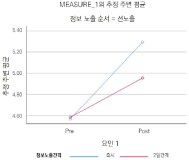
Purpose This study aims to find out the attitude changes of consumers on a corporate sponsor in a cause related marketing based on frequency of information exposure and the image of the sponsor. Methods The data were collected from 191 students of C university in Seoul and its vicinity. The data were collected three times from the sample to see the attitude changes over time. The hypotheses of the sutdy were developed based on meaning transfer theory and spreading activation theory. This study hypothesized that the attitude toward a sponsor would change in a positive direction when consumers are exposed to related information and the change would be moderated by the frequency of information exposure. Also, the changes in attitude would be different based on the image of sponsors(i.e., positive image sponsor vs. negative image sponsor). The hypotheses were analyzed using mixed-design ANOVA. Results The results of the analyses indicated that the attitude change was greater when the frequency of information exposure was higher. The attitude change in positive image sponsor was statistically lower than that of negative image sponsor possibly due to ceiling effect.


Purpose The purpose of the study was to examine the effect of exposure sequence and time gap between two exposures in image transfer in the context of sport sponsorship. Methods To accomplish the purpose of the study, one preliminary study and one main study were performed. The sample was drawn using a convenience sampling (33 for preliminary study and 120 for the main study). The data were analyzed using one sample t-test, repeated measure ANOVA(mixed design). Results The data for the main study indicated that the mean of the post-test was statistically higher than that of pre-test, which indicated that the image of the sporting event was transferred to the image of the brand Dell. This indicated that the image transfer actually took place although image similarity between sporting events and sponsoring brand was not conditioned. The hypotheses of the study were tested using a mixed design with exposure sequence and time gap between exposures as two between subject factors. The results indicated that the interaction was statistically significant. When two sponsorship information were given consecutively, the first sport event’s image was transferred more than the image of the secondly presented sport event, which indicated primacy effect. However, when the two sponsorship information was given with two days time gap, the image of the second sport event was transferred more than the first sport event’s image, which indicated a recency effect. Conclusions Two meaningful findins were delivered through the current study. First, even when there was no image similarity between sport event and brand, image transfer took place through sponsorship arrangement. Second, if primacy and recency effects are properly incorporated, image transfer can be achieved in a more effective way in sponsorship context.


Purpose The purpose of this study was to analyze the research topics of the articles which were published through European Sport Management Quarterly(ESMQ) from 2009 to 2018. The prior topic analysis studies of the ESMQ classified topics based on the key words using NASPE-NASSM SMPS categories. Therefore they couldn't fully reflect the content of the articles. Methods The topic modeling of the current study was conducted with the Latent Dirichlet Allocation(LDA) which generates topics based on the word usage in the article. A total of 265 articles were converted from 'pdf' format to 'txt' ANSI format for topic modeling analysis. The whole topic modeling process was done using R program and the model was set to generate 10 topics from the article. Results The 3 sport management experts were hired to label the name of the topics and the name of the topics are as follow : (1) Impact of mega sport event, (2) Cause-related marketing, (3) Factors affecting the results of the competition, (4) Managing sport organization, (5) European sport leagues, (6) Strategic management, (7) Sport economics, (8) Sport in communities, (9) Sport consumers, (10) Elite sports. It is not quite possible to compare the results of the current topic modeling results with the previous ones because of the methodological differences. However, even though the standards are different, Sport marketing topic showed the largest growth among the 10 topics extracted. Conclusions This study used the LDA probabilistic algorithm to analyze research topics, which made the analyses more objective and wholistic. However, the insights of the researchers were still needed to interpret and labeling the topics.
Purpose The current study reexamined the financial value of National Fitness Award. Methods To determine the economic value of National Fitness Award, we incorporated 6 willingness to pay(WTP) models using contingent valuation method(CVM). The data were collected from 250 members and 250 non-members of National Fitness Award(NFA) who were over 19 years old. Out of 500 completed questionnaires, total of 489 usable questionnaires were used for data analyses. Among 489, the WTP were calculated after 125 protest responses were discarded. The data were analyzed with SPSS 24.0 for frequency analysis, descriptive statistics, reliability test, and exploratory factor analysis. Stata 14.0 and R programs were used for calculating WTP. Results First, WTP was positively influenced by household income. Second, WTP was positively influenced by satisfaction level among members. Third, willingness to pay (WTP) for the National Fitness Award were 30,877won (Mean WTP), 29,455won (Median WTP), 25,829won (Truncated WTP). The average WTP was 28,720won. Conclusions Although National Fitness Award has been provided as free service to Korean people, previous study noted problems in facility and promotion. For the National Fitness Award to possess sustainability with proper service quality, it may need to be changed to fee based service. The current study suggested that, should it be changed to fee-based service, the proper price for the service is 25,000won.
