PURPOSE This study examined the process and cause of change in nationalism in German gymnastics in the 19th century. METHODS The study used a literature study method and analyzed data from previous studies. Eleven articles related to the research topic were chosen for domestic research data by searching RISS for "German gymnastics," "Turnen," and "German nationalism." Overseas research data involved seven articles related to this study and were found by searching for "German gymnastics" and "Turnen" in Google Scholar. RESULTS First, German nationalism was originally divided into liberal nationalism and nationalistic nationalism, resulting in nationalistic nationalism after German reunification. Second, Jahn as a liberal nationalist and Spiess as a nationalist attempted to spread their ideas through German gymnastics. Finally, German gymnastics change from Jahn's liberal nationalism to Spiess' nationalistic nationalism was inevitable due to German gymnastics' external background and inherent limitations. CONCLUSIONS This study illustrated the process and cause of the change in the nationalistic characteristics of German gymnastics in the 19th century. Various historical cases that have not yet received attention but are worthy of investigation must be studied.
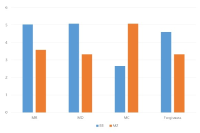
PURPOSE This study aimed to test the impact of sport consumers‘ self-construal levels on their responses toward an athlete scandal by conducting a cross-cultural experimental study. In particular, it focused on sport consumers’ subsequent responses toward an athlete scandal, such as the perceived target of responsibility and perceived the main agent for the public apology. METHODS Participants (total=151; KOREA=75, USA=76) were selected for a cross-national comparative study. MANCOVA and Descriptive Statistical Analysis were conducted using the SPSS Windows program version 26.0 to validate the research hypothesis. RESULTS The results indicate that sport consumers’ responses to an athlete scandal vary across the countries. Participants from Korea reported perceived responsibility to the athlete, team, and league. Conversely, those from the United States reported perceived responsibility only to the athlete. CONCLUSIONS There are cultural differences in sport consumers’ subsequent perceptions of an athlete scandal. The present study's findings are expected to provide stakeholders such as teams and leagues with practical implications to understand better sport consumers’ responses to athlete scandals in the globalized sports industry.
Purpose The purpose of this study was to explore cultural meanings of the concept of ‘Che-Yuk-In’ through a critical examination of how it was described, portrayed, and represented in the narratives of the mainstream newspapers in the early days of the nation(1945-1961). Methods As for the data collection and method, a total of 338 articles were collected by searching of "Che-Yuk-In" through the database provided by the Naver News Library. Sorting out them with the point of whether the concept simply denotes the number of players or the majority of athletes, for example, we select 140 column-type articles and analyzed how it serves as a linguistic element and what discourses were involved in the narratives. Results Our argument is twofold: 1) the concept of ‘Che-Yuk-In’ is a kind of self-representative terminology with which a particular group of people, who call themselves ‘Che-Yuk-In’, construct their collective identity into a particular type of the idealized subject, so-called sporting citizen, and 2) this construction consists of two functions: one is to share the emotion of pride by celebrating success and achievements of the sporting figures, and the other is to collectively reflect shame by criticizing negative incidents and controversies such as corruption, factional disputes, violent behaviors, which broke in the sporting practices. Conclusions With a brief summary, this paper concludes with some suggestions for future studies, in terms of how the shameful past should be embraced within the field of Korean sport history, and why a conceptual history of the ‘Che-Yuk-In’ might need to be further expanded.
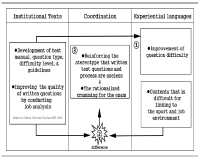
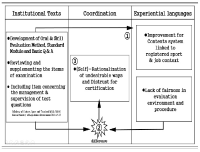
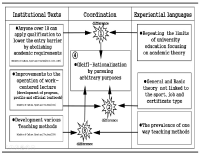
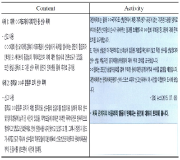
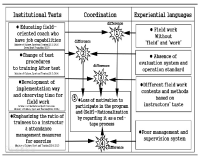
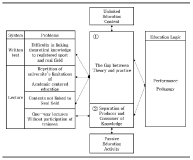
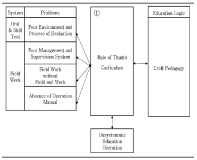
Purpose There are two purposes of this study; First is to investigate the reality of curriculum in the qualification system through the coordination process between participants’ experiences and institutional texts. Second is to identify the light and shade of the educational logics underlying the certificate courses of Level 2-sport-for-all-coach. Methods By relying on the institutional ethnography approach(Smith, 2005), the data were collected through on-site materials and semi-structural interviews with seven coaches who participated in the qualification programmes after 2015 system revision. The data were analyzed by mapping the social organization. Results The analysis shows two key findings. First, participants faced inconsistencies with institutional texts in the subcategories of qualification system and experienced (self-)rationalization process including doubt, complaint, acceptance and compromise toward the system. Second, Performance pedagogy and Craft pedagogy were operating at the root of the current qualification system, and the two logics led to the fundamental limitations(unlinked educational content, passive educational activity, and unsystematic educational operation) for the improvement of system. Conclusion The activation of the retrospective approach to distinguish the pros and cons of various educational logics was suggested. These findings are expected to provide useful implications for building the future framework to educate sport-coaches more systematically.
Purpose Based on Haidt's social-intuitionist theory, this study analyzes the differences in ethical decision-making between sport athletes and the general public in order to understand the ethical judgment tendencies of athletes and examine the determining factors influencing their judgment from the perspective of their environment. In so doing, this study hopes to motivate education for enhancing ethical consciousness as well as institutional policy. Methods To this end, 200 elite athletes in their twenties registered for more than 10 years at the Korean Sports Association and 200 college students in their twenties from five universities in Seoul were selected for comparison. Response trends for each item were analyzed by percentage, and differences between groups were confirmed by the χ2 test method. Results The results are as follows. First, in general ethical situations, athletes usually showed a compulsory ethical view that emphasized principles, whereas in a sports situation, they showed a double consciousness and revealed a very strong consequential ethical view which put much emphasis on outcome. Second, athletes strongly maintained a Confucian ethical view that recognized ethics as a norm compared to the general public and, as a result, it was found that paternalism was relatively stronger than rationalism in their ethical decision making. Third, athletes regarded other people's thoughts and group interests as important criteria for ethical decision-making rather than individual thoughts and interests, and showed a group-centered mindset which emphasized group harmony and relationship. Fourth, while the general public viewed excellent athletes as those with excellent skills and good personality, and valued their morality, athletes thought relatively little of the influence and importance of morality in their success. Finally, it was found that coaches and managers were fundamental to the formation of the athlete’s moral view. Conclusion An in-depth understanding of sports participants' ethical awareness should come first in order to enhance ethical consciousness in sport. I hope this study will work as a catalyst for research which approaches athletes' ethical consciousness from a socio-cultural context.
PURPOSE This study aims to analyze research trends on the social capital in sports. METHODS A total of 69 papers published until December 2020 were selected as research subjects. Further, Excel, KrKwic software, and NetDraw function of the UCINET 6 program were used for analysis. RESULTS First, social capital research on sports has shown quantitative growth since 2010. Second, the studies were conducted on sports participants such as general, elderly, college students, adolescents, foreigners, and the disabled, showing the highest frequency of research subjects. Third, quantitative research conducted based on the research method were several. Fourth, single-author studies were the highest. Fifth, as the result of the analysis on the publication journal, the Journal of the Korean Physical Education Association was shown the highest. Sixth, due to frequency analysis of the thesis keywords, “social capital,” “sports participation,” “action intention,” “social capital type,” “living sports participation,” and “youth” were shown the highest. Seventh, as a result of centrality analysis between keywords through the network analysis, “sports participation” in connection centrality, “health-promoting lifestyle” in proximity centrality, and “sports participation” in mediation centrality were found as the highest. CONCLUSIONS The significance of social capital in sports is more important than others because it is a fundamental element for creating a culture where more people can enjoy sports moderately in Korea, where capitalism and liberal democracy were adopted as the governing system. Therefore, this study can be a vital resource significantly contributing to the understanding and active use of social capital, a significant factor in developing sports in Korea.
Purpose The purpose of this study was to analyze the relationship among emotional leadership, coach trust and athletic satisfaction of university. Methods 288 university soccer players were surveyed on the emotional leadership questionnaire, coach trust questionnaire and athletic satisfaction questionnaire through convenience sampling method. SPSS 23.0 and AMOS 23.0 were used to achieve the purpose of this study. Frequency analysis, confirmation factor analysis, reliability verification, correlation analysis and the structural equation model analysis were performed. Results First, emotional leadership had a positive effect on coach trust of university soccer players. Second, emotional leadership had a positive effect on athletic satisfaction of university soccer players. Third, coach trust had a positive effect on athletic satisfaction of university soccer players. Finally, coach trust mediated the relationship between emotional leadership and athletic satisfaction. Conclusions Emotional leadership was a leadership that can efficiently increase coach trust, and leaders must communicate with players through emotional effort and team operations with goals of athletic satisfaction and happiness rather than wins and losses were required.
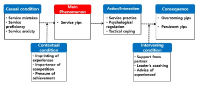
Purpose This study aims to investigate the experience of service yips in badminton players in depth through using grounded theory method. Methods We collected data from in-depth interviews with 14 participants in total, consisting of badminton players who experienced service yips, their doubles partners and coaches. The collected raw data were analyzed base on derive transcription, coding and paradigm models through grounded theory method. Results First, as a result, 59 concepts, 31 subcategories and 15 categories in regard to badminton service yips were deduced from open coding. Second, in axial coding, it was structured in a paradigm model by categories such as service yips, service mistakes, service proficiency, service anxiety, the imprinting experiences, the importance competition, the pressure of achievement, service practice, psychological control, tactical handling, support from partners, leaders’ coaching, advice from experienced ones, overcoming yips and persistent yips. Third, selective coding resulted in ‘Badminton service yips’ as the core category of this study. ‘Badminton service yips’ is a chronic performance impairment associated with badminton players making severe errors in swing motion on a service not intended by them that it is due to physiological or psychological symptoms such as hand tremors, overall body stiffness, arms stiffness, overstress, overanxiety, and concern over service mistakes. Conclusions We expect our study can be a theoretical foundation for understanding and explanation of ‘Badminton service yips’ and a useful reference for badminton players suffering from psychological difficulties caused by their service yips. The findings in this study should be considered for the development of potential strategies for overcoming the badminton service yips.
PURPOSE This study aimed to subdivide the market based on the general characteristics and consumer psychology of sports brand collaboration consumers and provide basic data for efficient collaboration marketing activities of sports companies. METHODS The subjects of this study were high school, college, and graduate students from high schools and universities in the Seoul and Gyeonggi area. Of the 600 copies of the questionnaire distributed, 475 were selected and analyzed in the final sample. Regarding the statistical method for this study, the PASW 18.0 statistical program was used for the frequency, exploratory factor, reliability, hierarchical cluster, K-means clustering, and cross analyses, as well as the one-way ANOVA. RESULTS The results of the analysis suggested five subdivided clusters with according marketing strategies: “external male,” “practical male,” “twenties design preferred female,” “low-interest women,” and “high consumption optional attributes” groups.
Purpose Drawing on Socioemotional Selectivity Theory, the present research aims to investigate how sport consumers’ moral reasoning strategies and forgiveness intent toward a sport organization’s misconduct depending on the consumers’ different time perspectives(expansive vs. limited). Methods An experimental study (total n = 129; Baby Boomer generation = 62, generation MZ = 67) was conducted by utilizing a fictitious scenario depicting a sport organization’s misconduct. The proposed hypotheses were tested by conducting T-test, correction analysis, and multiple regression analysis using SPSS 21.0. Results There were significant differences in moral reasoning and forgiveness based on different time perspective. Baby Boomer(MZ) group showed higher(lower) levels of moral rationalization, moral decoupling, and intent of forgiveness compared to MZ(Baby Bommer) group, while showing lower(higher) level of moral coupling. A result also revealed that negative moral emotions had moderating effect between a limited time perspective and moral coupling among MZ participants. Conclusion The results of this study indicated that sport consumers’ time perspective has a predictive function on moral reasoning strategies. Thus, it is necessary for sport organizations to establish strategies focusing on the consumers’ time perspective to effectively respond to an unexpected crisis.