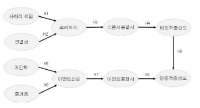
The purpose of this study was to develop a model of relationship intensification, identification formation, and loyalty achieved through mutual effect within participants of sports sponsorship. Through this, the study aims to provide guidance to businesses for establishing and developing sports sponsorships. In order to achieve the objective, two identification paths were used to understand the process of deepening consumer-sponsor relationship in professional volleyball title sponsorships. The target of this study is 'NH Nonghyup' a valleyball title sponsor in 2014-2015. A survey was conducted on 264 home crowd members of Korea Air, Samsung fire, Kepco, Woori card, OK saving bank and Hyundai capital based in metropolitan regions. Sampling method was Convenience Sampling Mode, and questionnaire has been structured to be self-administerd type. SPSSWIN Ver. 21.0 and AMOS 18.0 have been used for data processing. The results were as follows: Frist, the study showed that the connection between consumer-sponsor mutual effect positively influence "we-ness." "We-ness" in turn positively affected sponsor identification, and sponsor identification in turn positively affected attitudinal loyalty. Second, the personalization and enjoyment in consumer-event mutual effect positively affected event trust, and event trust in turn positively affected event identification, and event identification in turn positively affected behavioral loyalty. Third, attitudinal loyalty positively impacted behavioral loyalty.
PURPOSE The current study examined how baseball fans evaluate a robot umpire from the perspective of the human-robot interaction. In particular, this study examined whether baseball fans evaluated more positively a robot umpire depending on whether a robot or a human umpire has the final authority to make ball-strike decisions, when the ball-strike decision contradicts with each other. Furthermore, the different types of expertise (baseball vs. image analysis) embedded in robot umpire and fans’ levels of technology adoption were used to examine the relationship between umpire type and evaluations of robot umpire. METHODS This study used 2 (final decision maker: robot vs. human umpire) by 2 (different types of expertise embedded in robot umpire: baseball vs. image analysis) by 2 (different levels of technology adoption: low vs. high) between-subjects design. RESULTS The results indicated that when a robot umpire had the final authority to make ball-strike decisions, baseball fans evaluated more positively the adoption of robot umpire, when image analysis expertise was embedded in the robot umpire rather than baseball expertise. Meanwhile, baseball fans evaluated more positively the adoption of robot umpire when baseball expertise was embedded in a robot umpire rather than image analysis expertise. CONCLUSIONS The current study provides meaningful implications regarding how to design an effective system for the operation of robot umpire in baseball.
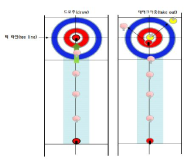
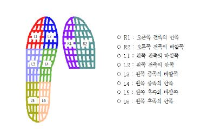
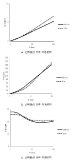
In this paper, we tried to find out the difference of CoM displacement, CoM velocity and Foot-pressure between draw motion and takeout motion in curling’s delivery motion. To do this, we experimented for 10 female athletes of curling national team(all athletes are in her 20th~30th ages) to carry out draw motion and takeout motion from backline to near hogline in state of speed limit. The limited speed was 3.80~3.90 sec for draw and 2.97~3.07 sec for takeout. From the experiments, we obtained the result like followings. 1. Draw motion is more increase than takeout motion in displacement of horizontal direction of CoM displacement. 2. Takeout motion is more increase than draw motion in displacement of vertical direction of CoM displacement. 3. Takeout motion is faster than draw motion in both of horizontal and vertical direction of CoM max. velocity. 4. Takeout motion is higher than draw motion in pressure of fore-foot and mid-foot of foot-pressure 5. Draw motion is higher than takeout motion in pressure of fore-foot and mid-foot of foot-pressure These result means that the characteristics of techniques for draw motion and takeout motion is differ from each other and it is necessary to take different training protocol individually to enhance athletes’s performance. And further research will contains another things like that the pursuit of curling stone’s rut by various delivery techniques
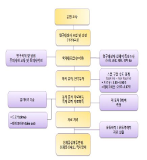



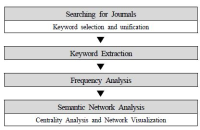
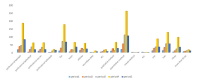
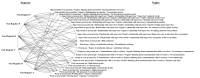
[Purpose] The purpose of this study was to identify research trend regarding pro-sports and visualize keyword network by using semantic network analysis. [Methods] After searching researches about pro-sports from 1994 to 2016, total 686 researches selected. In this process, inappropriate researches were excluded by 2 researchers’ consensus. [Results] First, the distribution of the number of researches were arranged on pro-baseball, pro-football, pro-basketball, and pro-volleyball in that order. Second, fan, team, and athletes were main research subject. Third, quantitative researches were dramatically more than qualitative researches and mixed method researches. Forth, the proportion of co-working have increased with the course of time. Fifth, the number of keyword which are appeared in researches has increased with the course of time, it dramatically was increased at 2010. [Conclusion] Through these results, researches regarding pro-sports have been broaden with the course of time and interdisciplinary convergence researches with adjacent fields were performed. However, some keyboards were repeated and academic interest about rare keywords was decreased with the course of time. Therefore, scholars in sports field need to have a inquiring stance about novel variables and phenomenons
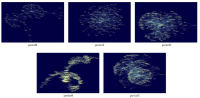

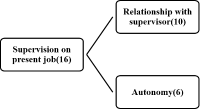
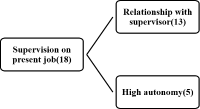
Purpose This study attempted to investigate the difference on job satisfaction and service quality between non-regular and regular workers in commercial sports facilities. Methods With the purpose of the study, the purposive sampling as the non-probability sampling method was used to intentionally select the representative cases. We conducted through utilizing in-depth interviews with 6 non-regular and regular workers, respectively, who have worked for more than a year at total commercial sports facilities holding more than 3 programs with more than 500 memberships. This study aimed to explain real phenomena as much as possible by utilizing NVivo 11, one of qualitative research method programs, on the basis of raw data. Results In conclusion, non-regular and regular employment types in commercial sports facilities did not affect service quality provided for customers. However, it was derived that there was a slight difference between regular and non-regular workers on job satisfaction. Conclusion It is necessary to improve the wage and compensation system for regular workers as well as the labor policy to improve treatment of the wage according to the qualification of non-regular workers in commercial sports facilities. In spite of the instability of non-regular workers, the effort of converting into regular workers would evoke organizational commitment, loyalty, and attachment of non-regular workers, when properly acknowledged.









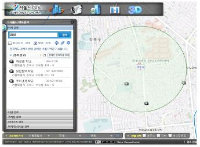
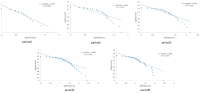
This study measured the accessibility of public exercise facilities within a residental area of a metropolitan community and examined how the accessibility can affect physical activity participation of residents. Initially, a total of 639 residents, who were aged between 19-70, visited Metabolic Syndrome Management Center of the Community Public Health Center, and registered for a Obesity Clinic Program, was listed as potential subjects. And those who responded to Physical Activity Questionnaire were selected for the analyses (n=92, 14.3% of 639). The relationships between physical activity level and accessibility to public exercise facilities were analyzed. Objective distance to public facility was related to ‘volume of participation to vigorous physical activity(r=.209)’, 'total volume of participation to physical activity(r=.206)’. And perceived distance to public facility was related to ‘volume of participation to vigorous-intensity physical activity(r=.235)’. perceived transport time to public facility was related to ‘duration of participation to vigorous-intensity physical activity(r=.239)’, ’volume of participation to vigorous-intensity physical activity(r=.306)’, and ‘volume of participation to total physical activity(r=.273)’. In contrast, the difference between objective distance to public facility and perceived subjective distance to the facility was negatively related to ‘duration of participation to moderate-intensity physical activity(r=-.221)’. The perceived numbers of public facility was positively related to ‘frequency of participation to vigorous-intensity physical activity(r=.237)’, ‘frequency of participation to walking(r=.273)’, ‘volume of participation to walking(r=.251)’ and 'total volume of participation to physical activity(r=.252)’. The predictor of 'total volume of participation to physical activity was perceived numbers of public facility(R2=.153, p=.046). The results revealed that the subjective accessibility to public health facilities was more influential to physical activity participation than the objective accessibility. Further research was warranted while using diverse populations as well as considering a inclusion of environmental factors.

PURPOSE This study aims to help improve performance by comparing and analyzing the kinematic variables for each upper and lower extremities segment when two groups of players attack the national women’s fencing players in a match situation. METHODS This study divided the movement time, movement time ratio, Fente step length change, angle factor at each event, and velocity factor of the fencing point of a sword at each event into the Olympic medalists’ group (Group A) and the international competition winners group (Group B) during the fencing Marche Fente. An independent t-test was performed for each factor, and the results were compared. RESULTS As a result, the difference between the two groups in movement time was statistically significant in the front of the foot in the velocity factor. However, no statistical significance was found between the two groups in the front angle of the trunk, the elbow angle, and the knee angle. CONCLUSIONS This indicates that group A and group B are both outstanding players with the best performance, so they are similar in the details of the movements except for the very slight difference in time and velocity. Therefore, the average of the result values of the joint angle will be a feedback index for fencing beginners or education subjects who are now starting to fencing.
Purpose The purpose of this study was to develop the Emotional Intelligence Scale in Sport Coaching(EISSC) based on the emotional intelligence trait model. Methods The participants were 236 professional sports coaches by the purposive sampling methods via e-mails. 48 preliminary items were developed by literature review among expert panels. Then, a total of 40 items were selected after the item-analysis. Exploratory factor analysis was conducted for construct validity and criterion validity was evaluated by Person’s correlation with coaching efficacy scale and general emotional intelligence scale. An internal consistency, Cronbach's alpha coefficient, was used to see the reliability. Results The results of exploratory factor analysis presented a six sub-structure factors (Self-awareness, Awareness of others, Optimism, Utilization of emotion, Emotion regulation, Social skills) with 20 items, which explained 68.49% of the total variance. Criterion-related validity was supported by correlations with in coaching efficacy(r=.713) and general emotional intelligence(r=.647). Reliabilities were secured with Cronbach’s alpha coefficient .854 for the total 20 items. Conclusions The EISSC can be used to provide an valid measure of emotional ability of coaches in sport.
Purpose The purpose of this study is to review the governance of the 2018 Pyeong Chang Winter Olympic Organizing Committee (POCOG), and to suggest potential governance models for the next mega sport event organizing committee. Methods For this study, In-depth Interview was conducted on 5 subjects who were involved in the process of organizing Pyeong Chang Olympic Games internally and also externally. Throughout the interviews, the subjects were asked to answer questions about the leadership of POCOG management, working relationships among the staff members, and improvement plans for the next mega event. Results The results of the study are as follows: First, POCOG sat up a governmental system and then tried to blend government officials and people from private sector to run the committee; Second, POCOG leadership was not an effective to run an Olympic Organizing Committee; Third, there were not effective working relationships among the staff members in the committee; Lastly, the subjects proposed the future organizing committee to hire more experts, to establish some kind of system that can prevent the turnover, and to go for privatization with the limited involvement from the government. Conclusions Therefore, this study suggests that the future mega sport event organizing committee should implement effective governance in bring more experts, and keeping them from the beginning to the end of the event. Also the organizing committee should consider implementing corporate governance to run the committee with entrepreneurial mindset, and to create cooperative working environment among the committee members.
Purpose Philosophical inquiries into physical education and sport pedagogy(PESP) have not been active until lately. A renewed interested has grown as scholars in UK and European countries have begun philosophical analysis since 2000. This study purports to review the philosophical studies in PESP during the last 50 years, and to forecast the future of SP in Korea based on its strength and weakness. Methods Literature review is adopted as the main method, as the philosophical study requires the conceptual analysis on the ideas. The past research, current main studies and future prospects are analyzed according to the three layers of the professional, the theoretical, and the personal dimensions. Results First, in the professional dimension, the philosophical inquiry by the SP philosophers and the educational inquiry by the sport philosophers are identified. Second, in the theoretical dimension, the exploration on the nature of research in PESP, the suggestions of PE models, the examination of teaching-learning in PE, the promotion of teacher/coach education and professional development, and the analysis of PE curriculum issues and policies are actively produced. Third, in the personal dimension, the practitioner research by PE teacher/professor/coach and the self-study of sport coaches have are begun to be conducted. Conclusions For the prospect of PESP in Korea, it can be said that study in the first dimension would not be bright, where as those of the second and the third would be very good for the near future.
