Purpose The purpose of this study was to develop an effective college life adaptation program for freshman student-athletes. Methods A total of 160 student-athletes and 5 experts agreed to participate in this study. Four procedures were followed in this study: the needs assessment, the preliminary program development, and the application of the program. For the needs assessment, in-depth interviews were conducted, and the data were analyzed using an inductive reasoning process. Results The results of the needs investigation showed seven need factors and four interruption factors for college life adaptation. In addition, three need factors based on experience and seven interruption factors based on experience were found. The preliminary program was developed based on the needs assessment through the expert meeting, and the program consisted of four stages. Each stage consisted of three sessions, and each session contained a specific topic. The program was provided to nine freshman student-athletes in two months. As a result, the final program which consisted of four stages and thirteen sessions was developed after the reinforcement process based on evaluation of the preliminary program was conducted. Conclusions It is concluded that, the program is able to be expected to help them to understand their roles, have a better sense of responsibility and improve their self-esteem. Therefore, coaches and mental performance consultants should provide the college life adaptation program for freshman student-athletes to reduce their stress and have a better college life.
Purpose Student-athletes in Korea are confronted with career development in both academics and sport. This paradigm change in sport policy aims at guarantee of student-athletes' learning rights and successful career transition after sport. But dual career development can be a difficult task for student-athletes, if there is a lack of social support. The purpose of this study was to provide updated information regarding the burnout-in-sport literature and suggest directions for future research in sport psychology. Methods This study is based on reviewing the literature. In order to improve the validity of discussion, the author focused on the findings of the published research articles targeting student-athletes. The outcomes were examined and discussed based on models and measurement tools of athletes’ burnout. Results First, longitudinal study is needed to understand causalities in sport burnout. Second, it is necessary to develop korean sport burnout scale reflecting our social and cultural contexts. To do this, qualitative research should be preceded to provide in-depth understanding on burnout phenomenon of student-athletes. Third, the cut-off values which can allow the separation between clinical and nonclinical athletes should be developed. Fourth, due to dual career development as a new sport environment, burnout research has to pay attention both psychological variables in person and environmental variables. Conclusions Since the 1990s burnout research in sport psychology has been increased in its quantity as one of the remarkable topics in Korea. Based on the comprehensive and systematic review of the literature, directions for future research are suggested.

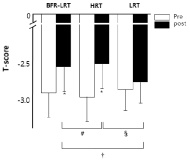
Purpose The purpose of this study was to investigate the effects of low-intensity resistance training with blood flow restriction on serum VEGF, bone markers and bone mineral density in elderly women. Methods The subjects were divided into three groups: low-intensity resistance training with blood flow restriction(BFR-LRT, n=8); high intensity resistance training(HRT, n=8); low- intensity resistance training (LRT, n=5). Both the BFR-LRT and LRT groups worked out knee extension and leg curl exercises at 20% of each estimated one-repetition maximum(1RM) and HRT group worked out knee extension and leg curl exercises at 70% of each estimated 1RM 3 days per week for 12 weeks. Results As a result after 12 weeks, serum VEGF level have increased significantly among BFR-LRT group compared to HRT and LRT groups. Serum Bone ALP level have increased significantly among BFR-LRT and HRT groups compared to LRT group. Calcaneus BMD have increased significantly among BFR-LRT and HRT groups compared to LRT group. Conclusions In conclusion, despite using low-intensity load, BFR-LRT is a efficient training alternative to HRT for improving bone metabolism in older women.
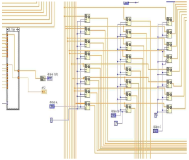
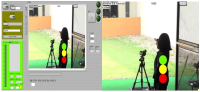
This study was to develop and to apply real-time neurofeedback system for psychological self-regulation of shooters. Neurofeedback system was developed with expert meetings consisting of 8 sport psychology, EEG, and sport engineering experts based on Labview program. Developed neurofeedback system was applied to 4 college shooters for 10 sessions(1 session/week, 30 mins/session). Collected EEG wave data were analyzed by paired sample t-test and independent sample t-test. The results were as follows: Firstly, based on user experience concept neurofeedback system was developed which easily perceived neurofeedback information as traffic lights with minimizing visual search activities. Secondly, after neurofeedback system application right brain activation level of shooters(except one shooter) were increased compared to left brain activation. Based on the results of this study, neurofeedback system can apply various sports and contribute to help athletes’ self-regulation and athletic performance enhancement in sport field.
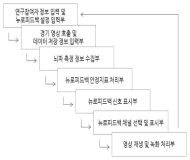

PURPOSE Recently, the need to improve service quality to provide an ideal viewing experience for sport OTT service users has increased. This study aimed to analyze user reviews of the SPOTV Now app, an OTT service specializing in sports in South Korea, to identify major perceptions of viewers and suggest measures for improvement. METHODS Review data (8,512) recorded on the SPOTV Now app were collected from November 21, 2017 to November 30, 2023. LDA-based topic modeling analysis was conducted along with a series of data preprocessing processes. Sentiment analysis was carried out through machine learning logistic regression analysis and odds ratio scores were calculated. RESULTS A total of five topics were derived, including ‘member management service', 'service stability', 'sport streaming service', 'sport video service', and 'subscription service'. Sentiment analysis indicated that 'exclusive', 'server', 'payment', 'log-in', 'authentication', 'pay', 'subscription', 'advertisement', 'play', and 'loading' were the top ten keywords. CONCLUSIONS Sport OTT operators should be more responsive to user requests and feedback, and video playback and server error problems should be improved for service stability. It is necessary to secure diversity as well as exclusivity of content, in addition to minimizing advertising or preparing various rate types, so that app users feel that they receive high value for their money.
PURPOSE This study aimed to examine the difficult realities, unresolved problems, and policy proposals of disability sports in Korea through the disability sports movies <Mal-aton> and <Glove>. METHODS We conducted a textual analysis from the perspective of critical theory. RESULTS The problems of Korean disabled sports revealed in the films <Mal-aton> and <Glove> could be cattegorized into three major issues: 'incorrect prejudice and indifference' of non-disabled people that disabled people will not be able to enjoy sports; 'sports facilities' where non-disabled people are prioritized and disabled people are marginalized, and the 'absence of sports facilities' specialized for disabled people; and the 'lack of leaders' who correctly understand the characteristics of the disabled. These have been pointed out as causes that keep them away from the natural right to enjoy sports. CONCLUSIONS The films <Mal-aton> (2005) and <Glove> (2011) were made based on true stories, and despite the fact that more than 10 years have passed since they were made, it remains a sad reality that the problems of Korean disabled sports shown in the films remain unresolved. Improvement measures in various aspects are required to promote sports for the disabled from the perspective of lifelong and adapted sports, such as media education and publicity that can eliminate misunderstanding and prejudice against people with disabilities, building sports facilities tailored to the disabled, and improving the treatment of sports instructors for the disabled.
PURPOSE This pilot study investigated biomechanical and physiological responses during walking and running on three surface materials: concrete, polyurethane, and cork. METHODS Four healthy young adult males completed barefoot walking at a speed of 1.4 m/s and running at 2.6 m/s on each surface under a randomized repeated-measures design. Tibial shock was quantified using a wireless inertial measurement unit attached to the distal tibia. Oxygen consumption (VO₂) and heart rate (HR) were measured using a portable metabolic analyzer and a heart rate monitor, respectively. RESULTS During walking, tibial shock tended to be lower on the cork surface in most participants. In contrast, no consistent surface-related pattern was observed during running, and substantial interindividual variability was evident. Heart rate remained relatively stable across locomotion conditions, although lower values were generally observed on cork and higher values on concrete surface. Oxygen consumption also exhibited considerable individual variability, with no clear differences detected among the surface conditions. CONCLUSIONS Overall, the findings suggest that cork surfaces may provide biomechanical advantages, attenuating impact forces during walking. However, physiological responses, including heart rate and oxygen consumption, appear to be less sensitive to surface materials. In addition, the results support the feasibility of the experimental protocol and provide a methodological foundation for future large-scale studies examining the effects of surface materials on locomotor performance.
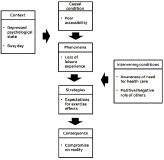
Purpose The purpose of this study is to investigate the alienation and the overcoming process of the physical activity participation of people with Adventitious Visual Impairment(AVI) Methods 21 Adults with AVI were recruited and one on one semi-structured interview was conducted. Ground theory was used to analyze the data. Member check, peer debriefing was conducted to enhance the trustworthiness of this study. Results As a result, a total of 203 concepts were derived. This consisted of 21 subcategories and the common themes of the subcategories were categorized into nine categories. Specific results are as follows. First, the physical activity of people with AVI was directly affected by the sports facilities, physical activity programs, and professional instructor. This causal condition resulted in the loss of leisure experience in the context of the busy daily life and the depressed psychological state. Second, due to the perceived need of health care and the positive involvement of others, people with AVI came to expect the effect of exercise. Third, people with AVI participated in physical activity again as a tool to achieve the purpose of health improvement. This type of physical activity has a limitation that it can not guarantee the continuity of physical activity due to the limitation that it does not contain autonomy and interest of people with AVI. Conclusions Based on these results, the following suggestions were made. First, it is necessary to improve the environment for ensuring participation in physical activity of people with AVI. Moreover education and promotion of the effects and values of the exercise should be carried out for people with AVI and their guardians. Second, it is necessary to diversify physical activity types and reconstruct existing exercise programs.
The purpose of this study was to investigate the effects of 8 weeks of aerobic training and resveratrol supplementation on a body composition, physical fitness, insulin resistance, liver function, blood pressure, and heart rate. Fifty-one elderly women were randomly assigned to aerobic training group (EX: n=12), resveratrol supplementation group (R: n=13), combined aerobic training and resveratrol supplementation group (EX+R: n=12), and control group (CON: n=14). The subjects in EX group exercised three sessions per week, 40 minutes per session for 8 weeks, the subjects in R group took 500 mg of resveratrol per day for 8 weeks, and the subjects in EX+R group received both treatments. The subjects in CON group were asked to maintain normal daily life pattern without any treatment for the same period of intervention. Body composition, physical fitness, insulin resistance, liver function, blood pressure, and heart rate were measured at pre- and post-test and the data were compared among groups and between tests by utilizing two-way ANOVA with repeated measures. Main results of the present study were as follows: 1) Physique and body composition did not change significantly in all groups. 2) Muscular endurance increased significantly in EX+R group, whereas the other physical fitness-related variables showed no significant changes in all groups. 3) Fasting glucose, fasting insulin, HOMA-IR, and HbA1c tended to be improved in EX+R group. 4) AST, ALT, and γ·GT showed no significant changes in all groups. 5) Systolic blood pressure and diastolic blood pressure increased significantly in CON group. Heart rate tended to be decreased in EX+R group and EX group. It was concluded that the 8 weeks of aerobic training and resveratrol supplementation had positive effects on muscular endurance, insulin resistance, and blood pressure in T2DM elderly women. Research investigating the effects of a longer period of aerobic training and resveratrol supplementation on the same variables would be warranted in the future.
PURPOSE This study seeks to contribute to the enhancement of the performance of domestic wheelchair racers by producing 3D-printed customized gloves and verifying their application effect. METHODS A total of three male wheelchair racers who belong to the T54 and have won gold medals in the National Para Games within the last three years were selected as subjects. Each subject performed three session s of muscle activity and maximum speed measurements before and after applying a 3D-printed glove during the stroke and recovery phases of wheelchair racing, focusing on the pectoralis major (PM), triceps brachii (TB), and erector spinae (ES) muscles. To standardize the muscle activity measurement data, the relative muscle activity level (%) for each section was calculated by maximum voluntary isometric contraction (MVIC) for each subject. All maximum speeds of each round of driving were calculated by the average record for comparative analysis. In addition, to verify the effectiveness of applying the 3D-printed glove, the Wilcoxon signed rank test, which is a non-parametric test method, was performed on all measured values using SPSS 24.0. RESULTS This study derived the following results. First, a statistically significant difference was observed in the muscle activity of each major muscle before and after using the 3D-printed glove. In common, an increase in muscle activity of the PM, TB, and ES was confirmed in the stroke section, and an increase in muscle activity of the TB was confirmed in the recovery section. Second, a statistically significant difference was documented in the maximum speed before and after using the 3D-printed glove. When using 3D-printed gloves, the maximum speed increased by 4.57, 3.63, and 1.06km/h for Payer A, and by 5.9, 6.04, and 7.86km/ h for Player B. In the case of Player C, the speed increased by 6.73, 2.27, and 0.83km/h, and all three players improved their maximum speed through the 3D-printed gloves. CONCLUSIONS Our study suggests that the application of 3D-printed customized gloves can have a positive impact on the performance of wheelchair racers. If the application of 3D-printed customized equipment is extended to athletes in a wider range of sports in the future, this could significantly contribute to the improvement of performance in domestic disability sport.
