It has been known that β-alanine supplementation induce the increment of carnosine in vivo and was effective in delaying fatigue by buffering the hydrogen which was formed during exercise. This study was designed to investigate the effects of 4 weeks of β-alanine supplementation on physical fitness and blood lactate concentration in middle school soccer players. Nineteen middle school soccer players were randomly assigned to either one of two groups, i.e., β-alanine group (n=10) and placebo group (n=9). Subjects in β-alanine group consumed β-alanine 2 g/day during 1st and 2nd week, as well as 3 g/day during 3rd and 4th week, whereas subjects in placebo group consumed maltodextrin in the same manner. All subjects ate same menu and trained same amount at the same training camp during the intervention period. Body composition, aerobic capacity, anaerobic capacity, isokinetic function, and blood lactate concentration during maximal GXT were measured at pre- and post-test. Main results of the present test were as follows: 1) Fat mass and percent body fat decreased significantly in β-alanine group. 2) No significant changes were found in variables related to aerobic capacity in both groups. 3) Average power increased significantly in β-alanine group. 4) Isokinetic muscular endurance increased significantly in β-alanine group. 5) Blood lactate concentration did not change in eithet group; however, blood lactate concentration immediately after maximal GXT in β-alanine group tended to be increased more than placebo group. It was concluded that β-alanine supplementation would have positive effects for improvement of body composition, anaerobic capacity, and muscular endurance in middle school soccer players.
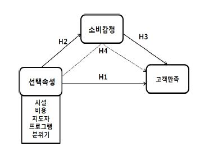
The purpose of the study was to provide managers and owners of fitness center with new marketing strategies for distinction strategies of quite competitive Korean fitness industry with analysis of mediating effects of consumption emotion within the relationship of fitness selection attribute and customer satisfaction. This paper chose fitness center customers as population of this study who registered in each 5 fitness centers in Seoul and Gyeonggi using convenience sampling. For this study, 400 questionnaires were given fitness center customer. For the analysis of data, 376 questionnaires were used using SPSS 15.0 Windows and Amos 7.0. To examine respondents demographics traits, frequency analysis was processed and reliability analysis, confirmatory factor analysis and correlation analysis for relationship among the variables were conducted. For the verification of model suitability and research hypotheses, the mediating effects were tested by using Bootrapping method and Aroian-test through structure equation modeling. The significance level was set at α=.05, and the results are as follows. First, Among fitness selection attribute variables, structural strategy, cost, a trainer and program had significant influence on customer satisfaction, but, atmosphere and facilities had not significant on customer satisfaction. Second, Among fitness selection attribute variables, structural strategy, cost, a trainer and atmosphere had significant influence on consumption emotion, but, facilities and program had not significant on consumption emotion. Third, consumption emotion had significant influence on customer satisfaction. Fourth, consumption emotion fully mediated in the relationship between fitness selection attribute and customer satisfaction.

The purpose of the study was to determine relationship of abdominal fat, adipocytokine, bone mineral density, and bone turnover markers in obese male adolescents. Twenty four male adolescents (obese: 12, normal: 12) volunteered to participate in the study. Anthropometry and skeletal maturity were measured. Body composition and bone mineral density were estimated by DXA (Hologic, QDR-4500, USA). Abdominal fat with total adipose tissue (TAT), visceral adipose tissue (VAT), subcutaneous adipose tissue (SAT), and visceral adipose tissue to subcutaneous adipose tissue ratio (VSR) were estimated by computed tomography (ECLOS, HITACH, Japan). Blood samples were obtained for and analysis of adipocytokines including leptin and adiponectin. Bone turnover markers, osteocalcin (OC), bone-specific alkaline phosphatase (BALP) for bone formation markers and N-terminal telopeptide (NTx), C-terminal telopeptide (CTx) for bone resorption markers were analysed. All data were analyzed utilizing SAS 9.3 (SAS Institute, NC, USA). Independent t-test was used to evaluate the differences between obese adolescents and normal adolescents. Pearson correlation analysis was applied to figure out the relationship between abdominal fat, adipocytokines, bone mineral density, and bone turnover markers. Multiple regression analysis was used to find out the factors of abdominal fat which influence on bone mineral density. A level of significance was set at p<.05. The results of the study indicated that fat tissue (p<.001), percent body fat (p<0.001), TAT (p<.001), VAT (p<.001), and SAT (p<0.001) were significantly higher in obese adolescents than normal adolescents. However bone mineral contents were significantly higher in normal adolescents. Normal adolescents have significantly higher whole body BMD and lumber BMD than obese adolescents. Abdominal fat including VAT and SAT related negatively with whole body BMD and lumbar BMD. Leptin related negatively with BMD whereas adiponectin related positively with BMD. NTx for bone resorption marker related positively with abdominal fat. Visceral adipose tissue was a predictor for whole body BMD and lumbar BMD in explaining 46% and 32% in adolescents. In conclusion, obese male adolescents have lower whole body BMD and lumbar BMD than normal adolescents. Abdominal fat including VAT and SAT related negatively with whole body BMD and Lumbar BMD. And leptin and adiponectin were closely related with BMD. Finally, visceral adipose tissue was a predictor for whole body and lumbar BMD in adolescents.

The purpose of this study was to investigate the effect of running economy and energy return in lower extremities according to the increase of bending stiffness of the shoes, furthermore to investigate the relationship between running economy and energy return for the improvement of sports performance. Subjects employed for this study were 10 healthy male college students who have not had the experiences in lower extremities injuries. Four different kinds of shoes in bending stiffness as with 0.56 N/mm, 0.74 N/mm, 0.96 N/mm, 1.21N/mm were used respectively. 3-D cinematography and pulmonary gas analyzer were utilized for energy return and energy consumption data during running according to the increase of bending stiffness of the shoes to obtain the following results. As the bending stiffness of running shoes increased, the statistical significance were not founded, however, the tendency of decrease in max. flexion moment and power, increase in max. extension moment and power in lower extremity joint were showed. Joints energy showed no statistical significance in phase 1, however, the tendency of lesser absorbtion as the bending stiffness of running shoes increased were showed. More energy were generated as the bending stiffness of running shoes increased in phase 2 with no statistical significance. Energy economy increased according to the increase of bending stiffness of running shoes. Negative correlation were showed between flexion moment of hip joint and energy consumption(p<0.05). Slightly higher degree of correlation between max. flexion power of hip and ankle joint and energy consumption were showed without statistical significance. Negative correlation were showed between joints energy and energy consumption for ankle joint in phase 1(p<0.05).
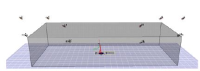

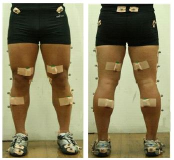
The purpose of this research is to investigate the factors affecting the performance capability of lunge movements by performing lunge movements which are commonly used as a method of instant physical movement in sports with a kinetic analysis including an EMG analysis. This research targeted 14 skilled fencers and made the subjects perform kick-lunges which allow them to go farthest from their positions and performed an analysis on such, applying a 3D motion analysis system and an EMG system. The subjects performed kick-lunges in two movements; one with a preliminary movement and the other without it and those are performed with both dominant leg and non-dominant leg. The result of this research is as follows. The lunges with a preliminary movement showed higher performance capability than those without it. Furthermore, as the level of skills gets higher, the length of lunges gets longer, and it seemed that a tactical mechanism shortening exercise performance times was used as a mechanism to control the impulse coming from such lengthened lunges. In addition, a difference appeared in mechanical factors such as moment and power in a dominant leg movement and it seemed to result from a difference in an functional capability using muscles.



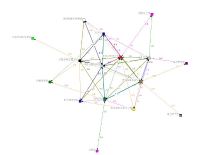
The purpose of this study was to investigate structural characteristics and participants` roles & functions of sport policy network in Korea, by social network analysis on structural characteristics of sport policy network and AHP analysis on participants` roles and functions. For that, 21 executive officers from 19 organizations and agencies related to sports policy were selected as study subjects, and, the materials collected from whole twice surveys on them were analysed by Ucinet 6 and Expert Choice 2000 program. As the results, the governmental organizations like the Blue House and Ministry of CultureㆍSports and Tourism composed the central position group of sport policy network of Korea, and took the main functions of planing and arrangement within their main roles of policy agenda formation and policy decision, so, sport policy network of Korea could be called centralized network by government. And, in cases of private agencies, Korea Sports Council composed the central position group only in policy network of professional sport, Korea Council of Sport for All of sport for all, and Korea Sports Association for the Disabled of disability sport, and, each of them took the main roles and functions of policy execution in their fields, so, it was obvious that the private agencies were divided into their own sport policy areas.
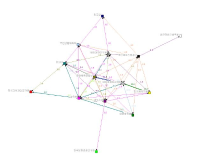
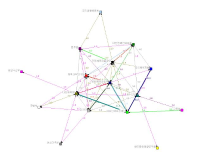
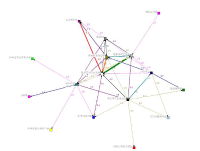
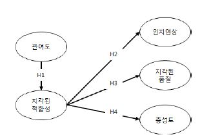
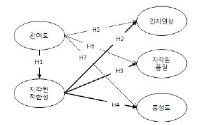
Although mega sporting events are becoming an effective means of brand communication, there has not been systematic research on involvement development and perceived fit enhancement through the sporting events. This study developed and tested a conceptual model delineating the impact of consumer involvement on perceive fit, and brand equity in mega sporting event context. Using quota sampling method, 1,847 participants (916 from IAAF; 931 from the F1) were recruited from several different cities in Korea during the mega-sporting events. Structural equation modeling were employed to examine the relationship between research constructs and test the model respectively. The study found that mega event involvement has a positive effect on perceived fit; and perceived fit influences brand equity(brand awareness, perceived quality and loyalty) toward event sponsor brands. The direct effects of involvement on sponsorship effectiveness (brand awareness, perceived quality and loyalty) did not have a significant effect on brand equity. The findings also reveal the mediating effect of perceived fit on brand equity.
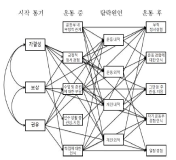
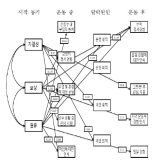
The purpose of this study is to explore the drop-out process of student-athletes and propose valuable policy ideas related to interscholastic sports. For this purpose, we surveyed 560 middle and high school drop-out student athlete's in 13 areas and finally 400 completed surveys were used for the study. To set the scales used for the study and test the reliability and validity of the scales, factor-analyses, Cronbach's alpha, and interfactor correlations were conducted using SPSS. For the main test, the paths analyses were carried out with AMOS program. As a result, we found two paths which had major effects on the drop-out process of student-athletes, self-efficacy path at the point of starting athletic career and negative relation path during athletic experiences. Based on these results, the following policy ideas were proposed. First, student-athletes should be able to join and leave athletic teams voluntarily. Second, the comfortable environments were provided to promote student-athletes' positive emotion toward athletic teams.



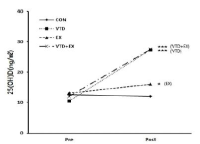
The objective of this study was to investigate the effects of 12-weeks of vitamin D supplementation and circuit training on skeletal muscle mass in elderly women with type 2 diabetes mellitus and vitamin D deficiency. Forty eight elderly women with type-2 diabetes mellitus and vitamin D deficiency were randomly assigned to control(n=10), vitamin D supplement(n=11), exercise(n=12), and vitamin D supplement+exercise(n=15) groups. Dependent variables were measured before and after the 12-week interventions. Major outcomes included body composition, fasting glucose, insulin, and 25(OH)D concentration. ASM(apeendicular skeletal muscle mass), SMI(skeletal muscle mass), and HOMA-IR (homeostasis model for insulin resistance) were calculated. Women assigned to the vitamin D supplement consumed 1,200 IU of vitamin D orally per week for 12 weeks. Women assigned to the exercise intervention performed a circuit training at an intensity of 60%~80% of HRmax with a frequency of 3 days per week for 12 weeks. Compared to control group, all groups had significant loss of body weight and increases in serum 25(OH)D after the 12-week intervention. ASM and SMI increased significantly in only vitamin D+exercise group. Regardless of treatments, no significant group differences were found in changed scores of fasting glucose, insulin, and HOMA-IR. In conclusion, vitamin D + exercise would improve the loss of ASM and SMI compared with vitamin D or exercise alone.
Many teams in the first division soccer league in Korea are suffering from financial insolvency which has resulted from lack of fan support. Despite the mentioned fact, many teams are still distributing free tickets which results lessoned ticket sales revenue. In order to address the fundamental issue of financial insolvency, it is important to seduce more paid fans to come to stadiums along with increased number of fans. The current study, therefore, examined the perceived value of K-league match ticket prices compared with other competitors such as baseball, basketball, and movie theaters. Data were collected from Gyeongnam F.C.'s home game and out of 164 data collected, 127 were utilized for further analysis. A conjoint analysis was conducted using regression analysis (Luce, 1959) to compare fans' perceived value of ticket prices among different entertainment options. The results displayed that K-league teams should consider increasing ticket prices as it is currently under-priced and, as a result, higher ticket price will drive increase in revenue.
