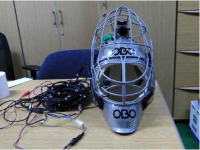
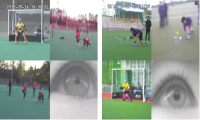
The purpose of this study is to establish the efficient defensive strategy from analyzing the goalkeeper’s gaze behavior and defensive motion in both field hokey penalty corner and penalty stroke. To achieve this goal, 3 national team goalkeepers’ gaze behavior and defensive motions were analyzed, as well as the player’s visual strategies from their interview contents. For the apparatus, multi-channel integrational system were used for analyzing goalkeeper’s reaction movement and personal visual strategies. The result is as follow: First of all, In the penalty stroke, goalkeepers were tended to focus on the bottom of the shooter’s hokey stick. Second, national hokey players had quicker anticipating saccadic movement. For this reason, their visual fixation locations were arrived in targets earlier than the hockey ball. Lastly, in the interview contents, they were reported to focus just on the ball from not disturbed by other various objects(body, hockey stick). However, they actually observed various body parts of shooters. These results imply that we need to develop an effective perceptual skill training in order to anticipate the shooting performance more accurately and rapidly. These types of perceptual and cognitive skill training should be conducted with information on knowing their specific visual cues in anticipating shooting direction.
The purpose of this study was to conduct an in-depth exploration of Korean national badminton players’ psychological momentum strategies. Data were collected using an open-ended questionnaire and group interviews of 66 badminton players, including 40 members of the 2018 Korean national badminton team and 22 college and semi-pro badminton players who each had badminton careers of 10 or more years and were registered in the Badminton Korea Association. The data were analyzed using inductive content analysis and the deductive process based on the inductively categorized results. The results are as follows. First, regarding strategies for maintaining positive momentum, 188 raw data were collected and classified into three category (keeping pace, dominating the play, and psychological facilitation) and 10 sub-category (including speedy resumption of the game, attacking weak points, and fighting shout). The results suggest that badminton players maintain positive momentum by using strategies to control the speed and tempo of the game at their preferred pace, implement special techniques, exploit their opponent’s weaknesses, and cheer or talk amongst themselves to motivate each other and communicate with their partners and coaches. Second, regarding strategies for overcoming negative momentum, 293 raw data points were collected and classified into three category (time outs, psychological reminders, and changes in plays) and 11 sub-category (including delaying the game, seeking social support, and play change). The data demonstrate that badminton players overcome negative momentum using strategies to intentionally delay the game and exchange equipment, focus on performance cues, and interact with their coaches and partners to change plays and prevent errors. It is hoped that these study findings will inform efforts to provide psychological support that is effective in increasing the odds of winning for the national badminton players in the Asian Games and the Olympic.
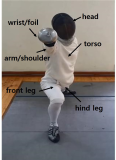
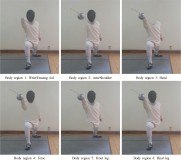
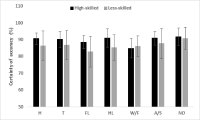
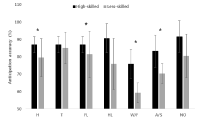
Purpose The purpose of this study was to establish the differences of anticipating accuracy and confidence according to fencing expertise and spatial occlusion region. Methods For the purpose of this study, the anticipation ability of 6 high-level fencing players and 6 low-level fencing players were analyzed. All subjects performed the 60 tasks of anticipating the attack positions(thorax, thigh, toe) from observing the fencing video screen using spatial occlusion technique. The spatial occlusion technique was used in 6 particular body of opponent’s movement. For statistic analysis, data was analyzed through independent T-test measure. Moreover, Paired t-test were used as follow-up analysis. Results The results of the study were as follows: In terms of accuracy anticipation, the main effect of expertise was significantly different. Specifically, when the spatial occlusion technique was applied in head, left leg, arm, and a foil, the accuracy of anticipation was significantly different. Moreover, comparing with no-occlusion condition, anticipation accuracy decreased when spatial occlusion technique was applied in arm and foil. In terms of confidence, there was no significant difference between level of expertise. Conclusions In order to effectively anticipate the opponent’s movement in fencing sports, it is necessary to focus on the visual cues of arm/shoulder, and the foil. Especially, focusing on the foil movement might provide the core informations on anticipation ability.


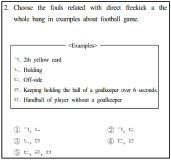
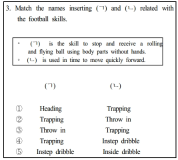
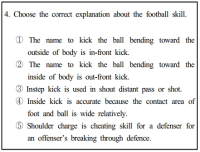
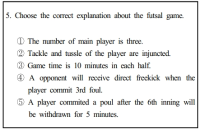
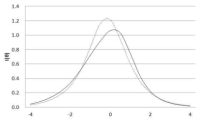
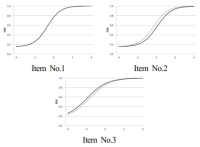
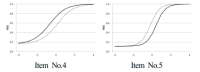
The purpose of this study was to analyze and confirm whether the items used in final paper and pencil test was determined to DIF when school sports clubs in each school operated by discriminatory curriculum in accordance with gender. Participants were 8th middle school students(male=135, female=141). They joined in school sports club every week from freshman to sophomore 1st semester. At that time, boys of them participated in soccer and basketball, and girls played dodge ball. They studied soccer unit at sophomore 1st semester, and had a final examination consisting of 5 soccer items. Using the data, differentially functioning item by the population difference between male and female were analysed quantitatively and qualitatively. The results showed that Mantel-Haenszel method(using classical test theory), comparison of item characteristic curve and likelihood ratio test(using IRT) determined item number 4 and 5 to differentially functioning item. Finally, item number 4 were identified differentially functioning item in favor of male students in intensive qualitative analyses. That item have low content validity and application-level of cognitive behavior classification. The result provides that application-level item can be functioning differentially to female students with little sports experience than male students in paper and pencil test of PE.
PURPOSE This study aims to examine how widespread disclosures of sports violence in South Korea (2018–2021) were culturally internalized by current universitylevel elite athletes who were adolescents at the time. Drawing on Richard Dawkins’ concept of memes, this study examines the cultural transmission and internalization of sports violence as a meme and explores how such violent memes may have ttransformed into ethical ones. METHODS This study employed Giorgi’s descriptive phenomenological method and conducted semi-structured interviews with ten collegiate elite athletes recruited through snowball sampling. Data were analyzed through a four-step process to identify the cultural perception structures underlying sports violence. RESULTS Participants initially normalized violence as part of athletic training but later critically reinterpreted it in response to shifting public discourse and ethics education. They identified performance-driven ideologies and hierarchical structures as key cultural factors that legitimize violence. Consequently, many participants rejected such norms and repositioned themselves as ethical agents. Ethical memes were found to propagate primarily through the practices of coaches and senior athletes rather than through formal institutional systems. Some participants demonstrated posttraumatic growth by committing not to reproduce violent behaviors. CONCLUSIONS Sports violence persists through cultural repetition and imitation but is increasingly challenged by emerging ethical memes. This shift necessitates perceptual change and structural transformation within sports organizations, highlighting the importance of promoting ethical practices through education, leadership, and policy interventions.
PURPOSE This study aimed to examine contemporary sports reality and its problems through the feature-length independent film <Not Out>, which focused on baseball, a popular sport, and highlighted its rather dark side. METHODS The researcher performed a textual analysis using the perspective of critical theory. RESULTS Gwang-ho was the hero of a walk-off hit in the national baseball competition final, who suffered from three career strikes during his third year of high school and thought that he had bright future ahead of him. Before the amateur draft, Gwang-ho boldly rejected the proposal of a trainee contract from a professional team (strike 1), then he was subsequently not selected in the amateur draft (strike 2), before he applied for the college entrance examination for baseball specialties, and was eventually rejected. (strike 3) In the end, he was able to enter college through a bribe given by his father (not-out situation). CONCLUSIONS <Not Out> is a film based on a true story, and it showcased the realities of elite sports by revealing the dynamics of society and school, where the main character responded with reluctance and indifference. This movie highlighted the realities of delinquency, violence, abusive language, bribe, and violations of the right to learn and how these have continued to evade the law despite being thought to be gone.
PURPOSE Neuromarketing measures and analyzes the unconscious response of consumer brain waves to marketing stimuli in real time. This study examined how a sensational scene (accident) in a sport game influences the sponsorship effects through electroencephalography (EEG) analysis. METHODS The current study uses an experimental method. First, as an experimental stimulus, a video of F1 racing edited in a total of 9 min and 39 s was used, and an accident scene was inserted in the middle of the video. A total of 46 people participated in the experiment, and all participants watched the F1 video, including the accident scene. Participants' brain waves were observed in two prefrontal and two occipital lobes. The relationship between scene sensation and sponsorship effect was analyzed based on alpha waves and the sponsor brand recall measured by questionnaires. RESULTS First, the accident scene of the race caused the power of alpha wave to be abruptly reduced (i.e., alpha blocking). Second, the difference between the alpha power level of the group that recalled the sponsor brand and that of the group that did not recall was statistically insignificant; hence, the hypothesis was rejected. Third, the right-brain dominance (negative emotion) in the accident scene of the race was statistically insignificant; therefore, the hypothesis was rejected. Finally, the group that recalled the sponsor brand showed a left-brain dominance (positive emotion), which was statistically significant. CONCLUSIONS This study confirmed the marketing communication and neuromarketing theories on the sponsorship effects created by stimulation, attention, and memory in a sport sponsorship setting, observing alpha blocking phenomena in a sensational scene (accidents). In addition, it was revealed that the group that watched the same accident scene relatively positively and exited remembered the sponsor brand better than the group that did not watch it. The result implied that sport fan’s personal trait (e.g., sensation seeking) to sensation in sponsorship activities affects the sponsorship effect. The results also emphasized the importance of selecting target customers of sports fans in sponsorship to maximize sponsorship effects.
PURPOSE This study aimed to develop the theory of child abuse of children with disabilities in Adapted Physical Education (APE). METHODS A grounded theory study was conducted based on a constructivist approach. Data were collected via in-depth interviews. Participants were 20 instructors selected based on theoretical sampling. The collected data were analyzed in the order of open coding, axial coding, and selective coding. RESULTS First, the direct causal conditions of abuse of children with disabilities in APE were the instructors’ and guardians’ distorted perception towards the disabled children along with the individual vulnerability of children with developmental disabilities. Second, the contextual conditions that form the background of the abuse of children with disabilities in APE included the burden of the instructor due to the unjust demands of the guardian of the child, the growth background of the instructor, and the repressive atmosphere of APE. Third, abuse of children with disabilities can be divided into three types: ‘active abuse’ based on the instructor’s distorted viewpoint of the child with a developmental disability, ‘passive abuse’ due to the unjust demands of the guardian, and ‘passive abuse’ due to the structural problems in the APE field. Fourth, the abuse of children with disabilities in APE, which can be distinguished by different characteristics, affects the instructor’s inner conflict and self-reflection. CONCLUSIONS This study approached the phenomenon of abuse of children with disabilities in Korean adapted physical education as a grounded theory, and the theory generated is expected to contribute to the establishment of strategies necessary to design adapted physical education in keeping with human rights.
Purpose The purpose of this study was to evaluate the moderate to vigorous physical activity(MVPA) and sedentary time measured by accelerometer. Furthermore, the level of physical activity and adherence rate of physical activity guideline(PAG) were compared with the self-reported questionnaire. Methods The MVPA, sedentary time, and adherence rate of PAG according to age and sex were examined to people who agreed to wear accelerometers among the participants of the 2014-2015 Korea National Health and Nutrition Examination Survey. To compare the relationship between accelerometer and self-reported questionnaire, Chi-squared test and Spearman correlation analysis were performed. Results The MVPA of the accelerometer-total(AT) was 40.6 minutes/day for men and 31.1 minutes/day for women. Sedentary time was 502.9 minutes/day for men and 498.9 minutes/day for women. The MVPA of accelerometer-bout(AB) estimates was 16.4 minutes/day for men and 14.2 minutes for women. On the other hand, the MVPA of the self-report was 95.8 minutes for men and 64.3 minutes for women, and the sedentary time was 471.2 minutes for men and 455.2 minutes for women. The adherence rate of PAG was 55.6% of the self-report, 56.1% of the AT, and 21.4% of the AB. The correlation between self-report and accelerometer was statistically significant(p < 0.01), but showed a weak correlation coefficient(rho=0.112-0.351). There was no association between AB and self-report(p < 0.01). The sensitivity and specificity of the self-report were 71.3% and 48.6%, respectively. The positive and negative predictive values of the self-report were 27.5% and 86.1%, respectively. Conclusions As a result of this study, self-reported physical activity level by questionnaire had more MVPA and less sedentary time than the accelerometer-determined physical activity. In addition, the adherence rate of the PAG differed from accelerometer and self-report. The difference was significantly increased when comparing AB with the self-report. Therefore, great care must be taken when interpreting accelerometer and self-report questionnaire. Further research will be needed on specific methods that can be used by complementing the two measurement tools.
