The purpose of this study was to conduct an in-depth exploration of Korean national badminton players’ psychological momentum strategies. Data were collected using an open-ended questionnaire and group interviews of 66 badminton players, including 40 members of the 2018 Korean national badminton team and 22 college and semi-pro badminton players who each had badminton careers of 10 or more years and were registered in the Badminton Korea Association. The data were analyzed using inductive content analysis and the deductive process based on the inductively categorized results. The results are as follows. First, regarding strategies for maintaining positive momentum, 188 raw data were collected and classified into three category (keeping pace, dominating the play, and psychological facilitation) and 10 sub-category (including speedy resumption of the game, attacking weak points, and fighting shout). The results suggest that badminton players maintain positive momentum by using strategies to control the speed and tempo of the game at their preferred pace, implement special techniques, exploit their opponent’s weaknesses, and cheer or talk amongst themselves to motivate each other and communicate with their partners and coaches. Second, regarding strategies for overcoming negative momentum, 293 raw data points were collected and classified into three category (time outs, psychological reminders, and changes in plays) and 11 sub-category (including delaying the game, seeking social support, and play change). The data demonstrate that badminton players overcome negative momentum using strategies to intentionally delay the game and exchange equipment, focus on performance cues, and interact with their coaches and partners to change plays and prevent errors. It is hoped that these study findings will inform efforts to provide psychological support that is effective in increasing the odds of winning for the national badminton players in the Asian Games and the Olympic.
Purpose The purpose of this study was to analyze the relationship among emotional leadership, coach trust and athletic satisfaction of university. Methods 288 university soccer players were surveyed on the emotional leadership questionnaire, coach trust questionnaire and athletic satisfaction questionnaire through convenience sampling method. SPSS 23.0 and AMOS 23.0 were used to achieve the purpose of this study. Frequency analysis, confirmation factor analysis, reliability verification, correlation analysis and the structural equation model analysis were performed. Results First, emotional leadership had a positive effect on coach trust of university soccer players. Second, emotional leadership had a positive effect on athletic satisfaction of university soccer players. Third, coach trust had a positive effect on athletic satisfaction of university soccer players. Finally, coach trust mediated the relationship between emotional leadership and athletic satisfaction. Conclusions Emotional leadership was a leadership that can efficiently increase coach trust, and leaders must communicate with players through emotional effort and team operations with goals of athletic satisfaction and happiness rather than wins and losses were required.
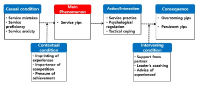
Purpose This study aims to investigate the experience of service yips in badminton players in depth through using grounded theory method. Methods We collected data from in-depth interviews with 14 participants in total, consisting of badminton players who experienced service yips, their doubles partners and coaches. The collected raw data were analyzed base on derive transcription, coding and paradigm models through grounded theory method. Results First, as a result, 59 concepts, 31 subcategories and 15 categories in regard to badminton service yips were deduced from open coding. Second, in axial coding, it was structured in a paradigm model by categories such as service yips, service mistakes, service proficiency, service anxiety, the imprinting experiences, the importance competition, the pressure of achievement, service practice, psychological control, tactical handling, support from partners, leaders’ coaching, advice from experienced ones, overcoming yips and persistent yips. Third, selective coding resulted in ‘Badminton service yips’ as the core category of this study. ‘Badminton service yips’ is a chronic performance impairment associated with badminton players making severe errors in swing motion on a service not intended by them that it is due to physiological or psychological symptoms such as hand tremors, overall body stiffness, arms stiffness, overstress, overanxiety, and concern over service mistakes. Conclusions We expect our study can be a theoretical foundation for understanding and explanation of ‘Badminton service yips’ and a useful reference for badminton players suffering from psychological difficulties caused by their service yips. The findings in this study should be considered for the development of potential strategies for overcoming the badminton service yips.
PURPOSE This study aims to examine the mediating effect of viewing flow on the relationship between perceived authenticity among [Kick A Goal] female viewers’ and football participation intention. METHODS A total of 414 questionnaires were distributed to [Kick A Goal] female viewers, aged from 20s to 60s, who had no experience in football. Among the collected questionnaires, the data used for the final analysis was 338 after data cleaning. The data analysis was conducted using SPSS 25.0, and it included frequency analysis, descriptive statistics analysis, correlation analysis, simple regression analysis, and a three-step mediation analysis proposed by Baron & Kenny(1986). RESULTS This study’s results were as follows: First, the perceived authenticity of female viewers positively affected viewing flow. Second, the viewing flow of female viewers positively affected their football participation intention. Third, viewing flow fully mediated the relationship between perceived authenticity and football participation intention. CONCLUSIONS In summary, this study suggests that it is significant to produce programs with authenticity and maximize viewing flow to further enhance the intention of female viewers to participate in football.
PURPOSE This study aimed to extract football coaches’ categories of performance evaluation factors (PEF) and examine the reflective characteristics of the football coaches’ player and casting judgments. METHODS PEF were extracted through an open-ended questionnaire and categorization from 80 AFC C or higher football coaches. Reflection was calculated in player and casting judgments through an analytic hierarchy process. The difference between the football coaches’ player and casting judgments was examined using SPSS 21.0. RESULTS First, the PEF of football coaches were categorized into four general categories: physical intelligence, psychological intelligence, growth potential, and competition intelligence. Second, the importance of football coaches’ player judgments were reflected by the PEF as football intelligence, situation judgment, football talent, tactical understanding, tactical operation, etc. The importance of the casting judgment were reflected by the PEF as tactical understanding, mediative skills, fitness, tactical operation, situation judgment, etc. Third, a statistically significant difference was noted between player and casting judgments. Football coaches tended to value growth potential and talent as sub-factors in the player evaluations. Football coaches’ PEF were aligned with the importance of player and casting judgments in psychological and competition intelligence as sub-factors such as skills, physical, attitude, passion, etc., but differed from physical intelligence and growth potential as sub-factors including mediative skills, physical, football talent, and tactical understanding. CONCLUSIONS In the football coaches’ player evaluations, the idealistic principle centered on growth potential. However, in the casting evaluation, the realistic principle centered on victory takes effect.
PURPOSE This study aimed to subdivide the market based on the general characteristics and consumer psychology of sports brand collaboration consumers and provide basic data for efficient collaboration marketing activities of sports companies. METHODS The subjects of this study were high school, college, and graduate students from high schools and universities in the Seoul and Gyeonggi area. Of the 600 copies of the questionnaire distributed, 475 were selected and analyzed in the final sample. Regarding the statistical method for this study, the PASW 18.0 statistical program was used for the frequency, exploratory factor, reliability, hierarchical cluster, K-means clustering, and cross analyses, as well as the one-way ANOVA. RESULTS The results of the analysis suggested five subdivided clusters with according marketing strategies: “external male,” “practical male,” “twenties design preferred female,” “low-interest women,” and “high consumption optional attributes” groups.
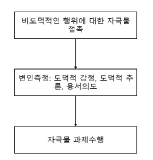
Purpose Drawing on Socioemotional Selectivity Theory, the present research aims to investigate how sport consumers’ moral reasoning strategies and forgiveness intent toward a sport organization’s misconduct depending on the consumers’ different time perspectives(expansive vs. limited). Methods An experimental study (total n = 129; Baby Boomer generation = 62, generation MZ = 67) was conducted by utilizing a fictitious scenario depicting a sport organization’s misconduct. The proposed hypotheses were tested by conducting T-test, correction analysis, and multiple regression analysis using SPSS 21.0. Results There were significant differences in moral reasoning and forgiveness based on different time perspective. Baby Boomer(MZ) group showed higher(lower) levels of moral rationalization, moral decoupling, and intent of forgiveness compared to MZ(Baby Bommer) group, while showing lower(higher) level of moral coupling. A result also revealed that negative moral emotions had moderating effect between a limited time perspective and moral coupling among MZ participants. Conclusion The results of this study indicated that sport consumers’ time perspective has a predictive function on moral reasoning strategies. Thus, it is necessary for sport organizations to establish strategies focusing on the consumers’ time perspective to effectively respond to an unexpected crisis.
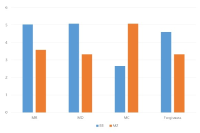
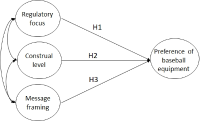
Purpose The purpose of this study was to analyze the propensity to consume the consumer of the baseball equipments who have difference of the product preference by regulatory focus, and who have construal level and suitable message framing. Methods Populations are consumers who have purchased the baseball equipments before, and the sampling groups, five different society baseball group’ league from Seoul and Kyeongi-do, were distributed, 318 copies, by convenience sampling. The questionnaire proceeded by three-way completely randomized design with stimulated sentences of four different advertisement compartmentalized by the regulatory focus, construal level and message framing. The analysis utilized SPSS 21.0 to perform the frequency analysis, manipulation check, independent t-test, two-way ANOVA, and Scheffe was used to post-hoc. Therefore, the result of this study is as below. Results First, after analyzing the distinction of the regulatory focus of the consumers of baseball equipments, the preference of the consumer who has improving focus was higher than that of consumer who has the prevention focus. Second, preference differentiation analyzed by construal level and the message framing of the consumer of the improving focus, the preference was higher when the message framing was positive, and the construal level was in short time. Third, preference differentiation analyzed by construal level and the message framing of the consumer of the prevetnion focus, there was no difference of the preference of the equipments followed by the construal level and message frame for prevention focus consumers.
PURPOSE This study aims to identify how the [Goal Kicking Women] TV program has changed the perceptions of male viewers on women’s football. METHODS Using a qualitative research design, semi-structured interviews were conducted with 8 male viewers who are in their 50s. Thematic analysis was used to draw implications from the interviews. RESULTS Results show that having watched [Goal Kicking Women], 1) participants have become more familiarized with women playing football; 2) participants’ initial stereotype about women’s alleged inferiority in football has changed, as the performance of female stars in the program, who did not have any experience playing football, improved; and 3) the genuine passion that female stars showed for football made participants think that women’s football was just as good as men’s. CONCLUSIONS This study provides practical and academic implications, as it identifies men’s perceptions on women’s football and analyzes the influence of [Goal Kicking Women]. To conclude, establishing a foundation for planning and implementing effective policies to promote women’s football in South Korea is recommended.
PURPOSE This study explores the impact of visual shape and exercise involvement on consumers' evaluation and happiness with healthy functional foods, specifically protein cookies. METHODS Using a one-factor design with two levels (pretty vs. ugly shape) and one measured variable (exercise involvement), we uncover interesting insights. RESULTS Consumers highly engaged in exercise show a greater purchase intention for ugly-shaped healthy functional foods compared to pretty-shaped ones. Conversely, consumers with low exercise involvement express a higher purchase intention and happiness when it comes to pretty-shaped healthy functional foods compared to their ugly counterparts. CONCLUSIONS These findings contribute to the sports management and sports science literature by shedding light on how visual shape influences the evaluation of healthy functional foods by sport consumers. Furthermore, this research offers valuable practical implications for designing the shape of such foods to cater to the preferences of sports enthusiasts.
