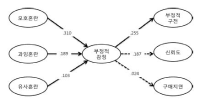
The ever-increasing golf club market made difficult and brought confusion to most of amateur golfers to differentiate and choose suitable clubs for them. Therefore, the purpose of study was to examine how consumer confusion proneness affects consumer’s negative emotion, negative word of mouth, trust and decision postponement, during the process of purchasing golf clubs. 450 questionnaires were distributed to recreational golfers in 6 different golf-driving rages and 4 golf courses located in Seoul, Gyeonggi and Gangwon area with a return rate of 98.4% (n=443). Total of 432 questionnaires were used for data analyses with PASW 18.0 and AMOS 18.0. The results of the study are as follow. First, all of the subordinate factors of consumer confusion proneness had a significant effect on the consumer’s negative emotion. Second, consumer’s negative emotion had a significant effect on negative word of mouth. Third, consumer’s negative emotion had a significant effect on trust. Fourth, consumer’s negative emotion had no significant effect on purchase postponement.
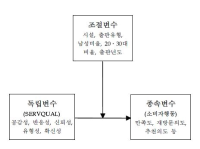
The current study aimed to investigate the impact of SERVQUAL on sport consumer behaviors using meta-analytic techniques. Findings from 25 dissertations and 26 journal articles were used to test of a model of the SERVQUAL on various sport consumer behaviors via the comprehensive meta analysis (CMA) program. Results showed that SERVQUAL has a large effect on sport consumer behaviors, with a fixed effect size of .383. In terms of the relative importance of the SERVQUAL sub-factors, sport consumer behaviors were influenced most by empathy, followed by reliability and tangibles. In predicting sport consumer behaviors, SERVQUAL had a most positive effect on, in order of, loyalty, customer orientation, and commitment. Results also found significant moderating evidence for sport facility types, publication types, publication year, the ratio of male and respondents' age.
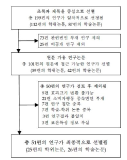


This study aimed to compare professional sport consumers on the basis of their ideology, spectator motivation, and message framing. In order to answer the research questions, the study first examined whether message framing effects existed across the designated variables. The study also assessed whether there were any differences in progressive-conservative ideology and motivation across respondent groups. The participants were spectators of two professional sports, soccer and baseball, sourced from 9 stadiums. Data were collected by the researcher and 33 survey assistants, from May to August 2013. The results of a chi-square test, MANOVA, and MANCOVA indicated that significant effects in message framing existed across the two variables. The findings also showed differences in ideology and motivation across major variables (e.g., age, gender, sports, and choice of newspaper). Some issues including media communication strategies were discussed based on the results of this study.

This study was to analyze the hierarchical importance of successful intelligence in Football coaches and players. In order to explore the hierarchical importance of successful intelligence 24 football coaches(under AFC A course) and 20 Korea Football Association U15 Players were responded to analytic hierarchy process questionnaires. In the Analytic Hierarchy Process, football coaches and players completed the AHP Questionnaire with creative intelligence, analytical intelligence and practical intelligence. The hierarchical importance order of successful intelligence for coach and player were analytical intelligence, practical intelligence, and creative intelligence respectively. Evaluation of hierarchical importance of successful intelligence for coach is analytical intelligence(.542), practical intelligence(.278), creative intelligence(.181) in order. Evaluation of hierarchical importance of successful intelligence for coach was analytical intelligence(.684), practical intelligence(.161), creative intelligence(.155) in order. The hierarchical importance of successful intelligence for coach and player were similar each other. Analytical intelligence, was evaluated most important factor for coach and player in successful intelligence. Successful intelligence is important issue for sport performance. More consider needs to Successful intelligence for sport psychology researchers.





There are expanding the base of amateur baseball with diverse factors and corporations are getting more interested in making opportunities to build relationships with customers by using this phenomenon. However, the previous research did not focus on examine practical effectiveness for relationship marketing methods as the strategy of the building relationship which was applied to sport events from diverse corporations. Therefore, the purpose of this study is to examine the practical effectiveness of the relationship marketing methods and the influencing process of the relationship marketing strategy applied to the amateur baseball. 150 players who took part in the amateur baseball tournament hosted by the on-line shopping mall company were selected for research samples with random assignment. To examine the practical effectiveness, 136 players' survey responses out of 150 responses were used for research data. For hypotheses testing, this study applied PLS structural equation model. This study presented that perceived face to face and listen as relationship marketing methods were significantly positive influenced on perceived relationship quality. In addition, perceived relationship advertising as relationship marketing methods were significantly positive influenced on perceived purchase intention. Moreover, perceived relationship quality was significantly positive influenced on perceived purchase intention. In the case of mediating effect with considering relationship quality, there was partial mediating effect for relationship advertising and face to face, and there was complete mediating effect for listen.
The purpose of the study was to investigate the meteorological and environmental information which should be provided for a winter sport event from the users' point of view, and to provide the fundamental data for the construction of the meteorological information to be specified in a sport event. For this study, some case studies were conducted at the center of Winter Olympic Games. Essential meteorological elements which should be fundamentally provided for a sport event were analyzed. Also, in-depth interviews with athletes, coaches were held to explore the meteorological elements needed from the users' point of view. On the basis of the results analyzed from the study, considerable meterological and environmental elements for supporting 2018 Pyeongchang Winter Olympic Games were suggested through the discussions with meteorological and sport event experts. As results of the study, essential requirements regarding the meterological and environmental information were extracted. Based on the essential requirements, a method of constructing the information in support of meteorology for Pyeongchang Winter Olympic Games was presented.
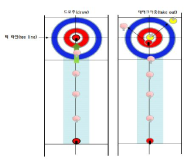
In this paper, we tried to find out the difference of CoM displacement, CoM velocity and Foot-pressure between draw motion and takeout motion in curling’s delivery motion. To do this, we experimented for 10 female athletes of curling national team(all athletes are in her 20th~30th ages) to carry out draw motion and takeout motion from backline to near hogline in state of speed limit. The limited speed was 3.80~3.90 sec for draw and 2.97~3.07 sec for takeout. From the experiments, we obtained the result like followings. 1. Draw motion is more increase than takeout motion in displacement of horizontal direction of CoM displacement. 2. Takeout motion is more increase than draw motion in displacement of vertical direction of CoM displacement. 3. Takeout motion is faster than draw motion in both of horizontal and vertical direction of CoM max. velocity. 4. Takeout motion is higher than draw motion in pressure of fore-foot and mid-foot of foot-pressure 5. Draw motion is higher than takeout motion in pressure of fore-foot and mid-foot of foot-pressure These result means that the characteristics of techniques for draw motion and takeout motion is differ from each other and it is necessary to take different training protocol individually to enhance athletes’s performance. And further research will contains another things like that the pursuit of curling stone’s rut by various delivery techniques
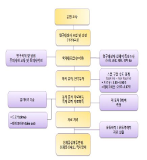


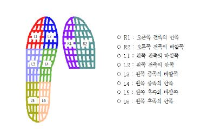

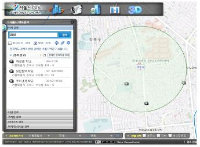
This study measured the accessibility of public exercise facilities within a residental area of a metropolitan community and examined how the accessibility can affect physical activity participation of residents. Initially, a total of 639 residents, who were aged between 19-70, visited Metabolic Syndrome Management Center of the Community Public Health Center, and registered for a Obesity Clinic Program, was listed as potential subjects. And those who responded to Physical Activity Questionnaire were selected for the analyses (n=92, 14.3% of 639). The relationships between physical activity level and accessibility to public exercise facilities were analyzed. Objective distance to public facility was related to ‘volume of participation to vigorous physical activity(r=.209)’, 'total volume of participation to physical activity(r=.206)’. And perceived distance to public facility was related to ‘volume of participation to vigorous-intensity physical activity(r=.235)’. perceived transport time to public facility was related to ‘duration of participation to vigorous-intensity physical activity(r=.239)’, ’volume of participation to vigorous-intensity physical activity(r=.306)’, and ‘volume of participation to total physical activity(r=.273)’. In contrast, the difference between objective distance to public facility and perceived subjective distance to the facility was negatively related to ‘duration of participation to moderate-intensity physical activity(r=-.221)’. The perceived numbers of public facility was positively related to ‘frequency of participation to vigorous-intensity physical activity(r=.237)’, ‘frequency of participation to walking(r=.273)’, ‘volume of participation to walking(r=.251)’ and 'total volume of participation to physical activity(r=.252)’. The predictor of 'total volume of participation to physical activity was perceived numbers of public facility(R2=.153, p=.046). The results revealed that the subjective accessibility to public health facilities was more influential to physical activity participation than the objective accessibility. Further research was warranted while using diverse populations as well as considering a inclusion of environmental factors.

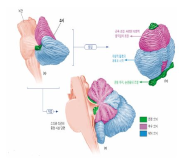
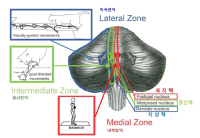
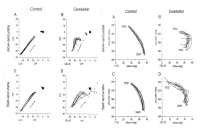
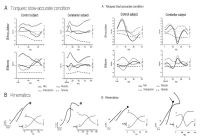
The cerebellum is one of the major parts of the brain involved in the motor control including motor coordination, muscle tone, balance, and the learning of motor skills. The purpose of this review paper was to explore of pathophysiology, anatomical function and neurophysiological mechanism for cerebellum. For this, we sought to examine of previous study related cerebellar disease. Specifically, this paper suggested that motor deficiency of limb movements, coordination, gait/posture balance, adaptation of during movement execution through information proprioception or kinaesthesia, and motor planning and programming of cerebellar patients. We expect that this review will be able to offer the useful information to research. For example, movement scientists will provide an academic information about cerebellar ataxia. Patients and their families will provide relevant information to the daily life (e.g., management and rehabilitation exercise).


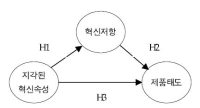
The Purpose of this study was to examines the effect of smart sport wear's innovation attribute on product attribute, focused on innovation resistance. Data were drawn from 253 college students and graduate college students in three different university. The model was tested using SPSS/PC ver. 18.0 for windows and AMOS 20.0 program. Data were analyzed using frequency analysis, reliability analysis, confirmatory factor analysis, correlation, and structural equation modeling techniques. The statistical significance level was set at a<.05. The results were as follows. First, perceived attributes of smart sport wear had a negative effect on innovation resistance. Second, innovation resistance had a negative effect on product attribute. Third, perceived attributes of smart sport wear had a positive effect on product attribute. Forth, innovation resistance partially mediated the relationship between perceived attributes of smart sport wear and product attribute.


