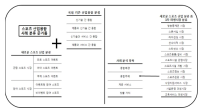
With coming industrial convergence era, there are the necessity of industrial convergence in sport industry. Therefore, the purpose of this study is to provide classification system and trend. This study applied case study method with semi-constructed interview, integrative literature review and observation. In addition, this study provide the conceptual framework for the classification system in sport industry related to industrial convergence. To conclusion, among the several criteria related to industrial convergence for product-new technology criterion, there are virtual sports, diagnosis valuation solution and exercise guide solution for participant sport market. In the case of new technology-service criterion, there are new media and virtual broadcasting for spectator sport market, and u-learning for participant sport market. For product-service criterion, there are complexity of sports facility and sportainment for spectator sport market, and virtual gaming sports and participatory tour for spectator and participant sport market. In addition, the trend of the sport industrial convergence has changed from leading media industry to converging with diverse industry areas.
Many teams in the first division soccer league in Korea are suffering from financial insolvency which has resulted from lack of fan support. Despite the mentioned fact, many teams are still distributing free tickets which results lessoned ticket sales revenue. In order to address the fundamental issue of financial insolvency, it is important to seduce more paid fans to come to stadiums along with increased number of fans. The current study, therefore, examined the perceived value of K-league match ticket prices compared with other competitors such as baseball, basketball, and movie theaters. Data were collected from Gyeongnam F.C.'s home game and out of 164 data collected, 127 were utilized for further analysis. A conjoint analysis was conducted using regression analysis (Luce, 1959) to compare fans' perceived value of ticket prices among different entertainment options. The results displayed that K-league teams should consider increasing ticket prices as it is currently under-priced and, as a result, higher ticket price will drive increase in revenue.

There are expanding the base of amateur baseball with diverse factors and corporations are getting more interested in making opportunities to build relationships with customers by using this phenomenon. However, the previous research did not focus on examine practical effectiveness for relationship marketing methods as the strategy of the building relationship which was applied to sport events from diverse corporations. Therefore, the purpose of this study is to examine the practical effectiveness of the relationship marketing methods and the influencing process of the relationship marketing strategy applied to the amateur baseball. 150 players who took part in the amateur baseball tournament hosted by the on-line shopping mall company were selected for research samples with random assignment. To examine the practical effectiveness, 136 players' survey responses out of 150 responses were used for research data. For hypotheses testing, this study applied PLS structural equation model. This study presented that perceived face to face and listen as relationship marketing methods were significantly positive influenced on perceived relationship quality. In addition, perceived relationship advertising as relationship marketing methods were significantly positive influenced on perceived purchase intention. Moreover, perceived relationship quality was significantly positive influenced on perceived purchase intention. In the case of mediating effect with considering relationship quality, there was partial mediating effect for relationship advertising and face to face, and there was complete mediating effect for listen.
Purpose A number of start-ups in the form of introducing sports contents in Korea as a new market are in progress, and appropriate support for each step is needed to increase the chances of a success. Therefore, the purpose of this study is to explore the entrepreneurial process of introducing and spreading newly created or developed sports content into a new market, Korea, by focusing on the innovation diffusion process model. Methods To derive the results, a qualitative research method was used, data were collected through in-depth interviews, literature search, and observation methods, and analyzed through categorization and itemization in stages based on content analysis results. Results Looking at the results, content recognition and problem identification were derived in the exogenous shocks stage, and the organization unity of internal and external stakeholder was confirmed in the formal coalition of opinion leaders stage. At the stage of internal communication between the opinion leaders of the social system, the expert communication in the same or similar field and external area appeared and the indirect experience also derived. In the decision to select a specific innovation stage, activities to belong to an international organization, to establish a new organization, and to secure idle space appeared, and at the stage of recruitment and/or the establishment of boundary spanners, efforts to secure internal and external human resource within the organization and to build an organization form appeared. In the stage of develop and introduce the innovation, online communication channels were established. In the stage of using mass media outlets, media articles, lectures, and academic conferences were used, and in the stage of actual diffusion of an innovation, experience and education programs were conducted, competition and exhibitions were held, venues were built, and actual international competitions were participated. At the stage of decisions to continue, discontinue, or re-invent the existing innovation must occur, evaluation was made by personnel inside and outside the organization. Conclusions It is possible to increase the success of start-up by creating a support system that can fill the necessary parts for each stage of start-up based on the derived activities for each stage.
Purpose This study focuses on accessibility to sports facilities that can be classified into structural leisure constraints. The purpose of this study is to explore exploratory analysis of the types of reservation methods and payment methods, which are the initial stages of consuming sports facilities, and to explore inconveniences that consumers feel when making reservations. Methods A quantitative research method was used to derive the results, and data were collected through a questionnaire survey method. The collected data were analyzed by technical statistics focusing on the reservation method, payment method, and inconvenience during reservation. Results As a result, it was found that the main types of reservation methods and payment methods were homepage, homepage/telephone, telephone, homepage/app, and account transfer and card payment, respectively. In the case of inconvenience, the procedure was complicated, address and location, and reservation method were identified as the main matters. Conclusions Efforts must be made to secure both the convenience and publicity of accessibility at an early stage, such as reservation methods and payment methods for sports facilities.
Purpose This research aims to find out factors affecting policy at the agenda setting phrase. In order to analyze, Multiple Streams Framework(MSF) was adopted. Based on the frame, policy problem stream, policy alternative stream, political stream, window of policy change, and policy entrepreneur were applied for analytical framework. Methods The research conducted qualitative research with triangulation. Data were collected by in-depth interview and literature review including newspaper and previous researches. Content analysis was done for deriving factors. Then categorization and itemization were conducted. Results For the result, factors derived from the study were not different from factions mentioning at MSF. For policy problem stream perspective, this study draw International Sports Event Result, Hosting International Sports Event, Elite Sports Athletic Recruiting, Athletic and Sports Category Supporting System, Student Study Right/Student Human Right/Sports Academy, Policy Reality, Sport Expert/Institute Capability, Perception of Elite Sport Origin. factors. In the case of Policy Alternative Stream, This study finds Sports Related Administrative Organization Restructure, Supporting Policy of Elite Athletic Promoting Restructure, Parent Policy of Elite Athletic Promoting Policy, Parent Institution of Elite Athletic Promoting Law, Incentive Institution for Elite Athletic, Supporting Institution for Elite Athletic, Value of Policy Community for Sports Category Feature, Value of Policy Community for Sports Category Fairness, Budget, International Sports Event Hosting Policy factors. Lastly, in the political perspective, this study figures out Elite Sports for Nation Integration, Elite Sports for Enhancing National Prestige (North and South Replacement), Elite Sports for Inter Korean Reconciliation and Cooperation, Sports Related Administrative Organization Restructure Following Regime Change, Parent Policy Change of Elite Sports Following Regime Change factors. Conclusions The research has academic implication for generating elite sport policy agenda setting model as well as practical implication for urging effective participation of various practitioners concerning elite sport.
PURPOSE Although sport and graffiti often collaborate in various forms and sectors, research on this phenomenon is insufficient. Therefore, this exploratory study analyzed the role of sport in line with the diffusion of graffiti in Korea. METHODS Qualitative research method was applied for data collection and analysis. Specifically, systematic literature review, semi-structured in-depth interviews, and written interviews were used for data collection. Subsequently, content analysis, categorization, and itemization were performed. RESULTS International sporting events had an impact on the diffusion process of graffiti. Additionally, graffiti was used as a promotional content for sporting events and sport brands, and specific sport content were used as the medium for street art works, including graffiti. Furthermore, graffiti was used as a promotional content for marketing activities in collaboration with a professional sports team by general corporations. CONCLUSIONS As graffiti becomes one of the major cultures from a subculture, it is expected to increase public interest in all sports and not just in specific sports through collaboration with graffiti.
PURPOSE The United Nations (UN) has proposed 17 Sustainable Development Goals and has been extending its efforts to achieve them. Sport can be linked closely to the third goal, which is related to health and well-being. Therefore, this study aimed to explore and to analyze individual's changed sport activities during the COVID-19 pandemic, focusing on ways to achieve health and well-being related goals through sport. METHODS A qualitative research method was employed, and in-depth interview methods were used for data collection. For data analysis, categorization and itemization were used along with content analysis. RESULTS Looking at the derived results, in the context of an infectious disease such COVID-19, sport activity patterns have changed due to reasons such as stadiums or facilities, interpersonal reasons, fear, inconvenience, staying healthy, increase in leisure time, and individual preferences. CONCLUSIONS Due to the COVID-19 pandemic, the indicators of health and well-being related SDGs are exhibiting a downward trend. At this point, it is necessary to find a way to achieve the goal through sport that can participate voluntarily for the purpose of pursuing pleasure.
