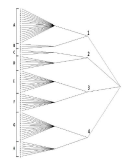
Purpose The purpose of this study was (1) to analyze judges’ evaluation on rhythmic gymnastics performance by applying generalizability theory and (2) to suggest recommendations to improve judges' rating. Methods Data were 34 players’ scores from Senior Part at 29th KGA President’s Cup National Rhythmic Gymnastics Championship in Korea. Difficulty and execution scores in ball, clubs, hoop and ribbon event were analyzed. Analysis models containing components of area and reputation rank were designed and multivariate generalizability theory were used for analysis. Results The G-study results showed (1) that the error source about players has more significant impact to evaluation than other error sources in analysis model containing components of only player and judge, (2) that the error source about players has more significant impact to evaluation than other error sources in analysis model adding components of area, but the error source about area has more significant impact to evaluation of clubs event than other error sources, (3) that the error source about players has more significant impact to evaluation than other error sources in analysis model adding components of reputation rank, but the error source about reputation rank has more significant impact to evaluation of hoop event than other error sources in analysis model adding components of area. The D-study results showed generalizability coefficient was stable in analysis model without components of area and reputation rank, but generalizability coefficient in analysis model containing components of area and reputation rank not stable in some event. Conclusion Recommendations for improving judging were discussed.
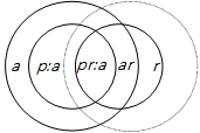

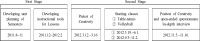
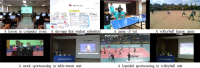
Purpose The purpose of this study was (1) to develop and to apply the PE classes based on Sportscasting Model on Creativity and Character and (2) to analyze the effects of PE classes on Creativity and Character. Methods Participants were 10th high school students(N=172) who had not experienced PE classes on Sportsasting Model. Data were collected using An Integrated Creativity Test(Lee & Lew, 2012), open-ended questionnaires and in-depth interviews with students. The data were analyzed through paired samples t-test and qualitative content analysis. Results Results showed that (1) Table-tennis and volleyball lessons on Sportscasting Model were developed and applied, and (2) significant differences were observed in creative thinking and creative personality of students’ creativity scores after lessons. And 14 creativity factors and 10 character factors were drawn from the analysis of questionnaires and interviews. Conclusion And to conclude, Sportcasting Model is efficient in developing creativity and character. Discussions were provided in terms of the development and application of PE classes based on Sportsasting Model and the effectiveness of Sportscasting Model.


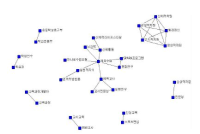
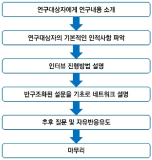
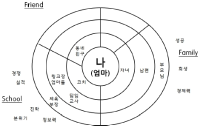
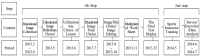
Purpose The purpose of this study was to investigate how the educational zeal of mothers with winter sports students in secondary schools appears on the network charts. Methods It lasted 28 days from February 6 to March 5, 2017. Starting with a description of the QNA, all interviews were recorded on a tape recorder to carry out the project. Data analysis were divided into four areas(Family, Friend, School, etc.) and 13 associative words(enthusiasm, intelligence, performance, entry, success, sacrifice, atmosphere, polarity, competition, vicarious, satisfaction, economic power, anxiety, stress) to attach associative word stickers according to color. Results As a result of inducing arbitrary interpretation of the network subject's educational network, it was possible to analyze the factors affecting mothers' sports education in three dimensions. In addition, although there is not much difference in areas around "I" on sports education charts, the distance between associative words and network charts has gradually moved away from the same person as their children go on to school. Conclusions The methodological significance of this study has been found to be very useful in visualizing an individual's educational network by utilizing qualitative network analysis and in understanding the characteristics associated with education.


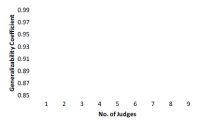
The purpose of this study was (1) to analyze judges’ evaluation on figure skating performance and statistical analysis and (2) to make recommendation to improve judges' performance. Data were 62 figure skaters’ scores from Senior Woman 1 Group Part at 2015 The National Figure Skating Championship in Korea. Data of presentation part in Short Program were analyzed. Presentation part consists of skating skills, transitions/linking footwork/movement, performance/execution, choreography/composition and interpretation. Nine judges evaluate skater's presentation with the score 10.0 for each factor. Generalizability theory, descriptive statistics and ANOVA were utilized. Results showed that generalizability coefficient of presentation part was over 0.9, therefore stable reliability was secured. The error source about players has more significant impact to evaluation than other error sources. Generalizability coefficient was stable when reducing the number of judges up to 2. Also, judges generally represented aspects of similar evaluation, but different aspects appeared on a few judges’ assessment in the components of presentation. Discussions were provided in terms of the reliability of the judging method for the presentation part of figure skating and the effective measurement condition.
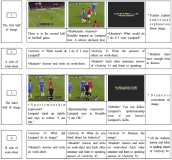
The purpose of this study was (1) to develop instructional contents for teaching and learning sportsmanship and (2) to examine the perceptions of sports instructors on that contents. Instructional contents based on sympathy was constructed from Youtube clips. Final version was developed to apply situated learning in class and was comprised of twenty-sportsmanship video clips and worksheets. Participants were sports instructors (N=208) in elementary and middle schools. Open-ended question and interview on call were used to collect the data. Qualitative content analysis was used to analyze the instructors’ perception regarding instructional contents. Results of this study showed that sports instructors responded to the contents as thoughtful experience (1) making myself realize the value of opponent, (2) making myself realize the value of sports, (3) making myself realize the value of judge, (4) making myself realize the value of coach/athlete. This study concluded that instructional contents was touching and emotional. Implication of instructional contents for teaching and learning sportsmanship, pros and cons of the contents and teaching tips were discussed.


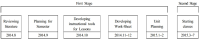
Researchers and teachers in physical education have emphasized sportsmenship in sport education setting. However, how to teach sportsmenship in physical education is not proposed yet. The purpose of this study was (1) to develop an instructional program for teaching and learning sportsmanship and (2) to examine its effects on sportsmenship. Participants were 7th middle school students(N=95). Data were collected using Sportsmanship Test(Park, 2014), open-ended questionnaire and in-depth interviews with students. The data were analyzed through paired samples t-test and qualitative content analysis. Results showed that significant difference was observed in students' sportsmanship test scores after instruction. Analysis of interview data showed that students experience the value of utmost effort, respect for opponents, respect for teammates, acknowledging results, respect for judgment, and valuable lessons related to character education. Implications for sportsmanship education using instructional program were discussed.
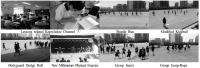
The purpose of this study was (1) to develop a archery lesson using forced connection method-sportcasting for cultivating collaborative problem-solving competencies, and (2) to apply and to examine the responses of students after physical education(PE) lesson. A archery lesson of Understanding-Performance-Appreciation step was developed according to LfPE(Lee, 2014) using backward curriculum design. Participants were tenth grade students (N=148) in a high school. Open-ended question used to collect the data. The analysis of data indicates that students expressed features in lessons. Six features are (a) 朋友信之, (b) 君子不器, (c) 能竭其力, (d) 觀其所由, (e) 溫故知新, (f) 思而不學. In-depth interviewers were carried out for further analysis of the answers to the questionnaires. The results are as follows. First, 朋友信之 means lesson cultivating collaborative problem solving competencies. Second, 君子不器 means pleasant and funny lesson. Third, 能竭其力 means lesson cultivating self management ability. Fourth, 觀其所由 means lesson cultivating appreciativeness for archery. Fifth, 溫故知新 means lesson improving the status of PE teacher and school. This study concluded that a archery lesson generated fun and interest for students. Implication for developing lesson using LfPE, utilize and transform forced connection method-sportcasting in PE were discussed.


Sportscasting in Physical Education (Lee, 2011) is a class activity that students simulate sports broadcasting (e.g., students report, analyze, and comment on game play). It encourages problem solving (PS) learning for students. Scaffolding is the support with the intention of helping the student achieves his/her learning goals and contributes to problem solving. However, limited studies have examined if sportscasting with scaffolding is effective instructional strategies for PS. The purpose of this study was to examine effects of sportscasting with scaffolding on PS abilities, and on academic achievement. Participants were 46 college students. The static-group comparison design was used: an experiment group (N=26) with supportive scaffoldings (e.g., conceptual explanation, terminology dictionary, visual materials) and a control group (N=20) with reflective scaffoldings (e.g., organizing the environment, using appropriate cues to guide behaviors, and modeling). The results revealed that students in reflective scaffoldings had higher PS abilities than students in supportive scaffoldings. However, two groups were not statistically different in academic achievement. Sportscasting with instructional scaffolding promote a deeper level of cognitive skills and male students performed better than female students. The effective scaffolding types (Lewis, 2010) for sportscasting were discussed to help students to foster PS skills.
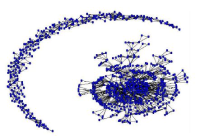
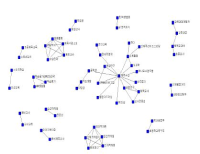
The purpose of this study was to identify the structure of knowledge in Sport Pedagogy field. Using bibliometric and social network analysis this study analyzed the keywords and citations appeared in Korean Journal of Sport Pedagogy and Korean Journal of Sport Science during 2006-2015 period. Total of 341 research papers which include 1301 keywords and 14826 citation were analyzed utilizing social network analysis as well as keywords frequency analysis, keyword co-occurrence, citation and co-ictation analysis. Results of this study showed that teaching, curriculum, and teacher education were three central theme in Sport pedagogy field. Key words such as physical activity, PE teacher, action research, and after school sport club activity were prominent research interests for scholard in the field. Quadradic Assignment Procedure analysis showed major research interests has not been changed between two periods of 2006-2010 and 2011-2015. Choi(2010)'s and You(2007)' books were most cited individual work and have influenced sport pedagogy researchers over the five years.