Purpose This purpose of this study was to understand how physical education can contribute to healthy emotions and activities of human beings. Methods We analyze Eva Illouz's emotional capitalism theory, the position and role of emotions in Spinoza, and Durkheim's theory of religious sociology. Results Illouz shows that emotions are coordinated by rationality through the analysis of emotional capitalism, and that expressions of natural emotions are restricted and controlled even in the area of intimacy. In Spinoza, emotions are divided into three emotions: joy, sadness, and desire as concepts of body movements. Emotions reveal that they are closely related to human activity, and emotions of joy are calculated for human emotional development Emphasize the need to organize meetings of possible bodies. Durkheim argues that while society is placed in a religious position, society is the subject of individual praise and the reality of baptizing individuals into morality. At this time, festivals and rituals reveal individuals to be a powerful mechanism that leads to devotion to society and strengthens individual’s sense of community and morality. Conclusions Making physical education classes as festivals enhances students' sense of community. It can also be an activity that allows students to have healthy moral and emotional energy.

Purpose The purpose of this study was to investigate differences among perfectionism, anxiety, and aggression in contact and non-contact sports and verify the structural relationship model of perfectionism, anxiety, and aggression in the field of sports. Methods Male college athletes (N=299) participated in the study and perfectionism, anxiety, and aggression questionnaires were utilized after their verification of validity and reliability were conducted. The descriptive statistical analysis, the multivariate analysis, the correlation analysis, the structural equation analysis, and the multi-group analysis were conducted. Results The results are as follows: First, the level of perfectionism, anxiety, and aggression were significantly different between contact and non-contact sports (F=4.316, p<.001). Additionally, subfactors of aggression such as hostility, physical aggression, and verbal aggression factors in contact sports showed a higher average than non-contact sports. Second, perfectionism positively affected anxiety (t=6.936, p<.001) and anxiety positively affected aggression (t=3.380, p<.001). Moreover, the complete mediation effect of anxiety was found in the path from perfectionism to aggression (β=.152, p<.01). Finally, we compared path coefficients between contact and non-contact sports. As a result, positive causal relationships was indicated in the path from anxiety to aggression (β=.511, p<.001) in contact sports. However, it was not discovered in non-contact sports (β=.149, p>.05). Conclusions In conclusion, perfectionism causes anxiety and anxiety is a mediator leading to aggression in sports. Such effect is more predictable and observable in contact sports in which aggression is more favorable and encouraged. Implications and suggestions for future research are discussed.
PURPOSE This study investigated the relations among professional golfers’ evaluative concerns over perfectionism, psychache, psychological flexibility, and retirement intention. METHODS A total of 216 professional golfers answered questionnaires on perfectionism, psychache, psychological flexibility, and retirement intention. The collected data were subjected to descriptive statistics, correlation analysis, and path analysis via SPSS 23.0 and AMOS 22.0. RESULTS First, “doubts about action” perfectionism and socially prescribed perfectionism positively affect psychache, but “concerns over mistakes” perfectionism has no significant effect on psychache. Second, “concerns over mistakes” perfectionism and “doubts about action” perfectionism negatively influence psychological flexibility, but socially prescribed perfectionism has no significant impact on psychological flexibility. Third, psychache positively influences retirement intention, and psychological flexibility negatively affects retirement intention. CONCLUSIONS Psychache and psychological flexibility depend on professional golfers’ evaluative concerns over perfectionism, and retirement intention is shaped by psychache and psychological flexibility. In addition, this study discussed its implications and provided suggestions for future research.
PURPOSE This study investigated differences in gaze entropy according to skill level and temporal occlusion in table tennis serve reception. METHODS Study participants were divided into a skilled group (n = 6) and a novice group (n = 6). The study task involved sitting in front of a monitor while wearing an eye tracker, watching 36 serve videos, and predicting whether the ball’s length would be short or long by pressing the "Top" (short serve) or "Bottom" (long serve) pad on the selection response pad. RESULTS Overall, the later the temporal occlusion level, the faster the reaction time and the higher the judgment accuracy. At temporal occlusion levels 2 and 3, skilled participants showed higher judgment accuracy than novices. Analysis of heatmap and gaze entropy revealed that novices exhibited visual search toward the ball across all temporal occlusion levels (T1, T2, T3) and had high gaze entropy. In contrast, skilled participants generally showed visual search to the racket area depending on the temporal occlusion level, with low gaze entropy at T1 and T2, and a tendency for increased gaze entropy at T3. CONCLUSIONS Compared to novices, skilled participants had lower gaze entropy and fixated more on the racket area when predicting table tennis serves. Similarly, novices focused more on the ball than on the racket. The study also proposed the value of using heatmap and Shannon entropy for this type of analysis.
Purpose The purpose of this study was to explore cultural meanings of the concept of ‘Che-Yuk-In’ through a critical examination of how it was described, portrayed, and represented in the narratives of the mainstream newspapers in the early days of the nation(1945-1961). Methods As for the data collection and method, a total of 338 articles were collected by searching of "Che-Yuk-In" through the database provided by the Naver News Library. Sorting out them with the point of whether the concept simply denotes the number of players or the majority of athletes, for example, we select 140 column-type articles and analyzed how it serves as a linguistic element and what discourses were involved in the narratives. Results Our argument is twofold: 1) the concept of ‘Che-Yuk-In’ is a kind of self-representative terminology with which a particular group of people, who call themselves ‘Che-Yuk-In’, construct their collective identity into a particular type of the idealized subject, so-called sporting citizen, and 2) this construction consists of two functions: one is to share the emotion of pride by celebrating success and achievements of the sporting figures, and the other is to collectively reflect shame by criticizing negative incidents and controversies such as corruption, factional disputes, violent behaviors, which broke in the sporting practices. Conclusions With a brief summary, this paper concludes with some suggestions for future studies, in terms of how the shameful past should be embraced within the field of Korean sport history, and why a conceptual history of the ‘Che-Yuk-In’ might need to be further expanded.
PURPOSE This study aimed to identify ACTN3 gene polymorphisms amongprofessional ssireum players by weight class and between elite and non-elite players,and to select genotype that matches the characteristics of the sport. METHODS The subjects of this study were 148 male athletes currently working as professionalssireum players. Chi-square test cross-tabulation analysis was conducted to examinethe differences in ACTN3 genotypes between weight classes and between elite andnon-elite players. RESULTS There were no significant differences in allele or genotypebetween ssireum players, but there were significant differences in R-allele and XXgenotype. CONCLUSIONS Players with the R-allele type of the ACTN3 gene weremore often classified as elite. Using this marker as a basis for organizing a playerselection and training programs would be more effective in training those that matchthe characteristics of elite players of the game.
PURPOSE The purpose of this study was to systematically review Korean research on genetics and athletic performance, to examine patterns of research accumulation and structural characteristics within the field of sports genetics in Korea, and to propose directions for future research. METHODS This study adopted a systematic review design. Relevant literature was retrieved from the Research Information Sharing Service (RISS) using the search terms “genetic performance” and “athlete genetics and exercise.” Following PRISMA guidelines, duplicate records, nonacademic publications, and studies with limited relevance to the research focus were excluded, yielding a final sample of 35 studies. The selected studies were analyzed across multiple dimensions, including research themes, athlete characteristics, and sport types, genetic variants examined, performance indicators, analytical methods, and interpretive approaches to gene–performance relationships. RESULTS The findings indicated that sports genetics research in Korea has predominantly focused on candidate gene approaches, with particular emphasis on the ACE and ACTN3 genes. Performance-related fitness variables, including aerobic power, aerobic capacity, and muscular strength, were the most frequently examined outcome measures. Study participants were primarily national-level and elite athletes, with research samples heavily concentrated in combat sports and ice sports. Methodologically, most studies relied on single-gene analyses, and interpretations of gene– performance relationships were largely based on between-group mean comparisons. CONCLUSIONS In conclusion, Korean sports genetics research should transition toward the systematic adoption of polygenic and multi-marker approaches to improve explanatory power related to athletic performance and injury susceptibility. Moreover, the development of sport-specific and training–context–sensitive analytics is warranted, alongside validation of field applicability using performance-based data and cross-platform genetic analyses. Finally, establishing long-term research infrastructures grounded in longitudinal designs and standardized data accumulation will be essential for constructing a Korean-specific sports genetics research system that supports talent identification, individualized training, and injury prevention.

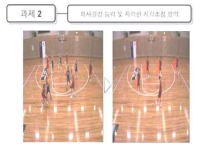
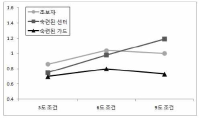
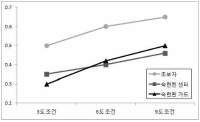
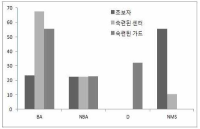
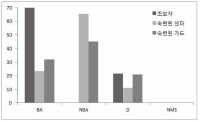
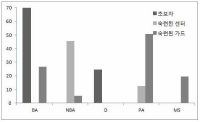
The purpose of this research was to investigate the difference in decision making and perceived eye-focus location on peripheral vision and attacker's expertise in basketball tactical game. A total of twenty four subjects who were expert guard players (n=8), expert basketball center players (n=8), and novices (n=8), participated in this experiment. All subjects participated two tasks. The first task was to anticipate the attack direction after viewing a sequence of basketball tactic film. These films simulated three situations including offensive patterns. The three situations were consist of 3, 6, 9 degree peripheral vision. The second task was to express the level of confidence on their anticipation and to verbalize the perceived visual cues immediately after responding. For this research, an Eyelink eye movement system, an equipment for measuring anticipating, basketball tactic film were used. The variables on anticipation of attack direction were speed, accuracy, and the level of confidence. The acquiring process of advanced visual cues was examined through analyzing visual search strategies and perceived eye-focus location. In order to examine the difference in visual search, in decision making, and in perceived eye-focus locations as a function of expertise, data were analyzed through descriptive statistics, two-way ANOVA, and two-way MANOVA. This research had the following results. First, there was a significant difference on the search rate among the three groups. But, on the other hand, expert guard and center exhibited more fixations of shorter duration than the novices in the 6 and 9 degree condition. Second, results from the ratio of fixation time allotted to areas in the 3 degree condition revealed that experts spent more time fixating the ball-attacker(BA) than novices. The results from the ratio of fixation time allotted to areas in the 6 and 9 degree condition revealed that expert guard and center spent more time fixating the non-ball attacker(NBA) than novices. Expert guard also fixated longer on the pass attacker(PA) and meaning space(MS) than novices. Finally, experts paid attention to two or three locations simultaneously, whereas novices did to only one location such as the ball, attacker, defender, non-meaning space in all condition.


Purpose The purpose of this study was to provide basic data for spectators group of Taekwondo performance efficient marketing activities through market segmentation from characteristics, perceived values of the Taekwondo performance spectators. Methods The subjects of this research were Kukkiwon, Taekwondowon and 1,021 questionnaires were finally used for the analysis. The results of this research were drawn by frequency analysis, CFA(confirmatory factor analysis), reliability analysis, cluster analysis (hierarchical and K-means), cross-tabulation analysis and One-way ANOVA were used for data processing through SPSS 22.0 and AMOS 22.0. Results As results of the analysis, It was subdivided into three clusters (such as group of male college students, man group of low perceived value and high degreed women group of low pragmatism). Conclusions The significant differences of the characteristics and perceived value appeared from each cluster. Cluster 1: A group of male college students, and the highest perceived value for Taekwondo performance. Cluster 2: A group of male, and a low perceived value for Taekwondo performance. Cluster 3: A group of high degreed women and a low pragmatism of perceived value. Therefore, a practical marketing strategy was needed for each groups.

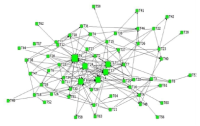
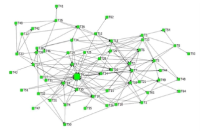
Previous work has shown that coaches sought information from several sources; however, there was a strong reliance on learning from other coaches within their social networks. There has been limited research examining the nature of these social networks with other coaches (Trudel and Gilbert 2004). Thus the purpose of this study was to examine the structures of coaches’ social networks of Korean rhythmic gymnasts. Research questions were: (1) What are the network structures of Korean rhythmic gymnasts’ coaches? (2) What structural parameters contribute to coaches’ network structures, and (3) Is there an association between coaches’ network and flow of information in their networks? A total of 37 coaches of youth rhythmic gymnasts (6-18 years old) participated in this study. Each of those coaches was asked to complete a Name Generator Questionnaire (i.e., list four names that you have a close relationship with) and general socio-demographic survey. Data were analyzed using social network analysis tools such as UCINET, p-net, and Quadratic Assignment Procedure. Analysis of network centrality, density, and strong components showed that (1) homophily was identified in the structure of coaches’ social networks (2) homophily (e.g., by gymnasts’ ranking, mentor coaches) contributed to the total social network of coaches, and (3) interacting only with close coaches in the network, coaches received information about coaches/coaching from the strong ties rather than weak ties (Granovetter, 1973). This study also has strong links to Wenger’s (1998) community of practice which posited that groups of people share a common characteristic in practice.