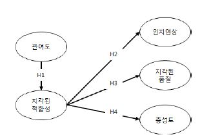
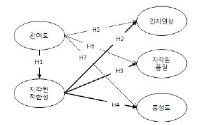
Although mega sporting events are becoming an effective means of brand communication, there has not been systematic research on involvement development and perceived fit enhancement through the sporting events. This study developed and tested a conceptual model delineating the impact of consumer involvement on perceive fit, and brand equity in mega sporting event context. Using quota sampling method, 1,847 participants (916 from IAAF; 931 from the F1) were recruited from several different cities in Korea during the mega-sporting events. Structural equation modeling were employed to examine the relationship between research constructs and test the model respectively. The study found that mega event involvement has a positive effect on perceived fit; and perceived fit influences brand equity(brand awareness, perceived quality and loyalty) toward event sponsor brands. The direct effects of involvement on sponsorship effectiveness (brand awareness, perceived quality and loyalty) did not have a significant effect on brand equity. The findings also reveal the mediating effect of perceived fit on brand equity.
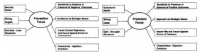
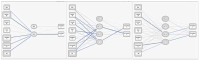
This study examined whether or not regulatory focus can predict motivation level. 141 Ssireum player completed Korean self-regulatory focus of Hong(2005)assessing their self-regulatory focus, and Behavioral Regulation in Sport Questionnaire(BRSQ) of Lonsdale, Hodge & Rose(2008) accessing motivation level based on self-determination theory. Artificial neural network analysis was utilized to find motivation factors that determine the regulatory focus, and the option was multi-layer perception. The result represented promotion focus predicted intrinsic motivation. Also, the prevention focus predicted extrinsic motivation. This result provided that self-regulatory focus can predict player’s motivation level and promotion focus related to intrinsic motivation.
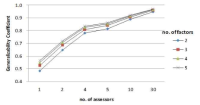
The purpose of this study which is follow up study of Lee and Kim(2015b)'s was to analyse error sources and estimation of reliability in peer review of forced connection method-sportscasting by applying generalizability theory. Generalizability theory quantify error sources of the data measured under certain specific situation set by the researchers. It is an analysis method that the relative influences of each error sources taking from score is determined(G-study), and the effective measurement condition future applicable is provided(D-study). Participants were 10th high school students(N=216). Data were collected from student's peer review results and analyzed using univariate and multivariate generalizability theory. Results showed that error source for video have a more significant impact than other error sources. But the result by analyzing the gender difference was that error source for the interaction of video and participants have a more significant impact than other error source in the case of girls. Peer review used in this study showed high generalizability coefficient and even when reducing the number of video or participants it can maintain the adequate reliability. But generalizability coefficient of boys was higher than girls and specific measurement conditions leading to enhanced reliability were different when analyzing by gender difference. Also, method of analysis which cannot reflect measurement conditions properly estimates the reliability excessive. Discussions were provided in term of the relative influences of each error sources, the effective measurement condition maintaining the Generalizability coefficient of a certain level, and the comparison the Generalizability coefficient with the way of estimation traditional reliability applying univariate and multivariate Generalizability theory taking from score in peer review of forced connection method-sportscasting.


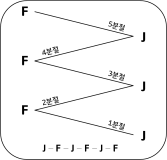
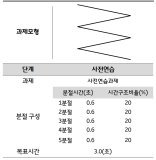
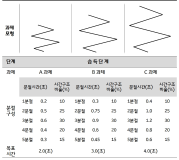
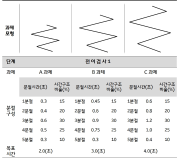
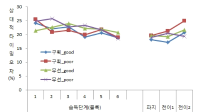
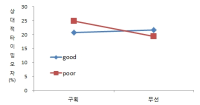
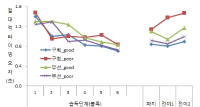
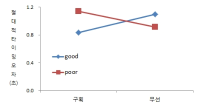
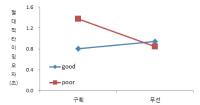
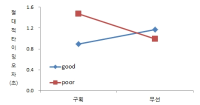
The present study was conducted to determine the effect of contextual interference (CI) and motivational properties (MP) of Knowledge of Result (KR) in learning on relative and absolute timing. Participants (N=48) were randomly assigned to one of four practice groups, which differed in practice structure on CI (blocked, random) and KR on MP (good trial, poor trial). They performed temporal timing tasks in pre-exercise and acquisition phase and went through a retention test and 2 transfer tests after approximately 24 hours. The main findings showed that first, for the relative timing error there was no significant main effect of CI and MP in the acquisition phase, retention, transfer1, and 2 test. However, there was a significant interaction effect between CI and MP in the transfer 2 test. Second, for the absolute timing error there was no significant main effect of CI and MP in the acquisition phase, retention, and transfer test 2 while there was in the transfer test 1. Moreover, there was a significant main effect between CI and MP in the retention, transfer 1, and 2 test. The findings indicated that 1) there was a significant learning effect of absolute timing between KR_good group and KR_poor group on blocked practice in the retention test, 2) random practice schedule and KR_good condition resulted in enhanced absolute timing performance relative to blocked practice and KR_poor respectively at transfer test 1, 3) there was a significant learning effect of absolute timing between KR_good group and KR_poor group on blocked practice at transfer test, 4) KR_good condition could be an useful relative timing learning strategy relative to KR_poor on blocked practice schedule at transfer test 2, effector transfer test. KR-good condition resulted in learning superior to KR_poor group on blocked practice schedule as well. However, there was no significant difference between two conditions on random practice, and 5) there was no difference in the learning effect of absolute timing error between KR_good and KR-poor group in the blocked practice, while there was not in the random practice. It indicated that motivational properties would influence the learning effect of timing in the blocked practice.
PURPOSE This study investigates the effectiveness of biomechanics information on intermediate golfers driver swing learning. It analyzes changes in center of pressure (COP) patterns, GRF Direction Inclination, driver performance, and learners psychological responses to determine the learning effects. METHODS Subjects were 32 right-handed male golfers (handicap 15-23) who had no difficulty in performing the golf driver swing (Full swing). Four groups were selected, BF (Biomechanics Feedback group), BVC (Biomechanics Verbal Cue group), CB (Combination group), and CT (Control group), and assigned randomly. Driver swing learning showed results after 6 weeks,and a transfer test was conducted 1 week after the completion of the learning. RESULTS Analysis of COP patterns and GRF Direction Inclination indicated changes in the BF, BVC, and CB groups. Furthermore, analysis of driver distance (m), club head speed (km/h), and ball spin rate (rpm) revealed that during the 6-week acquisition phase, all three groups (excluding the control group) showed improvements in driver distance, club head speed, and ball spin rate. However, there were no statistically significant differences among the groups. In contrast, the transfer test showed statistically significant differences among the groups, with the CB group exhibiting the highest driver distance. Learners' psychological responses during the learning process were trust, understanding, and satisfaction. The understanding factor was relatively higher in the CB and BVC groups compared to the BF group. CONCLUSIONS In summary, biomechanics information (BI) was effective in improving driver performance, and changesappeared in the COP pattern and GRF Direction Inclination, indicating a change in movement. Therefore, BI can be fully utilized for athletes or high-level advanced players and for motor learning for intermediate-level students.However, BI can only improve learning effects by strengthening learners' “understanding” when visual feedback forms and verbal cues are provided together.
PURPOSE This study reviews the operational status of the four courses that comprise the 'International Referee Development Program' in 2022 and 2023, analyzes participant satisfaction and feedback, and derives policy implications for the program’s future direction from the perspective of its operators. METHODS To achieve the study objectives, a literature review was conducted, survey items were developed, and expert meetings were held. RESULTS The four sub-courses within the 'International Referee Development Program' were analyzed by comparing modifications made between 2022 and 2023, evaluating satisfaction survey results, and identifying operational improvements. From the operators’ perspective, the study emphasized the urgency of conducting a comprehensive review of the scope of sports included in the referee development program, establishing clear evaluation criteria for selecting and monitoring focus areas, enforcing sanctions for dropouts under the current format and maximizing outcomes through long-term support. CONCLUSIONS It is expected that by establishing more macro-level and practical key performance indicators (KPIs) under the guidance of the Ministry of Culture, Sports, and Tourism and the Korea Sports Promotion Organization, the program’s continuity and direction will be maintained, even in the event of changes in responsible personnel.

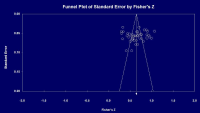
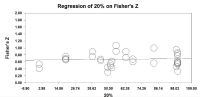
Purpose The purpose of this study was to conduct the impact of technology acceptance model(TAM) in sports field using a meta-analysis. Methods First of all, findings from 22 articles were used to analyze the relationship between perceived usefulness, perceived ease of use and intention to use via the comprehensive meta analysis(CMA) program. Results Its study results are as follows: First, results showed that TAM have a big effect on intention to use, with an effect size of .537. Second, the most influential effect size of TAM sub-factors was perceived usefulness. Third, in application and SNS had a most effect on TAM. Lastly, results found significant moderating evidence for ratio of female. But ratio of 20’s was not founded significant moderating evidence. Conclusion Based on the results of this study, it will be possible to pursue the behavior of the audience in the field where TAM is applicable in sports field.


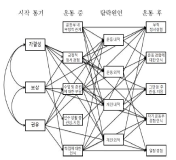
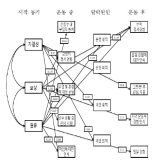
The purpose of this study is to explore the drop-out process of student-athletes and propose valuable policy ideas related to interscholastic sports. For this purpose, we surveyed 560 middle and high school drop-out student athlete's in 13 areas and finally 400 completed surveys were used for the study. To set the scales used for the study and test the reliability and validity of the scales, factor-analyses, Cronbach's alpha, and interfactor correlations were conducted using SPSS. For the main test, the paths analyses were carried out with AMOS program. As a result, we found two paths which had major effects on the drop-out process of student-athletes, self-efficacy path at the point of starting athletic career and negative relation path during athletic experiences. Based on these results, the following policy ideas were proposed. First, student-athletes should be able to join and leave athletic teams voluntarily. Second, the comfortable environments were provided to promote student-athletes' positive emotion toward athletic teams.


Purpose This study examines legal and institutional aspects of FA Compensation System (FACS) which was introduced by Korean professional football league in 2013. Methods This legal analysis reviews the current FACS in lights of several provisions of human rights in the Constitution and other relevant rules of law. Results First, the FACS violates Article 15 of the Constitution that protects 'freedom of choice to workplace' arguably implied under the 'freedom of occupation' provision since the system restricts a player's transfer within the league by requiring a transfer fee paid by the destination team even if the player has acquired the free agency status and his current contract is expiring. Second, the FACS would likely be unconstitutional according to precedents decided by the Constitutional Court and the National Human Rights Commission on the ground that 'freedom of occupation' is closely related to the rights to pursue happiness under Article 10 of the Constitution. Conclusions Based on the legal interpretations, the study argues complete abolition or significant revision of the FACS. This project calls for follow-up studies and further policy-making efforts given the practical magnitude and scholarly merits of the issue.
Purpose The goal of this article is to examine the unwritten law of sports - a moral law - in relation to the purposeful act of continuing to score, when winning has been already secured, in normative terms of sportsmanship. Methods To do this, this article analyzed previous debates on the unwritten law about overwhelming victory and looked at the pros and cons of this law. Then, I contemplated the reasons for these opposite views, as well as the values and theories underpinning these views from the perspective of the nature and morality of sports. Results My argument is that respect for sport should mean more than observing sporting rules and include respect for the tradition and practice of each sport: hence the necessity of the unwritten law regarding overwhelming victory. I also suggested that the mercy rule be applied in a heavily lopsided game in order to maintain sportsmanship in a rational way. Conclusion My discussion on the unwritten law about overwhelming victory from the viewpoint of sportsmanship may reveal the significance of the essence of sports, attitude towards competition as mutual request for excellence, and the importance of winning.
