Purpose The purpose of this study is to examine the elite sport system in Germany by selecting six keyword. Methods In order to review the literature, we reviewed the reports of sports organizations such as the Ministry of the Interior, the Olympic Games of Germany, the Sports Council of Germany, and the German sports policy, history, business, programs and financial status. Conclusion In Germany, athletic associations were created in the 40s and 50s and strengthened infrastructure, projects, and workforce infrastructure by the 60s and 90s. Through its long history and tradition, Germany is at the forefront of both the Winter and Sommer Olympics. Among them, the German Olympic Sports Federation, researchers Institute, Olympic training centers, Sports School, Kader-systems and federal police·military·customs are the main keyword of elite sports. In order to support the national players in Germany, the regional Olympic training center supports sports science, sports gymnasium, sports athletic high school, sports elite school, athletes' house are operated for selection and training of excellent athletes. And all the players are in the carder system and there is a system that allows them to enter the federal police, soldiers and customs so that they can support the human resources, facilities and programs as well as train and work at the same time.
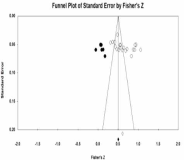
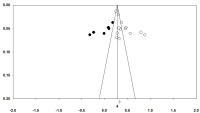
[Purpose] The purpose of this study is to analyze the effect size of the relationship between team identification and their intention to attend sport events and intention to purchase licensed team merchandise using a Meta-analysis. [Methods] To accomplish the purpose of the study, multiple databases were visited (e.g., RISS, KISS, Library of National Assembly) and studies were collected using the keyword of team identification. Through the search process, total of 92 studies were identified, among which 20 studies provided Pearson correlation coefficients between team identification and intention to attend and 13 studies between team identification and intention to purchase licensed team merchandise. The 33 studies were analyzed using Comprehensive a Meta Analysis(CMA) program. The analyses were done using random effect model assuming there were significant heterogeneity among the studies included. [Results] The overall effect size between team identification and intention to attend sport games was .567 and .403 for between team identification and intention to purchase licensed team merchandise, which can be classified as large effect size(Cohen, 2013). Sub-group analyses were done using types of publication(journal article vs. thesis). The results of the sub-group analyses indicated that the effect size differences were statistically insignificant. [Conclusions] As indicated in many previous studies, team identification was found to be a significant predictor of sport consumers’ behaviors. However, future studies need to find the reasons of heterogeneity in effect sizes.
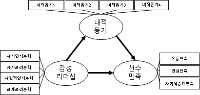
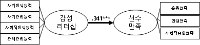
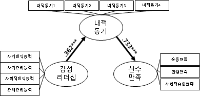
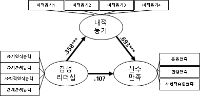
Purpose The purpose of this study was to examine the influence of coaches’ emotional leadership on athletic satisfaction and to investigate mediating effect of intrinsic motivation perceived by professional female basketball athletes in Korea and Japan. Methods 154 professional female basketball athletes in Korea and Japan participated in this study and responded to questionnaires which consisted of coaches’ emotional leadership, intrinsic motivation, and athletic satisfaction. The collected data were analyzed by frequency analysis, confirmatory factor analysis, reliability analysis, descriptive statistical analysis, correlation analysis, and structure equation analysis with using SPSS 23.0 and AMOS 23.0. Results The results of this study were as follows; Firstly, coaches’ emotional leadership had positive effect on athletic satisfaction. Secondly, coaches’ emotional leadership had positive influence on intrinsic motivation. Thirdly, intrinsic motivation had positively affect on athletic satisfaction. Lastly, intrinsic motivation completely mediated the relationship between coaches’ emotional leadership and athletic satisfaction. Conclusion In conclusion, these findings imply that coaches’ emotional leadership and intrinsic motivation are critical factors for improving athletic satisfaction.
PURPOSE This study aimed to develop a team building program for a middle school soccer team in order to verify its effects. METHODS A total of 50 middle school soccer players participated in the needs analysis, and 10 middle school soccer players participated the preliminary program. In addition, a total of 37 ‘S’ middle school soccer players and 2 coaches participated the final team building program to identify its effects. The team building program was developed through the following sequence: program goal setting, organization of program activities, and the pretest. Three types of questionnaires and a self-report were utilized to verify the effects of the team building program. RESULTS The team building program was developed based on interpersonal relationships, goal setting, and communication. The level of team cohesion, team communication, and coach-athletes interaction significantly increased through this program. Furthermore, the effects of stress relief and self-improvement were revealed through the self-report. CONCLUSIONS The team building program was determined to be effective and has various benefits. It is expected to contribute to the growth of middle school soccer players if coaches actively participate in the program with their athletes.
PURPOSE This study aimed to identify the decision-making process for consumers participating in sports centers based on an extended goal-directed behavior model (EMGB), and to provide empirical data for establishing effective operation strategies for sports centers, including additional risk perception of consumers during pandemic. METHODS A total of 446 surveys were used as the final sample. For data analysis, SPSS 21.0 and AMOS 21.0 were used for frequency analysis, correlation analysis, confirmatory factor analysis, and structural equation model analysis. RESULTS Except for hypothesis 2 and 9, all of the hypothesis were chosen. CONCLUSIONS The findings suggested that extended goal-oriented behavior models can increase consumers' cognitive and emotional factors through emotional aspirations, suggesting that a lower risk perception of COVID19 increases their desire to participate in sports centers, and provides academic fundamental data on how to increase and activate sports centers.
Purpose The purpose of this study is to explore the trend of K league exodus and its factors. Methods Qualitative case study was conducted by selecting 9 footballers and 7 their agents as the participants who have migrated from South Korea to China and the Middle East. Results The factors of migration were categorized as three push and pull factors such as economy (individual income and club's profit), policy (employment for foreign and military service) and environment (markets in home and abroad). To understand sport migration in the economic factor, there should be the environmental condition (overseas market) to pay high salaries and transfer fee to individuals and their clubs, and at the same time, the domestic market should be relatively poor environment. In addition, this study overcame limitations of economic and environmental factors by classifying Asian quota system and military service into political factor, and found the specificity (local context) of K league. Conclusions In conclusion, this study can be regarded as the first empirical work on sport labor migration in Korea and valuable as basic data of follow-up studies.
PURPOSE The purpose of this study was to explore violence in the Korean sports world and examine the reality of sports violence in the past and present by reflecting the voices of the field and academia through an in-depth analysis. METHODS First, through a systematic literature analysis, the essential problems of sports violence that have been discussed in academia were explored. Next, based on this, perception was explored by applying a multi-case study method to an in-depth analysis of the opinions of experts in academia and the field. Finally, by deriving the research results and discussing them, implications for this study were provided. RESULTS First, the essential problem of sports ethics was the change in sports ethics perception that was different from the sports ethics problem caused by the diversification of victoryism. Second, the essential problems of sports violence were ethics and sports ethics in society with different standards, and the unaltered perception and culture of sports ethics. Third, the problems and causes of sports violence were institutional changes and practical limitations of physical violence, control of the possibility of violence, insensitive verbal violence, cyber violence as a new form violence due to changes in the times, and rationalizations of bystanders. CONCLUSIONS This study is expected to serve as a catalyst for the field and academia by exploring the phenomenon of sports violence in more depth through the problems of violence by type and its causes according to the changing times.
As an attempt to think about the popularization of Korean sport history, this paper discusses three main things. First, it will be introduced what public/popular history is, how it has been developed, and why it is important to history as an academic discipline. Second, it will be summarized how sport historian embraced public/popular history into their practices in terms of what theoretical, critical, and methodological aspects they have focused. Third, I will discus why public/popular history is useful in the ways in which Korean sport history envisions its popularization in Korean society. To be more specific, I highlight two ideas: an insight for understanding sport history as a process and sport historiansʼ role of critic. Based upon these two, I will argue that Korean sport historians might need to actively embrace practices of public/popular history into their studies of the Korean sporting past.
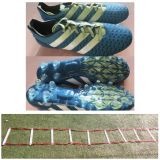
Purpose The purpose of this study was to investigate the lower extremity muscles activity during forward side step by soccer field ground types. Methods Fifteen elite high school soccer players participated in this study. Muscle activation patterns were recorded at 2000 Hz during forward side step task. Surface EMG of the tibialis anterior(TA), soleus(SOL), medial gastrocnemius(MG), lateral gastrocnemius(LG), peroneus brevis(PB) muscle was recorded, and the root mean square of the EMG was normalized, using a maximum voluntary isometric contraction(%MVIC). One-way repeated ANOVA was used for comparison among three soccer field ground types(natural grass, artificial turf, hard ground). Results Artificial turf displayed greater soleus and peroneus brevis activities compare to natural grass during forward side step task. Conclusions The relationship between increased soleus and peroneus brevis activation and greater incidence of injury in artificial turf versus natural grass requires further study. Soccer players routinely training on artificial turf for prolonged periods should be carefully monitored.

The purpose of this paper is to map how sport sociologists and sport historians have engaged in the study of race and/in sport. Focusing on scholars with two communities of the North American Society for Sport Sociology & Sport History, it investigates themes, historical/sociological philosophy, theoretical/methodological issues that underpin their works. To be more specific, mainly four types of research are detailed: 1) popular narratives that mostly celebrate black athletes’ success in sport, 2) so-called the early academic works that highlight the positive role of sport in advancing the issue of race in relation to social justice, unification, equality, and so on, 3) a group of researches informed by the positivism, which attempt to discover, investigate, identify racially problematic phenomena, incidents, policies, or incidents and explain why they happen, what makes them problematic, and how to solve such matters, and 4) critical paradigm that orients cultural studies based researches that attempt to explore the relationship between sport and race with focus on interpretive, theoretical, and reflective approaches. In conclusion, it is discussed why I pay attention to the critical paradigm, what it’s emergence means to the sporting academy, and in what ways we can embrace it into the Korean sporting academy.
