Purpose The purpose of this study is to explore ‘K League Influx (KLI)’ which is the phenomenon a number of international footballers migrate to South Korea and its factors. Methods Qualitative case study was conducted with 10 footballers who have migrated to South Korea and 4 their Korean agents. Results The KLI can be explained with four factors such as (1) Asian football dream and K league as a stop (not destination); (2) Brazilian footballer salary increase caused by Chinese football policy; (3) Financial crisis of European football market; and (4) The quantitative and qualitative changes in the agent market due to FIFA’s abolition of agent system and the development of new media. Conclusions These factors are close to the properties of external factor rather than internal factor. It requires various perspectives on sport labor migration (academic significance) and new management philosophy of K league and each club (practical discussion). Therefore, this study examined the possibility of 'selling-league' and suggested the follow-up study and policy direction related to it.
Purpose This study conducted legal, institutional and pedagogical consideration on C0rule in Korean collegiate sport. Methods (1) Systematically examined the unconstitutional elements of C0rule in terms of the basic rights of student-athletes, and (2) reviewed pedagogical validity in terms of higher education, college credit system and physical education. Results First, C⁰rule adopted the result (the credit) of the uniform education as the standard of sanctions. Providing discriminatory educational opportunities according to academic credit is regarded as the infringement of equal rights. Second, since the college sports league is the only place to prepare for vocational education and employment for student-athletes, restricting their opportunities according to the credit is also against the freedom of happiness and choice of profession. Third, C0 credit, the minimum standard, overlooked purpose and level of higher education and rigorous evaluation. Last, C0rule has resulted in overlooking the academic significance and status of college education, especially physical education. Conclusions This study is meaningful in that it brought the subjects to discourse field and provided opportunities to review the fundamental problem of the school sport and the basic rights of student-athletes. At the present stage of the transition of the school sport system due to the introduction of various regulatory systems, we should be careful about oligopoly and unilateral flow of knowledge and production of other alienation.
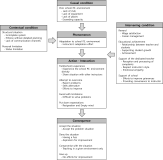
Purpose The purpose of this study is to explore the Instructor’s adaptation process of school P.E. environment in middle school sports club and to develop substantive level theory. Methods For this purpose, 17 sports instructors who had worked for more than 3 years at the middle school in Seoul were selected as research participants. The method of this study is the Grounded theory(Strauss & Corbin, 1990). Results The results of this study are as follows. First, as a result of open coding, the instructor's adaptation process of the school P.E. environment was organized into 104 concepts, 30 sub-categories, and 15 categories. Second, as a result of axial coding, a paradigm model for the adaptation process of the school P.E. environment was formed. Third, as a result of the selective coding, created the storyline of the adaptation process and made the core category, ‘instructor's adaptation process of the school P.E. environment in middle school’. Four types of adaptation process such as 'Acceptance type', 'Effort type', 'Compromising type' and 'Abandoning type' are derived through the formalization applied to the hypothesis of the core category. Conclusions Based on these results, the developed substantive level theory was evaluated and summarized.
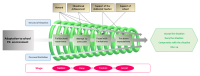

PURPOSE This study aimed to present the measures necessary to perform well in tennis clubs by examining the adaptation process of the MZ generation participating in tennis clubs. METHODS A qualitative case study was performed and data was collected through in-depth interviews, direct observations, and literature surveys. The data were analyzed by applying pattern matching among the analysis methods proposed by Yin (2014), and the reliability and validity of the study were demonstrated by consultations between colleagues, reviewing members, and comparing and analyzing previous studies. The study participants were seven MZ generation tennis club participants selected through snowball sampling (one of the non-probability samples). RESULTS Achieving a level of skill that allows for compatibility and the effort required for it, the acceptance of differences in club culture and between generations, having the etiquette necessary for Generation MZ, and falling for the charm of tennis itself were identified as factors for successful participation in tennis clubs. CONCLUSIONS This study is expected to help the MZ generation, who have recently been interested in tennis, continue their participation, as well as lay a small foundation for the expansion of the base of the sport by detailing the measures necessary to successfully participate in tennis clubs.
