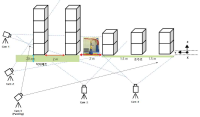
[Purpose] The purpose of this study was to compare Yeo 2 vault and YANG Hak Seon vault to verify the possibility of YANG Hak Seon vault. [Methods] The YANG Hak Seon vault and Yeo 2 vault performed by five Korean national gymnastic athletes, and the photographic images were collected using a high-speed camera and their kinematic characteristics were analyzed by 3D image analysis. [Results] The main variable of the post-flight phase S1, S4, and S2 were similar to YANG Hak Seon vault. S1 showed the largest at shoulder angle and the highest body center of mass at horse take-off. S4 showed the smallest shoulder angle at horse take-off, slow twisting at the post-flight ascending period, but faster femoral rotation during horse contact. S2 showed the slowest twist velocity in the ascending period of the post-flight and the smallest rotational distance and twist distance at the peak. S3 showed the slowest horse take-off velocity, the least time in the post-flight phase, and the hip joint was flexed at the peak. [Conclusions] S1 is required to increase the twist velocity by narrowing the shoulder angle during post-flight. S4 is required to strong push-up and an increase in the twisting velocity in the post-flight ascending period. S2 is required to shorten the horse contact time and increase the horse take-off angle through powerful femoral rotation after board take-off. S3 will have to get enough power from the preparation phase.
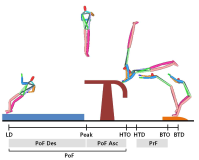

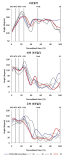
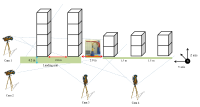
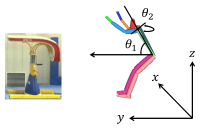
Purpose The purpose of the study was to perform a comparative analysis of the YANG Hak Seon technique carried out by "K" athlete with the kinematical data of "Y" athlete and propose a method to improve the YANG Hak Seon technique of "K" athlete. Method The subject recruited for the study was a male athlete from Korean national team (Age: 21, height: 1.65 m, body weight: 59.6 kg, and career: 11 years). Four high - speed cameras were used to analyze the 3D motion of the YANG Hak Seon technique performed by "K" athlete. The variables selected for analysis were the velocity of COM, displacement of COM, the rotational & torsional angle of the trunk and rotational & torsional angular velocity of the trunk. The results obtained were compared to the preexisting data of the "Y" athlete (data set from the published research). Results Firstly, the horizontal displacement of the YANG Hak Seon technique of the "K" athlete was observed to be shorter along with lower vertical displacement during landing compared to “Y” athlete. In addition, the overall horizontal velocity was low and vertical velocity was not generated which rises during the BC (board contact) phase. Although the rotational angular velocity of the trunk was lower during the BC, HC (horse contact) phase and LD (landing) phase, torsional angular velocity was higher during the LD. Conclusion In order to improve the completeness of the YANG Hak Seon technique of the K player, it is necessary to enter with a fast and low posture on the footplate during the initial phase. In the BC phase, it is essential to raise the COM simultaneously while landing on the footplate and increase the rotational angular velocity of the trunk.
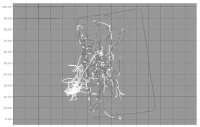
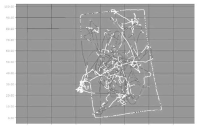
The purpose of this study was performance improvement through analysis of movement in elite field hockey players regarding positions using real-time GPS monitoring for compared training game and 2014 Incheon Asian Games. Fifteen elite women field hockey players (Defender: 4, Mid-fielder: 6, and Forward: 5) participated in this study. There were 2014 Incheon Asian Games Korean national team. Real-time GPS system analysis was completed during 10 training game appearances 5 2014 Incheon Asian Games appearances. The results of this study showed that in training game mid-fielder>forward>defender for 3, 4, 5, and 6 zone at speed zone by moving distance, in 2014 Incheon Asian Games forward>mid-fielder>defender for 6 zone at speed zone by moving distance. And moving distance by quarter increased all position in 2014 Incheon Asian Game more than training game. Therefore, These data might be useful to analysis of movement in field hockey players. Moreover improved performance and individual exercise ability by feedback for players distance, heart rate, and exercise trajectory. Thus, Gold-medal won at the 2014 Incheon Asian Games in field hockey.

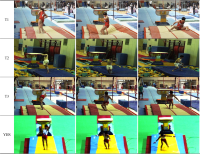
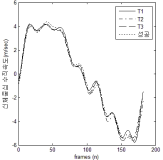
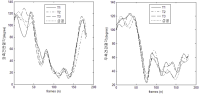
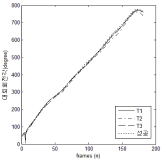
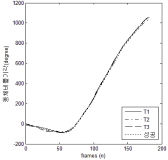
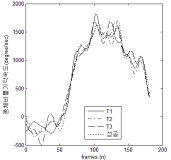
The research was a case study conducted in order to develop a new technique “YANG Hak Seon 2” for YHS athlete. A comparative kinematical three dimensional video analysis was performed with the use of high speed cameras. One successful trial and three of failure trials (T1: Falling backward while landing, T2: sitting reluctantly while landing, T3: Falling of sideways while landing). The result obtained from the study are as follows. Firstly when comparing the successful operation of the technique with failure trials, relatively higher landing angle was secured through increasing the thigh rotation and the body’s rotational velocity. Furthermore, despite increase in rotational velocity at twisting, stable landing was achieved through increasing the moment of inertia by spreading the left shoulder. Secondly, in case of failure trials while taking off the board, the thigh rotational angular velocity was comparatively less which ultimately affected the body position in the next phase of approach to the vault. Thus, due to the affected body position the athlete was not able to utilize the proper momentum of twist in positive direction Hence, it is considered that the velocity of center of mass might have also effected the operation not only the velocity while approaching the board.







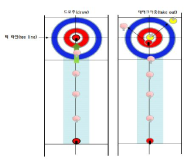
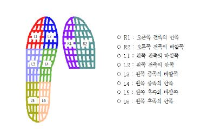
In this paper, we tried to find out the difference of CoM displacement, CoM velocity and Foot-pressure between draw motion and takeout motion in curling’s delivery motion. To do this, we experimented for 10 female athletes of curling national team(all athletes are in her 20th~30th ages) to carry out draw motion and takeout motion from backline to near hogline in state of speed limit. The limited speed was 3.80~3.90 sec for draw and 2.97~3.07 sec for takeout. From the experiments, we obtained the result like followings. 1. Draw motion is more increase than takeout motion in displacement of horizontal direction of CoM displacement. 2. Takeout motion is more increase than draw motion in displacement of vertical direction of CoM displacement. 3. Takeout motion is faster than draw motion in both of horizontal and vertical direction of CoM max. velocity. 4. Takeout motion is higher than draw motion in pressure of fore-foot and mid-foot of foot-pressure 5. Draw motion is higher than takeout motion in pressure of fore-foot and mid-foot of foot-pressure These result means that the characteristics of techniques for draw motion and takeout motion is differ from each other and it is necessary to take different training protocol individually to enhance athletes’s performance. And further research will contains another things like that the pursuit of curling stone’s rut by various delivery techniques
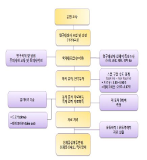



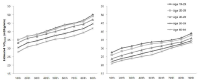
To provide the distribution of cardiorespiratory fitness including Bruce treadmill exercise time and estimated peak oxygen uptake (VO2peak) and investigate association with cardiorespiratory fitness and metabolic syndrome, sedentary lifestyle, or education level among Korean adults. Analysis of data on 2,006 adults (19-64 yr) who had completed a maximal grade treadmill exercise test, from the Sports Institute of Sports Science Fitness Standards (KISS FitS) project 2014-2015. The mean maximal exercise time was 11’26’‘, 11’18’‘, 11’06’‘, 10’03’‘ and 8’51’‘ (minutes and seconds) for men 19-29, 30-39, 40-49, 50-59 and 60-64 years of age, respectively, for women, it was 9’49’‘, 9’09’‘, 8’42’‘, 8’01’‘ and 7’33’‘ for the corresponding age groups. The mean peak oxygen uptake was estimated as 42.3, 41.8, 41.2, 37.6 and 33.6 ml/kg/minute for men 19-29, 30-39, 40-49, 50-59 and 60-64 years of age, respectively, For women, it was 34.0, 31.8, 30.3, 28.0 and 26.4 ml/kg/minute for the corresponding age groups. A positive association between cardiorespiratory fitness level and education level was observed for both men and women. Furthermore, participants with sedentary lifestyle had a significantly lower cardiorespiratory fitness than participants with activity lifestyle. Finally, Men with moderate and high fitness level had 50% and 87% lower odds for the metabolic syndrome, and women had 48% and 50% lower odds for the metabolic syndrome, respectively, than the ones with low fitness level after adjustment for age, smoking, alcohol intake, and sedentary lifestyle. These results can be used to track future Korean assessments and to evaluated interventions. The differences in fitness status by education level, sedentary lifestyle or metabolic syndrome can also be used to develop health policies, program and educational services.

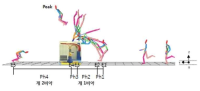
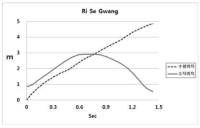
The aim of this study was to acquire essential information regarding Ri Se Gwang motion(element group Ⅱ, difficulty 6.4 point, double Tsukahara with tucked 1/1 twist), which Ri Se Gwang of North Korea performed during the final vault event of artistic gymnastic at Incheon Asian Game 2014, by analyzing motional characteristics. Firstly, Ri Se Gwang technique had second jump airborne time of 1.07 seconds and airborne height of 2.91m, which have great influences on the success of technique while having horizontal and vertical velocity of 2.73 m/s and 3.87 m/s, respectively, at the takeoff. These were sufficient jump motion for successful accomplishment of the technique however flight pattern was somewhat small which was mainly oriented vertically when compared to previous studies of Yeo and YANG Hak Seon 2 techniques. Secondly, blocking angle of vault contact was small at 9 degrees while having very small takeoff angle of 79 degrees. However, it had fast average trunk rotational velocity of 545 deg./s at the vault contact phase by rapidly bending trunk from the board takeoff until approaching the vault leading to achieve fast trunk rotational velocity of 452 deg./s after the take off in order to complete the airborne rotation successfully. Thirdly, the preparation phase of Ri Se Gwang technique had a distinct characteristics that the trunk was rapidly bent during the approach to the vault attempting aggressive blocking which leads to vertically oriented flight. It showed that this characteristic assists the motion of thigh snatch and the regulation of twist which strengthen airborne rotation for airborne rotational motion. And it also showed that sufficient landing and twist angles at the landing phase are possible with free rotational motion if the height of second jump reaches 3 m.



The frailty, characterized by reduced physiological function is closely related to a fall, disability, institutionalization, hospitalization, and mortality in the elderly. A reduced physical fitness is a major phenotype of the frailty. The purpose of this study was to investigate the relationship among pre-frailty, physical activity (PA) and functional fitness in the community dwelling elderly women. The study participants were elderly women (n=338, 70.6±4.2years) aged over 65 who took part in the Korean Healthy Fitness Criteria study for the National Fitness Award Project in 2015. The pre-frailty was defined using the Cardiovascular Health Study frailty criteria. PA was assessed using the International PA Questionnaire (IPAQ). The participants were classified as regular PA participants if they meet the World Health Organization (WHO) PA recommendation for the elderly. Functional fitness was assessed using the composite of the National Fitness Award fitness testing for the elderly. Quality of life was evaluated using EuroQoL visual analogue scale and WHO quality of life assessment. As the results, the pre-frail elderly women were significantly older and obese (body mass index, percent body fat, waist circumference) than the healthy elderly. The pre-frail elderly presented significant decreases in walking, moderate intensity, and total PA compared to the healthy elderly even after adjusted for age and percent body fat. However, no significant difference was found in vigorous-intensity activity between the pre-frail and healthy elderly. Also, the pre-frail elderly women showed the decrease in functional fitness and quality of life compared to the healthy elderly. Regular PA was associated with high levels of muscular endurance and coordination in healthy and pre-frail elderly. In pre-frail elderly, high levels of cardiorespiratory endurance was associated with PA. In conclusion, regular PA is inversely associated with fitness decline in healthy and pre-frail community-dwelling elderly women. Regular PA might attenuate fitness decline in pre-frail elderly women.
The purpose of this research is to provide the information about sports injury by surveying and analyzing a result, and to lead analytic and scientific training among the subjects being elite summer sport athletes. All sports injuries are recorded on injury report form and the following results were obtained. In Cycle sport, the prevalence of injuries of the low back, knees were highest. and In Table tennis sport, the prevalence of injuries of the ankle was highest due to the chronic fatigue. The prevalence of injuries of the shoulder, low back were highest due to the overuse of joints. In Badminton sport, the prevalence of injuries of low back, knees, ankles were highest by overtraining. In Gymnastics, the prevalence of injuries of the low back, knees, ankles were highest. In Archery sport, there is a lot of injuries to the shoulder and neck. In Weight lifting sport, the prevalence of injuries of the low back, knees, and ankles were highest. In Golf sport, the prevalence of injuries of knees, low back were highest. In Hockey sport, the prevalence of injuries of ankles, knees, low back were highest. In Boxing sport, the prevalence of injuries of hands, shoulder, the low back were highest, In Judo sport, there are overall damage occurred in parts of the whole body, but the prevalence of injuries of ankles, knees, low back were highest. In Fencing sport, the prevalence of injuries of the low back, knees were highest. In Wrestling sport, although there is a difference slightly depending on freestyle and Greco-Roman, but the prevalence of injuries of knees, ankles, low back were highest. In Handball sport, the prevalence of injuries of ankles, knees were highest. In Taekwondo, the prevalence of injuries of ankles, knees, feet were highest.
