Purpose The purpose of this study lies in: 1) clarifying what constitutes coaching ethics; 2) providing a theory to set up a coaching ethics in Korea; 3) and offer a direction to coaching ethics based on its normative traits. Methods In order to achieve this purpose, the following has been done: 1) a review of existing literature has been done to analyze the relationship between professionalism and ethics in coaching and explicate the concept and necessity of coaching ethics; 2) an effort has been made to answer such questions as “why and how much should a coach be ethical?”; “How should a coach be ethically evaluated?”; 3) An analysis of ethical responsibility embedded in coaching has been done, focusing on four ethical theories: Kantian categorical imperative, Aristotelian phronesis, Simon’s broad internalism, and Morgan’s conventionalism. Results This study reviews prior literature considering the relationship between professionalism and ethics in coaching and offers theoretical evidence to explain coaching ethics and its normative aspect. This will help resolve complicated ethical predicaments arising in the field. Conclusions This study emphasizes the role of coaches to improve fairness and wholesomeness in the field of sport, as well as suggests a coaching ethics required of a profession with internal regulations. Coaching ethics not only increases a sense of responsibility on the part of coaches but helps create a virtuous circle in which coaches’ ethical sensibility is reproduced in athletes as well. All in all, coaching ethics can stop important qualities of sport from deteriorating due to commercialism and the winner-takes-all attitude prevalent in sport today and contribute to a fair and wholesome sporting culture.
Purpose This purpose of this study was to understand how physical education can contribute to healthy emotions and activities of human beings. Methods We analyze Eva Illouz's emotional capitalism theory, the position and role of emotions in Spinoza, and Durkheim's theory of religious sociology. Results Illouz shows that emotions are coordinated by rationality through the analysis of emotional capitalism, and that expressions of natural emotions are restricted and controlled even in the area of intimacy. In Spinoza, emotions are divided into three emotions: joy, sadness, and desire as concepts of body movements. Emotions reveal that they are closely related to human activity, and emotions of joy are calculated for human emotional development Emphasize the need to organize meetings of possible bodies. Durkheim argues that while society is placed in a religious position, society is the subject of individual praise and the reality of baptizing individuals into morality. At this time, festivals and rituals reveal individuals to be a powerful mechanism that leads to devotion to society and strengthens individual’s sense of community and morality. Conclusions Making physical education classes as festivals enhances students' sense of community. It can also be an activity that allows students to have healthy moral and emotional energy.

Purpose The present study explores educational values of professional coaches from perspectives as educators while they are giving the players sports coaching. Since free agent system was introduced in 1999 at Korean Baseball Organization(KBO) league, the socio-economical differences between players and coaches are getting bigger and bigger. In this situation, professional coaches tend to have more difficulties in interacting with the players. The study focuses on looking into professional coaches' educational agony and reward. Also, it highlights their educational values as educators rather than coaches. Methods Two professional baseball coaches and a TV commentator participated in the study: all past professional players, and professional coaches for more than 10 years. The researchers collected data through semi-structured in-depth interviews; each participant was interviewed three times. The researchers recorded and transcribed all of the interviews; then, the researchers reread the interview transcripts and inductively produced codes for themes whenever emergent codes appeared. Verbatim quotations from the interviews are excerpted in the present research report. Results The findings indicate that, first, the participants are all highly motivated in giving lessons to the players. They all helped the players overcome the difficulties and be good players. They emphasized the importances of endeavors and attitudes during their lessons to be well-received by the players. Second, the participants agreed that good coaches should have the ability to find the potentials of the players and have personality to gain the players' trust. They always have to work and study hard to keep expertises. Conclusions This study argues that the participants are playing their roles in a sport coaching area not only as coaches, but also as educators.
[Purpose] This study analyzes ethical issues about genetic technology used for the enhancement of athletes. In so doing, this study aims to rethink gene manipulation in sports and suggest theoretical groundwork for an ethical discussion of gene doping, as well as providing some guidelines. [Methods] For this purpose, this study looks at the relationship between genetic engineering and morality as discussed by eminent domestic and international philosophers, medical ethicists, and scholars of sport studies. Then, the pros and cons of the use of genetic engineering in sport are analyzed to show the different values embedded in each of the opposite positions. [Results] This study identifies three points of debate: fairness, coercion, dignity and autonomy. Through a literary and philosophical review, it is revealed that prior criticism against gene manipulation has logical loopholes. [Conclusion] Rather than approaching the issue with groundless fear and prejudice, it is necessary to look into its benefits and ethical problems in detail. In addition, better equipped ethical as well as practical grounds are required to control the introduction of gene doping technology.
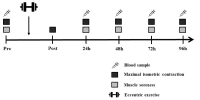
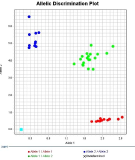
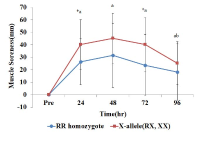
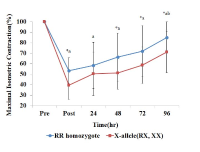
[Purpose] The purpose of this study was to examine the change of muscle damage markers after maximal eccentric exercise and to verify the difference of recovery according to ACTN3 gene polymorphism. [Methods] Fifty healthy males participated in this study. Subjects performed 25 times/1 set (total 2 set) maximal eccentric contractions of the elbow flexor muscles on a modified preacher curl machine with a between-sets rest time of 5 min. Maximal isometric contraction (MIC) was measured 6 times (pre, post, after 24 h, 48 h, 72 h and 96 h). Muscle soreness (SOR) was measured 5 times (pre, after 24 h, 48 h, 72 h and 96 h). Blood samples were collected 5 times (pre, after 24 h, 48 h, 72 h and 96 h). ACTN3 gene polymorphisms were identified using polymerase chain reaction (PCR). Data were analyzed using a 2-way repeated measure ANOVA and post hoc Bonferroni test. [Results] Analysis of ACTN3 gene polymorphism revealed the following distribution: 22% RR (n=11), 50% RX (n=25), and 28% XX (n=14). Individuals were classified into the RR homozygote group (n=11) and the X-allele group (n=39). MIC showed a significant difference between groups and interaction (p<.05). The groups differed significantly in MIC at 48 h, 72 h, and 96 h after exercise and the X-allele group decreased more than the RR homozygote group. The groups differed significantly in muscle soreness and interaction (p<.05). SOR in the X-allele group was significantly higher than in the RR homozygote group at 24 h after exercise. Although blood CK activity was lower in the RR homozygote group than in the X-allele group, but there was no significant difference between the groups (p>.05). [Conclusion] The RR homozygote group showed lower muscle strength reduction rate, muscle soreness and blood CK activity than the X-allele group. This indicates that RR individuals have a lower risk of exercise-induced muscle damage than those with an X-allele.
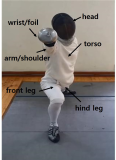
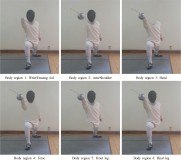
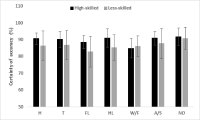
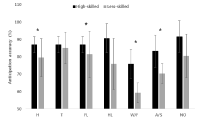
Purpose The purpose of this study was to establish the differences of anticipating accuracy and confidence according to fencing expertise and spatial occlusion region. Methods For the purpose of this study, the anticipation ability of 6 high-level fencing players and 6 low-level fencing players were analyzed. All subjects performed the 60 tasks of anticipating the attack positions(thorax, thigh, toe) from observing the fencing video screen using spatial occlusion technique. The spatial occlusion technique was used in 6 particular body of opponent’s movement. For statistic analysis, data was analyzed through independent T-test measure. Moreover, Paired t-test were used as follow-up analysis. Results The results of the study were as follows: In terms of accuracy anticipation, the main effect of expertise was significantly different. Specifically, when the spatial occlusion technique was applied in head, left leg, arm, and a foil, the accuracy of anticipation was significantly different. Moreover, comparing with no-occlusion condition, anticipation accuracy decreased when spatial occlusion technique was applied in arm and foil. In terms of confidence, there was no significant difference between level of expertise. Conclusions In order to effectively anticipate the opponent’s movement in fencing sports, it is necessary to focus on the visual cues of arm/shoulder, and the foil. Especially, focusing on the foil movement might provide the core informations on anticipation ability.

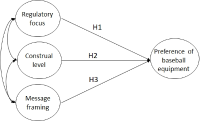
Purpose The purpose of this study was to analyze the propensity to consume the consumer of the baseball equipments who have difference of the product preference by regulatory focus, and who have construal level and suitable message framing. Methods Populations are consumers who have purchased the baseball equipments before, and the sampling groups, five different society baseball group’ league from Seoul and Kyeongi-do, were distributed, 318 copies, by convenience sampling. The questionnaire proceeded by three-way completely randomized design with stimulated sentences of four different advertisement compartmentalized by the regulatory focus, construal level and message framing. The analysis utilized SPSS 21.0 to perform the frequency analysis, manipulation check, independent t-test, two-way ANOVA, and Scheffe was used to post-hoc. Therefore, the result of this study is as below. Results First, after analyzing the distinction of the regulatory focus of the consumers of baseball equipments, the preference of the consumer who has improving focus was higher than that of consumer who has the prevention focus. Second, preference differentiation analyzed by construal level and the message framing of the consumer of the improving focus, the preference was higher when the message framing was positive, and the construal level was in short time. Third, preference differentiation analyzed by construal level and the message framing of the consumer of the prevetnion focus, there was no difference of the preference of the equipments followed by the construal level and message frame for prevention focus consumers.
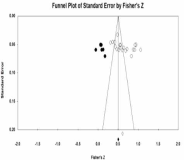
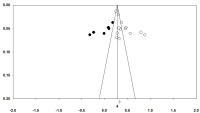
[Purpose] The purpose of this study is to analyze the effect size of the relationship between team identification and their intention to attend sport events and intention to purchase licensed team merchandise using a Meta-analysis. [Methods] To accomplish the purpose of the study, multiple databases were visited (e.g., RISS, KISS, Library of National Assembly) and studies were collected using the keyword of team identification. Through the search process, total of 92 studies were identified, among which 20 studies provided Pearson correlation coefficients between team identification and intention to attend and 13 studies between team identification and intention to purchase licensed team merchandise. The 33 studies were analyzed using Comprehensive a Meta Analysis(CMA) program. The analyses were done using random effect model assuming there were significant heterogeneity among the studies included. [Results] The overall effect size between team identification and intention to attend sport games was .567 and .403 for between team identification and intention to purchase licensed team merchandise, which can be classified as large effect size(Cohen, 2013). Sub-group analyses were done using types of publication(journal article vs. thesis). The results of the sub-group analyses indicated that the effect size differences were statistically insignificant. [Conclusions] As indicated in many previous studies, team identification was found to be a significant predictor of sport consumers’ behaviors. However, future studies need to find the reasons of heterogeneity in effect sizes.
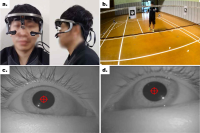
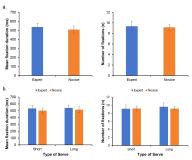
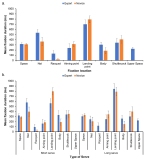
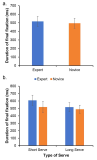
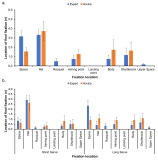
[Purpose] The purpose of this study was to examine the differences in visual search strategies between expert and novice badminton players while performing badminton serve. [Method] To this end, expert (more than 10 years experience) and novice (less than 6 months experience) badminton players performed 15 trials of two types of serve (i.e., short-serve and long-serve), in total 30 trials. All the participants’ eye movement was recorded during each trial, and mean fixation duration, fixation distribution, final fixation duration and location, and gaze entropy were analyzed. [Results] The results showed that there was no difference in mean fixation duration between expert and novice players. The analysis of mean fixation duration on each location showed that participants fixated more on the net while doing short serve whereas fixated more on the space when they did long serve. In particular, expert players fixated more on the space while doing long serve than novice players, and fixated more on the net and racquet for the short serve. However, novice players fixated more on the location of shuttle would be landed. The final fixation duration was not different between expert and novice players. Further, expert players showed higher gaze entropy than novice players. [Conclusion] The findings indicate that expert players fixated more on the net for the short serve, and the space for the long serve, and visual search strategies of experts were more varied than novice players.


[Purpose] The purpose of this study was to examine acceptance intentions of Sports O2O Service Potential consumers using the revised model of goal-directed behavior. [Methods] The 330 surveys were distributed to potential consumers through convenience sampling method for pilot study. Due to the reliability of data, 42 samples were discarded and 288 samples were put to actual analysis. Then data were analyzed for frequency analysis, reliability analysis, correlation analysis and structural equation modeling technique via SPSS 23.0 and AMOS 22.0. [Results] The results of this study were as follows. First, attitude and subjective norm had a positive effect on desire. Second, perceived behavior control did not affect on desire but had a positive affect on acceptance intention. Third, positive anticipated emotions had a positive effect on desire but negative anticipated emotions did not effect on desire. Fourth, desire had a effect on acceptance intention. [Conclusions] According to the result, sports O2O service operators should do best to improve consumers positive attitude. Especially, they have to establish marketing strategies of introducing strong aspects of sports O2O services. Also, providing easy processes and intuitive interface are needed to consumers. To promote sports O2O services to potential consumers which is unfamiliar to that services, it is important to induce easy ways for potential consumers to experience sports O2O services.


