Purpose The purpose of this study was to investigate the effects of regular vigorous- and moderate-intensity aerobic exercise on serum brain-derived neurotrophic factor (BDNF) level, aging- and lifestyle disease-related blood components in middle-aged women. Methods The participants were recruited from a total of 19 physically healthy people aged 50-59 years, and were randomly divided into vigorous-intensity aerobic exercise (VIAE, n = 10) and moderate-intensity aerobic exercise (MIAE, n = 9) group. The participants were performed vigorous- and moderate-intensity aerobic exercise three times a week for eight weeks, and body composition measurement, graded exercise test, blood collection were performed before and after. Results Mean exercise time was significantly longer in the MIAE group than in the VIAE group. The V̇O2max was significantly higher in the VIAE group than in the MIAE group. Body weight, BMI, and body fat percentage were significantly lower than pre both groups. The BDNF concentration was significantly higher in the VIAE group than in the MIAE group. The dehydroepiandrosterone sulfate (DHEA-s) and insulin-like growth factor-1 (IGF-1) concentration were significantly higher than pre both groups. The free fatty acid and triglyceride concentrations were significantly lower than pre both groups, and HDL-C concentrations were significantly higher than pre both groups. Conclusions Vigorous-intensity aerobic exercise not only increases maximal oxygen uptake and blood BDNF level in middle-aged women, but also induces positive changes in aging-related hormones and lifestyle-related blood variables.

Purpose This study aims to find out the attitude changes of consumers on a corporate sponsor in a cause related marketing based on frequency of information exposure and the image of the sponsor. Methods The data were collected from 191 students of C university in Seoul and its vicinity. The data were collected three times from the sample to see the attitude changes over time. The hypotheses of the sutdy were developed based on meaning transfer theory and spreading activation theory. This study hypothesized that the attitude toward a sponsor would change in a positive direction when consumers are exposed to related information and the change would be moderated by the frequency of information exposure. Also, the changes in attitude would be different based on the image of sponsors(i.e., positive image sponsor vs. negative image sponsor). The hypotheses were analyzed using mixed-design ANOVA. Results The results of the analyses indicated that the attitude change was greater when the frequency of information exposure was higher. The attitude change in positive image sponsor was statistically lower than that of negative image sponsor possibly due to ceiling effect.

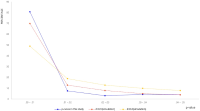
Purpose This study was aimed at laying out criticism regarding statistical hypothesis testing and presenting realistic alternatives focused on published studies of sports management in Korea. Methods Among 202 studies compiled by the Korean Society for Sport Management, vol. 19, no. 1 through vol. 23, no. 6, 115 studies which used the null hypothesis significant testing were finally selected. After data coding for selected studies, p-curve, the distribution of p-values which reported in individual studies, was schematized, and than adequacy about the sampling method and result descriptions were analyzed. Results The ratio of p-values close to zero was relatively very high in p-curve although there was no clear evidence of p-hacking. Also, approximately 82% of the studies used convenience sampling method, and incorrect descriptions in part of result and discussion due to lack of understanding of statistical hypothesis testing was found in some studies. In conclusion, the shortcomings of statistical hypothesis testing which commonly used in academic field were depended on not a defect in the method itself but researchers who misused statistical hypothesis testing. Conclusions Researchers in sport management field need to understand the advantages and disadvantages of statistical hypothesis testing and consider to use both confidence interval and effect sizes to compensate the disadvantages of p-value.
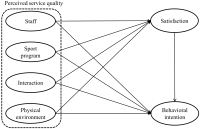
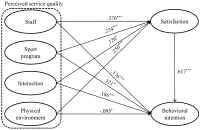
Purpose This study aimed to investigate the impact of perceived service quality on satisfaction, and behavioral intention in migrant members of German sport clubs. Methods The questionnaire was structured in four sections: perceived service quality (four dimensions and 12 items), satisfaction (two items), and behavioral intention (two items). With data from 438 members of 33 sport clubs in western Germany, SPSS 23.0 and AMOS 23.0 were utilized to conduct factor analysis, reliability, validity, and structural equation modeling analysis. Results The results of this study indicated that (1) staff, sport program, interaction, and physical environment in perceived service quality had a significantly influence on satisfaction, (2) staff, sport program, and interaction significantly affected behavioral intention, and (3) satisfaction was found to have significantly impact on behavioral intention. Conclusions The delivery of high-quality services can promote satisfaction, which in turn lead to behavioral intention. The empirical results suggest that the practitioners and sport club mangers should understand the importance of perceived service quality for the retention of members in sport clubs.
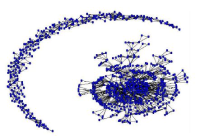
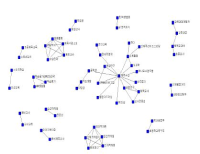
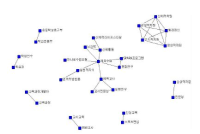
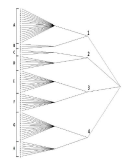
The purpose of this study was to identify the structure of knowledge in Sport Pedagogy field. Using bibliometric and social network analysis this study analyzed the keywords and citations appeared in Korean Journal of Sport Pedagogy and Korean Journal of Sport Science during 2006-2015 period. Total of 341 research papers which include 1301 keywords and 14826 citation were analyzed utilizing social network analysis as well as keywords frequency analysis, keyword co-occurrence, citation and co-ictation analysis. Results of this study showed that teaching, curriculum, and teacher education were three central theme in Sport pedagogy field. Key words such as physical activity, PE teacher, action research, and after school sport club activity were prominent research interests for scholard in the field. Quadradic Assignment Procedure analysis showed major research interests has not been changed between two periods of 2006-2010 and 2011-2015. Choi(2010)'s and You(2007)' books were most cited individual work and have influenced sport pedagogy researchers over the five years.

PURPOSE This study analyzed differences in ball speed and kinematic, kinetic characteristics according to stride length. METHODS Forty participants recruited for the study were divided into two groups based on stride length: an over stride group (overstride, OS) and an under stride group (understride, US). Independent sample t-tests were conducted to analyze differences in pelvis and trunk kinematics, ground reaction forces (GRF), and timing of pitch between groups. RESULTS Significant differences were found between groups in drive leg GRF impulse, pelvis, trunk closed angle and pelvic angular velocity (p<.05). Furthermore, the OS had statistically later pitching timings than the US at stride foot contact, maximal external rotation, and ball release phases (p<.05). CONCLUSIONS The maximized drive leg GRF impulse created a wider stride, significantly increasing the pelvis and trunk’s opening angles. Additionally, the OS displayed characteristics of later pitching timings compared to the US. However, since no significant differences in ball speed were observed between groups based on stride length, perhaps stride length does not contribute directly to ball speed. Future research should investigate optimal stride length tailored to individual flexibility and physical characteristics.
PURPOSE This study aimed to identify the dimensions of sport brand authenticity and to develop a valid and reliable scale for measuring such dimensions. METHODS Along with a sequential mixed method design, qualitative researches were conducted (a literature review on brand authenticity and the inherent value of sport, 5 one-to-one expert interviews, and a Delphi survey of 10 researchers). Based on the qualitative research results, an EFA (n=304), 2 times CFA (1st: n=304, 2nd: n=311), and correlation analysis using the other scale (brand relationship quality, brand attachment, brand credibility) were conducted to test reliability, construct validity, and criterion-related validity. RESULTS In the qualitative research results, 8 dimensions with 36 items were extracted; however 6 dimensions (originality, connectedness, legitimacy, authority, sport spirit, and expertise) with 28 items were identified as appropriate structures from EFA and CFA, and the relations between all the dimensions and other scales related to consumer attitude were statistically significant in the correlation analysis. CONCLUSIONS The findings suggest that the scale in this study could provide a new and specific perspective on sport brand authenticity, which is constructed using a general aspect and a sport specific aspect, and an understanding of the concept of sport brand authenticity in other sport industries.
PURPOSE This study investigated the experiences of national-level female elite athletes with disabilities and examined their support needs within a policy framework, aiming to develop strategies for advancing elite parasports. METHODS To address this objective, semistructured interviews were conducted with 11 Korean female para-athletes (M = 46.6 ± 9.01yrs). Two researchers with experience in parasports developed the interview protocol. Individual interviews employed open-ended questions to explore multiple aspects of participants’ athletic careers. Each electronically recorded interview lasted 71–176 mins. Constant comparative method to iteratively generate themes from interview transcripts. RESULTS Using the Sports Policy Factors Leading to International Sporting Success framework, 9 common policy factors were identified, yielding 18 corresponding themes. Furthermore, the factors “Classification System” and “Family Support” were found to influence every stage of an athlete’s career, from initial attraction to retirement. CONCLUSIONS To enhance the success of Korean female athletes with disabilities, the following considerations are recommended: (1) establishing targeted support systems for post-partum athletes and navigating dual roles as athletes and mothers, (2) developing individualized talent pathways based on athletes’ circumstances and performance rather than agebased criteria, (3) expanding multidisciplinary support staff and resource provision to optimize training environments, and (4) strengthen specialized coaching capacity for female athletes with disabilities.
PURPOSE This study aims to show that the ground for moral condemnation for an act, including cheating, is too vague and ambiguous in sports. Further, in sports, such condemnation and moral assessment must be found in ethical conventions within sports communities. METHODS I discuss how to distinguish between acceptable and unacceptable conduct in sports—what exactly is a moral action in sports, and on what basis moral condemnation or praise can be imposed on an action. These are discussed to understand the complexity and ambiguity of sports norms. Next, by examining the concept of cheating offered by prominent moral philosophers and sports philosophers, I argue that the concept of cheating does not have a useful moral compass for identifying cheating in sports. Finally, I show that the practical reasons used by sports communities to justify the normative qualification of actions in a specific way cannot be separated from the practical reasons produced by sports practices. RESULTS I argue that, since cheating in sports does not have the status or qualification of a concept, the evaluation of ethical behavior in sports should be based on the conventional norms instituted within the realm of sport as its starting point and moral basis. CONCLUSIONS Therefore, the normative evaluation of whether an action in sports has been ethically justified should be undertaken from a conventional evaluative perspective operating within the sports community rather than relying on a philosophical verification based on independent reason outside sports.
PURPOSE The aim of this study was to investigate the effects of 12-week instrumental pilates exercise on isokinetic muscle function and body composition of healthy college women. METHODS Twenty-four college women (aged 21.6±1.3yrs) were recruited to the study. The participants were divided into two groups, as the instrumental pilates group (IPG, n=12) and the control group (CG, n=12). The springboard pilates exercise was conducted 3 times a week for 40~60 minutes during 12 weeks. RESULTS There was significant interaction effects in the right knee and left · right elbow extensor muscles (60°/sec) and left knee flexor and right elbow extensor · flexor muscles (180°/sec)(p<.05, p<.01). There was no significant interaction effects in the muscle mass of the total body, trunk, arms, and legs (NS) and also in the serum growth hormone, insulin-like growth factor-I and 25(OH)Vitamin D (NS). Serum creatine kinase was significantly increased (p<.05). There was also no significant interaction effects in weight, body fat, serum total cholesterol, triglycerides, low & high-density lipoprotein cholesterol (NS). CONCLUSIONS These results suggest that although prolonged instrumental pilates exercise of healthy college women might be improving isokinetic muscle function, there is no increasing effect of muscle mass.
