PURPOSE This study systematically observed and analyzed nonverbal behaviors performed during table tennis matches to develop a coding system facilitating an indepth understanding of their strategic and psychological functions. The key purpose of the study is to lay a foundation for practical applications and future research. METHODS A descriptive coding approach was used to develop a framework for the analysis of athletes’ nonverbal behaviors. The process of development followed a structured 10-step procedure that involved video analysis, expert review, and intercoder reliability assessment. Three trained coders participated in the development and application phases and were supported by two additional observers who had no pre-existing knowledge of the research purpose to enhance objectivity. Inter-coder reliability was evaluated using percent agreement and intraclass correlation coefficient. RESULTS In this process, 17 distinct nonverbal behavioral categories were identified and organized into four overarching categories: (1) Encouraging behaviors, intended to boost morale and concentration; (2) Equipment check behaviors, interpreted as attributive actions adopted to externalize responsibility for errors; (3) Pace control behaviors, which are intended to regulate match tempo and disrupt the opponent’s rhythm; and (4) Negative emotiondriven behaviors, which reflect internal emotional struggles. CONCLUSIONS These findings indicate the strategic and psychological significance of players’ nonverbal behaviors in competitive sports. The coding system developed in this study provides an objective framework for understanding athletes’ behaviors, providing insights that can contribute to emotion regulation during matches and the development of strategies for psychological warfare with opponents.
PURPOSE This study assessed elite Taekwondo athletes’ physical fitness and developed reference standards for both their basic and specialized physical fitness. METHODS Data for analysis were collected from 870 athletes: from national teams, 123 elite Taekwondo athletes from the Performance Analysis and Assessment System (PAAS) administrator website (1999–2020); from regional sports centers, 731 collegiate and general division elite Taekwondo athletes (2015–2019); and from Y University, 16 elite Taekwondo athletes. Through measurement items’ selection and categorization, 20 physical fitness items were selected for the reference standards’ development, including 9 for basic fitness and 11 for specialized fitness. Taekwondo weight classes were divided into two: light + middle (fin, fly, bantam, feather) and middle + heavy (light, welter, middle, heavy). RESULTS Descriptive statistics for basic and specialized physical fitness items were categorized by gender and athletes’ fitness level. The reference standards’ development was aligned with existing standards, integrating the Cajori physical fitness 5-levels. It also introduced minimum physical fitness reference standards and target achievement reference standards for evaluating elite Taekwondo athletes’ physical fitness. CONCLUSIONS The reference standards proposed here can serve as objective indicators in selection of national representative athletes and also provide foundational data to establish fitness goals and evaluate future elite athletes’ physical fitness.
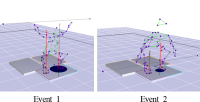
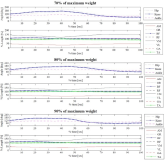
Purpose The purpose of this study was to identify the lower extremity muscles length change according to the increase of the weight during snatch. Also, through the muscle contraction velocity analysis, it is necessary to identify muscles that require rapid muscle contraction. Methods The subjects were 10 national weight-lifters. Their mean age was 29 ± 3.84 yrs, body weight 71.3 ± 16.04 kg, height 1.63 ± 0.07 m, and the highest recorded height 128 ± 36.30 kg. Experiments were performed during the snatch to 70%, 80%, and 90% of the individual highest records. The analysis variables were the lower extremity angle, angular velocity, muscle length and muscle contraction velocity and were calculated by biomechanical modeling. Statistical analysis was performed with a repeated measure with one-way ANOVA to analyze the difference between the increase weight (70%, 80%, 90% of peak) and the dependent variable (angel, angular velocity, muscle length and muscle contraction velocity). Results According to the results of the study, there was no statistical difference in angle, angular velocity and muscle length with increasing weight. However, in the comparison of the muscle length, muscle length of the vastus medialis, vastus lateralis, biceps femoris, rectus femoris were statistically higher than other muscles. Also muscle contraction velocity of the rectus femoris, biceps femoris, vastus medialis, vastus lateralis, rectus femoris were statistically higher than other muscles. Conclusion In the snatch, the dominant muscles were the muscles around the femur, and the co-contraction of biceps femoris and great adductor muscles would contribute to improve the performance.
The purpose of this study was to examine psychological capital acquisition through Asian Games Participation. 17 of national women football players were completed Psychological Capitals Questionnair. The psychological capital consists of optimism, psychological skills, self-management, collective efficacy, and performance perception was investigated after the team call-ups and before the team-release. The data was analyzed by paired t-test. As results, Korean women football players’ collective efficient and performance perception showed a statistical significance at the beginning of the team call-ups but optimism, psychological skills, and self-direction did not show statistic significances. The team-harmony, interpersonal-management, team-power, sufficient training, trust in coach, efficient communication, and psychological football factors, which were subfactor of football players’ psychological capital, showed statistical significances. However, confidence, concentration, goal-setting, imagery, willpower, anxiety-control, mental-management, life-management, training-management, innate-behavior management, physical-management, football skills, mediative skills, and football intelligence factors did not have statistic significances. These results demonstrate that effects of mega sporting events-like experiences and psychological factors’ variability and inflexibility according to weather changes should be considered when it comes to discussion of psychological factors regarding players’ performance. It is expected that this study would be a fundamental resource for understanding of psychological influences through participations in mega sporting events and discussions about further psychological interventions for teams with environmental consideration as well as methodological developments which could measure effects of the psychological interventions.

This study aimed to analyze the patterns of service return and the 3rd stroke in relation to the winning and losing points in Badminton men's doubles matches. Especially the comparison of the patterns between rally point and service server game systems was made. Video records of 12 top elite teams were analyzed. As a result, there were significant differences in the total stroke patterns between the rally point system and the server game, and there was a higher offensive stroke tendency. After classification of situations with ‘after the service trial’ and ‘after the service return’, there were high number of winning ratio and offensive stroke in the after the service situations. There were no significant difference in the winning/losing points and winning ratio when the types of 3rd shot attempts were analyzed. I case of the win and lose in service return, there was a significant difference in the server game while not in the rally point system. Offensive stroke ratio in the server’s return categories and the service return strokes’ categories, and was no difference in shots after the return of service in the server team. From the investigation of offensive stroke ratio and winning ratio, there was a high ratio in the rally point system game but no difference in the server game. When aggressive service return took place, rally point system had higher winning ratio, but the server game system did not display such characteristic. Based on these results, recommendations of service anticipation and aggressive plays for Korean Men's doubles game have been suggested.
PURPOSE The purpose of this study was to develop the estimating equations for 4 types of Wingate Anaerobic test setting. METHODS 80 male elite athletes performed 4 trials of the Wingate Anaerobic test by each type. Subjects were conducted the retest one week later. Data collected from the Wingate Anaerobic test included mean power, peak power, and power drop for 30s were measured. Coefficient of correlation was used for validity of type 1(DOS version) and the other types(ver. 2.24, 3.3.0, and 3.2.1). Pearson’s correlation coefficient was used to examine the reliability of test and retest. Simple regression analysis was used for calculating the estimating equation. RESULTS There was significant correlation for absolute value(Watt, p<.01) and relative value(Watt/kg, p<.01) of mean power, absolute value(W, p<.01), relative value(Watt/kg, p<.05), and power drop rate(%, p<.01). Test and retest reliability was excellent for all test variables(p<.01). CONCLUSIONS From the all results, the estimating equation was calculated to convert all outputs from each type to the other types of the Wingate Anaerobic test setting. These findings suggest that the estimating equations are compatiable to 4 types of Wingate Anaerobic test setting.
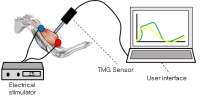
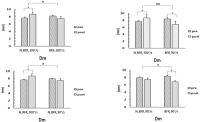
Purpose The purpose of this manuscript was to investigate the effect of high and low speed blood flow restriction versus non-blood flow restriction isokinetic exercise on isometric muscle strength, muscle fatigue, and muscle contraction displacement. Methods The subjects were consisted of ten males without non-specific muscular skeletal disease. They were classified into four training groups: ① high speed(300°/s) without blood flow restriction, ② high speed(300°/s) under blood flow restriction, ③ low speed(90°/s) without blood flow restriction, ④ low speed(90°/s) under blood flow restriction. Before and after the intervention, all of the subjects underwent measurements of isometric quadriceps strength, muscle fatigue, and muscle contraction displacement. Results In regard to isometric quadriceps strength before & after intervention, there was no significant difference between groups. For the lactic acid measurement before & after intervention, there was a signigicant difference between groups(p<.05). Also, there was a significant difference between groups(p<.05) in muscle contraction displacement in terms of Dm but there was no significant difference between groups in terms of Tc Conclusions Isokinetic exercise with blood flow restriction had effects on lactic acid and muscle contraction displacement.


This study conducted to explore K-League (Korea Professional Football League) referees’ psychological experience and coping strategies just after the moment of wrong judgment. Open-ended questionnaire were conducted on 35 full-time referees who participated in the K-League winter training camp. The data were categorized by inductive content analysis. The results were as follows. Psychological experience yielded 45 raw data points, which were based on the following 10 sub categories; increased anxiety, rumination wrong judgment, concern about reprimand, and feeling apologetic; and four general categories including, psychological fragmentation, feeling helpless, concern about reputation, and acknowledgment of wrong judgment. Thus, K-league referees experience a psychological turbulence just after the moment of the bad calls and worsen feelings of helplessness about the wrong decisions. Also, K-league referees worry about further disadvantages following the misjudgement and admit their bad calls feeling sorry for teams and athletes who were in the incidents. Coping strategies yielded 55 raw data points from which the following categories were identified 11 sub categories; increasing concentration, attempting to forget wrong judgment, apologizing on wrong judgment, and change in thinking; and four general categories including, emotional self-support, avoiding situation, correcting the error and thinking, and changing of refereeing approach. Therefore, K-league referees enhance their concentration in order to not reoccur wrong judgement after the moment of the mistakes and try to forget the incidents of wrong judgement. Also, K-league referees apology to the teams and athletes who experienced the bad calls and make efforts to correct the mistakes if possible. Moreover, K-league referees try to modify a criteria of judgement in order to manage aftereffects of wrong judgement and make decisions correctly by approaching the scenes of the wrong judgement. The study emphasizes the importance of referee psychological stability on the field and the need for psychological support. The study is expected to encourage further research on sports referees in Korea to ensure they receive appropriate psychological support.
PURPOSE This study aimed to investigate conditioning management and perception in Korea Ladies Professional Golf Association golfers and elite amateur female golfers. METHODS Physical characteristics and performance-related factors were investigated through a short version of the conditioning questionnaire consisting of 16 questions on five factors, surveying 129 female professional golfers and 174 elite amateur female golfers. The components of the questionnaire included physical fitness (four questions), injury (four questions), nutrition (three questions), mental (three questions), and performance strategy factors (two questions). Data were analyzed using IBM SPSS Statistics ver. 23.0 (IBM Co., Armonk, NY, USA). An independent t-test was used for comparison between groups. RESULTS Physical fitness-related factors showed significant differences in all four questions between groups (p<0.001–0.031), injury-related questions showed significant differences between groups in three questions (p<0.001–0.003), and one nutrition-related question was different between groups (p<0.001). CONCLUSIONS Differences were seen in conditioning management factors recognized between professional and elite amateur female athletes. Future research on conditioning questions and differences in effects according to actual performance will be needed.
PURPOSE This study sought to establish obesity diagnosis criteria by using the Body Volume Index (BVI) by body part extracted through 3D BodyScanner. METHODS The body fat percentage was measured using Dual Energy X-ray Absorptiometer (DEXA) for 225 participants (male = 119, female = 106), and BVI for eight body parts was measured using 3D BodyScanner. Independent t-test and Receiver Operating Characteristic (ROC) analysis were conducted. ROC analysis calculated the Area Under the Curve (AUC), and the optimal cut-point by Youden's J index. Sensitivity, Specificity, Accuracy, Balanced Classification Rate (BCR), and F1-score (harmonic mean of recall and precision) values were calculated to verify the validity of the optimal cut-point. RESULTS A statistically significant difference was observed in BVI by body part according to whether obesity was present for both men and women, and the obese group higher than the normal group. The optimal cut-point for each body part to diagnose obesity was 7.96 for shoulder, 9.79 for chest, 7.15 for upper abdominal, 7.71 for lower abdominal, 14.89 for total abdominal, 9.79 for thigh, 5.70 for calf, and 74.96 for total body volume in men. In case of women, this was 6.04 for shoulder, 9.82 for chest, 4.96 for upper abdominal, 6.23 for lower abdominal, 11.63 for total abdominal, 8.88 for thigh, 4.05 for calf, and 58.15 for total body volume, and the accuracy was 0.6~0.9. CONCLUSIONS BVI is a useful indicator for diagnosing obesity. However, this can be applicable only to Asian adults since there may be differences depending on race or age.
