
Purpose The purpose of this study was to apply the Self-Assertiveness Training based on Solution-Focused to student-athletes caused by violence in sports. Methods Participants were five Taekwondo athletes in this study. They were consisted of offenders, a accuser, and a victim. The head coach of the team asked for counseling to resolve the conflict. Data was collected with quantitative, qualitative data, and group dynamics. The group counseling program was conducted for 90 minutes a week for eight weeks. Results The results are as follows. First, (application process) the 8-week Self-Assertiveness Training based on Solution-Focused was assessed to be applied step by step and systematically. Second, (qualitative evaluation) as a result of analyzing the observation journal and the interview data, the participants experienced the change of attitude and thought of group members in a short period of time by focusing on enhancing self-assertiveness. Third, (quantitative evaluation) self-assertiveness and attitude of school violence measured by questionnaires were higher in post-survey than pre-survey. In addition, participants' satisfaction with the program was found to be very positive. Discussions and Suggestions Self-Assertiveness Training based on Solution-Focused was found to have a significant effect on conflict resolution among the student-athletes who have experienced violence in sport. This programs was expected to increase the value of use in the sport field. Based on this case study, We suggested for future research.
Purpose The purpose of this study is to compare the maximal strength, isokinetic muscle function and anaerobic capacity according to the position of college and professional rugby players. Methods Subjects for this study were 54 athletes and randomly divided into 4 groups: the forwards group in college rugby players (FCRP, n = 10), backs group in college rugby players (BCRP, n = 16), forwards group in professional rugby players (FPRP, n = 16), and backs group in professional rugby players (BPRP, n = 12). Physical fitness was consisted of squat, bench press, bilateral grip strength. Isokinetic knee and trunk muscle functions were measured by Humac Norm device, and anaerobic pedaling power was analyzed by Wingate test. Significant differences between groups were determined with one-way repeated ANOVA. Results As the result of this study, there was no statistically significant difference between the absolute and relative values of the squat and bilateral grip strengths, but bench press was significantly higher in FPRP and BPRP compared to other groups. Isokinetic knee and trunk extensor and flexor muscle strength showed stronger in FPRP and BPRP than those in FCRP and BCRP. In addition, the anaerobic pedaling power was also the highest in FPRP and BPRP. Conclusions Our findings suggest important information that the college rugby players and forwards in professional rugby team should be given scientific training to improve their maximum strength, isokinetic strength and anaerobic power.
Purpose Sperm quality and function are reduced by environmental factors (e.g., obesity), leading to increased infertility worldwide. Therefore, the purpose of this review paper was to investigate the effects of obesity and exercise training on sperm quality and function in animal and human models. Methods In order to determine the effects of obesity and exercise on sperm quality, motility, morphology, testosterone, oxidative stress, inflammation, we reviewed previous literatures with MEDLINE, PubMed, and Scopus databases. Results The most important factor to control the sperm motility is calcium ion, which is performed by the protein of CatSper (Cation Channel of Sperm). Obese men showed the decrease of number, concentration, motility, and volume in sperm, resulting in delayed or failed fertility. However, regular exercise training increased sperm-mediated factors including number, motility, and morphology, and festicular function-mediated factors including sperm concentration and serum testosterone. Conclusions While obesity exacerbates sperm quality and function in men, regular exercise training with moderate intensity increases sperm number and motility and reduces oxidative stress and inflammation, leading to the improvement of men’s fertility.
Purpose The purpose of this study was to investigate the differences in physique and physical fitness according to maturity between primary and middle school baseball players. Methods Participants were 112 elite youth baseball players (49 primary school; 63 middle school). Skeletal age estimated maturity. Physique (height, arm span, thigh volume), body composition (weight, muscle mass and body fat), physical fitness (strength, power, agility, flexibility, coordination, anaerobic power and aerobic power) were measured. An independent sample t-test was used to conduct verify the difference between physique and physical fitness according to maturity. Results The results of analyzing physical and physical fitness according to maturity showed that there was a significant difference (p<.05) between the early maturation group and on-time group in primary school baseball players, body fat percentage, muscle mass percentage, sit-up, anaerobic power and reaction time. There was a significant difference between the early maturation group and the on-time group in the middle school baseball players, weight (p<.05), thigh volume (p<.05), fat mass (p<.05), muscle strength (p<.01), power (p<.05) and coordination (p<.05). Conclusions In conclusion, the maturity of a growing baseball player may be influenced by the performance, so maturity status should be considered when judging the performance of a growing baseball player, especially a middle school baseball player.
Purpose The purpose of this study was to develop a Korean Life Skills Scale for Sports (KLSSS) that original version is the LSSS developed by Cronin and Allen (2017). Methods The subjects were 899 middle school and high school students. The measurement tool was used with LSSS. The validation of KLSSS followed a three-stage of validation procedure; substantive stage, structural stage, and external stage. The result is as follows. Results First, In the substantive stage, KLSSS consisted of 47 items with 8 factors. As a result of the item clarity test, it was confirmed that all the items were appropriate. Second, in the structural stage, KLSSS was explored and confirmed as 5 factors and 18 items. Third, in the external stage, KLSSS showed discrimination and convergent validity. Conclusions KLSSS is composed of 5 factors and 18 items. The factors are teamwork (TW), goal setting (GS), time management (TM), social skills (SS), and leadership (LD). This scale can be used to obtain information on life skills in school physical education or sports.
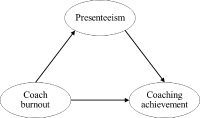
Purpose The purpose of this study was to examine the relationship among burnout, presenteeism, and coaching achievement perceived by athlete coaches in the sport field, and to identify the mediating effect of the presenteeism on the relationship between burnout and coaching achievement. Methods For this purpose, data were collected from 151 athlete coaches in South Korea through the survey. Measurement tools consisted of questionnaires on the coach’ burnout and presenteeism (SPS-13) that were designed in line with the research purpose. Collected data were analyzed using reliability testing, descriptive statistics, correlation analysis and simple mediation effect test. Results First, burnout level perceived by coaches was positively related to presenteeism, and not associated with coaching achievement. And presenteeism negatively correlated with coaching achievement. Second, the burnout level of the coach was negatively related to the coaching achievement through the presenteeism, the mediating variable. Conclusions Burnout of the athletes' coaches in the sports field has been confirmed to decrease the coaching achievement by increasing the presentations which is the work impairment due to their health problems.
Purpose The purpose of this study is to explore the trend of K league exodus and its factors. Methods Qualitative case study was conducted by selecting 9 footballers and 7 their agents as the participants who have migrated from South Korea to China and the Middle East. Results The factors of migration were categorized as three push and pull factors such as economy (individual income and club's profit), policy (employment for foreign and military service) and environment (markets in home and abroad). To understand sport migration in the economic factor, there should be the environmental condition (overseas market) to pay high salaries and transfer fee to individuals and their clubs, and at the same time, the domestic market should be relatively poor environment. In addition, this study overcame limitations of economic and environmental factors by classifying Asian quota system and military service into political factor, and found the specificity (local context) of K league. Conclusions In conclusion, this study can be regarded as the first empirical work on sport labor migration in Korea and valuable as basic data of follow-up studies.
Purpose The purpose of this study was to provide basic data for spectators group of Taekwondo performance efficient marketing activities through market segmentation from characteristics, perceived values of the Taekwondo performance spectators. Methods The subjects of this research were Kukkiwon, Taekwondowon and 1,021 questionnaires were finally used for the analysis. The results of this research were drawn by frequency analysis, CFA(confirmatory factor analysis), reliability analysis, cluster analysis (hierarchical and K-means), cross-tabulation analysis and One-way ANOVA were used for data processing through SPSS 22.0 and AMOS 22.0. Results As results of the analysis, It was subdivided into three clusters (such as group of male college students, man group of low perceived value and high degreed women group of low pragmatism). Conclusions The significant differences of the characteristics and perceived value appeared from each cluster. Cluster 1: A group of male college students, and the highest perceived value for Taekwondo performance. Cluster 2: A group of male, and a low perceived value for Taekwondo performance. Cluster 3: A group of high degreed women and a low pragmatism of perceived value. Therefore, a practical marketing strategy was needed for each groups.

Purpose The purpose of this study was to identify the relationship among the social responsibility (economic responsibility, community cultural activity and social contribution activity), the image of the club, and the assets (image, reliability, attitude and loyalty) of the mother company. Methods The objectives of this research were the home fan in “2018 Shinhan Bank My Car KBO League.” A survey was conducted for 350 home fans of SK Wyverns who gathered in Incheon SK Happiness Dream Baseball Ground to watch the games of SK Wyverns vs. Samsung Lions held from April 6 (Fri.) to April 8 (Sun.). Data processing was done with PASW Ver. 18.0 and AMOS 18.0. Results Firstly, among the sub-factors of social responsibility, economic responsibility, community cultural activity and consumer protection had significant influence on the team image. Secondly, the team image had meaningful influence on the mother company image. Thirdly, the mother company image had significant influence on the mother company trust, mother company attitude and mother company loyalty. Fourthly, the mother company trust had significant influence on the mother company loyalty. Fifthly, the mother company attitude had significant influence on the mother company loyalty. Conclusions The mother companies of professional baseball clubs, too, will have to seek various ways for joint working with professional baseball clubs while actively supporting the activities of the professional baseball clubs being aware that professional baseball clubs give positive effect to the mother companies.

[Purpose] This study aimed to investigate the structural relationships among event quality, spectators‘ destination image, country image, and behavioral intention in the international cycle competition, Tour de Korea 2017. [Methods] The questionnaire was structured in four dimensions: event quality (three sub-dimensions and twelve items), destination image (three items), country image (three items), and behavioral intention (four items). A total of 292 spectators from six hosting cities (Yeosu, Gunsan, Muju, Yeongju, Cheongju, and Seoul) during the event participated in this study. Factor analysis, reliability, validity, correlation analysis, and structural equation modeling analysis were conducted utilizing SPSS 21.0 and AMOS 21.0. [Results] This study indicated that event quality in an international sporting event was found to be the significant factor of spectators’ destination image and country image, which, in turn, significantly influenced the spectators’ intention to revisit to the place of the event and/or the event itself. [Conclusions] The findings of the present study contribute to theoretical understandings of event quality that predicts spectators’ behavioral intention and destination image in a global sporting event. Practically, this study also provides some important suggestions for practitioners who plan marketing strategies for international sporting events.
