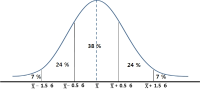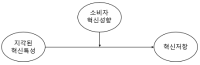
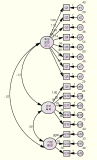
The purpose of this study was to identify the effect of sportwearable device's innovation attribute on innovation resistance and moderating effect of consumer innovativeness between sportwearable device's innovation attribute and innovation resistance. Samples were the 20, 30s who registered on undergraduate and graduate college students. They were extracted from three different universities, in Seoul. After 125 questionnaires were removed, 375 samples were used in the actual analysis; frequency analysis, reliability analysis, confirmatory factor analysis, correlation, and structural equation modeling. The results were as follows. First, perceived innovation attributes of sportwearble devices had a negative effect on innovation resistance. Second, consumer innovativeness was moderated in the relationship between perceived innovation attributes and innovation resistance.


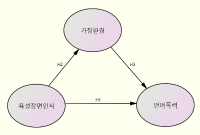
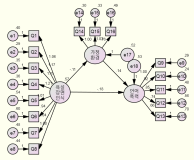
The purpose of this study is to analyse that the college students' recognition on abuse scene of sport broadcasting influences verbal violence. The subjects were college students in P municipality and this study distributed 230 questionnaires among them. And 203 questionnaires were collected except some questionnaires that didn't fill in them properly. To analyze them, this study used SPSS Win 20.0 and AMOS 20.0 and came to a conclusion as follows. First, the College students' negative recognition on abuse scene of sport broadcasting had negative influences on verbal violence. Second, home environment wasn't affected by the college students' negative recognition on abuse scene of sport broadcasting. Third, the verbal violence also wasn't much effected by the home environment of the college students. Finally, the home environment didn't intervene in the relationship between the college students' recognition on abuse scene of sport broadcasting and the verbal violence. Therefore this study considers that the abuse scene in the game on the live broadcasting needs to apply sanction properly by a broadcasting station for TV viewers, although the college students with a higher negative understanding of this abuse scene use less verbal violence.
The purpose of this paper is to map how sport sociologists and sport historians have engaged in the study of race and/in sport. Focusing on scholars with two communities of the North American Society for Sport Sociology & Sport History, it investigates themes, historical/sociological philosophy, theoretical/methodological issues that underpin their works. To be more specific, mainly four types of research are detailed: 1) popular narratives that mostly celebrate black athletes’ success in sport, 2) so-called the early academic works that highlight the positive role of sport in advancing the issue of race in relation to social justice, unification, equality, and so on, 3) a group of researches informed by the positivism, which attempt to discover, investigate, identify racially problematic phenomena, incidents, policies, or incidents and explain why they happen, what makes them problematic, and how to solve such matters, and 4) critical paradigm that orients cultural studies based researches that attempt to explore the relationship between sport and race with focus on interpretive, theoretical, and reflective approaches. In conclusion, it is discussed why I pay attention to the critical paradigm, what it’s emergence means to the sporting academy, and in what ways we can embrace it into the Korean sporting academy.
Recent studies focus on Metabolic Equivalent Task (MET) to measure levels of and areas of peoples’ physically active lifestyle because MET more readily translate peoples ’subjectively perceived physicality into standardized scores. MET also allows researchers to clearly understand the relationships between peoples’ physicality and psychological variables. Thus, the purpose of this study was to understand the levels of and areas of MET among Korean middle school students and to analyze the relationships between MET scores and physical self-efficacy. A total of 278 questionnaires were analyzed using SPSS 18.0. Exploratory factor analysis, descriptive analyses, and regression analyses indicated that middle school students’ physically active lifestyle occurred in the order school, leisure, housework, and transportation areas. Female students did more physical activity in the areas of housework and transportation, compared to male students. In contrary, male students did the majority of physical activity in the areas of school and leisure. Physical self-efficacy affected students’ MET scores, especially for vigorous intensity activity. With regard to gender differences, physical self-efficacy affected male students’ MET scores in the area of leisure while female students’ MET scores were affected in the areas of school and housework. The results were discussed in light of methodological and pedagogical perspectives, and future research suggestions were provided in the discussion.
The purpose of this study was (1) to develop a archery lesson using forced connection method-sportcasting for cultivating collaborative problem-solving competencies, and (2) to apply and to examine the responses of students after physical education(PE) lesson. A archery lesson of Understanding-Performance-Appreciation step was developed according to LfPE(Lee, 2014) using backward curriculum design. Participants were tenth grade students (N=148) in a high school. Open-ended question used to collect the data. The analysis of data indicates that students expressed features in lessons. Six features are (a) 朋友信之, (b) 君子不器, (c) 能竭其力, (d) 觀其所由, (e) 溫故知新, (f) 思而不學. In-depth interviewers were carried out for further analysis of the answers to the questionnaires. The results are as follows. First, 朋友信之 means lesson cultivating collaborative problem solving competencies. Second, 君子不器 means pleasant and funny lesson. Third, 能竭其力 means lesson cultivating self management ability. Fourth, 觀其所由 means lesson cultivating appreciativeness for archery. Fifth, 溫故知新 means lesson improving the status of PE teacher and school. This study concluded that a archery lesson generated fun and interest for students. Implication for developing lesson using LfPE, utilize and transform forced connection method-sportcasting in PE were discussed.

There has been a growing advocacy for a critical approach to physical education teacher education(PETE) in the era of globalization and ubiquitous society. Drawing on critical pedagogy, the purpose of this paper was to explore the meanings and methods for developing critical professionalism in PETE through identifying the definitions and features of critical professionalism. The notion of critical professionalism includes four crucial components: critical reflection, social sensitivity, critical thinking, and practicability. This paper suggests an inquiry-oriented physical education teacher education to develop per-service teachers’ critical professionalism in terms of providing a range of teaching methods centered on microteaching, discussion-based lessons, critical reading and writing, and using media materials. Building on findings, it was concluded that there is a need of programs for the development of policy literacy understanding complex social and cultural contexts of school physical education. Furthermore, PETE should focus on the processes of critical reflection on the teaching and learning act itself within wider social contexts, by using an inquiry-oriented approach to PETE, which will contribute to fostering teachers’ critical capacities needed to guard the educational aims of physical education against political interference.

Sportscasting in Physical Education (Lee, 2011) is a class activity that students simulate sports broadcasting (e.g., students report, analyze, and comment on game play). It encourages problem solving (PS) learning for students. Scaffolding is the support with the intention of helping the student achieves his/her learning goals and contributes to problem solving. However, limited studies have examined if sportscasting with scaffolding is effective instructional strategies for PS. The purpose of this study was to examine effects of sportscasting with scaffolding on PS abilities, and on academic achievement. Participants were 46 college students. The static-group comparison design was used: an experiment group (N=26) with supportive scaffoldings (e.g., conceptual explanation, terminology dictionary, visual materials) and a control group (N=20) with reflective scaffoldings (e.g., organizing the environment, using appropriate cues to guide behaviors, and modeling). The results revealed that students in reflective scaffoldings had higher PS abilities than students in supportive scaffoldings. However, two groups were not statistically different in academic achievement. Sportscasting with instructional scaffolding promote a deeper level of cognitive skills and male students performed better than female students. The effective scaffolding types (Lewis, 2010) for sportscasting were discussed to help students to foster PS skills.
Impact of 9-week strength training of racing cyclist candidate during training camp on body composition, racing cyclist specific fitness, and racing cycle performance was examined. Two by two (cyclist experience, y/n and strength training (ST) participation, y/n) experiment design was employed. A total of 20 candidates participated and divided evenly into four groups; 1) experienced cyclist participating ST (CST), 2) non-experience cyclist participating ST (nCST), 3) experienced cyclist no participating ST (CnST), and 4) non-experience cyclist no participating ST (nCnST). Two programs were introduced; 1) non ST containing, pre-existing program emphasizing on sprint and acceleration training and 2) new-program containing ST and sprint and acceleration training. CST and nCST participated the latter program. Before and after the 9-week training, body composition, racing cyclist specific fitness, and racing cycle performance was tested. After 9 weeks, all groups decreased body weight(p<0.05), body fat content(p<0.05), body mass index, and CST and nCST increased lean body mass(p<0.05). Muscular strength measures such as grip strength, low back strength, 1RM of bench press, 1RM of squat, and anaerobic capacity improved after 9 weeks in all groups(p<0.05). The magnitude of changes was greater in order of CST, nCST, CnST, nCnST. Time trial of 200 meter sprint was faster after 9 weeks in all groups except CnST while 500 meter sprint was improved only in nCnST(p<0.05). After 9 weeks, regardless of previous cyclist experience, those who participated in ST ranked high places at racing cycle competition. Both training programs for the candidates improved body composition and racing cyclist specific fitness. When strength training was added to pre-existing training program emphasized on sprint and acceleration, the racing cycle performance was enhanced. Strength training for racing cyclist is highly recommended to improve their racing performance.
The primary purpose of the study was to identify the characteristics of Korean national youth soccer players’ functional movements. The secondary purpose was to examine whether certain tests of Functional Movement Screen (FMS) meaningfully achieve goodness-of-fit for the soccer-specific movements. Korean national youth soccer players (30 male players, 18.37 ± 0.67 yrs, 178.7±7.09 cm, 70.2±6.46 kg), performed FMS tests [deep squat (DS), hurdle step (HS), in-line lunge (IL), shoulder mobility (SM), active straight leg raise (ASLR), trunk stability push-up (TSP), and rotary stability (RS)]. The mean (±SD) FMS composite score and each test score were calculated. Rasch analysis, which was used to determine the goodness-of-fit for the tests, was applied to examine the item difficulty of the FMS tests. The mean FMS composite score was 10.2± 1.79; the mean DS, HS, IL, SM, ASLR, TSP, and RS score were 1.13±0.35, 1.27±0.45, 1.4±0.56, 1.6±0.77, 2.07±0.69, 1.43±0.82, and 1.3±0.47 respectively. According to the results of Rasch analysis, 4 tests (DS, IL, ASLR, and RS) were shown to be within the acceptable range (infit & outfit > 0.5 ~ < 1.5). The other 3 tests (HS, SM, and TSP) were shown to be out of acceptable range. The additional analysis revealed the DS (logit = 2.08) as the most difficult test and ASLR (logit = -3.16) the least. The results of the study showed that the players’ FMS composite score was lower (< 14) than the cut-off points used by previous studies for different athletes. The further study is warranted to examine the relationships between the scores of the tests appeared to be soccer-specific in the present study and the level of performance variables.
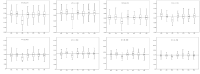
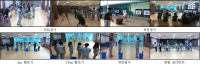
The purpose of this study was to evaluate the physical performance and develop the criteria of 4243 middle and high school students across 5 provinces (Busan, Gwangju, Daejeon, Gyeongi and Jeonbuk) in Korea that took part in the talent development project. The data was collected between 2011 and 2014. The criteria was divided by gender and age across different grades, and the mean, standard deviation and 5 evaluation levels were calculated and analyzed.