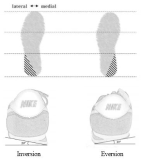
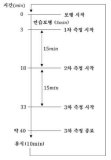
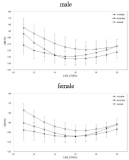
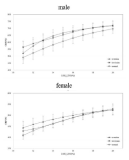
The purpose of the study was to investigate the effect of shoe's soles abrasion positions on gait biomechanics and joint moment of the lower limbs. Participants between the age of 20 and 29 (Male: 10, Female: 8) were chosen as subjects. These subjects wore shoes for 40 minutes with soles that were previously worn down medially or laterally. Motion analysis system consisting of 8 infrared cameras and two force platforms were used to measure the following: center of mass(COM), ground reaction force(GRF) and lower limb’s joint moment. Significant differences in the COM and GRF were observed between lateral & medial worn shoes and non-worn shoes. In addition, significant differences in ankle and knee movements were observed. The change in shoe soles is common however there is still a lack of information regarding the effects on gait patterns, joint forces, etc. This study reveals that shoes with worn down soles can negatively influence our gait pattern. We recommend that shoes be checked regularly for signs of wear and tear and changed accordingly. Furthermore, research focusing on the effects of differently shaped shoe sole abrasion is needed to recommend how they influence an abnormal gait. In addition, further studies on the relationship of worn shoes on lower back pain needs to be conducted.

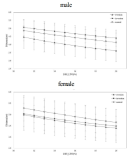
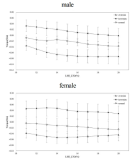


The purpose of this study was to examine the influence 12 weeks of Hatha yoga exercise has upon changes in postural control ability of high school girls. The research subjects were 27 high school girls (yoga group: 15, control group: 12). Changes that took place after yoga exercise were comparatively analyzed after having them train Hatha yoga for 12 weeks. The research variables that were measured were the moving range of COP in static postural balance, Rambling & Trembling in the moving range of COP, and postural change in the sagittal plane. The mean and the standard deviation(SD) were calculated on each measurement item by using the SPSS Ver 21.0 statistical program. To verify difference in pre-value between groups, an independent t-test was carried out. The verification of change according to time within the group after 12 weeks of yoga exercise was conducted in a paired t-test. To inspect interaction by time and group before and after yoga exercise, two-way repeated measures ANOVA was implemented. As a result, the moving distance of the pre and post direction in the moving range of COP was reduced. Rambling and Trembling in the pre-and-post direction significantly decreased. And in postural change of the sagittal plane, there was significant interaction between two groups in the neck and thigh parts. It was thought that the 12 weeks hatha yoga exercise has positive influence upon improving the postural control mechanism in female high school students and has an effect even on change in the postural control ability of an individual.
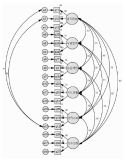
This study was to explore and confirm factors of sport psychology counseling needs in Korean elite coaches. In order to achieve this purpose, 56 elite coaches in Korean Olympic training center at Taereung and Jincheon responded on open-questionnaire and 260 coaches responded on survey. Open-ended questionnaire responses were analyzed by inductive content analysis and collected survey data were analyzed by exploratory factor analysis and confirmatory analysis. The results were as follows: Firstly, sport psychology counseling needs of elite coaches were competition preparation, negative athlete-coach relationship, athlete private problems, performance degradation, pressure on performance result, injury management, team cohesion degradation, motivation, training management, different gender athlete control, athletes drop out, pressure from outside, conflicts with colleagues, neglecting from athletes, feeling of incompetence, emotional control problem, and so on. Secondly, based on these responses, closed-ended questionnaire was developed, surveyed, and analyzed. Exploratory factor analysis illustrated that sports counseling needs of coaches were performance enhancement strategies, unreasonable pressure, negligence on training, coaching stress, competition result stress, conflicts with athletes. Finally, confirmatory factor analysis showed that construct of sport counseling needs illustrated appropriate fit indices values. The results of this study contributed to provide fundamental information on coaching education program and sport psychology counseling program development and application. Consequently, it will help coaches to control their mind at coaching in training and competitions.
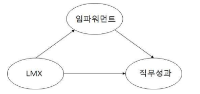
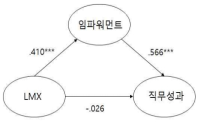
The current study aimed to investigate the relationships between leader-member exchange (LMX) quality, empowerment, and job performance of fitness center instructors. Data were mainly analyzed using a structural equation modeling technique with the AMOS program. The results, based on a paper-and-pencil survey with 263 respondents from 15 fitness centers, reported that LMX quality positively influences the level of empowerment perceived by subordinates while employee empowerment has a positive effect on job performance. However, LMX quality does not statistically influence self-rated job performance. Employee empowerment mediates the relationship between LMX quality and job performance.
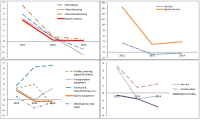
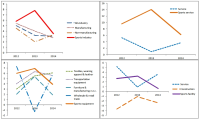
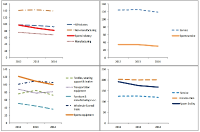
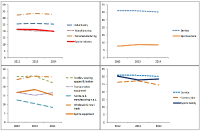
In this paper, we analyzed financial ratio of Sports Industry Enterprises in Korea from 2011 until 2014. We use Kis-Value data and extract 195 enterprise from it. And we compared the results with other industries which data were analyzed from the Bank of Korea. The results of the analysis are that the financial ratios of the sports industry is higher than other industries. This shows that the management conditions in sports industry are better than the other industries. In particular, among the sports industries, the management condition in sports service industry shows better states than other sports industries and other industries. This indicates that the sports service industry is a high value-added industry and growth rate of this industry is much faster than other industries. Growth rate of sales of Sports industry in 2014 was 0.1% whereas growth rate of sales of all industries was –1.5%. Also, growth rate of total assets of Sports industry in 2014 was 3.5% while growth rate of sales of all industries was 3.0%. So, growth ratio of the sports industry was higher than all industries. On the other hand, growth rate of tangible asset which represents the investment in fixed assets was 1.9%, which was lower than that of all industries 2.5%. Through operating income to sales, we can know the profitability of company from operating activities. Operating income to sales of sports industry in 2014 was 9.5% whereas operating income to sales of all industries was 4.3%. Especially sports service industry increased 24.6% in 2014. Income before income taxes to sales was 10.1%, which was higher than all industries 3.9%. In particular sports service industry was 28.3%. It shows that the sports service companies have issued a profit through strong corporate activities. Debt ratio of the sports industry in 2014 was 80.9% while it was 91.9% for all industries. Debt ratio of sports facilities industry was 166.9% that is higher than the average of all industries. But the debt ratio of the sports service industry was 29.9%, it can be seen considerably lower than the average of all industries. Total borrowings and bonds payable ratio of the sports industry was 19.8%, it can be seen lower than the 25.3 percent for all industries. Cash flow coverage ratio which represents the ability to afford the interest and debt to cash income. Sports industry rate was 25.4%. It was lower than the all industry's 62.7% and it indicates sports industry is financially not good. So, we know that sports service industry was financially not healthy. Business analysis results of sports industry of Korea appeared better than other industries. But business conditions are getting worse and, like any other industry. Thus, through the business analysis, we should prepare substantiality of management. And we should plan productivity improvement and business strategies for the changing business environment.


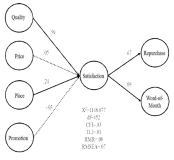
The purpose of this study was to examine the effect of marketing mix on satisfaction, repurchase intention, and word-of-mouth intention. Through the convenience sampling method, a total of 350 spectators from 2013 Son Yeon-Jae Gala Show. Of 350 surveys that were collected, 20 were discarded resulting in 330 usable surveys. By employing independent t-test, confirmatory facor analysis, structural equation modeling through SPSS 20.0 and AMOS 20.0, this study found followings. First, there was difference according to past experience of attending the gala show or watching it on media. Second, quality of performance and place in marketing mix were positively related to satisfaction. Third, satisfaction had a positive influence on repurchase intention and word-of-mouth intention. Fourth, quality of performance and place in marketing mix had a positive influence on repurchase intention and word-of-mouth intention mediated by satisfaction.
The purpose of this study was to find out what experiences pre-service physical education teachers have before, during and after student teaching along with teacher educational meanings in the experiences. The subjects of this study were 7 senior students in department of physical education of B university located in A city. The data were collected through daily records of student teaching and in-depth interview(group and individual). The collected data were analyzed using the methods of Smith & Kinsella(2009) and Spradley(1980). The analysis showed expectation for learning(knowledge, skills, behavior) and realization(feeling, stimulation, awareness) before student teaching, fight and compromise with 'me'(body, spirit, life), 'you'(teacher, student) and 'it'(instruction, environment, episode) during student teaching, and regret of 'instruction'(plan, execution, evaluation), 'relationship'(forming, maintaining, improving) and 'role'(teacher, attitude, sense of calling) after student teaching. These characteristics were discussed in 4 aspects of educational meanings including seeking essence, seeking forms, seeking roles and seeking status. Lastly, the study suggested unification of student teaching contents, introduction of exclusive teacher system for student teaching, establishment of evaluation system for student teaching program and development of field ability strengthening program available to connect with student teaching in physical education.

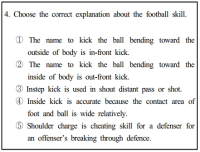
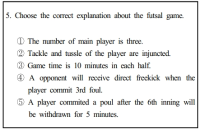
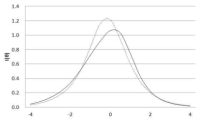
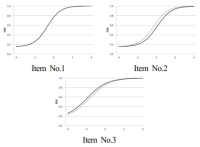
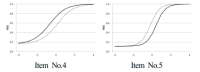
The purpose of this study was to analyze and confirm whether the items used in final paper and pencil test was determined to DIF when school sports clubs in each school operated by discriminatory curriculum in accordance with gender. Participants were 8th middle school students(male=135, female=141). They joined in school sports club every week from freshman to sophomore 1st semester. At that time, boys of them participated in soccer and basketball, and girls played dodge ball. They studied soccer unit at sophomore 1st semester, and had a final examination consisting of 5 soccer items. Using the data, differentially functioning item by the population difference between male and female were analysed quantitatively and qualitatively. The results showed that Mantel-Haenszel method(using classical test theory), comparison of item characteristic curve and likelihood ratio test(using IRT) determined item number 4 and 5 to differentially functioning item. Finally, item number 4 were identified differentially functioning item in favor of male students in intensive qualitative analyses. That item have low content validity and application-level of cognitive behavior classification. The result provides that application-level item can be functioning differentially to female students with little sports experience than male students in paper and pencil test of PE.

Purpose: This study was to verify the relationship between coaching behavior(autonomy/controlling behavior), self-regulation motivation and performance. Method: 356 athletes (from middle to work and professional team) in individual and team sport completed coaching behavior scale developed by this researchers assessing autonomy and controlling coaching behavior perceived by players, Korea Basic Pyshoclogical Needs Scale (KBPNS) assessing basic psychological needs, Behavioral Regulation in Sport Questionnaire (BRSQ) assessing sports motivation level based on self-determination theory, and sport performance score. To estimate the relationship between coaching behavior, self-regulation motivation and performance, this study employed the structure equation modeling analysis. Results: The relationship between psychological needs, regulation motivation and performance showed that autonomy coaching behavior tend to reinforce competence and autonomy of player. These variables have a positive effect on more inner regulation motivation. Moreover, the intrinsic motivation through stimulation experience was a key factor leading to a positive performance by improving the performance strategy and skill of athletes. Conclusion: These results are meaningful as an empirical evidence that relationship between motivation and performance can be changed according to the type of coaching behavior, and that autonomous coaching behavior play an important role in maximizing the performance of player that provided theoretically form.
Purpose : The purpose of this study was to investigate coaching information with which coaches provided players during badminton competition. Methods : To this end, we generated an open-ended questions and presented it to 88 high school athletes registered in the Badminton Korea Association. The survey was conducted during a tournament and immediately after the tournament to collect the data. The collected data were categorized through inductive content analysis. Results : As a result of this study, a total of 480 raw data points collected through the open-ended survey were categorized into four general areas: psychological information, technical information, tactical information, and game operation information. Specifically, psychological information was divided into six subdivisions: concentration, confidence, relaxation/stabilization, mental toughness, play thought, and passion; technical information was broken into four subdivisions: strokes, footwork, swing and posture, and position preparation; tactical information had four subdivisions: coping to opponents, play changes, rotation, and manipulation of opponents; and, game operation information was divided into two subdivisions: taking the lead in a game and changing atmosphere. Conclusions : In other words, in badminton competition, the coaches strengthened psychological skills that promote psychological stability to attain the athletes’ peak performance and modified the athletes’ motion into the action necessary for achieving accurate techniques. Furthermore, they provided a variety of coaching information so that the athletes will respond appropriately to their opponents’ play, take the lead in games and induce a positive mood. The psychological, technical, tactical and game operation information offered by badminton coaches are the main factors influencing the performance of badminton players and suggest a need for the proper management and control of the coaches as well as athletes for the peak performance.
