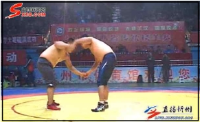
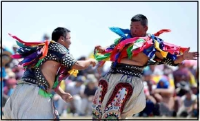
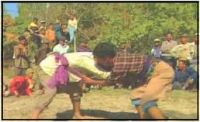
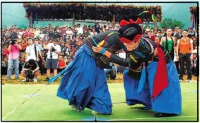
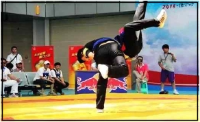
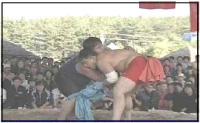
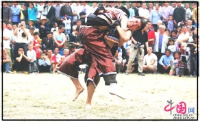
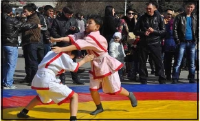
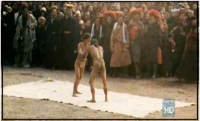
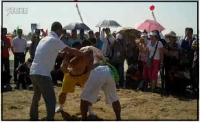
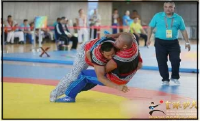
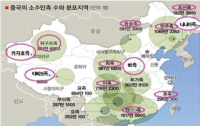
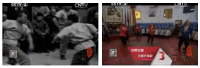
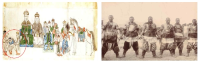
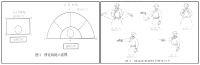
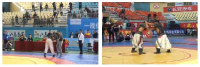
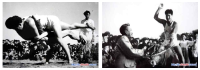
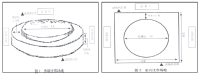
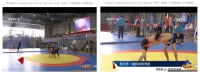
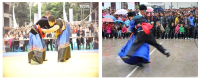
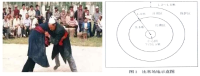
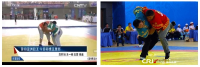
This research begins from the awareness that even though there are different forms of wrestlings in the ethnic minority groups in China, the study on their morphological aspects has reached the limit. Based on the documents and VOD data about these wrestlings of each ethnic group, their morphological characteristics can be verified as follows. First, The postures of Han and Mongolian people take the way of two players standing and playing, and Korean-Chinese people and Hui people take a saddle stance using a thigh band. Second, as for the arenas for the wrestlings, owing to some geographical features and natural environments, they were set up at a specific area during the traditional era using natural objects(grass, lawn, soil, sand). Yet, in the modern times, they have been changed as being installed and run in modernized gyms, sports fields, or parts following the standard of stadium facilities supervised by each organization. Third, with regard to the play wear of wrestling, some parts of the traditional costumes have been transmitted and worn. However, in case of most of the traditional costumes, it has been found out that modernized clothes which take the forms of garments developed since the modern era into consideration are being used. Fourth, in terms of the game equipments of wrestling, certain clothes(uniform, vest), running shoes and a band(a thigh band) should be worn.





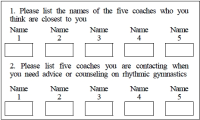
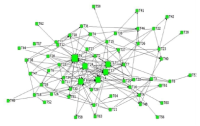
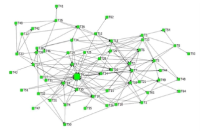
Previous work has shown that coaches sought information from several sources; however, there was a strong reliance on learning from other coaches within their social networks. There has been limited research examining the nature of these social networks with other coaches (Trudel and Gilbert 2004). Thus the purpose of this study was to examine the structures of coaches’ social networks of Korean rhythmic gymnasts. Research questions were: (1) What are the network structures of Korean rhythmic gymnasts’ coaches? (2) What structural parameters contribute to coaches’ network structures, and (3) Is there an association between coaches’ network and flow of information in their networks? A total of 37 coaches of youth rhythmic gymnasts (6-18 years old) participated in this study. Each of those coaches was asked to complete a Name Generator Questionnaire (i.e., list four names that you have a close relationship with) and general socio-demographic survey. Data were analyzed using social network analysis tools such as UCINET, p-net, and Quadratic Assignment Procedure. Analysis of network centrality, density, and strong components showed that (1) homophily was identified in the structure of coaches’ social networks (2) homophily (e.g., by gymnasts’ ranking, mentor coaches) contributed to the total social network of coaches, and (3) interacting only with close coaches in the network, coaches received information about coaches/coaching from the strong ties rather than weak ties (Granovetter, 1973). This study also has strong links to Wenger’s (1998) community of practice which posited that groups of people share a common characteristic in practice.
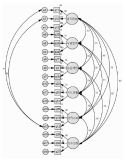
This study was to explore and confirm factors of sport psychology counseling needs in Korean elite coaches. In order to achieve this purpose, 56 elite coaches in Korean Olympic training center at Taereung and Jincheon responded on open-questionnaire and 260 coaches responded on survey. Open-ended questionnaire responses were analyzed by inductive content analysis and collected survey data were analyzed by exploratory factor analysis and confirmatory analysis. The results were as follows: Firstly, sport psychology counseling needs of elite coaches were competition preparation, negative athlete-coach relationship, athlete private problems, performance degradation, pressure on performance result, injury management, team cohesion degradation, motivation, training management, different gender athlete control, athletes drop out, pressure from outside, conflicts with colleagues, neglecting from athletes, feeling of incompetence, emotional control problem, and so on. Secondly, based on these responses, closed-ended questionnaire was developed, surveyed, and analyzed. Exploratory factor analysis illustrated that sports counseling needs of coaches were performance enhancement strategies, unreasonable pressure, negligence on training, coaching stress, competition result stress, conflicts with athletes. Finally, confirmatory factor analysis showed that construct of sport counseling needs illustrated appropriate fit indices values. The results of this study contributed to provide fundamental information on coaching education program and sport psychology counseling program development and application. Consequently, it will help coaches to control their mind at coaching in training and competitions.
Purpose : The purpose of this study was to investigate coaching information with which coaches provided players during badminton competition. Methods : To this end, we generated an open-ended questions and presented it to 88 high school athletes registered in the Badminton Korea Association. The survey was conducted during a tournament and immediately after the tournament to collect the data. The collected data were categorized through inductive content analysis. Results : As a result of this study, a total of 480 raw data points collected through the open-ended survey were categorized into four general areas: psychological information, technical information, tactical information, and game operation information. Specifically, psychological information was divided into six subdivisions: concentration, confidence, relaxation/stabilization, mental toughness, play thought, and passion; technical information was broken into four subdivisions: strokes, footwork, swing and posture, and position preparation; tactical information had four subdivisions: coping to opponents, play changes, rotation, and manipulation of opponents; and, game operation information was divided into two subdivisions: taking the lead in a game and changing atmosphere. Conclusions : In other words, in badminton competition, the coaches strengthened psychological skills that promote psychological stability to attain the athletes’ peak performance and modified the athletes’ motion into the action necessary for achieving accurate techniques. Furthermore, they provided a variety of coaching information so that the athletes will respond appropriately to their opponents’ play, take the lead in games and induce a positive mood. The psychological, technical, tactical and game operation information offered by badminton coaches are the main factors influencing the performance of badminton players and suggest a need for the proper management and control of the coaches as well as athletes for the peak performance.
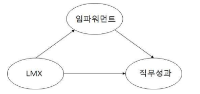
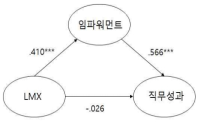
The current study aimed to investigate the relationships between leader-member exchange (LMX) quality, empowerment, and job performance of fitness center instructors. Data were mainly analyzed using a structural equation modeling technique with the AMOS program. The results, based on a paper-and-pencil survey with 263 respondents from 15 fitness centers, reported that LMX quality positively influences the level of empowerment perceived by subordinates while employee empowerment has a positive effect on job performance. However, LMX quality does not statistically influence self-rated job performance. Employee empowerment mediates the relationship between LMX quality and job performance.
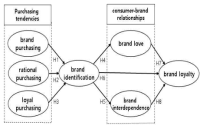
The purpose of this study was to investigate the relationships among purchasing tendencies, brand identification, consumer-brand relationships, and brand loyalty by analyzing structural equation model. A survey was conducted by using members(n=220) of 8 sport clubs located in Chungcheong Province. The data were recorded and analyzed using the SPSSWIN Ver. 21.0 and AMOS 18.0 to analyze the structural equation model. The findings of this study were as follows: First, brand purchasing had a significantly negative effect on brand identification. Second, rational purchasing was found to impact significantly on brand identification. Third, loyal purchasing did not show significant impact on brand identification. Firth, brand identification was found to significantly influence on brand love, brand interdependence, and brand loyalty. Fifth, brand love had no positive impact on brand loyalty. Finally, interdependence was found to impact significantly and positively on brand loyalty.
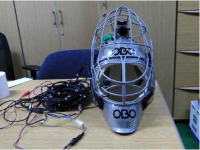
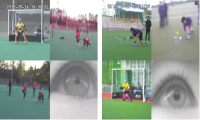
The purpose of this study is to establish the efficient defensive strategy from analyzing the goalkeeper’s gaze behavior and defensive motion in both field hokey penalty corner and penalty stroke. To achieve this goal, 3 national team goalkeepers’ gaze behavior and defensive motions were analyzed, as well as the player’s visual strategies from their interview contents. For the apparatus, multi-channel integrational system were used for analyzing goalkeeper’s reaction movement and personal visual strategies. The result is as follow: First of all, In the penalty stroke, goalkeepers were tended to focus on the bottom of the shooter’s hokey stick. Second, national hokey players had quicker anticipating saccadic movement. For this reason, their visual fixation locations were arrived in targets earlier than the hockey ball. Lastly, in the interview contents, they were reported to focus just on the ball from not disturbed by other various objects(body, hockey stick). However, they actually observed various body parts of shooters. These results imply that we need to develop an effective perceptual skill training in order to anticipate the shooting performance more accurately and rapidly. These types of perceptual and cognitive skill training should be conducted with information on knowing their specific visual cues in anticipating shooting direction.

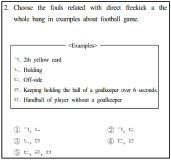
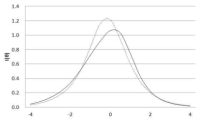
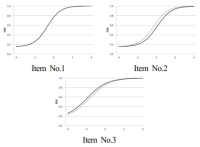
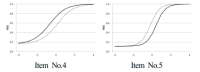
The purpose of this study was to analyze and confirm whether the items used in final paper and pencil test was determined to DIF when school sports clubs in each school operated by discriminatory curriculum in accordance with gender. Participants were 8th middle school students(male=135, female=141). They joined in school sports club every week from freshman to sophomore 1st semester. At that time, boys of them participated in soccer and basketball, and girls played dodge ball. They studied soccer unit at sophomore 1st semester, and had a final examination consisting of 5 soccer items. Using the data, differentially functioning item by the population difference between male and female were analysed quantitatively and qualitatively. The results showed that Mantel-Haenszel method(using classical test theory), comparison of item characteristic curve and likelihood ratio test(using IRT) determined item number 4 and 5 to differentially functioning item. Finally, item number 4 were identified differentially functioning item in favor of male students in intensive qualitative analyses. That item have low content validity and application-level of cognitive behavior classification. The result provides that application-level item can be functioning differentially to female students with little sports experience than male students in paper and pencil test of PE.
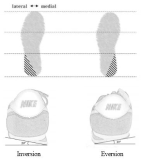
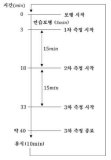
The purpose of the study was to investigate the effect of shoe's soles abrasion positions on gait biomechanics and joint moment of the lower limbs. Participants between the age of 20 and 29 (Male: 10, Female: 8) were chosen as subjects. These subjects wore shoes for 40 minutes with soles that were previously worn down medially or laterally. Motion analysis system consisting of 8 infrared cameras and two force platforms were used to measure the following: center of mass(COM), ground reaction force(GRF) and lower limb’s joint moment. Significant differences in the COM and GRF were observed between lateral & medial worn shoes and non-worn shoes. In addition, significant differences in ankle and knee movements were observed. The change in shoe soles is common however there is still a lack of information regarding the effects on gait patterns, joint forces, etc. This study reveals that shoes with worn down soles can negatively influence our gait pattern. We recommend that shoes be checked regularly for signs of wear and tear and changed accordingly. Furthermore, research focusing on the effects of differently shaped shoe sole abrasion is needed to recommend how they influence an abnormal gait. In addition, further studies on the relationship of worn shoes on lower back pain needs to be conducted.


This study was designed to examine the effects of 12 weeks of resistance exercise training on physique, body composition, insulin resistance, and blood lipid profiles in 20s normal weight obese females. Sixteen females were randomized into one of following two groups: resistance training group (RT group; n=8) and control group (CON group; n=8). Subjects in RT group completed 12 weeks of resistance exercise training for three times/wk, and subjects in CON group were asked to maintain their normal life pattern during the same intervention period. Data were analyzed using two-way repeated measures ANOVA with post hoc test. Main results of the present study were as follows: 1) Body weight, BMI, waist circumference, hip circumference, WHR, and WHtR decreased significantly in RT group. 2) All variables regarding body composition did not change in both groups; however, fat mass was tended to decrease more in RT group than CON group. 3) Fasting plasma glucose decreased significantly in both groups, whereas other variables regarding insulin resistance did not change significantly in both groups. 4) All variables regarding blood lipids did not change significantly in both groups. Results indicate that 12 weeks of resistance exercise training was beneficial in physique and body composition; however, it was not beneficial in insulin resistance and blood lipid profiles in 20s normal weight obese females. Future research including normal weight obese subjects with higher age would be warranted to elucidate more clearly the effects of resistance exercise training on metabolic status.
