
Purpose The purpose of this study was to investigate differences among perfectionism, anxiety, and aggression in contact and non-contact sports and verify the structural relationship model of perfectionism, anxiety, and aggression in the field of sports. Methods Male college athletes (N=299) participated in the study and perfectionism, anxiety, and aggression questionnaires were utilized after their verification of validity and reliability were conducted. The descriptive statistical analysis, the multivariate analysis, the correlation analysis, the structural equation analysis, and the multi-group analysis were conducted. Results The results are as follows: First, the level of perfectionism, anxiety, and aggression were significantly different between contact and non-contact sports (F=4.316, p<.001). Additionally, subfactors of aggression such as hostility, physical aggression, and verbal aggression factors in contact sports showed a higher average than non-contact sports. Second, perfectionism positively affected anxiety (t=6.936, p<.001) and anxiety positively affected aggression (t=3.380, p<.001). Moreover, the complete mediation effect of anxiety was found in the path from perfectionism to aggression (β=.152, p<.01). Finally, we compared path coefficients between contact and non-contact sports. As a result, positive causal relationships was indicated in the path from anxiety to aggression (β=.511, p<.001) in contact sports. However, it was not discovered in non-contact sports (β=.149, p>.05). Conclusions In conclusion, perfectionism causes anxiety and anxiety is a mediator leading to aggression in sports. Such effect is more predictable and observable in contact sports in which aggression is more favorable and encouraged. Implications and suggestions for future research are discussed.
Purpose The purpose of this study was to provide basic data for spectators group of Taekwondo performance efficient marketing activities through market segmentation from characteristics, perceived values of the Taekwondo performance spectators. Methods The subjects of this research were Kukkiwon, Taekwondowon and 1,021 questionnaires were finally used for the analysis. The results of this research were drawn by frequency analysis, CFA(confirmatory factor analysis), reliability analysis, cluster analysis (hierarchical and K-means), cross-tabulation analysis and One-way ANOVA were used for data processing through SPSS 22.0 and AMOS 22.0. Results As results of the analysis, It was subdivided into three clusters (such as group of male college students, man group of low perceived value and high degreed women group of low pragmatism). Conclusions The significant differences of the characteristics and perceived value appeared from each cluster. Cluster 1: A group of male college students, and the highest perceived value for Taekwondo performance. Cluster 2: A group of male, and a low perceived value for Taekwondo performance. Cluster 3: A group of high degreed women and a low pragmatism of perceived value. Therefore, a practical marketing strategy was needed for each groups.
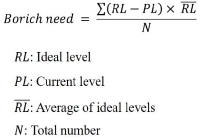
Purpose This study was designed to develop a curriculum for pre-service golf coaches at universities to enhance the coaches’ competencies to counsel athletes on the field. Methods This study was conducted in accordance with the revised and supplemented procedures for the national competency standard (NCS) based curriculum development outline under the level of application of individual instruction-level classes among the types of curriculum development. Results The results were as follows: First, the elements of the counseling competence were guided by conflict resolution counseling, psychological skills training, guidance counseling, coordination and Intervention, and relationship formation. Second, the curriculum was adopted as a curriculum for sports psychology, theory and practice of counseling, counseling practice and super-vision, and psychological skills training, and non-disciplinary activities were participation in group and personal counseling, and an open counseling case study. Third, the feasibility of the curriculum was calculated in the range of 0.8 to 1.0 for all areas to be reasonable. Conclusions The results of this study have structured the counseling competencies required for pre-service golf coaches. Based on this, the results of the study suggest counseling courses in the curriculum of university. This is expected to ultimately seek to improve the coaching field by enhancing the capacity of the coaches.

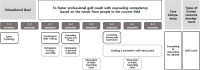
The purpose of this study was to conduct an in-depth exploration of Korean national badminton players’ psychological momentum strategies. Data were collected using an open-ended questionnaire and group interviews of 66 badminton players, including 40 members of the 2018 Korean national badminton team and 22 college and semi-pro badminton players who each had badminton careers of 10 or more years and were registered in the Badminton Korea Association. The data were analyzed using inductive content analysis and the deductive process based on the inductively categorized results. The results are as follows. First, regarding strategies for maintaining positive momentum, 188 raw data were collected and classified into three category (keeping pace, dominating the play, and psychological facilitation) and 10 sub-category (including speedy resumption of the game, attacking weak points, and fighting shout). The results suggest that badminton players maintain positive momentum by using strategies to control the speed and tempo of the game at their preferred pace, implement special techniques, exploit their opponent’s weaknesses, and cheer or talk amongst themselves to motivate each other and communicate with their partners and coaches. Second, regarding strategies for overcoming negative momentum, 293 raw data points were collected and classified into three category (time outs, psychological reminders, and changes in plays) and 11 sub-category (including delaying the game, seeking social support, and play change). The data demonstrate that badminton players overcome negative momentum using strategies to intentionally delay the game and exchange equipment, focus on performance cues, and interact with their coaches and partners to change plays and prevent errors. It is hoped that these study findings will inform efforts to provide psychological support that is effective in increasing the odds of winning for the national badminton players in the Asian Games and the Olympic.
Purpose The purpose of this study is to explore the trend of K league exodus and its factors. Methods Qualitative case study was conducted by selecting 9 footballers and 7 their agents as the participants who have migrated from South Korea to China and the Middle East. Results The factors of migration were categorized as three push and pull factors such as economy (individual income and club's profit), policy (employment for foreign and military service) and environment (markets in home and abroad). To understand sport migration in the economic factor, there should be the environmental condition (overseas market) to pay high salaries and transfer fee to individuals and their clubs, and at the same time, the domestic market should be relatively poor environment. In addition, this study overcame limitations of economic and environmental factors by classifying Asian quota system and military service into political factor, and found the specificity (local context) of K league. Conclusions In conclusion, this study can be regarded as the first empirical work on sport labor migration in Korea and valuable as basic data of follow-up studies.
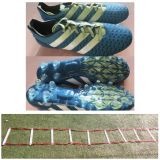
Purpose The purpose of this study was to investigate the lower extremity muscles activity during forward side step by soccer field ground types. Methods Fifteen elite high school soccer players participated in this study. Muscle activation patterns were recorded at 2000 Hz during forward side step task. Surface EMG of the tibialis anterior(TA), soleus(SOL), medial gastrocnemius(MG), lateral gastrocnemius(LG), peroneus brevis(PB) muscle was recorded, and the root mean square of the EMG was normalized, using a maximum voluntary isometric contraction(%MVIC). One-way repeated ANOVA was used for comparison among three soccer field ground types(natural grass, artificial turf, hard ground). Results Artificial turf displayed greater soleus and peroneus brevis activities compare to natural grass during forward side step task. Conclusions The relationship between increased soleus and peroneus brevis activation and greater incidence of injury in artificial turf versus natural grass requires further study. Soccer players routinely training on artificial turf for prolonged periods should be carefully monitored.


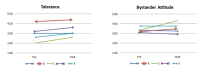
Purpose The purpose of this study was to apply the Self-Assertiveness Training based on Solution-Focused to student-athletes caused by violence in sports. Methods Participants were five Taekwondo athletes in this study. They were consisted of offenders, a accuser, and a victim. The head coach of the team asked for counseling to resolve the conflict. Data was collected with quantitative, qualitative data, and group dynamics. The group counseling program was conducted for 90 minutes a week for eight weeks. Results The results are as follows. First, (application process) the 8-week Self-Assertiveness Training based on Solution-Focused was assessed to be applied step by step and systematically. Second, (qualitative evaluation) as a result of analyzing the observation journal and the interview data, the participants experienced the change of attitude and thought of group members in a short period of time by focusing on enhancing self-assertiveness. Third, (quantitative evaluation) self-assertiveness and attitude of school violence measured by questionnaires were higher in post-survey than pre-survey. In addition, participants' satisfaction with the program was found to be very positive. Discussions and Suggestions Self-Assertiveness Training based on Solution-Focused was found to have a significant effect on conflict resolution among the student-athletes who have experienced violence in sport. This programs was expected to increase the value of use in the sport field. Based on this case study, We suggested for future research.
Purpose Lock and Heere (2017) argued that two different theories of social identity theory(SIT) and role identity theory have been used in previous studies of team identification. However, they failed to provide why such phenomenon existed in the literature of team identification. Thus, the first purpose of the study is to provide the possible reasons why the two theories were used as the ground of team identification in the previous literature. In addition, the current study examined whether team identification was properly developed from SIT by incorporating the cases of organizational identification and consumer-company identification in business literature. Results & Conclusion There are two possible explanations on why the two theories have been used in team identification studies. First, in the initial studies of team identification, theoretical ground of team identification was lacking. Thus, without a firm theoretical guidelines, authors might have used the two theories as the ground of team identification. Second, as previous literature noted, the two theories are like the two different sides of a single theory. Thus, authors may have not recognized the need of differentiating the two theories and used the two theories as the ground of team identification. This study also examined whether team identification was properly developed from SIT. The social category in team identification includes two different social identities(team members and fans), which is quite different from a social category with single identity in it. The locus of social category of team was arbitrarily expanded to include fans in the same category. This case is quite similar with consumer-company identification in marketing literature. Future study needs to examine whether the locus of social category can be expanded to include two different social identities.
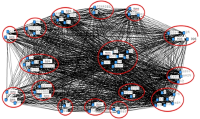
Purpose This study reviewed the seriousness of the Match-fixing through the mixed research methods of the big data analysis (quantitative) and the focus group interview (qualitative) using the keyword, ‘Match-fixing’ and discusses the cautious and comprehensive basic direction for coping with negative issues and preventing recurrence. Methods For the quantitative research method, Naver and Daum were used as the analysis channel and the main keywords selected for the data search were ‘Match-fixing’ and ‘Match-fixing+(measures/eradication/solution)’. The data collection period was limited from January 1, 2010 to December 31, 2016. In addition, for the qualitative research method, 6 homogeneous groups (experience, interest, knowledge) related to the research topic were constructed and interviewed using purposive(intentional) sampling. Results First, five factors (emotion, participant, cause, punishment, countermeasure) were categorized by big data analysis. Second, through Focus Croup interview, additional keywords for three factors (emotion, participant, countermeasure) were derived. Conclusions Therefore, it is required that various preventive measures such as emotional reward for negative emotion, preventive and ethical education, advancement of sports, establishment of Match fixing committee, Expert training are needed.

Purpose Student-athletes in Korea are confronted with career development in both academics and sport. This paradigm change in sport policy aims at guarantee of student-athletes' learning rights and successful career transition after sport. But dual career development can be a difficult task for student-athletes, if there is a lack of social support. The purpose of this study was to provide updated information regarding the burnout-in-sport literature and suggest directions for future research in sport psychology. Methods This study is based on reviewing the literature. In order to improve the validity of discussion, the author focused on the findings of the published research articles targeting student-athletes. The outcomes were examined and discussed based on models and measurement tools of athletes’ burnout. Results First, longitudinal study is needed to understand causalities in sport burnout. Second, it is necessary to develop korean sport burnout scale reflecting our social and cultural contexts. To do this, qualitative research should be preceded to provide in-depth understanding on burnout phenomenon of student-athletes. Third, the cut-off values which can allow the separation between clinical and nonclinical athletes should be developed. Fourth, due to dual career development as a new sport environment, burnout research has to pay attention both psychological variables in person and environmental variables. Conclusions Since the 1990s burnout research in sport psychology has been increased in its quantity as one of the remarkable topics in Korea. Based on the comprehensive and systematic review of the literature, directions for future research are suggested.
