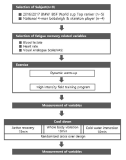
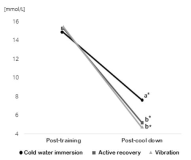
[Purpose] The purpose of this study was to examine the effect of recovery methods comparing with change ratio in Lactic acid(LA), Heart rate(HR), VAS(Visual analogue scale) on recovery patterns after field training(FT) in Korea National bobsleigh and skeleton players. [Methods] The tests were conducted for 3 times at a one-week interval as an experimental design within the same subjects(n=9), observed change ratio in LA, HR, VAS through applying Active recovery(AR), Whole body vibration(WBV) & Cold water immersion(CWI) after FT. [Results] The results were summarized as follows: The alteration of ratio in LA, HR, VAS decreased significantly after applying the three recovery patterns(p<.01). The difference between the groups showed that the reduction in lactic acid according to active recovery and whole-body vibration was higher than cold water immersion(p<.01). [Conclusion] In conclusion, although active recovery was more effective than static recovery, there was a significant effect of the three recovery methods in this study on reducing a fatigue in bobsleigh & skeleton players. Therefore, it would be considered to improve the performance of athletes when these methods apply for them depending on situations and environments.
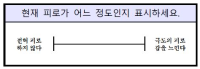
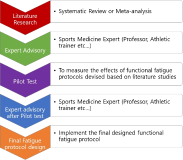
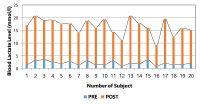
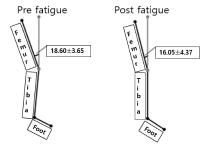
Purpose The purpose of this study was to investigate the effects of a functional fatigue protocol on lower extremity dynamic and static postural control. Methods A total of 20 physically active collegiate students participated in this study (ten males, ten females; age 22.5±2.7 years; mass 67.0±13.0 kg; height 168.0±8.9 cm). A unilateral stance with eyes closed for 10 seconds was performed to test static postural control using a balance force plate and single-leg drop landing on 30cm box was performed as a dynamic postural control test and captured using VICON motion analysis system. Results The results of this study showed an average heart rate of 176.3 beats/minute, an 18 rating on the perceived exertion scale, significant differences in blood lactate, and a static postural control deficit after fatigue as compared with before fatigue(p<.05). Dynamic postural control after fatigue changed landing strategy in the form of stiff landing. Knee flexion was decreased at initial contact and at peak vertical ground reaction force, also, both decreased valgus and internal rotation of knee joint. Conclusions This protocol may use for enhancing fatigue-endurance training as well as for inducing fatigue. Further, to ascertain a landing strategy, it is recommended to increase landing height to clearly observe changes in landing strategy.



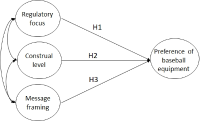
Purpose The purpose of this study was to analyze the propensity to consume the consumer of the baseball equipments who have difference of the product preference by regulatory focus, and who have construal level and suitable message framing. Methods Populations are consumers who have purchased the baseball equipments before, and the sampling groups, five different society baseball group’ league from Seoul and Kyeongi-do, were distributed, 318 copies, by convenience sampling. The questionnaire proceeded by three-way completely randomized design with stimulated sentences of four different advertisement compartmentalized by the regulatory focus, construal level and message framing. The analysis utilized SPSS 21.0 to perform the frequency analysis, manipulation check, independent t-test, two-way ANOVA, and Scheffe was used to post-hoc. Therefore, the result of this study is as below. Results First, after analyzing the distinction of the regulatory focus of the consumers of baseball equipments, the preference of the consumer who has improving focus was higher than that of consumer who has the prevention focus. Second, preference differentiation analyzed by construal level and the message framing of the consumer of the improving focus, the preference was higher when the message framing was positive, and the construal level was in short time. Third, preference differentiation analyzed by construal level and the message framing of the consumer of the prevetnion focus, there was no difference of the preference of the equipments followed by the construal level and message frame for prevention focus consumers.
Purpose The current study reexamined the financial value of National Fitness Award. Methods To determine the economic value of National Fitness Award, we incorporated 6 willingness to pay(WTP) models using contingent valuation method(CVM). The data were collected from 250 members and 250 non-members of National Fitness Award(NFA) who were over 19 years old. Out of 500 completed questionnaires, total of 489 usable questionnaires were used for data analyses. Among 489, the WTP were calculated after 125 protest responses were discarded. The data were analyzed with SPSS 24.0 for frequency analysis, descriptive statistics, reliability test, and exploratory factor analysis. Stata 14.0 and R programs were used for calculating WTP. Results First, WTP was positively influenced by household income. Second, WTP was positively influenced by satisfaction level among members. Third, willingness to pay (WTP) for the National Fitness Award were 30,877won (Mean WTP), 29,455won (Median WTP), 25,829won (Truncated WTP). The average WTP was 28,720won. Conclusions Although National Fitness Award has been provided as free service to Korean people, previous study noted problems in facility and promotion. For the National Fitness Award to possess sustainability with proper service quality, it may need to be changed to fee based service. The current study suggested that, should it be changed to fee-based service, the proper price for the service is 25,000won.
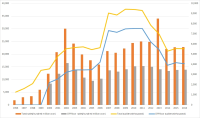
Purpose This research analyzed the Korean and Japanese cycle racing businesses by comparing each country’s total profits and total audience from 1996 to 2016. Methods In this process, it used total profits data and total audience data from 1966 to 2016. The data showed an economic correlation between Korean and Japanese cycle racing businesses by using each county’s economic variables. Results According to regression analysis, the income and audiences of Korean cycle racing industry has been increased as their income level has been increased. However, Japanese cycle racing generally has negative effects between income level and other variables except audiences. Moreover, aging population affects negatively to Korean cycle racing industry. In contrast, aging population is less affects to Japanese cycle racing industry. Furthermore, improvement of employment and unemployment rate affects negatively to Korean cycle racing industry. As a result, Korean cycle racing industry looks like a gambling. On the other hands, Japanese cycle racing industry becoming one of leisure sports industry. Conclusions Korean cycle racing industry has to examine closely Japanese’s restructuring method & result. Also, they have to analyze closely Japanese’s sociocultural variables which explain decreasing profits and increasing audiences. In other words, Korea cycle racing industry needs to various methods to becoming leisure sports industry.
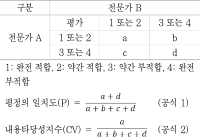
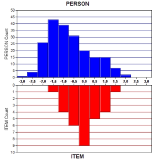
Purpose Common content knowledge(CCK) is composed of rules, techniques, and tactics. Such knowledge is a requirement for effective teaching of physical education (PE). There are, however, few validated tests of CCK. Thus, the purpose of this study was to develop a CCK test of soccer and evaluate the validity and reliability of the test using Rasch modeling (Rasch, 1980). Methods We developed thirty item common content knowledge test for soccer. Then, we used Rasch modeling to evaluate the validity and reliability of a test of soccer. Pre-service teachers (N=92) majoring in physical education and non-PE major (N=111) participated in this study. Results Thirty questions demonstrated good item-model fit. Moderately high internal consistency for person-ability and high internal consistency for item-difficulty are reported. Both Infit and Outfit statistics showed a good fit between the data and the Rasch model. Conclusions The analysis provides evidence to support the validity and reliability of this instrument as a CCK test of soccer. Limitations of the study were discussed and suggestions were provided to improve the test.

Purpose The present study explores educational values of professional coaches from perspectives as educators while they are giving the players sports coaching. Since free agent system was introduced in 1999 at Korean Baseball Organization(KBO) league, the socio-economical differences between players and coaches are getting bigger and bigger. In this situation, professional coaches tend to have more difficulties in interacting with the players. The study focuses on looking into professional coaches' educational agony and reward. Also, it highlights their educational values as educators rather than coaches. Methods Two professional baseball coaches and a TV commentator participated in the study: all past professional players, and professional coaches for more than 10 years. The researchers collected data through semi-structured in-depth interviews; each participant was interviewed three times. The researchers recorded and transcribed all of the interviews; then, the researchers reread the interview transcripts and inductively produced codes for themes whenever emergent codes appeared. Verbatim quotations from the interviews are excerpted in the present research report. Results The findings indicate that, first, the participants are all highly motivated in giving lessons to the players. They all helped the players overcome the difficulties and be good players. They emphasized the importances of endeavors and attitudes during their lessons to be well-received by the players. Second, the participants agreed that good coaches should have the ability to find the potentials of the players and have personality to gain the players' trust. They always have to work and study hard to keep expertises. Conclusions This study argues that the participants are playing their roles in a sport coaching area not only as coaches, but also as educators.
Purpose The purpose of this study lies in: 1) clarifying what constitutes coaching ethics; 2) providing a theory to set up a coaching ethics in Korea; 3) and offer a direction to coaching ethics based on its normative traits. Methods In order to achieve this purpose, the following has been done: 1) a review of existing literature has been done to analyze the relationship between professionalism and ethics in coaching and explicate the concept and necessity of coaching ethics; 2) an effort has been made to answer such questions as “why and how much should a coach be ethical?”; “How should a coach be ethically evaluated?”; 3) An analysis of ethical responsibility embedded in coaching has been done, focusing on four ethical theories: Kantian categorical imperative, Aristotelian phronesis, Simon’s broad internalism, and Morgan’s conventionalism. Results This study reviews prior literature considering the relationship between professionalism and ethics in coaching and offers theoretical evidence to explain coaching ethics and its normative aspect. This will help resolve complicated ethical predicaments arising in the field. Conclusions This study emphasizes the role of coaches to improve fairness and wholesomeness in the field of sport, as well as suggests a coaching ethics required of a profession with internal regulations. Coaching ethics not only increases a sense of responsibility on the part of coaches but helps create a virtuous circle in which coaches’ ethical sensibility is reproduced in athletes as well. All in all, coaching ethics can stop important qualities of sport from deteriorating due to commercialism and the winner-takes-all attitude prevalent in sport today and contribute to a fair and wholesome sporting culture.
Purpose The purpose of this study is to review the governance of the 2018 Pyeong Chang Winter Olympic Organizing Committee (POCOG), and to suggest potential governance models for the next mega sport event organizing committee. Methods For this study, In-depth Interview was conducted on 5 subjects who were involved in the process of organizing Pyeong Chang Olympic Games internally and also externally. Throughout the interviews, the subjects were asked to answer questions about the leadership of POCOG management, working relationships among the staff members, and improvement plans for the next mega event. Results The results of the study are as follows: First, POCOG sat up a governmental system and then tried to blend government officials and people from private sector to run the committee; Second, POCOG leadership was not an effective to run an Olympic Organizing Committee; Third, there were not effective working relationships among the staff members in the committee; Lastly, the subjects proposed the future organizing committee to hire more experts, to establish some kind of system that can prevent the turnover, and to go for privatization with the limited involvement from the government. Conclusions Therefore, this study suggests that the future mega sport event organizing committee should implement effective governance in bring more experts, and keeping them from the beginning to the end of the event. Also the organizing committee should consider implementing corporate governance to run the committee with entrepreneurial mindset, and to create cooperative working environment among the committee members.
Purpose The purpose of this study was to examine the effects of parents’ involved dance-sports program on a physical activity level and a fitness of children with a developmental disability and on their parents’ perception. Methods The participants were seven children with a developmental disability ranged between 8 and 16 years and seven parents of them participating in the dance-sports program during 90 minutes, 3 times per week for 8 weeks. The quantitative data (i.e., the physical activity level, the physical fitness, and the questionnaire) were collected before and after the intervention. Results The results showed that there was statistically significant difference of the parents’ perception on children’s participation in a physical activity [F=5.63, P<.04]. Although the experimental group showed increase trend, whereas the control group showed decrease trend, there was no statistically significant difference of the physical activity level and the physical fitness of the children with development disabilities. Conclusions Parent participated dance sports program seems to be effective on parents’ perception on children’s participation in a physical activity, physical activity level and the physical fitness of the children with a development disability in experimental group.
