PURPOSE This study examined the process and cause of change in nationalism in German gymnastics in the 19th century. METHODS The study used a literature study method and analyzed data from previous studies. Eleven articles related to the research topic were chosen for domestic research data by searching RISS for "German gymnastics," "Turnen," and "German nationalism." Overseas research data involved seven articles related to this study and were found by searching for "German gymnastics" and "Turnen" in Google Scholar. RESULTS First, German nationalism was originally divided into liberal nationalism and nationalistic nationalism, resulting in nationalistic nationalism after German reunification. Second, Jahn as a liberal nationalist and Spiess as a nationalist attempted to spread their ideas through German gymnastics. Finally, German gymnastics change from Jahn's liberal nationalism to Spiess' nationalistic nationalism was inevitable due to German gymnastics' external background and inherent limitations. CONCLUSIONS This study illustrated the process and cause of the change in the nationalistic characteristics of German gymnastics in the 19th century. Various historical cases that have not yet received attention but are worthy of investigation must be studied.
PURPOSE This study examined how consumers' visual attention to ads during eSports media consumption varies over time. METHODS An experimental study with a single factor, three-level within subject experimental design was conducted, utilizing an eye-tracker to measure visual attentions, including fixation count and duration. Seventy-eight students from a national university in city B participated in the experiment. A repeated measures ANOVA was conducted using the open-source statistical program R to test the research hypothesis. RESULTS Both the fixation count and duration were highest for the first ad and then gradually decreased for the second and third ad. CONCLUSIONS It is recommended that eSports sponsors should consider differentiating ad pricing based on the order of exposure, then expose the first ad presented more frequently and for extended periods, and consider different shapes, colors, and movements to prevent adaptation to the initial allocation of attention.
PURPOSE This study aimed to explore methods for stimulating consumer purchasing behavior in the sportswear market, where gaining a competitive edge through traditional means has become increasingly challenging, by focusing on the recently highlighted environmental, social, and governance (ESG) management practices. The objective was to present strategic alternatives for sportswear brands grounded in sustainable management and value creation. METHODS The research employed SPSS 21.0 and AMOS 21.0 for frequency analysis, reliability and validity analysis, confirmatory factor analysis, structural equation modeling, and mediation effect analysis. RESULTS First, among the sportswear brand‘s ESG message trust and ESG authenticity, only ESG authenticity positively impacted consumer behavior. Second, both the sportswear brand‘s ESG message trust and ESG authenticity were found to positively influence ESG congruence. Third, ESG message trust and ESG authenticity negatively affected ESG skepticism. Fourth, ESG congruence positively impacted consumer behavior. Fifth, ESG skepticism was found to negatively influence consumer behavior. The mediation effect analysis yielded the following results: First, the direct effect of ESG message trust on consumer behavior was not statistically significant; however, a full mediation effect was observed through ESG congruence and skepticism. Second, the direct effect of ESG authenticity on consumer behavior was statistically significant, with a partial mediation effect through ESG congruence and skepticism. CONCLUSIONS For sportswear brands to achieve sustainable management and profit generation, it is essential to explore methods for stimulating consumer purchasing behavior based on trust and authenticity in ESG messages.
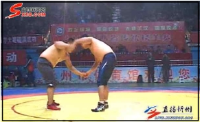
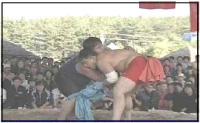
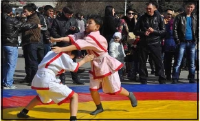
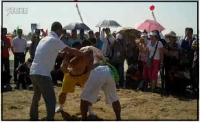
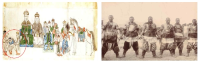
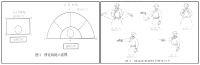
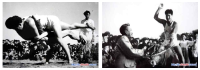
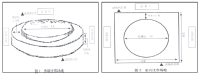
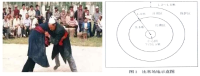
This research begins from the awareness that even though there are different forms of wrestlings in the ethnic minority groups in China, the study on their morphological aspects has reached the limit. Based on the documents and VOD data about these wrestlings of each ethnic group, their morphological characteristics can be verified as follows. First, The postures of Han and Mongolian people take the way of two players standing and playing, and Korean-Chinese people and Hui people take a saddle stance using a thigh band. Second, as for the arenas for the wrestlings, owing to some geographical features and natural environments, they were set up at a specific area during the traditional era using natural objects(grass, lawn, soil, sand). Yet, in the modern times, they have been changed as being installed and run in modernized gyms, sports fields, or parts following the standard of stadium facilities supervised by each organization. Third, with regard to the play wear of wrestling, some parts of the traditional costumes have been transmitted and worn. However, in case of most of the traditional costumes, it has been found out that modernized clothes which take the forms of garments developed since the modern era into consideration are being used. Fourth, in terms of the game equipments of wrestling, certain clothes(uniform, vest), running shoes and a band(a thigh band) should be worn.














In the field of Adapted Physical Activity, there is a dearth of research that has attempted to critically explore ethical issues arising in the field of practice. The reason why ethical considerations are needed in the field of practice is that adapted physical activity instructors can negatively affect other people's lives, such as students with disability, regardless of their intentions. Purpose Therefore, the purpose of this study is to apply ethical theories on ethical issues that may appear in the adapted physical activity practice field and consider their implications. Methods Through ethics theory, researcher attempted to critically examine what is right, wrong, or good or bad in the field of adapted physical activity practice. Results As a result of the research, ethical theories were considered and the contributions and limitations that each theory could offer to adapted physical activity practice were discussed.
PURPOSE This study aimed to test the impact of sport consumers‘ self-construal levels on their responses toward an athlete scandal by conducting a cross-cultural experimental study. In particular, it focused on sport consumers’ subsequent responses toward an athlete scandal, such as the perceived target of responsibility and perceived the main agent for the public apology. METHODS Participants (total=151; KOREA=75, USA=76) were selected for a cross-national comparative study. MANCOVA and Descriptive Statistical Analysis were conducted using the SPSS Windows program version 26.0 to validate the research hypothesis. RESULTS The results indicate that sport consumers’ responses to an athlete scandal vary across the countries. Participants from Korea reported perceived responsibility to the athlete, team, and league. Conversely, those from the United States reported perceived responsibility only to the athlete. CONCLUSIONS There are cultural differences in sport consumers’ subsequent perceptions of an athlete scandal. The present study's findings are expected to provide stakeholders such as teams and leagues with practical implications to understand better sport consumers’ responses to athlete scandals in the globalized sports industry.
Purpose The purpose of this study lies in: 1) clarifying what constitutes coaching ethics; 2) providing a theory to set up a coaching ethics in Korea; 3) and offer a direction to coaching ethics based on its normative traits. Methods In order to achieve this purpose, the following has been done: 1) a review of existing literature has been done to analyze the relationship between professionalism and ethics in coaching and explicate the concept and necessity of coaching ethics; 2) an effort has been made to answer such questions as “why and how much should a coach be ethical?”; “How should a coach be ethically evaluated?”; 3) An analysis of ethical responsibility embedded in coaching has been done, focusing on four ethical theories: Kantian categorical imperative, Aristotelian phronesis, Simon’s broad internalism, and Morgan’s conventionalism. Results This study reviews prior literature considering the relationship between professionalism and ethics in coaching and offers theoretical evidence to explain coaching ethics and its normative aspect. This will help resolve complicated ethical predicaments arising in the field. Conclusions This study emphasizes the role of coaches to improve fairness and wholesomeness in the field of sport, as well as suggests a coaching ethics required of a profession with internal regulations. Coaching ethics not only increases a sense of responsibility on the part of coaches but helps create a virtuous circle in which coaches’ ethical sensibility is reproduced in athletes as well. All in all, coaching ethics can stop important qualities of sport from deteriorating due to commercialism and the winner-takes-all attitude prevalent in sport today and contribute to a fair and wholesome sporting culture.
PURPOSE This study aims to critically read the film <Run-Off 2> in a manner in which its narrative represents and constructs the multicultural subject as the fearful and compassionate “other,” and its structure and meanings reconciles with the concept of cultural citizenship. METHODS This research is informed by two methods: 1) text analysis by deconstructing the narrative structure and flow, and 2) contextual interpretation focussing on understanding the significance of the filmic representation in the Korean historical, political, social, and cultural contexts. RESULTS The narrative of the film portrays and constructs the multicultural subject as a cultural other, with specific styles of representation, in which stereotypical description, otherizing tropes of double process, and recognition struggle for cultural citizenship. CONCLUSIONS The study summarized the present research and laid out some suggestions for critical studies of sport films from an interdisciplinary approach and cultural studies-based methods.
PURPOSE This study examined the relations among role modeling, sports confidence, and perfectionism to provide foundational insights into nurturing positive sports confidence in student swimmers. METHODS The survey included a total of 237 middle and high school swimmers registered with organizations under the Korean Sport and Olympic Committee. The analysis included data from 231 participants after excluding 6 insincere responses. The construct validity of the measurement tools was assessed using confirmatory factor analysis, while the basic characteristics of the measured variables and their interrelations were examined using descriptive statistics and correlation analysis. Moderating effects were tested using PROCESS Macro Model 1. RESULTS First, role modeling (r =.274–.471, p <.05) and perfectionistic striving (r =.301–.428, p <.05) showed a positive relation with sports confidence. Second, perfectionistic concern (r =−.056 to −.218, p <.05) was negatively associated with sport-confidence. Third, in the relation between role modeling and sports confidence, the moderating effect of perfectionistic concern was not significant whereas that of perfectionistic striving was statistically significant(ΔR 2=.019, p <.05). CONCLUSIONS Perfectionistic striving may play a positive role in enhancing student swimmers’ sports confidence. Specifically, striving for perfection may facilitate sports confidence improvement among athletes who observe and emulate their role models’ performance and behaviors.
PURPOSE This study analyzes the elementary physical education (PE) instructor system and identifies patterns of change and their underlying causal mechanisms. METHODS The study examines the systems that define the qualifications and roles of elementary school instructors, focusing on the subject specialist teacher system, the secondary-to-elementary teacher system, and the sports instructor system. These systems are analyzed using an integrated approach that combines morphogenetic theory and historical institutionalism. RESULTS First, during the implementation of the subject specialist teacher system, structural and institutional conditions created a necessary/incompatible relationship between the government and the education sector. This led to a compromise interaction, resulting in the implementation of the subject specialist teacher system. This change represents a case of morphogenesis, following a pattern of gradual change through displacement. Second, during the implementation of the secondary-to-elementary teacher system, structural and institutional conditions produced a contingent/incompatible relationship between the government and the education sector. Consequently, a competitive interaction occurred, leading to the establishment of the secondary-to-elementary teacher system. This change is also classified as morphogenesis, with a pattern of gradual change through layering. Third, during the implementation of the sports instructor system, structural and institutional conditions fostered a contingent/compatible relationship between the government and the education sector. This resulted in an opportunistic interaction, culminating in the adoption of the sports instructor system. This change is considered morphogenesis and exhibits a pattern of radical change. Fourth, during the coexistence period of multiple elementary PE instructor systems, structural and institutional conditions created a necessary/compatible relationship between the government and the education sector. As a result, a defensive interaction occurred, leading to institutional path dependency and morphostasis. CONCLUSIONS This study presents three key findings. First, the education sector's role as an active agent in shaping changes to the elementary PE instructor system has gradually diminished. Second, institutional changes have been implemented in ways that promote openness and enhance PE expertise. Third, these changes have not addressed the fundamental challenges facing elementary PE.
