PURPOSE The purpose of this study was to investigate the association of physical activity level with insomnia severity (Normal, Subthreshold, Moderate and Severe) in adolescents and to use it as a basis for insomnia prevention. METHODS This study was conducted on a cohort of 50 adolescents under the age of 20 (19 males, 31 females) recruited from Hospital N in Incheon, Korea. Participants were categorized into groups according to the severity of insomnia in both males and females using the Korean version of the Insomnia Severity Index-Korean (ISI-K). The Korean version of the International Physical Activity Questionnaire was also used to calculate participants’ weekly moderate and vigorous physical activity. RESULTS The participants’ characteristics did not differ by insomnia severity in males, but there were significant differences in weight (p=.008), BMI (p=.019), SBP (p=.004), and DBP (p=.019) in females by insomnia severity. In male adolescents, there was no significant difference in the amount of physical activity by insomnia severity, but there was a trend toward decreased amount of physical activity with increasing severity. Among female adolescents, there were significant differences in the amount of physical activity by insomnia severity: moderate (p<.05), high (p<.05), and moderate-high (p<.05). In the unadjusted model, adolescents who did not meet the recommended amount of physical activity (150 minutes per week) were more likely to have insomnia (OR=4.67, 95% CI=1.34–16.24) than those who met the recommended amount of physical activity. The model after adjusting for covariates (gender and body mass index) also showed an association between the recommended amount of physical activity and insomnia (OR=3.94, 95% CI=1.17–13.28). Negatice correlations was found between insomnia index and moderate-to-vigorous physical activity (r=–.357, p=.013). CONCLUSIONS Adolescents are approximately 4.67 times more likely to suffer from insomnia if they do not meet physical activity recommendations, and there was a negative correlation between the insomnia index and moderate-to-vigorous physical activity, suggesting that physical activity should be increased to reduce the insomnia index.

This study was to verify the structure of efficacy related to performance perceived by short-track athletes when playing a match. Therefore, 50 players answered open questionnaires and 200 players participated in construct validity verification, a total of 250 players of short-track members of national, business and university team were sampled during the research phase. The data was analyzed through the study procedures. The results were as follows: First, efficacy structure of players during the match were categorized into three groups as game managing strategy(including course management, race control, match management and selective attention ability), psychological control ability(including positive imagery, match competition, competitive spirit, ability to handle hardship, anxiety control, and patience), and physical usage of ability(including physique, endurance, and quickness). Second, the result of the first construct validity verification through exploratory factor analysis showed 7 factors in 29 items as game management, course management, psychological control, physical use, coping with hardship, speed control and psychological stability. Finally, as a result of confirmatory factor analysis, short-track self-efficacy showed the 5 factor in 15 items except for coping with hardship and psychological stability.
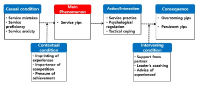
Purpose This study aims to investigate the experience of service yips in badminton players in depth through using grounded theory method. Methods We collected data from in-depth interviews with 14 participants in total, consisting of badminton players who experienced service yips, their doubles partners and coaches. The collected raw data were analyzed base on derive transcription, coding and paradigm models through grounded theory method. Results First, as a result, 59 concepts, 31 subcategories and 15 categories in regard to badminton service yips were deduced from open coding. Second, in axial coding, it was structured in a paradigm model by categories such as service yips, service mistakes, service proficiency, service anxiety, the imprinting experiences, the importance competition, the pressure of achievement, service practice, psychological control, tactical handling, support from partners, leaders’ coaching, advice from experienced ones, overcoming yips and persistent yips. Third, selective coding resulted in ‘Badminton service yips’ as the core category of this study. ‘Badminton service yips’ is a chronic performance impairment associated with badminton players making severe errors in swing motion on a service not intended by them that it is due to physiological or psychological symptoms such as hand tremors, overall body stiffness, arms stiffness, overstress, overanxiety, and concern over service mistakes. Conclusions We expect our study can be a theoretical foundation for understanding and explanation of ‘Badminton service yips’ and a useful reference for badminton players suffering from psychological difficulties caused by their service yips. The findings in this study should be considered for the development of potential strategies for overcoming the badminton service yips.
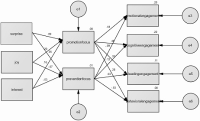
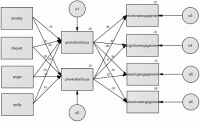
Purpose The purpose of this study was to find out the relationship between emotion and control focus and training involvement in games where elite shooters are late. Methods Thus, 228 elite shooters were selected and the research results were derived based on data analysis using discriminatory emotions, control focus, and training attendance scales. Results According to the analysis of the correlation between emotion, control focus, and training involvement, positive emotions of surprise, enjoyment, and interest showed a static relationship with improvement focus and training involvement, while negative emotions such as anger and guilt had a static relationship with prevention focus, but showed an inadequate relationship with training involvement. The multiple regression analysis between emotion and control focus showed that the improvement focus showed the most significant effect of enjoyment emotion, while the prevention focus showed that instability had the most effect on the prevention focus. Overall, the focus of improvement has been shown to be affected by training. Finally, it was found that positive sentiment had a positive effect on improvement focus and training involvement, while negative sentiment affected prevention focus and reduced cognitive involvement. Conclusions Positive sentiment toward the competition has been confirmed to enhance training participation by strengthening the focus of improvement, but negative sentiment has been shown to enhance the focus of prevention, reducing cognitive involvement.
The purpose of this study was to conduct an in-depth exploration of Korean national badminton players’ psychological momentum strategies. Data were collected using an open-ended questionnaire and group interviews of 66 badminton players, including 40 members of the 2018 Korean national badminton team and 22 college and semi-pro badminton players who each had badminton careers of 10 or more years and were registered in the Badminton Korea Association. The data were analyzed using inductive content analysis and the deductive process based on the inductively categorized results. The results are as follows. First, regarding strategies for maintaining positive momentum, 188 raw data were collected and classified into three category (keeping pace, dominating the play, and psychological facilitation) and 10 sub-category (including speedy resumption of the game, attacking weak points, and fighting shout). The results suggest that badminton players maintain positive momentum by using strategies to control the speed and tempo of the game at their preferred pace, implement special techniques, exploit their opponent’s weaknesses, and cheer or talk amongst themselves to motivate each other and communicate with their partners and coaches. Second, regarding strategies for overcoming negative momentum, 293 raw data points were collected and classified into three category (time outs, psychological reminders, and changes in plays) and 11 sub-category (including delaying the game, seeking social support, and play change). The data demonstrate that badminton players overcome negative momentum using strategies to intentionally delay the game and exchange equipment, focus on performance cues, and interact with their coaches and partners to change plays and prevent errors. It is hoped that these study findings will inform efforts to provide psychological support that is effective in increasing the odds of winning for the national badminton players in the Asian Games and the Olympic.

Purpose: This study was to verify the relationship between coaching behavior(autonomy/controlling behavior), self-regulation motivation and performance. Method: 356 athletes (from middle to work and professional team) in individual and team sport completed coaching behavior scale developed by this researchers assessing autonomy and controlling coaching behavior perceived by players, Korea Basic Pyshoclogical Needs Scale (KBPNS) assessing basic psychological needs, Behavioral Regulation in Sport Questionnaire (BRSQ) assessing sports motivation level based on self-determination theory, and sport performance score. To estimate the relationship between coaching behavior, self-regulation motivation and performance, this study employed the structure equation modeling analysis. Results: The relationship between psychological needs, regulation motivation and performance showed that autonomy coaching behavior tend to reinforce competence and autonomy of player. These variables have a positive effect on more inner regulation motivation. Moreover, the intrinsic motivation through stimulation experience was a key factor leading to a positive performance by improving the performance strategy and skill of athletes. Conclusion: These results are meaningful as an empirical evidence that relationship between motivation and performance can be changed according to the type of coaching behavior, and that autonomous coaching behavior play an important role in maximizing the performance of player that provided theoretically form.
The purpose of this research is to provide the information about sports injury by surveying and analyzing a result, and to lead analytic and scientific training among the subjects being elite summer sport athletes. All sports injuries are recorded on injury report form and the following results were obtained. In Cycle sport, the prevalence of injuries of the low back, knees were highest. and In Table tennis sport, the prevalence of injuries of the ankle was highest due to the chronic fatigue. The prevalence of injuries of the shoulder, low back were highest due to the overuse of joints. In Badminton sport, the prevalence of injuries of low back, knees, ankles were highest by overtraining. In Gymnastics, the prevalence of injuries of the low back, knees, ankles were highest. In Archery sport, there is a lot of injuries to the shoulder and neck. In Weight lifting sport, the prevalence of injuries of the low back, knees, and ankles were highest. In Golf sport, the prevalence of injuries of knees, low back were highest. In Hockey sport, the prevalence of injuries of ankles, knees, low back were highest. In Boxing sport, the prevalence of injuries of hands, shoulder, the low back were highest, In Judo sport, there are overall damage occurred in parts of the whole body, but the prevalence of injuries of ankles, knees, low back were highest. In Fencing sport, the prevalence of injuries of the low back, knees were highest. In Wrestling sport, although there is a difference slightly depending on freestyle and Greco-Roman, but the prevalence of injuries of knees, ankles, low back were highest. In Handball sport, the prevalence of injuries of ankles, knees were highest. In Taekwondo, the prevalence of injuries of ankles, knees, feet were highest.
