PURPOSE The United Nations (UN) has proposed 17 Sustainable Development Goals and has been extending its efforts to achieve them. Sport can be linked closely to the third goal, which is related to health and well-being. Therefore, this study aimed to explore and to analyze individual's changed sport activities during the COVID-19 pandemic, focusing on ways to achieve health and well-being related goals through sport. METHODS A qualitative research method was employed, and in-depth interview methods were used for data collection. For data analysis, categorization and itemization were used along with content analysis. RESULTS Looking at the derived results, in the context of an infectious disease such COVID-19, sport activity patterns have changed due to reasons such as stadiums or facilities, interpersonal reasons, fear, inconvenience, staying healthy, increase in leisure time, and individual preferences. CONCLUSIONS Due to the COVID-19 pandemic, the indicators of health and well-being related SDGs are exhibiting a downward trend. At this point, it is necessary to find a way to achieve the goal through sport that can participate voluntarily for the purpose of pursuing pleasure.
PURPOSE This study was conducted to investigate changes in stress before and after elite shooting athletes participate in a match, and to find out the effect on the match score. METHODS Thirty-wight elite shooting athletes were sampled, questionnaires were distributed to measure psychological stress before and after the match, and saliva was collected before and after the match to measure cortisol. In addition, psychological stress and changes in cortisol before and after the game were investigated, and how psychological stress before and after the game and cortisol affect the score of the game were investigated. Accordingly, a statistical analysis based on data analysis was conducted, and the following research results were obtained. RESULTS The pre-match analysis of psychological stress and cortisol revealed statistically significant changes; both post-match stress and cortisol decreased compared to before the match. Increased psychological stress and cortisol both before and after the match had a negative effect on the match score. CONCLUSIONS These findings confirmed that shooters experience very strong psycho-physiological stress before the match, and the stronger the psychological stress, the lower the game score.
PURPOSE The outdoor camping market size is expected to hit a new high in 2021 as the popularity of outdoor activities surges due to the COVID-19 pandemic. The purpose of this study was to investigate the structural relationships among servicescape, perceived value, flow and behavioral intention, focusing on participants of international outdoor camping exhibition. METHODS Demographic analysis, confirmatory factor analysis, and structural equation modeling analysis were perfomed. RESULTS The findings suggest that (1) all servicescape factors (attractiveness, cleanliness, accessibility and responsiveness) have a positive effect on perceived value, (2) attractiveness, cleanliness and responsiveness are significant predictors of flow, (3) perceived value affects both flow and behavioral intention, and (4) flow also significantly impacts behavioral intention. CONCLUSIONS These findings highlight that high quality servicescape can result in enhancing a positive perceived value and flow, and in turn leading to behavioral intention of consumers. Hence, it is recommended for practitioners and staff of the exhibitions to considering the strategies for improving servicescape factors in order to achieve their goal.
PURPOSE The aim of this study was to investigate the effects of 12-week instrumental pilates exercise on isokinetic muscle function and body composition of healthy college women. METHODS Twenty-four college women (aged 21.6±1.3yrs) were recruited to the study. The participants were divided into two groups, as the instrumental pilates group (IPG, n=12) and the control group (CG, n=12). The springboard pilates exercise was conducted 3 times a week for 40~60 minutes during 12 weeks. RESULTS There was significant interaction effects in the right knee and left · right elbow extensor muscles (60°/sec) and left knee flexor and right elbow extensor · flexor muscles (180°/sec)(p<.05, p<.01). There was no significant interaction effects in the muscle mass of the total body, trunk, arms, and legs (NS) and also in the serum growth hormone, insulin-like growth factor-I and 25(OH)Vitamin D (NS). Serum creatine kinase was significantly increased (p<.05). There was also no significant interaction effects in weight, body fat, serum total cholesterol, triglycerides, low & high-density lipoprotein cholesterol (NS). CONCLUSIONS These results suggest that although prolonged instrumental pilates exercise of healthy college women might be improving isokinetic muscle function, there is no increasing effect of muscle mass.
PURPOSE The purpose of this study was to examine the effect of visual color perception on autonomic nervous activity and exercise capacity in healthy male college students. METHODS The subjects who were healthy male college student (n=10) were participated in 4 visual colors using by randomized crossover; clear color group (CG), red color group (RG), blue color group (BG) and green color group (GG). All subjects wore goggles for five minutes prior to the exercise to adjust to color, and they did not take off goggles until recovery after exercise. Significant differences between groups were determined by two-way repeated measures ANOVA. RESULTS As a result of this study, the low frequency (LF) was significantly higher in RG than those in GG. But the high frequency (HF) was significant higher in BG compared to GG. Exercise capacity such as maximum strength, muscle endurance, reaction time, power, agility and aerobic performance did not differ significantly between all groups. CONCLUSIONS Therefore, our findings suggested that perception of the visual color might be change autonomic nervous activity, while don’t influence exercise capacity.
PURPOSE This study aimed to identify the nature of human rights violations experienced by semi-professional athletes in semi-professional sports teams and explored the relevant cases. METHODS For this purpose, 35 semi-professional athletes (20 men and 15 women) from the semi-professional sports teams participated in the study, and data collection was conducted through in-depth interviews and focus group interviews (FGI). The collected data were analyzed using the phenomenological research method proposed by Colaizzi (1978). RESULTS The study summarized the results into five categories, 14 theme clusters and 41 themes. Its inherent structures include ‘first step to becoming a semi-professional athlete: disadvantageous contracts for players,’ ‘unavoidable absolute power: obedience to the coach,’ ‘forced training camp: autonomy and privacy infringement,’ ‘structural problems of the semi-professional sports federation: tyrannized power’ and ‘female players who are in male-oriented society: gender-focused than performance.’ CONCLUSIONS The results of this study provided an understanding of athletes’ human rights violations experienced in semi-professional sports teams. Understanding athletes in semi-professional sports teams through phenomenological research was conducted based on previous studies discussing practical and policy intervention measures.
Purpose The purpose of this study was to develop an effective college life adaptation program for freshman student-athletes. Methods A total of 160 student-athletes and 5 experts agreed to participate in this study. Four procedures were followed in this study: the needs assessment, the preliminary program development, and the application of the program. For the needs assessment, in-depth interviews were conducted, and the data were analyzed using an inductive reasoning process. Results The results of the needs investigation showed seven need factors and four interruption factors for college life adaptation. In addition, three need factors based on experience and seven interruption factors based on experience were found. The preliminary program was developed based on the needs assessment through the expert meeting, and the program consisted of four stages. Each stage consisted of three sessions, and each session contained a specific topic. The program was provided to nine freshman student-athletes in two months. As a result, the final program which consisted of four stages and thirteen sessions was developed after the reinforcement process based on evaluation of the preliminary program was conducted. Conclusions It is concluded that, the program is able to be expected to help them to understand their roles, have a better sense of responsibility and improve their self-esteem. Therefore, coaches and mental performance consultants should provide the college life adaptation program for freshman student-athletes to reduce their stress and have a better college life.
Purpose The purpose of this study was to examine the role of trust on sport fan behavior following the favored team’s loss. Methods Online survey modes were employed to collect the data. A total of 300 individuals participated in the study, of which 288 were valid and therefore analyzed. To test the hypotheses, structural equation modeling was conducted using Mplus 8. Results The findings are as follows. First, cognitive trust had a significant effect(+) on future viewing intention. Second, affective trust had a significant effect(+) on future viewing intention. Third, cognitive trust had a significant effect(-) on switching behavior. Fourth, affective trust had no significant effect on switching behavior. Fifth, team identification moderated the relationship between affective trust and switching behavior. Conclusions The results of this study suggest that sport fans’ trust affects fan behavior following a team’s loss. Therefore, professional sport teams should seek to establish strong affective trust and cognitive trust.
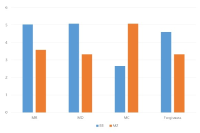
Purpose Drawing on Socioemotional Selectivity Theory, the present research aims to investigate how sport consumers’ moral reasoning strategies and forgiveness intent toward a sport organization’s misconduct depending on the consumers’ different time perspectives(expansive vs. limited). Methods An experimental study (total n = 129; Baby Boomer generation = 62, generation MZ = 67) was conducted by utilizing a fictitious scenario depicting a sport organization’s misconduct. The proposed hypotheses were tested by conducting T-test, correction analysis, and multiple regression analysis using SPSS 21.0. Results There were significant differences in moral reasoning and forgiveness based on different time perspective. Baby Boomer(MZ) group showed higher(lower) levels of moral rationalization, moral decoupling, and intent of forgiveness compared to MZ(Baby Bommer) group, while showing lower(higher) level of moral coupling. A result also revealed that negative moral emotions had moderating effect between a limited time perspective and moral coupling among MZ participants. Conclusion The results of this study indicated that sport consumers’ time perspective has a predictive function on moral reasoning strategies. Thus, it is necessary for sport organizations to establish strategies focusing on the consumers’ time perspective to effectively respond to an unexpected crisis.
Purpose The purpose of this study was to develop the Emotional Intelligence Scale in Sport Coaching(EISSC) based on the emotional intelligence trait model. Methods The participants were 236 professional sports coaches by the purposive sampling methods via e-mails. 48 preliminary items were developed by literature review among expert panels. Then, a total of 40 items were selected after the item-analysis. Exploratory factor analysis was conducted for construct validity and criterion validity was evaluated by Person’s correlation with coaching efficacy scale and general emotional intelligence scale. An internal consistency, Cronbach's alpha coefficient, was used to see the reliability. Results The results of exploratory factor analysis presented a six sub-structure factors (Self-awareness, Awareness of others, Optimism, Utilization of emotion, Emotion regulation, Social skills) with 20 items, which explained 68.49% of the total variance. Criterion-related validity was supported by correlations with in coaching efficacy(r=.713) and general emotional intelligence(r=.647). Reliabilities were secured with Cronbach’s alpha coefficient .854 for the total 20 items. Conclusions The EISSC can be used to provide an valid measure of emotional ability of coaches in sport.
