
[Purpose] The purpose of this study was to examine acceptance intentions of Sports O2O Service Potential consumers using the revised model of goal-directed behavior. [Methods] The 330 surveys were distributed to potential consumers through convenience sampling method for pilot study. Due to the reliability of data, 42 samples were discarded and 288 samples were put to actual analysis. Then data were analyzed for frequency analysis, reliability analysis, correlation analysis and structural equation modeling technique via SPSS 23.0 and AMOS 22.0. [Results] The results of this study were as follows. First, attitude and subjective norm had a positive effect on desire. Second, perceived behavior control did not affect on desire but had a positive affect on acceptance intention. Third, positive anticipated emotions had a positive effect on desire but negative anticipated emotions did not effect on desire. Fourth, desire had a effect on acceptance intention. [Conclusions] According to the result, sports O2O service operators should do best to improve consumers positive attitude. Especially, they have to establish marketing strategies of introducing strong aspects of sports O2O services. Also, providing easy processes and intuitive interface are needed to consumers. To promote sports O2O services to potential consumers which is unfamiliar to that services, it is important to induce easy ways for potential consumers to experience sports O2O services.


This study was to analyze the hierarchical importance of successful intelligence in Football coaches and players. In order to explore the hierarchical importance of successful intelligence 24 football coaches(under AFC A course) and 20 Korea Football Association U15 Players were responded to analytic hierarchy process questionnaires. In the Analytic Hierarchy Process, football coaches and players completed the AHP Questionnaire with creative intelligence, analytical intelligence and practical intelligence. The hierarchical importance order of successful intelligence for coach and player were analytical intelligence, practical intelligence, and creative intelligence respectively. Evaluation of hierarchical importance of successful intelligence for coach is analytical intelligence(.542), practical intelligence(.278), creative intelligence(.181) in order. Evaluation of hierarchical importance of successful intelligence for coach was analytical intelligence(.684), practical intelligence(.161), creative intelligence(.155) in order. The hierarchical importance of successful intelligence for coach and player were similar each other. Analytical intelligence, was evaluated most important factor for coach and player in successful intelligence. Successful intelligence is important issue for sport performance. More consider needs to Successful intelligence for sport psychology researchers.




PURPOSE This study aimed to identify and establish ESG activity assessment factors tailored for sports brands, offering a foundational framework for fostering sustainability within the sports industry. METHODS A Delphi survey was conducted between December 1, 2022, and January 31, 2023, involving university professors, sports brand executives, ESG researchers, sports marketing majors , a nd sports brand influencers. Data were analyzed using SPSS WIN 24.0 and MS Excel, encompassing research subject classification, consistency verification, and empirical analysis. RESULTS The assessment of ESG activity evaluation factors of sports brands revealed that governance, social, and environmental dimensions ranked in descending order of relative importance. Among specific evaluation criteria, the adoption of employee ethics regulations was deemed paramount in the governance evaluation area, while support for stakeholder welfare and social well-being took precedence in the social evaluation category. In the environmental sector, the production and delivery of eco-friendly, durable products held the highest significance. Further analysis, considering the weighted priorities of all evaluation factors, emphasized the importance of factors, such as the adoption of employee ethics regulations, support for stakeholder welfare, social well-being, and the production and delivery of eco-friendly, durable products. Conversely, disclosure of company information and issues, support for the underprivileged, and general shareholders' meeting or agenda for the protection of shareholders' rights and interests ranked lower. CONCLUSIONS In summary, this study validates the role of governance (G) aspects within ESG activities for sports brands, alongside environmental and social dimensions. It highlights the importance of a balanced ESG framework, particularly in an era marked by heightened social responsibility awareness among consumers. Prioritizing governance in marketing strategies not only distinguishes sports brands but also necessitates impactful promotion and advertising efforts.

There are expanding the base of amateur baseball with diverse factors and corporations are getting more interested in making opportunities to build relationships with customers by using this phenomenon. However, the previous research did not focus on examine practical effectiveness for relationship marketing methods as the strategy of the building relationship which was applied to sport events from diverse corporations. Therefore, the purpose of this study is to examine the practical effectiveness of the relationship marketing methods and the influencing process of the relationship marketing strategy applied to the amateur baseball. 150 players who took part in the amateur baseball tournament hosted by the on-line shopping mall company were selected for research samples with random assignment. To examine the practical effectiveness, 136 players' survey responses out of 150 responses were used for research data. For hypotheses testing, this study applied PLS structural equation model. This study presented that perceived face to face and listen as relationship marketing methods were significantly positive influenced on perceived relationship quality. In addition, perceived relationship advertising as relationship marketing methods were significantly positive influenced on perceived purchase intention. Moreover, perceived relationship quality was significantly positive influenced on perceived purchase intention. In the case of mediating effect with considering relationship quality, there was partial mediating effect for relationship advertising and face to face, and there was complete mediating effect for listen.
PURPOSE This study aimed to develop physique and basic physical fitness evaluation criteria for middle school soccer players, providing a foundation for training and player development to be used by coaches in the field. METHODS The study involved 440 middle school soccer players (Grade 1=178, Grade 2=132, and Grade 3=130). Measurements were conducted on seven physique and ten basic physical fitness factors. Measurement results were organized using Windows Excel 2021 and descriptive statistics were performed using Windows SPSS 26.0. Based on the descriptive statistics of the measurement results, the Cajori 5-Grade evaluation method was applied to establish evaluation criteria for each grade and fitness component. RESULTS The study results provide evaluation criteria for middle school soccer players based on the measured data, considering grade, physique, and basic physical fitness. CONCLUSIONS The criteria established in this study are expected to be widely utilized by coaches in the field to set training goals for areas such as player selection, development, injury prevention, and rehabilitation.

Purpose The purpose of this study was (1) to analyze judges’ evaluation on rhythmic gymnastics performance by applying generalizability theory and (2) to suggest recommendations to improve judges' rating. Methods Data were 34 players’ scores from Senior Part at 29th KGA President’s Cup National Rhythmic Gymnastics Championship in Korea. Difficulty and execution scores in ball, clubs, hoop and ribbon event were analyzed. Analysis models containing components of area and reputation rank were designed and multivariate generalizability theory were used for analysis. Results The G-study results showed (1) that the error source about players has more significant impact to evaluation than other error sources in analysis model containing components of only player and judge, (2) that the error source about players has more significant impact to evaluation than other error sources in analysis model adding components of area, but the error source about area has more significant impact to evaluation of clubs event than other error sources, (3) that the error source about players has more significant impact to evaluation than other error sources in analysis model adding components of reputation rank, but the error source about reputation rank has more significant impact to evaluation of hoop event than other error sources in analysis model adding components of area. The D-study results showed generalizability coefficient was stable in analysis model without components of area and reputation rank, but generalizability coefficient in analysis model containing components of area and reputation rank not stable in some event. Conclusion Recommendations for improving judging were discussed.
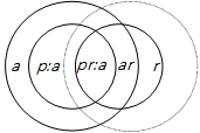


Purpose The purpose of this study is to identify the causal relationship between competitive strategy, absorption capacity and business performance of commercial fitness center and to confirm the control effect of absorption capacity between competitive strategy and business performance. Methods 330 fitness center managers and administrators were selected for the study. Out of 330, 308 questionnaires were collected and used for data analysis. The questionnaire consisted of confirmatory factor analysis, reliability analysis, correlation analysis and structural equation model analysis. Finally, Ping 's two - step approach was used to verify the moderate effect of absorptive capacity. Results The results of the study are as follows. First, competition strategy of fitness center has a positive effect on absorptive capacity. Second, the competition strategy of fitness center has a significant effect on business performance. Third, the absorptive capacity did not effect the management performance. Fourth, the absorptive capacity was found to be moderate effect between the competition strategy and the management performance of the fitness center. Conclusion Based on the results, the fitness center managers and administrators of fitness center should set up competitive strategy internally and increase absorptive capacity to utilize external information by internalizing it.

Purpose Incidence and prevalence of Korean teenager cheerleading injuries were surveyed. Methods A total of 769 junior cheerleaders who participated in National Sport Cheerleading Competitions responded to a questionnaire, and 435 reported experiences of injuries. Results Risk factors for injury included older age (p<0.001), increased experience (p<0.001), and higher BMI (p<0.05). The most frequent injury occurred at wrist, ankle, knee, shoulder and waist. And the most responded types of injury were muscular pain and contusion. Cheerleading experience affected on injury prevalence. They were injured when they perform Elevator (<0.5 yrs), Cradle (0.5-1 yrs), Cradle and Basket toss (1-2 yrs), Cradle and Pyramid (2-3 yrs). These techniques involved in bodily movements of going up and cradle. About 56% of injury was treated at home or not treated at all, and 60% of injury was either self-treated or not intervened. And only 32% of cheerleaders practiced on a formal mattress. Conclusion Safety measures for these youth cheerleaders are necessary and guidelines for securing safety and preventing and treating injuries for these population are urgent.
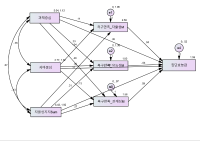
In sport context, the motivational climate created by significant others (e.g., coachs and peers) has been influences on the athletic-student's motivation, engagement, performance, and skill development. Collective efficacy is important for team performance because it influences a group's task choice, effort expenditure, persistence in the face of failure, and resistance to discouragement. This study was to examine the influence of peer motivational climate (i.e., task-involving and ego-involving motivational climate) and coach autonomous support for basic psychological need satisfaction and collective efficacy. In the study, participants were 289 athletic-students' of team sports. In the study then, questionnaire was assessed using by the correlation and path analysis. The results showed that task-involving motivational climate significantly predicted of collective efficacy, while ego-involving motivational climate were negatively predict to the collective efficacy. The results suggest the importance of considering peer influence in addition to coach influence when examining motivational climate in team sport.
PURPOSE Sport pedagogy (SP) has established itself as a subdiscipline in Human Movement Studies since the 1970s. It has become an academic labyrinth as a result of its rapid flourishing. Most researchers are extremely confused about this disorderly research complex. This study aimed to evaluate the characteristics of SP in stages in the western (mostly English speaking) countries. METHODS Analysis of literature published in English from 1990 to 2022. RESULTS The developmental versions were divided as follows: SP1.0 is positivistic in nature, SP2.0 is multi-paradigmatic as it includes all paradigms, and SP3.0 (current version). Many academic journals have been launched, and a variety of books on divergent topics are being published. Currently, research has exploded. In SP3.0, research performed by British scholars are notable in terms of number and quality, overpowering those by scholars in the USA and other countries. Youth sport and sport coaching are regarded as new legitimate areas. Additionally, signs for SP4.0 have been indicated. CONCLUSIONS In order to find way outs in the SP labyrinth, it is necessary to recognize the current research trends in international SP.
