Purpose The purpose of this study was to analyze the research topics of the articles which were published through European Sport Management Quarterly(ESMQ) from 2009 to 2018. The prior topic analysis studies of the ESMQ classified topics based on the key words using NASPE-NASSM SMPS categories. Therefore they couldn't fully reflect the content of the articles. Methods The topic modeling of the current study was conducted with the Latent Dirichlet Allocation(LDA) which generates topics based on the word usage in the article. A total of 265 articles were converted from 'pdf' format to 'txt' ANSI format for topic modeling analysis. The whole topic modeling process was done using R program and the model was set to generate 10 topics from the article. Results The 3 sport management experts were hired to label the name of the topics and the name of the topics are as follow : (1) Impact of mega sport event, (2) Cause-related marketing, (3) Factors affecting the results of the competition, (4) Managing sport organization, (5) European sport leagues, (6) Strategic management, (7) Sport economics, (8) Sport in communities, (9) Sport consumers, (10) Elite sports. It is not quite possible to compare the results of the current topic modeling results with the previous ones because of the methodological differences. However, even though the standards are different, Sport marketing topic showed the largest growth among the 10 topics extracted. Conclusions This study used the LDA probabilistic algorithm to analyze research topics, which made the analyses more objective and wholistic. However, the insights of the researchers were still needed to interpret and labeling the topics.
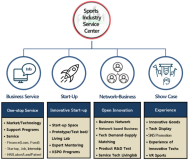
Purpose This study estimated the social value of the Sports Industry Support Center, which will be newly established and operated by the Ministry of Culture, Sports and Tourism, using the contingent valuation method. The survey designed a structured questionnaire for 480 households in 16 cities across the country to explain the necessity and major services of the Sport Industry Support Center and to investigate the willingness to pay for the social value of the center's sports industry support services. According to the NOAA panel's recommendation, the questionnaire survey consisted of dual dichotomous questionnaires and the form of payment in the form of income tax. As a result of analysis through logit model, statistically significant explanatory variables were payment amount, income level and gender. In particular, the higher the income level, the higher the willingness to pay, and the use of income tax as a means of payment was statistically significant. The social value granted to Sports Industry Support Center was 4,576.17 won per household per year, and it was estimated that there was a total of 469 billion won for the five years of income tax payment.
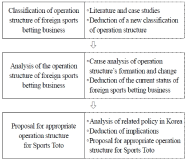
Purpose The purpose of this study is to examine and propose the appropriate operation structure for the sports betting business in Korea(Sports Toto) by analyzing foreign cases. Methods To accomplish the purpose of this study, literature and case studies were conducted on preceding studies, the World Lottery Association compendium, and Internet data. Results The results were as follows. Firstly, in terms of competition, it was deducted that maintaining the monopoly method was appropriate among the monopoly, partial competition, and free competition methods. Secondly, as for the business operator, it was deducted reasonable to adopt the non-profit operation method between the non-profit operation and the for-profit operation methods. Also, it was identified as necessary to review the adequacy of the three-level redundant business management structure, which is rarely found abroad. Conclusions This study examined all the sports betting business operation structure of foreign countries presented so far, and deducted a new classification of operation structure considering the competition. The results of this study will be useful for policymakers to review the appropriateness of the Sports Toto’s operation structure more systematically and rationally.
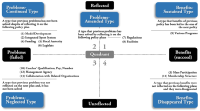
Purpose The purpose of this study is to identify policy learning in the government-led sport club policy and to analyze its type of the policy learning. Methods Sport club related documents such as policy plans, evaluation reports and journals published from 2004 to 2018 were analyzed by framework of this study. For identifying the policy learning, 12 items were determined by policy goals, policy means and policy targets. Each item was placed on four quadrants of the X-axis(benefits and problems) and the Y-axis(reflected and unreflected), and was categorized. Results This study found out the five types of policy learning. A 'benefit-sustained type' is the type that benefits of previous policy has been led to the benefits of next policy and a ‘problem-amended type’ is the type that previous problem is solved by reflecting on the following policy plans. A ‘problem-continued type’ is the type of problem that has not been solved. On the other hand, A ‘Benefit-diminished type’ and the ‘problem-neglected type’ are that previous results were not reflected. It indicates that those types have not performed the policy learning. Conclusions In order to expand the benefits of the sport club policy and to solve the problem, we should recognize the policy process and environment are not static and do policy learning. Furthermore, it suggests that there should do policy learning on what Korean sport club would be.
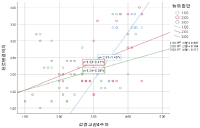
Purpose This study has four objectives. First, the study attempted to see if trainee teachers in PE experienced a higher level of burnout as their experience as trainee teacher accumulated. Second, the current study explored whether female trainee teachers experienced a higher level of burnout than their male counterpart. Third, the study examined whether self-efficacy of trainee teachers had a significant causal relationship on the level of burnout. Forth, the study looked into the possible moderating effect of motivation in the relationship between burnout and intention to change their career path. Methods The data for the study were collected from 112 trainee PE teachers of middle and high schools in Seoul and its vicinity. The data were analyzed with the SPSS statistical package. Results First, the trainee teachers’ level of burnout increased between 2nd week and 4th week and the increase was statistically significant except in the sub-dimension of depersonalization. Second, female trainee teachers showed a higher level of emotional exhaustion than their male counterpart. However, male trainee teachers showed a higher level of diminished personal accomplishment than their female counterpart. Depersonalization did not show any statistical mean difference between male and female groups. Among the four teacher self-efficacy sub-dimensions, only teaching competence showed statistically significant negative influence on emotional exhaustion. Lastly, trainee teachers’ level of motivation worked as a significant moderator in the relationship between emotional exhaustion and intention to change their career path.
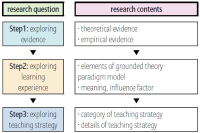
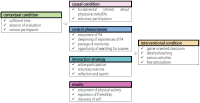
Purpose The purpose of this study was to understand learning experiences deeply and to prepare practical teaching strategies by reflecting the voices of the field. Methods For this, I used the logic and techniques of 'the grounded theory'. In particular, I used ‘the grounded theory paradigm model', which enables a holistic and systematic analysis of specific experiences to explore learning experiences and teaching strategies. I selected 10 male and female students who participated in art and physical activities as research participants. I collected data through literature review, in-depth interviews, and expert meetings, and analyzed using open coding, axial coding, and selective coding. Results First, I explored “the learning experience of art and physical activities in free-semester system", according to the elements of grounded theory paradigm model. It is composed of the ’causal condition’, ‘contextual condition’, ‘central phenomenon’, ‘interventional condition’, ‘interaction strategy’, and ‘results’. Second, based on this, I conducted "the teaching strategies for art and physical activities in free-semester system". These are composed of 'expansion strategy', 'diversity strategy', 'spontaneity strategy', and 'immersion strategy'. Conclusions The results of this study suggest that art and physical activities in free-semester system are leading to a positive change extended from the planned goals. In addition, various variables are structurally intertwined, and thus, it is considered that more strategic and systematic efforts are required in various dimensions for the successful application.
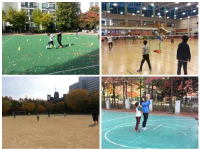
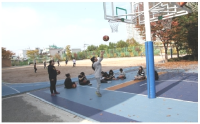
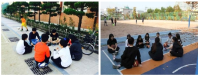
Purpose The purposes of this study were to examine the influence of a formal sports mentoring program on mentors(pre-service PE teachers), and to identify main factors affecting educational growth of the pre-service teachers. Methods Data were generated in this study using: In-depth interviews, mentoring observations, and document resources from 4 mentors and their mentees as research participants. The collected data were inductively analyzed as an iterative process of working back and forth between the data and the categories(Miles & Huberman, 1994). Results The key findings of this study are as follows. First, mentors developed pre-service teachers’ practical knowledge including teaching knowledge, environment knowledge, student knowledge within teaching contexts. Furthermore, they practiced mentee-centered education through sports mentoring not only by mentees but also for mentees. Second, with respect to the factors impacting mentors’ educational growth, there were two main factors; the systematic structure of a program and mentors’ reflexivity. Mentors improved practical knowledge through the circular ‘experiential learning’ phases the sports mentoring program provided. In addition, mentor had valuable opportunities to learn how to care mentees by reflecting on positive and negative influences deriving from interactions with their mentees. Conclusion Potential benefits were embedded in inherent nature of sport and the unique structure of mentoring. sports mentoring can provide experience of learner-friendly teaching distinct from classes of lecture type. It is necessary to be reconsidered as pre-service PE teacher education program with opportunities of other teaching practice.
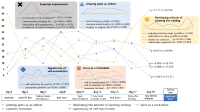
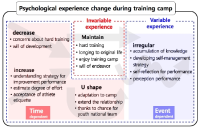
Purpose The current study aimed to identify national youth cyclist`s experience and change tendency of experience during camp training. Methods A total of 35 cyclists who participated in 2017 Korea youth national cycling camp training provided the data. The survey was conducted 9 times during the 20 days of camp training using open-ended questionnaire by diary method. The collected data were analyzed based on inductive categorization and response rates. This study was conducted in the order of formation rapport, data collection, and data analysis. Results Youth cyclists experiences during camp training to growing pains as an athlete, developing the attitude of savoring training, serve as a motivation, expertise formation and opportunity of self-examination. Based on the change in response frequency of the survey data, camp training experience falls into two categories: variable and invariable. Conclusions Youth national cyclist were growing their growth power through various experiences during the training camp, and these experiences changed to specific inflection points from the beginning to the end of the camp. Understanding changes in psychological experience can provide the design of timely psychological support and coaching method. This study will be used as a material for the design of the camp training program for the youth cyclist, as well as an opportunity to increase the interest of continuity reflection on the psychological experience.
The purpose of this study was to conduct an in-depth exploration of Korean national badminton players’ psychological momentum strategies. Data were collected using an open-ended questionnaire and group interviews of 66 badminton players, including 40 members of the 2018 Korean national badminton team and 22 college and semi-pro badminton players who each had badminton careers of 10 or more years and were registered in the Badminton Korea Association. The data were analyzed using inductive content analysis and the deductive process based on the inductively categorized results. The results are as follows. First, regarding strategies for maintaining positive momentum, 188 raw data were collected and classified into three category (keeping pace, dominating the play, and psychological facilitation) and 10 sub-category (including speedy resumption of the game, attacking weak points, and fighting shout). The results suggest that badminton players maintain positive momentum by using strategies to control the speed and tempo of the game at their preferred pace, implement special techniques, exploit their opponent’s weaknesses, and cheer or talk amongst themselves to motivate each other and communicate with their partners and coaches. Second, regarding strategies for overcoming negative momentum, 293 raw data points were collected and classified into three category (time outs, psychological reminders, and changes in plays) and 11 sub-category (including delaying the game, seeking social support, and play change). The data demonstrate that badminton players overcome negative momentum using strategies to intentionally delay the game and exchange equipment, focus on performance cues, and interact with their coaches and partners to change plays and prevent errors. It is hoped that these study findings will inform efforts to provide psychological support that is effective in increasing the odds of winning for the national badminton players in the Asian Games and the Olympic.
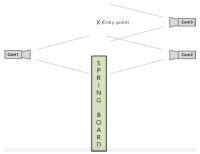
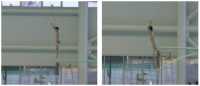
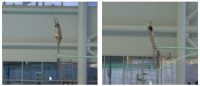
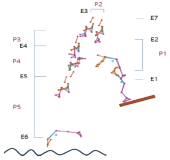
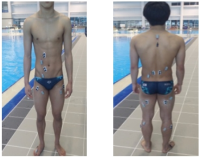
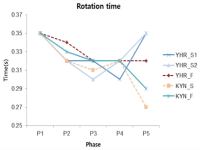
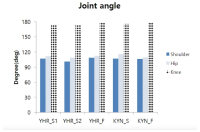
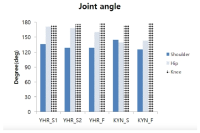
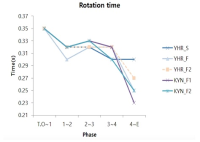
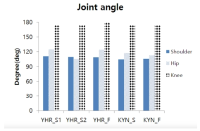
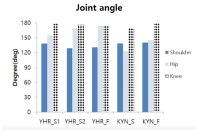
Purpose The purpose of this study is to overcome the shortcomings of 109C(Forward 4 ½ somersault) skill(Level 3.7) for two members of the men’s national diving team(YHR, KYN). Methods For qualitative analysis of the performed skill, three high-speed cameras and water-attached EMGs consisting of a total of ten placements were used. We instructed the two players to perform single-leg jump and double-leg jumps a total of three times each. Results The results of this study indicate that YHR and KYN appeared to increase their time or maintain the same time compared to the previous phase and displacement appeared higher when skill success occurred after the double-leg jump. The Shoulder & hip joints of YHR, KYN appeared larger in E2 and the hip joint of KYN appeared to increase in E1. Single-leg jump appeared similar or decreased the performed time of the previous phase in the last P5. YHR appeared larger only at a hip joint angle and KYN appeared smaller at the hip joint. The muscle activity(iEMG) of the two players appeared greater during skill failure than most of the muscles. Conclusions When perfectly performing 109C skills, the acquisition of medals in international competitions is possible. Therefore, in the future, it is necessary to study all of the variables that pertain to 109C.