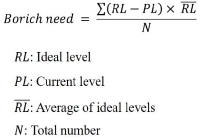
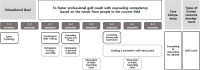
Purpose This study was designed to develop a curriculum for pre-service golf coaches at universities to enhance the coaches’ competencies to counsel athletes on the field. Methods This study was conducted in accordance with the revised and supplemented procedures for the national competency standard (NCS) based curriculum development outline under the level of application of individual instruction-level classes among the types of curriculum development. Results The results were as follows: First, the elements of the counseling competence were guided by conflict resolution counseling, psychological skills training, guidance counseling, coordination and Intervention, and relationship formation. Second, the curriculum was adopted as a curriculum for sports psychology, theory and practice of counseling, counseling practice and super-vision, and psychological skills training, and non-disciplinary activities were participation in group and personal counseling, and an open counseling case study. Third, the feasibility of the curriculum was calculated in the range of 0.8 to 1.0 for all areas to be reasonable. Conclusions The results of this study have structured the counseling competencies required for pre-service golf coaches. Based on this, the results of the study suggest counseling courses in the curriculum of university. This is expected to ultimately seek to improve the coaching field by enhancing the capacity of the coaches.

Purpose The purpose of this study is to examine effects of professional baseball home fans' perception of the community on their recognition of stadium spaces. Methods The subjects of the survey were home fans of baseball. A total of 600 questionnaire(100 fans each team: DOOSAN, LG, SK, LOTTE, HANHWA and KIA) were collected and 510 copies were used as the final analysis data. Collected data was processed by using SPSS 21.0 program. T-test, one-way ANOVA, correction analysis and multiple regression analysis were conducted to test hypothesis. Results There were significant differences of perceptions on community such as perceptions on sense of belonging; favored teams, perceptions on active involvement; gender and favored teams, perceptions on pride of the home town; gender, favored teams and glasses for viewing, and perceptions on classification; educational level and favored teams. There were significant differences of perceptions on stadium spaces such as perceptions on historicity; favored teams and viewing experience, perceptions on authenticity; favored teams and viewing experience, and perceptions on symbolism; age, favored teams and glasses for viewing. Among home fans' perceptions of their community, sense of belonging and pride of the home town had positive effects on their perceptions on historicity among perceptions of stadium spaces, while perceptions of classification had negative effects on them; sense of belonging and pride of the home town had positive effects on both perceptions of authenticity and symbolism. Conclusions The findings indicate that there is a close relationship between the community and professional baseball stadiums, and it is necessary to commonly enhance sense of belonging and pride of the home town for the community in order to promote positive perceptions on stadiums.
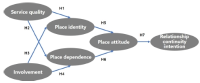
Purpose The purpose of this research is to empirically analyze the relationship between a indoor swimming pool on service quality and involvement, place attachment, place attitude & relationship continuity intention through structural equation model analysis. Methods For this purpose, this study set 241 members at the five private indoor swimming pools located in Seoul as the research subjects. In an effort to verify the proposed structural model, this study used IBM SPSS WIN Ver. 21.0 and AMOS 18.0. Results As a result, First, the results showed that service quality had a positive effect on place identity. Second, it was found that service quality had a positive effect on place dependence. Third, the results showed that involvement didn't have a positive effect on place identity. Fourth, involvement didn’t have a positive effect on place dependence. Fifth, the results showed that place identity had a positive effect on place attitude. Sixth, the results showed that place dependence had a positive effect on place attitude. Seventh, place attitude was found to had a positive effect on relationship continuity intention.

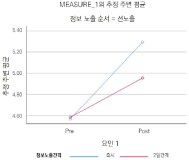
Purpose The purpose of the study was to examine the effect of exposure sequence and time gap between two exposures in image transfer in the context of sport sponsorship. Methods To accomplish the purpose of the study, one preliminary study and one main study were performed. The sample was drawn using a convenience sampling (33 for preliminary study and 120 for the main study). The data were analyzed using one sample t-test, repeated measure ANOVA(mixed design). Results The data for the main study indicated that the mean of the post-test was statistically higher than that of pre-test, which indicated that the image of the sporting event was transferred to the image of the brand Dell. This indicated that the image transfer actually took place although image similarity between sporting events and sponsoring brand was not conditioned. The hypotheses of the study were tested using a mixed design with exposure sequence and time gap between exposures as two between subject factors. The results indicated that the interaction was statistically significant. When two sponsorship information were given consecutively, the first sport event’s image was transferred more than the image of the secondly presented sport event, which indicated primacy effect. However, when the two sponsorship information was given with two days time gap, the image of the second sport event was transferred more than the first sport event’s image, which indicated a recency effect. Conclusions Two meaningful findins were delivered through the current study. First, even when there was no image similarity between sport event and brand, image transfer took place through sponsorship arrangement. Second, if primacy and recency effects are properly incorporated, image transfer can be achieved in a more effective way in sponsorship context.


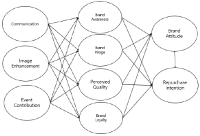
Purpose The purpose of this study was to provide title sponsorship marketing strategies by defining the relationship between professional volleyball title sponsorship, brand equity, brand attitude, and repurchase intention. Methods This study distributed 390 questionnaires to 2018-2019 V-League audiences and a total of 313 questionnaires were used as final validity sample. For data analysis, SPSS 21.0 and Amos 18.0 were used for frequency analysis, reliability analysis, confirmatory factor analysis, and structural equation analysis. Results First, title sponsorship had significant influence on brand equity, therefore hypothesis 1~3 were accepted, except for 1-3(perceived quality) and 1-4(brand loyalty). Second, among brand equity subfactors, hypothesis 4-1(brand awareness) and 4-4(brand loyalty) had significant influence on brand attitude which made hypothesis 4 partially accepted . Third, among brand equity subfactors, only brand image(hypothesis 5-2) had significant influence on repurchase intention which made hypothesis 5 partially accepted. Lastly, brand attitude had significant influence on repurchase intension, which made hypothesis 6 accepted. Conclusions It is anticipated that based on the result of the study, effective marketing strategy can be developed for title sponsorship companies in the future.
Purpose This study conducted legal, institutional and pedagogical consideration on C0rule in Korean collegiate sport. Methods (1) Systematically examined the unconstitutional elements of C0rule in terms of the basic rights of student-athletes, and (2) reviewed pedagogical validity in terms of higher education, college credit system and physical education. Results First, C⁰rule adopted the result (the credit) of the uniform education as the standard of sanctions. Providing discriminatory educational opportunities according to academic credit is regarded as the infringement of equal rights. Second, since the college sports league is the only place to prepare for vocational education and employment for student-athletes, restricting their opportunities according to the credit is also against the freedom of happiness and choice of profession. Third, C0 credit, the minimum standard, overlooked purpose and level of higher education and rigorous evaluation. Last, C0rule has resulted in overlooking the academic significance and status of college education, especially physical education. Conclusions This study is meaningful in that it brought the subjects to discourse field and provided opportunities to review the fundamental problem of the school sport and the basic rights of student-athletes. At the present stage of the transition of the school sport system due to the introduction of various regulatory systems, we should be careful about oligopoly and unilateral flow of knowledge and production of other alienation.
Purpose The purpose of this study is to suggest issues needed in the process of developing the next national physical education curriculum. Methods Data were collected from three different physical education curricula including the 2007 revised physical education curriculum, the 2011 physical education curriculum based on the 2009 revised curriculum and the 2015 revised physical education curriculum. Results Three findings emerged. Firstly, there was no clear conceptual relationships between physical activity value and subject competency. Secondly, the way in which physical activity value works as learning content area cannot offer helps to set the level of subject competency and to design physical education lessons that based on the subject competency. Lastly, the 2015 revised physical education curriculum has low level of clarity, usability and readability. Conclusions This study suggests the three different findings as issues that should be discussed in the development of the next physical education curriculum.

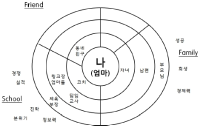
Purpose The purpose of this study was to investigate how the educational zeal of mothers with winter sports students in secondary schools appears on the network charts. Methods It lasted 28 days from February 6 to March 5, 2017. Starting with a description of the QNA, all interviews were recorded on a tape recorder to carry out the project. Data analysis were divided into four areas(Family, Friend, School, etc.) and 13 associative words(enthusiasm, intelligence, performance, entry, success, sacrifice, atmosphere, polarity, competition, vicarious, satisfaction, economic power, anxiety, stress) to attach associative word stickers according to color. Results As a result of inducing arbitrary interpretation of the network subject's educational network, it was possible to analyze the factors affecting mothers' sports education in three dimensions. In addition, although there is not much difference in areas around "I" on sports education charts, the distance between associative words and network charts has gradually moved away from the same person as their children go on to school. Conclusions The methodological significance of this study has been found to be very useful in visualizing an individual's educational network by utilizing qualitative network analysis and in understanding the characteristics associated with education.
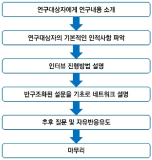


Purpose The purpose of this study is to identify why and how sports docudrama is one of the unique objects for the scholarship of sport history. Methods As a review study, this paper pays attention to, collects, and critically reviews three dimensions of the literatures: 1) ones that claim and argue for a-historicity of historical sport films by pointing out how they are full of actual errors, mistakes, and misrepresentation, and why they are problematic, 2) ones that belong to so called ‘the study of docudrama’ with specific focus on the themes of definition, mode of representation, and cultural memory, and 3) ones that attempt to envision the possibility of visual history or filmic history from the perspective of historiography and some other epistemological issues. Results Following the above review method, the result of this paper is also divided into three parts: 1) how sport historians respond to and criticize historical sport films from the sense based on the modern historiography, 2) how a group of historians argue why historical sport films can be one of the promising way of doing histories, 3) review of the study of docudrama, focusing on what is docudrama, why it can be a mode of representation, and how it resonates to cultural memory. Conclusions As a conclusion, this paper argues that a more collectively academic concerns to sport docudrama paves way for developing and envisioning the scholarship of sport history.

Purpose The purpose of this study is to look into the life of MTB college athletes before and after their college entrances through long-term longitudinal narrative inquiry and investigate how the career exploration after graduation is conducted in a contextual way. Methods For this study, four MTB college athletes who entered the university as specialists are selected as research participants, and their life and career are examined through a long-term longitudinal narrative inquiry. Results As a result, the life and career of MTB college athlete appear as follows. First, MTB college athletes entered MTB because of 'self - will' or 'influence of family and acquaintances' and the motivation is 'extension of hobbies', 'college entrance', etc. Second, the MTB college athletes' training and goals are set in the 'college entrance examination', which means the entrance to higher college. Third, MTB college athletes' college life is closely related to 'management and support system for college athletes', and the career search for them is based on 'the prospect as a player' and 'professional prospect of MTB athletes’. However, MTB college athletes showed their plan B to prepare for their uneasy future or to retire. Conclusions In the end, the MTB college athletes came to think about life and career on the narrow stage of unpopular sports and was seen coming down from the narrow stage of unpopular sports. Based on these results, this study presents critical discussions about their life and career of MTB college athletes and seeks implications for the school elite sports in Korea.
