This study was to identify the perception on retirement for professional soccer players as a basic study for the development of career transition program, Professional soccer K-League(K-League Classic, K-League Challenge), N-League(Club League), K3-League(Challenger League) league players registered in 2013 were selected as a population. Structured questionnaire surveys were utilized for the research, total of 1000 questionnaires(250 per league) were distributed and gathered. Final sample of 548 questionnaires were analyzed excluding people which do not respond properly. SPSS was used to identify the characteristics of the responder in frequency analysis. One-way ANOVA was used to find the difference in retiring causes among the leagues, Pearson Correlation analysis was used to examine the correlations among the variables. Multiple regression analysis was used to find the effect of economic and psychological preparation on plans after retirement. The results were as follows. First, among the causes of retirement, 'contract suspended', 'seek other life', 'family issues such as marriage' showed the difference in perception of retirement according to the leagues. Second, psychological preparation was more focused than economic preparation to prepare for retirement planning among players, respectively.

Based on the expanding concept of public value in most of areas as well as in public administration, the purpose of this study is to explore the meaning and functions of public value in sport pedagogy in Korea. For doing this, this paper has classified the concept of public value into classical and modern concepts and re-conceptualized it throughout diverse concepts implemented in several areas (e.g., social welfare, media, & culture-arts). Thus, this paper has explored the meaning of public value in sport pedagogy for analyzing the common element among the public values of sport, education, and scholarship. The public value of sport pedagogy is conceptualized as ‘the discipline that has inquired the public knowledge and also that has been served the instrumental role for making better society’. In addition, this paper has suggested the conceptual framework to extend the areas that can be applied the public value of sport pedagogy inside and outside in Kinesiology with reflection about academic and practical activity of Sport Pedagogy. Lastly, this paper has searched the multiple functions of public value in Sport Pedagogy such as educational, cultural, integrative, and global functions that could connect the academic and professional activity of Sport Pedagogy into making the public value of Sport Pedagogy.

As an attempt to think about the popularization of Korean sport history, this paper discusses three main things. First, it will be introduced what public/popular history is, how it has been developed, and why it is important to history as an academic discipline. Second, it will be summarized how sport historian embraced public/popular history into their practices in terms of what theoretical, critical, and methodological aspects they have focused. Third, I will discus why public/popular history is useful in the ways in which Korean sport history envisions its popularization in Korean society. To be more specific, I highlight two ideas: an insight for understanding sport history as a process and sport historiansʼ role of critic. Based upon these two, I will argue that Korean sport historians might need to actively embrace practices of public/popular history into their studies of the Korean sporting past.
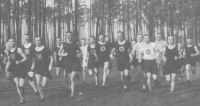
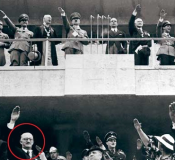
The research is to shed new light to historical meaning and value of Carl Diem who was a pillar of modern sports in Germany and also served as an athlete, PE administrator, journalist, sports scholar and dean of a university. He has been highly regarded in Korea as a trail-blazer of German sports, but in his own country, he who once served as the secretary general of the 1936 German Olympics was at the center of controversy since he was named as a pro-Nazi, and even the name of a place named after him was deleted. Having said that, as an athlete, he played a huge role in organizing sports clubs where he worked as an chairman; organized and held various sports competition events; laid the academic groundwork for the modern sports in Germany by majoring in Sports in the United States. Above all, he is the one who came up with the torch relay and staved to define the significance of the Olympic Games by founding the International Olympic Academy. His academic and practical capabilities were proven through the establishment of Deutsche Sporthochschule Köln, also known as German Sport University Cologne. And Carl Diem Research Institute is still up and running to this day. Thus, in this research, I’d like to take a look at his passion for sports and changes of German sports including the German Olympics and offer a multi-faceted view on him who was evaluated during a historical turmoil back then.
The purpose of this study was to examine psychological capital acquisition through Asian Games Participation. 17 of national women football players were completed Psychological Capitals Questionnair. The psychological capital consists of optimism, psychological skills, self-management, collective efficacy, and performance perception was investigated after the team call-ups and before the team-release. The data was analyzed by paired t-test. As results, Korean women football players’ collective efficient and performance perception showed a statistical significance at the beginning of the team call-ups but optimism, psychological skills, and self-direction did not show statistic significances. The team-harmony, interpersonal-management, team-power, sufficient training, trust in coach, efficient communication, and psychological football factors, which were subfactor of football players’ psychological capital, showed statistical significances. However, confidence, concentration, goal-setting, imagery, willpower, anxiety-control, mental-management, life-management, training-management, innate-behavior management, physical-management, football skills, mediative skills, and football intelligence factors did not have statistic significances. These results demonstrate that effects of mega sporting events-like experiences and psychological factors’ variability and inflexibility according to weather changes should be considered when it comes to discussion of psychological factors regarding players’ performance. It is expected that this study would be a fundamental resource for understanding of psychological influences through participations in mega sporting events and discussions about further psychological interventions for teams with environmental consideration as well as methodological developments which could measure effects of the psychological interventions.

This study was to verify the structure of efficacy related to performance perceived by short-track athletes when playing a match. Therefore, 50 players answered open questionnaires and 200 players participated in construct validity verification, a total of 250 players of short-track members of national, business and university team were sampled during the research phase. The data was analyzed through the study procedures. The results were as follows: First, efficacy structure of players during the match were categorized into three groups as game managing strategy(including course management, race control, match management and selective attention ability), psychological control ability(including positive imagery, match competition, competitive spirit, ability to handle hardship, anxiety control, and patience), and physical usage of ability(including physique, endurance, and quickness). Second, the result of the first construct validity verification through exploratory factor analysis showed 7 factors in 29 items as game management, course management, psychological control, physical use, coping with hardship, speed control and psychological stability. Finally, as a result of confirmatory factor analysis, short-track self-efficacy showed the 5 factor in 15 items except for coping with hardship and psychological stability.

The purpose of this study was to examine the effect of the functional movement improvement training program on the score of high-school baseball players’ functional movement screen (FMSTM) test. After 16-weeks treatment period, a significant increase of Deep Squat, Hurdle Step, In-Line Lunge, Shoulder Mobility, Active Straight Leg Raise, Rotary Stability, and total score was found only in treatment group. There was decrease on the number of players in treatment group whose total score is less than 14; the criteria vulnerable being injured. The results of this study suggested that applying functional movement improvement training program on high-school baseball players can be effective to prevent injuries.








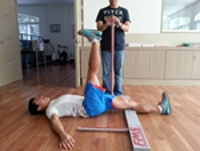





The aim of this study was to evaluate gender differences of expert and non-expert in match playing time, moving distance, energy consumption and heart rate (average, maximal) during 16 simulated badminton matches in male (n = 16) and female (n = 16) national elite players. The players had perform three sets on same day, and this time observed the playing time, moving distance, energy consumption and heart rate (resting, average, maximal) level during badminton match. Analyses of variance with repeated measures were used to test any significant time×group interaction effects on the measured variables. Statistical significances were tested at p = 0.05 with spss-pc (version 18.0). As a result, male's player had significantly difference between expert and non-expert in moving distance (p=.012), energy consumption (p=.003), average heart rate (p=.002) and maximum heart rate (p=.002). Female's players showed significant difference between expert and non-expert in moving distance (p=.001) and energy consumption (p=.012). In conclusion, there seemed to be an increased playing intensity (i.e., moving distance, energy consumption, average heart rate and maximum heart rate) from expert than non-expert in gender differences. These results suggest that men male's players with expert performed the game at a higher intensity than compared to non-expert, on the other hand female's player with non-expert showed that more activity and energy consumption was unclear during the game

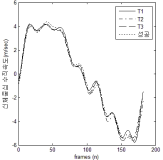
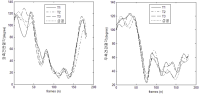
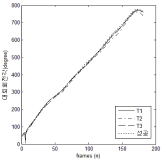
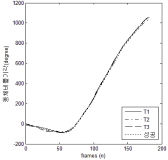
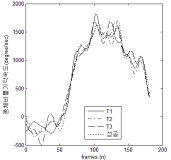
The research was a case study conducted in order to develop a new technique “YANG Hak Seon 2” for YHS athlete. A comparative kinematical three dimensional video analysis was performed with the use of high speed cameras. One successful trial and three of failure trials (T1: Falling backward while landing, T2: sitting reluctantly while landing, T3: Falling of sideways while landing). The result obtained from the study are as follows. Firstly when comparing the successful operation of the technique with failure trials, relatively higher landing angle was secured through increasing the thigh rotation and the body’s rotational velocity. Furthermore, despite increase in rotational velocity at twisting, stable landing was achieved through increasing the moment of inertia by spreading the left shoulder. Secondly, in case of failure trials while taking off the board, the thigh rotational angular velocity was comparatively less which ultimately affected the body position in the next phase of approach to the vault. Thus, due to the affected body position the athlete was not able to utilize the proper momentum of twist in positive direction Hence, it is considered that the velocity of center of mass might have also effected the operation not only the velocity while approaching the board.







The purpose of this review was to examine research trends of sport-philosophical articles published in <Journal of Korean Philosophic Society for Sport and Dance>. All articles from the years 2005 through 2014 published in <Journal of Korean Philosophic Society for Sport and Dance> were analyzed by research method and by research domain of the philosophy of sport. Results show that the number of literature analysis concerning the research methodology for the philosophy of sport was larger than that of survey research and observational research. This means that the main research methodology of the philosophy of sport is a literature analysis. In terms of the domain of philosophy of sport, the rates of metaphysical research was larger than that of the other domains. This means that the main domain of philosophy of sport is metaphysics. On the other hand, the rates of epistemological research was smallest. This means the lack of self-reflection in philosophy of sport.
