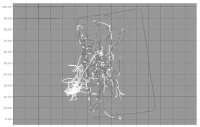
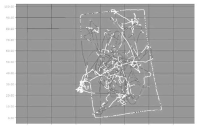
The purpose of this study was performance improvement through analysis of movement in elite field hockey players regarding positions using real-time GPS monitoring for compared training game and 2014 Incheon Asian Games. Fifteen elite women field hockey players (Defender: 4, Mid-fielder: 6, and Forward: 5) participated in this study. There were 2014 Incheon Asian Games Korean national team. Real-time GPS system analysis was completed during 10 training game appearances 5 2014 Incheon Asian Games appearances. The results of this study showed that in training game mid-fielder>forward>defender for 3, 4, 5, and 6 zone at speed zone by moving distance, in 2014 Incheon Asian Games forward>mid-fielder>defender for 6 zone at speed zone by moving distance. And moving distance by quarter increased all position in 2014 Incheon Asian Game more than training game. Therefore, These data might be useful to analysis of movement in field hockey players. Moreover improved performance and individual exercise ability by feedback for players distance, heart rate, and exercise trajectory. Thus, Gold-medal won at the 2014 Incheon Asian Games in field hockey.
When the long-awaited KSME in PESS was established in 1998, KSME faced a turning point in its growth. Following the changes in both quality and quantity of the society's researches since its establishment and seeking for future themes is important for the society. This research analyzed the society's research trend using mainly the Korean Journal of ME in PESS. Then, by examining the physical fitness test, it proposed possible future themes for the KSME. This research also looked into the American Kinesmetrics’ contribution to Kinesiology, its research trend and future researches The KSME's recent researches show refined quality, diversified themes and reinforcements in practical researches. Regarding the themes, the reliability and validity of tests became predominant, sports analysis and physical activity emerged, and interest in measurement and evaluation in school PE was low. Possible research themes in the future are measurement and evaluation in school PE, game analysis and sport big data. The recent interest of the American Kinesmetrics was the cross validation of criterion-referenced physical fitness cut-off score, the validation of the guideline for physical activity, and the relationship between sedentary behavior and health. Possible future research themes of the American Kinesmetrics were the refinement of test methods, the effectiveness of the physical fitness test award system, and the application of the ubiquitous wearable technology.

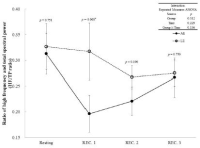
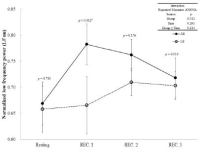
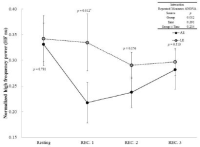
Although delayed heart rate recovery (HRR) and impaired autonomic nerve system (ANS) modulation after acute exercise are related with cause of cardiovascular disease (CVD) and mortality, studies evaluating ANS changes with local exercise are still unsatisfied. Thus, this study aimed at investigating the modulation of ANS-related parameters, followed by upper or lower body exercise. Eleven male without cardiovascular and orthopedic diseases measured basic body composition, resting blood pressure (BP), and heart rate variability (HRV). This study based on randomized cross-over design; AE composed with arm-ergometer, and LE involved with leg cycling. Participants had at least one week wash-out between each exercise, also there was no cool-down after exercise. All sessions were performed with intensity of 50 % target heart rate for 30 min. With measurement of Rating of perceived exertion (RPE) during every 10 min, HRV was measured Kubios HRV software using R-R intervals collected with Polar RS800CX in post-exercise recovery (for 30 min). As a result, heart rate (HR) and RPE were same (p > 0.05) through the experiment. As results of this study, SDNN and rMSSD in time domain on LE were higher than on AE during post-exercise recovery. When LE compared with AE used by Poincare plot, both parasympathetic reactivation (SD1) and autonomic nerve regulation (SD 2) on LE were higher than AE. Immediately after submaximal exercise, the high-frequency component on LE was significantly greater compared to AE. Also, the LF/HF ratio and LF nu reflecting sympathetic activity were higher on AE than LE. In contrast, the HF/TP ratio and HF nu reflecting vagal tone were greater on LE than AE. In conclusion, this study suggested regional lower body exercise recovers more sufficient than regional upper body exercise after submaximal aerobic exercise at same HR. Local exercise like leg cycling needs a careful approach to apply for accurate exercise prescription and effective training.
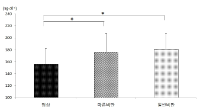
This study was designed to compare physical fitness, blood lipids, and insulin resistance according to body mass index (BMI) and percent body fat (%BF) in 20s females. Sixty women, aged 20-29 yrs, volunteered to participate in the study as subjects. There were three groups, i.e., normal group (BMI < 24 kg·m-2 and %BF < 25%; n = 25), normal weight obese group (BMI < 24 kg·m-2 and 28% < %BF < 40%; n = 22), and obese group (BMI > 26 kg·m-2 and 30% < %BF < 40%; n = 13). Physical fitness, blood lipid profiles, and surrogate indices of insulin resistance were measured and compared among three groups. Main results of the present study were as follows: 1) There were significant differences in all variables regarding body composition among three groups. All values were lowest in normal group and highest in obese group. 2) There was significant difference in sit-and-reach among three groups, whereas no significant differences were found in other variables regarding physical fitness among three groups. 3) There were significant differences in all variables regarding blood lipids among three groups. In particular, total cholesterol (TC), low density lipoprotein cholesterol (LDL-C), TC/HDL-C ratio, and LDL-C/HDL-C ratio were significantly higher in normal weight obese group than normal group. 4) There were significant differences in all variables regarding insulin resistance among three groups. Fasting plasma glucose and HOMA-IR were lowest in normal group and highest in obese group. It was concluded that there would be abnormal blood lipid profiles and insulin resistance in even normal weight obese individuals as well as general obese individuals in 20s females.

Frailty in older adults is related to an increased risk for poor health outcomes including falls, disability, hospitalization and mortality. The purpose of this study was to determine the thresholds of a functional fitness associated with frailty for community-dwelling woman aged 65 or older. In this study, the National Fitness Award(NFA) items for elderly were utilized as the physical function and fitness testing for korean elderly women. The total of 444 community-dwelling woman completed the testings. Frailty status was classified by the Japan LTCI system ‘Kihon Checklist’ in the study. The prevalence of the frailty was 19.1% in the study. The frail elderly were older and showed higher obesity index such as weight, body mass index (BMI), percent body fat and waist circumference than the normal elderly. After adjusting for age and BMI which was related to frailty, fitness testing items were compared depending on frailty. As the result, the frail elderly showed significantly lower fitness levels in grip strength, 30-second chair stand test, timed up and go, figure-of-8 walk around two cones, and 2-minute step test than the normal elderly. When the fitness cut-off values were analyzed using the ROC curve, also, grip strength: 34.13%, 30-second chair stand test: 14 reps, timed up and go: 7.09 seconds, figure-of-8 walk around two cones: 30.88 seconds, and 2-minute step test: 93 reps. In addition, based on the cut-off values of each fitness item, the group with a low fitness level showed a 1.86 to 3.09 higher odds ratio of frailty than the group with a high fitness level, even after age and BMI were adjusted. In conclusion, these findings indicate that the fitness cut-off values in this study are fitness levels for preventing frailty of Korean elderly women and there will be a need for a large-scale study including subdivided fitness cut-off values for each age group and targets elderly men as well.
This study aims to provide an in-depth study on K-League players' perception and preparation process on retirement. In order to achieve the purpose, data collection was conducted in two major ways; face-to-face interviews and questionnaires from 10 currently working players. The result of study is based on inductive analysis. First of all, sense of expectation and concern, limited scope of secondary job, and necessity for career education are appeared in terms of players' perception. Second, preparation process on retirement is concluded in two categories; personal development activities(non-professional and inefficiency) and financial preparation. Thirdly, difficulties in the procedures of retirement preparation are categorized into ‘limited time and isolated lifestyle caused by staying in club house ’ and ‘lack of educational programs regarding retirement’. Depending on the results of this study, opportunities confined to retired players are supposed to be enlarged to currently working players. In addition, football club and K-League federation need to support players not only to enhance performance but also to prepare retirement.

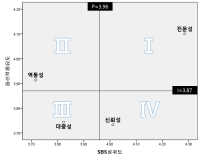
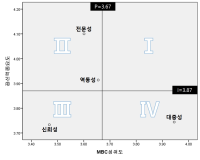
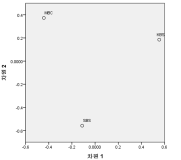
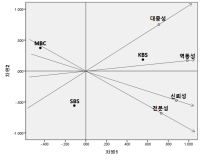
The purpose of this study was to evaluate sports commentators’ public confidence by the difference between media recipients’ expected level on the public confidence and their perceived outcomes, and to investigate how such characteristics are perceived by media recipients. The questionnaires were given out to people in Seoul and Gyeonggi province, who have experience of having watched the 2014 FIFA World Cup Brazil. The samples were collected by snowball sampling method and a total of 218 questionnaires were chosen as final validity sample. For data analysis, frequency analysis, exploratory factor analysis, paired t-test, importance-performance analysis (IPA), PROXSCAL analysis, and a multiple regression analysis were done by using PASW 21.0. The derived results are as follows: First, according to results from IPA analysis, the Quadrant I is a status-quo area, which is inclusive of the professionalism of KBS and SBS commentators. The Quadrant Ⅱ is a concentrated effort-oriented area, which includes dynamics of KBS and SBS commentators, and professionalism and dynamics of MBS commentators. The Quadrant Ⅲ is an inferiority ranking area, which contains popularity of KBS and SBS commentators, and reliability of MBC commentators. The Quadrant Ⅳ is a rejection of overexertion area, which incorporates reliability of KBS and SBS commentators and popularity of MBC commentators. Second, according to results from MDS analysis in terms of the characteristics of public confidence, an order of KBS>SBS>MBC appeared in the fields of professionalism, reliability and dynamics, and an order of KBS>MBC>SBS appeared in popularity.

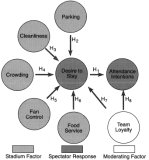
This study employed a sportscape model to analyze environmental impact on spectators’behavior. In addition, the loyalty construct in the sportscape model was reanalyzed based on the theoretical framework. Five hundred questionnaires were distributed to the spectators of World University Taekwondo Championship, and 418 questionnaires were used for data analyses. The analyses of measurement and structural models were conducted using SPSS 18.0 and EQS 6.2 programs. The results indicated that the measurement model showed acceptable reliability and validity. The structural analysis showed that five stadium factors (parking, cleanliness, crowding, food service, and fan control) have significant effects on spectators’ desire to stay and to revisit the stadium. Loyalty also positively affected revisit intention. This study emphasizes sport environment to make spectators revisit and provides future research suggestions to improve the sportscape model.


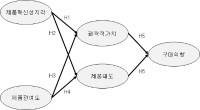
The aim of this study is to empirically verify the relationships between innovativeness perception of and involvement in sports products, and hedonic value, product attitude and purchase intention through the structural equation model. For this purpose, this study conducted a questionnaire survey of 291 college students in Chungcheong region. Sampling method was Quota Sampling Mode, and questionnaire has been structured to be self-administerd type. SPSSWIN Ver. 21.0 and AMOS 18.0 have been used for data processing. As a result, first, it was found that innovativeness perception had a positive influence on hedonic value; second, innovativeness perception had a positive influence on product attitude; third, product involvement had a positive influence hedonic value; fourth, product involvement had a positive influence on product attitude; fifth, hedonic value had a positive influence on purchase intention; sixth, product attitude had a positive influence on purchase intention. Such results imply that it's not desirable to overlook the level of innovativeness perception & involvement from a corporate perspective when an enterprise develops and launches new sports products.

The purpose of this study was to analyze the effects of employee’s job burnout on turnover intention and to draw average effect size(weighted averaged fisher’s z) in sports industry. After a lot of dissertations and journal articles were extracted by searching web sites, 11 papers were finally selected through thorough verification procedure. Specific analyses were conducted via MIX 2.0(Meta-analysis with Interactive eXplanations). The results were as follows. First of all, the weighted average correlation coefficient of between depersonalization and turnover intention was .326. Secondly, the weighted average correlation coefficient of between reduced personal accomplishment and turnover intention was .192. Lastly, the weighted average correlation coefficient of between emotional exhaustion and turnover intention was .326.

