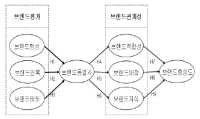
This study is aimed at identifying the relationship among brand evaluation, brand identification, brand relationship, and brand loyalty towards professional baseball title sponsors in an empirical manner. The target of this study is 'Korea Yakult,' a baseball title sponsor in 2014. A survey was conducted on 377 home crowd members of Nexen, Doosan, LG and SK based in metropolitan regions. Sampling method was Convenience Sampling Mode, and questionnaire has been structured to be self-administerd type. SPSSWIN Ver. 21.0 and AMOS 18.0 have been used for data processing. The findings are as follows. First, the brand reputation had a significant impact on brand identification. Second, the brand satisfaction had no significant impact on brand identification. Third, the brand attitude had a significant impact on brand identification. Fourth, the brand identification had a significant impact on brand suitability. Fifth, the brand identification had a significant impact on brand attachment. Sixth, the brand identification had a significant impact on brand knowledge. Seventh, the brand suitability had a significant impact on brand loyalty. Eighth, the brand attachment had a significant impact on brand loyalty. Ninth, the brand knowledge had a significant impact on brand loyalty.
This study aimed to compare professional sport consumers on the basis of their ideology, spectator motivation, and message framing. In order to answer the research questions, the study first examined whether message framing effects existed across the designated variables. The study also assessed whether there were any differences in progressive-conservative ideology and motivation across respondent groups. The participants were spectators of two professional sports, soccer and baseball, sourced from 9 stadiums. Data were collected by the researcher and 33 survey assistants, from May to August 2013. The results of a chi-square test, MANOVA, and MANCOVA indicated that significant effects in message framing existed across the two variables. The findings also showed differences in ideology and motivation across major variables (e.g., age, gender, sports, and choice of newspaper). Some issues including media communication strategies were discussed based on the results of this study.
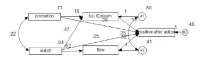
The purpose of this study was to examine the relationship among service quality, psychological experiment, and positive feedback including the moderating effect of motivation at Formula One World Championship. Therefore, the proposed research model was divided and compared by the level of motivation. By using questionnaire method, we found the following results. First, high motivation group indicated a higher-level of service quality, psychological experiment, and positive feedback than low motivation group's. Second, service quality had an influence on positive feedback directly and indirectly with the psychological experiment as a mediator. Third, it would be more effective for high motivation group that driving positive feedback through promotion while both promotion and watch is effective for low motivation group to drive positive feedback. Thus, promotion is considered as an important factor in both high and low motivation group and the watch needs to be strengthened in high motivation group.
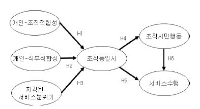
The purpose of this study is to empirically inquire into the relationship between a commercial sports center employee's person-environment fit(person-organization fit., person-job fit) & perceived service climate and organizational identification, organizational citizenship behavior and service performance through structural equation model analysis. For this purpose, this study conducted a questionnaire survey of 207 employees working at 12 commercial sports center(a facility in possession of more than 3 events). In an effort to verify the proposed structural model, this study used SPSSWIN Ver. 21.0 and AMOS 18.0. The research results are as follows: First, it was found that person-organization fit had an influence on organizational identification. Second, person-job fit was found to have an influence on organizational identification. Third perceived service climate was found not to have a positive influence on organizational identification. Fourth, organizational identification was found not to have a positive influence on organizational citizenship behavior, either. Fifth, organization identification was also found not to have a positive influence on service performance. Sixth, organizational citizen's action was found to have a positive influence on service performance.
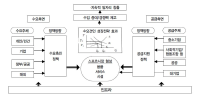
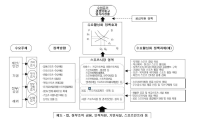
This paper focuses on the analysis of growth policies in the sport industry and the suggestions of the owned demand-pull growth model. The Korean government have enforced the supply-oriented growth policy in the sport industry. However, when the demand for sport is low and inelastic, the supply-oriented growth policy could be less effective. When the supply-oriented growth policy is based on the demand-pull growth policy, the growth policy in the sport industry could be more effective. Concretely, if the government carries out the introduction of sport voucher system, the enlargement of public and private sport facility use, the development of fused policies linked with sport-health-welfare, etc., the sport industry will be advanced more rapidly.
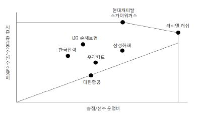
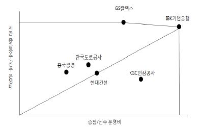
Professional volleyball league, which was launched and its popularity was steadily increased since 2005, has suffered from difficulties in its operation due to deficits after 2013. In addition, each professional volleyball team has worked out for parent company so far as a means of advertisement but does not look like effective management. Therefore, the purpose of this study was to evaluate each professional female and male volleyball team management efficiency through Data Envelopment Analysis. Player salary for the input variable and points and the number of spectators for output variable were used respectively then data were analyzed using Frontier Analyst 4.0. The results were as follows. First, Hyndai capital and Rush & Cash recorded the most efficient management among all professional male volleyball team. On the other hand, Samsung showed inefficient management, followed by LIG, KEPCO, Woori Card, and Korean Air. Second, GS Caltex and IBK were discovered as the highest management efficiency among all professional female volleyball team. On the contrary, KGC recorded inefficient management, followed by Korea Expressway Corporation, Hyundai Construction and Heungkuk life.
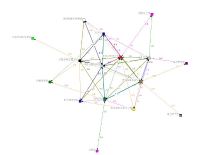
The purpose of this study was to investigate structural characteristics and participants` roles & functions of sport policy network in Korea, by social network analysis on structural characteristics of sport policy network and AHP analysis on participants` roles and functions. For that, 21 executive officers from 19 organizations and agencies related to sports policy were selected as study subjects, and, the materials collected from whole twice surveys on them were analysed by Ucinet 6 and Expert Choice 2000 program. As the results, the governmental organizations like the Blue House and Ministry of CultureㆍSports and Tourism composed the central position group of sport policy network of Korea, and took the main functions of planing and arrangement within their main roles of policy agenda formation and policy decision, so, sport policy network of Korea could be called centralized network by government. And, in cases of private agencies, Korea Sports Council composed the central position group only in policy network of professional sport, Korea Council of Sport for All of sport for all, and Korea Sports Association for the Disabled of disability sport, and, each of them took the main roles and functions of policy execution in their fields, so, it was obvious that the private agencies were divided into their own sport policy areas.
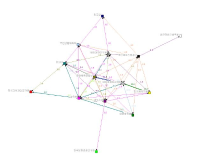
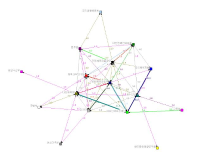
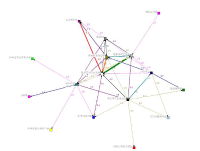
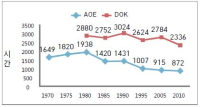
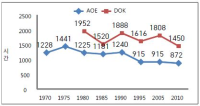
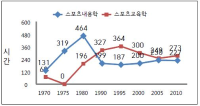
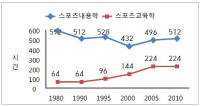
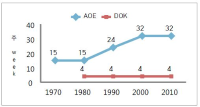
The aim of this study is to examine the directions of Physical Education Teacher Education (PETE) programs in Korea through the historical changes of each one PETE institute in England and Korea from the 1970s to 2010s based on academicisation. Document analysis and grounded theory were used to analyse historical sources and interviews. I identify four findings. First, the amounts of hours in curricula in both PETE courses have been reduced. Second, discipline knowledge in England was a first priority in the 1970s but has urgently reduced since the 1980s because of the growth and adoption of sport pedagogy. In Korea, discipline knowledge has still kept as a first priority for 40 years. However, professional knowledge in Korea has increased to enhance PETE since the middle of 2000s. Third, teaching experiences in England has increased by nearly double from 15 weeks to 32 weeks. In Korea, student have, and continue to participate in only four weeks of teaching experience. Fourth, education studies in England abolished in the 1990s. In Korea, they urgently increased in 2009. I conclude by confirming the need to study a structure and content of units of discipline knowledge and professional knowledge. I propose a system for selection of majors in the Department of Physical Education.
The purpose of this study was to examine the current status of school sport club(SSC) participation and to explore relationship between school sport participation and positive youth development. In order to do this, a survey was conducted with 403 elementary, middle, and high school teachers who are currently taking charge of SSCs, and also individual interviews were conducted with 22 students. In addition, the youths' developmental asset questionnaire was administered with 412 middle school students. The survey results from 403 teachers showed that SSCs have potential to contribute to positive youth development because teachers are placing an emphasis on character development as well as physical and social development through SSC activities. In addition, participants who regularly participate in physical activities had higher internal and external developmental assets than non-participants or irregular participants. Specifically, students participated in SSC more than twice a week had higher internal and external assets than students participate once a week. In addition, participants who engage more than one hour per session had higher internal and external assets except constructive use of time and social competence. Discussion and implications for organizing SSCs to provide developmental contexts and contents for positive youth development were provided.
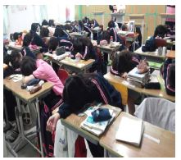
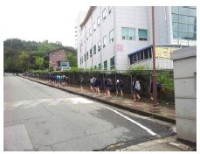
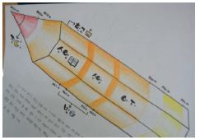
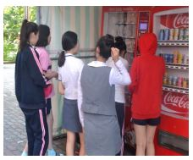
The purpose of this study was to explore Physically Activity Lifestyle pattern & constraints of high school girl in city, and then to propose P.A. promotional ways. I used International Physical Activity Questionnaire Long version and accelerometer to examine outline of P.A. pattern, and photo-voice as qualitative research techniques. The results were as followings. First, sedentary lifestyles of students in G girls' high school was terrible. Accelerometer was said that their inactive time were about 92.4%, however their moderate to vigorous time about 0.76% of the total time of a week. And, school domain of four domains(school, transportation, leisure, domestic chores) were the most active domain of all. Second, P.A. constraints were analyzed as 'because of something no'(time, effort, will, space, physical skills and person) and 'because of something'(smart phone, car, gaze, rules). The key cause were a shortage of time caused by academic based on school curriculum, sedentary leisure and transportation culture. Lastly, I proposed high school girl' P.A. promotional ways in basis of social ecological model.