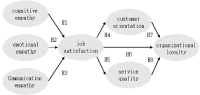
Purpose The purpose of this study was to empirically analyze the relationship between a commercial sports centers employees’ empathy, job satisfaction, customer orientation, service quality & organization loyalty through structural equation model analysis. Methods For this purpose, this study set 205 employees’ at the eleven commercial sports centers located in Seoul as the research subjects. In an effort to verify the proposed structural model, this study used IBM SPSSWIN Ver. 21.0 and AMOS 18.0. Results First, cognitive empathy had a positive effect on job satisfaction. Second, emotional empathy had a positive effect on job satisfaction. Third, communication empathy had a positive effect on job satisfaction. Fourth, job satisfaction had a positive effect on customer orientation. Fifth, job satisfaction had a positive effect on service quality. Sixth, job satisfaction had a positive effect on organization loyalty. Seventh, customer orientation didn’t had a positive effect on organization loyalty. eighth, service quality had a positive effect on organization loyalty.
Purpose The purpose of this study was to find out whether they can contribute to the revitalization of urban communities. Methods This study conducted in-depth interviews and focus group interviews to collect qualitative data. The collected data were analyzed through the domain analysis and the classification analysis. Results The roles of sports club managers in leadership and network intermediaries were very important in the accumulation of social capital. The formation of staff members who work for the managing and activating sports clubs has created trust and satisfaction with the sport. Their activities contributed to the formation of social capital in sports clubs and played an important role in revitalizing sports clubs. Conclusions Sports club managers performed important roles in building trust and network with the club members and even other clubs through their leadership. These management activities are possibly contributed to the creation and accumulation as social capital. Therefore this research also showed the possibilities of extension to local community of the social capital through sports clubs.
Purpose The purpose of this study is to explore the physical activity promotion plans for female student by revising and supplementing the SPARK program which is actively applied as a P.E physical activity improvement program recently. Methods To achieve this, this study followed the custom of action research and apprehended problem in female students' physical activity in SPARK soccer program(first action and examination), problem solving plan(replanning), execution and evaluation of replanned SPARK soccer program (second action and evaluation). The collection and analysis of data was conducted by sequential explanation strategy. Specifically, the study utilized 3 dimensional accelerometer to measure the physical activity in P.E class, and collected data which could apprehend the experience of students by utilizing qualitative study tools(observation, class note, interview). To analyze the collected data, the study utilized mixed-methods study analysis method developed by Greene(2007). Results The study results are as follows. As for the result of first action(October~November 2014), SPARK program increases the entire physical activity in P.E class, but the female students' activity was relatively lower than male students'. The reasons for lower physical activity of female students' were unmotivated class, burdensome class, alienated class. These were specified into teaching strategy to replan and execute the second action (May~June 2015). Compared to first action, the second action showed positive physical activity, and the MVPA of female students' showed statistical difference (<.01). As for the result of qualitative analysis, the positive grounds of second action are 1) motivative resource like "necessity", 2)hard but meaningful learning activity, and 3)kind P.E teacher. Conclusions In conclusion, the implementation of a soccer class with a modified supplement to the SPARK program can enhance physical activity of female middle school students.

Purpose The purpose of this study was to explore environmental constraints that hindered the physical activity of female students in daily life, and then to provide alternatives to improve the problems based on the social ecological model. Methods Research participants were twelve female students to be selected in two schools(Norang, Parang middle school), the process of data collection(orientation, photovoice implementation, focus group interview) and analysis(choosing a photo, contextualizing, subjecting) were conducted according to the Photo-voice. Results The constraints of physical activity in daily life were categorized on ‘playground as like a desert’(leisure domain), ‘space of recess and in-active play’(family domain), ‘transportation replaced by mom and dad car’(transportation domain), ‘space of the only exercise as well as reproduction of gender discrimination’(school domain). Conclusions The environmental constraints were analyzed as academic, physical, daily living, socio-cultural environment. Lastly, alternatives for promoting physical activity of female student were proposed in the level of organization, community, public policy based on the social ecological model.


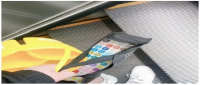



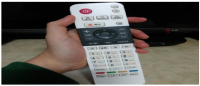






In the field of Adapted Physical Activity, there is a dearth of research that has attempted to critically explore ethical issues arising in the field of practice. The reason why ethical considerations are needed in the field of practice is that adapted physical activity instructors can negatively affect other people's lives, such as students with disability, regardless of their intentions. Purpose Therefore, the purpose of this study is to apply ethical theories on ethical issues that may appear in the adapted physical activity practice field and consider their implications. Methods Through ethics theory, researcher attempted to critically examine what is right, wrong, or good or bad in the field of adapted physical activity practice. Results As a result of the research, ethical theories were considered and the contributions and limitations that each theory could offer to adapted physical activity practice were discussed.
Purpose Highly popular these days, eSport is inviting increasing scholarly attention and research. Scholarly work on eSport, however, remains focused on whether eSport is a “real” sport, that is, its sporting qualities and status, excluding ethical issues. This paper analyzes ethical issues about cognitive enhancement drugs often associated with eSport in order to suggest guidelines for resolving these issues. Methods First, environmental features of eSport are examined to find out types of cheating in eSport, as well as the ways eSport athletes are exposed to drugs. Next, ethical issues of cognitive enhancement drug use and why they are important are discussed, drawing upon multiple scholars. Last, this paper argues that the ban on drug use conventionally implemented in sport is not appropriate to eSport due to the characteristics of eSport. The paper concludes with possible future approaches to this issue. Results The ban lists administered by ESIC and WADA would not work for the need of eSport athletes and even run a risk of stunting the growth of eSport industries. It is thus important to think up an appropriate drug-related policy for eSport. Preemptive education for eSport athletes is also required to promote the ethical consciousness and judgment regarding drug use. Conclusions Insofar as eSport’s huge popularity leads to the increased status of eSport athletes, thereby exerting much influence on young people, ethical questions about eSport, drug use in particular, need to be urgently discussed for the sake of eSport’s wholesome development.
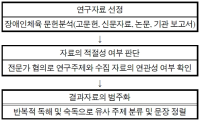
Purpose This study examines the Physical Education curriculum history of special schools, and then in-depth grasps the process of how the sports environment for the disabled has changed by age. Method The research method was literature review analyzing papers, reports and newspapers. For the concrete process, this study verified the relationship between the research subject and the collected data through experts and historians with disabilities to verify the sports data for the disabled. Results First, the process of physical education management of special schools is as follows. in the 1940's and 50's special schools, physical education was carried out simply by gymnastics. but, special schools were differentiated by the characteristics of the disabled, and the institutional foundation for physical education was also imitated by the 1960s, 1970s and 1980s, special schools were shortened in physical education time due to the increase in the number of courses and the strengthening of disability coping programs. in the 1990s, as special sports curriculum was established, customized prescription for students with disabilities was implemented. Second, the process of changing disability sports is as follows. In the 1960s and 1970s, disability sports were mainly focused on special schools, while in the 1980s, disability sports were expanded by the government. in particular, the hosting of the 88 Seoul Olympics and Seoul Paralympics provides an opportunity to equip the disabled with a system, organization and facilities. in the 1990s disability sports was meaningful in terms of academic progress, and with the quantitative growth of the 1980s and the academic foundations of the 1990s, disability sports in the 2000s provided a legal basis and improved welfare conditions for the disabled. In the future, it is necessary to find a way to solve the value of physical education for the disabled more reasonably.
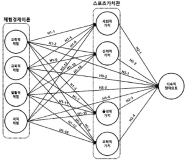
Purpose The purpose of this study was to examine the structural relationship between the sport values and continuous participation intention of the dance for all participants based on the 4 experience economy theory. Methods Frequency analysis, correlation analysis, confirmatory factor analysis and structural equation modeling using SPSS 21.0 and AMOS 18.0 were conducted to analyze the survey materials. Results First, the entertainment experience was a significant effect on all factors of sports value. Second, educational experience was a significant effect on all factors except sports entertainment value. Third, escapist experiences have a significant effect on all factors except physical value. Fourth, aesthetic experience has a significant effect on all factors of sports value. Fifth, social value and entertainment value was a significant influence on the continuous participation intention. Sixth, entertainment experience and aesthetic experience was a significant influence on the continuous participation intention. Conclusions Through these study results, it was confirmed that 4 experience, sport values and continuous participation intention of dance for all participants had a significant influence on each other.

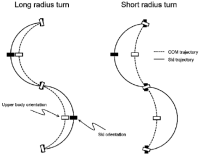
Purpose The purpose of this study was to investigate the three dimensional joint angles of the ankle, knee and hip during basic long turn, carving long turn, basic short turn and carving short turn. Methods Fourteen alpine ski instructors from Korea Ski Instructor Association participated in this study. Each skier asked to perform 4-types of turning technique, classified by radius and level. 8 inertial measurement units were used to measure three-dimensional joint angles of the ankle, knee and hip joint. Results Significant differences were found the lower extremity joint angles on the mediolateral and vertical axis during long-turn and carving-turn (p<.05). significant differences were found the lower extremity joint angles on the anteroposterior axis in the steering phases 1, 2 and complete phase (p<.05). Conclusions In the Alpine skiing, the short turn requires a complex movement of the lower limb joint compared to the long turn. When performing a long turn, the movement of the ankle joint on the vertical axis are required compared to the short turn. And the carving and short turn need to the movements of the lower limb joint on the mediolateral axis.


Purpose The purpose of this study was to confirm and evaluate the assessment of dehydration, whole body sweat rate, sweat sodium · potassium concentration, and fluid intake during workout in college badminton and rugby athletes using the field sweat test. Methods 14 male badminton athletes and 17 male rugby athletes were measured during an usual training session in a typical environment. USG(urine specific gravity) was measured before the start of training. Whole body sweat rate, sweat sodium·potassium concentration, and fluid intake were measured during and post a session of training. Results USG higher than 1.023 in both groups, which was considered as dehydrated. Sweating rate were 1.037±0.315L/h for the badminton athletes and 1.987±0.386L/h for the rugby athletes. The concentration of sodium and potassium were 53.6±20.2mmol/L, 4.1±0.7mmol/L for badminton athletes, and 55.6±15.2mmol/L, 4.3±0.5mmol/L for rugby athletes, respectively. The loss of sodium and potassium were 1.02±0.48g, 0.08±0.02g for badminton athletes, and 1.95±0.52g, 0.15±0.03g for rugby athletes, respectively. Conclusions In this study, a standard protocol of field sweat test was suggested as a useful factor in evaluating athletes' hydration status and electrolyte loss during a routine in-door or out-door training session. And, it is expected to build reliable data to establish a standard hydration guideline for Korean athletes.
