Purpose The purpose of this study is to examine the differences in physique and physical fitness factors affecting exercise performance according to the vitamin D receptor (VDR) FokI gene polymorphism in athletic gifted children. Methods FokI VDR polymorphisms were genotyped in 82 boys (9.1±0.9 years) and 55 girls (9.3±0.9 years). Basic physical fitness (basketball throw, half-squat jump, standing long jump, 15m pacer, 50m run, handgrip strength, side-step, trunk forward flexion, sit-up) and physique were measured and analyzed using one-way ANOVA with bonferroni’s correction. Results No association was found between the VDR FokI genotypes and all the physical fitness variables as well as physique variables in boys and girl. However, Hardy-Weinberg equilibrium results for VDR polymorphism distribution showed significant differences (χ2= 6.516, df=2, p=.038). Conclusion Although there was no significant difference in the fitness variables according to the VDR Fok1 genotype, it was difficult to exclude the potential for predicting fitness in that the H-W equilibrium test showed a significant difference. Therefore, in order to confirm the true potential of the VDR Fok1 gene to predict physical fitness, it is considered that additional studies on general children should be conducted.

Purpose The purpose of this study was to investigate the effect of auditory stimulus using white noise on stability and balance during sit-to-stand and standing tasks of chronic stroke patients. Methods Eighteen chronic stroke patients participated in this study. They asked to perform the tasks of sit-to-stand, standing with eyes open and standing with eyes closed before and after listening to white noise. Eight infrared cameras and one force plate were used to evaluate the stability and balance before and after the white noise stimulus during each task. Results There was no significant difference between before and after white noise stimulus in all tasks. On the other hand, the anteroposterior range of CoP was significantly decreased after white noise stimulus in standing with eyes-closed (p<.05), and the sagittal angle of CoP-CoM was significantly decreased after white noise stimulus in standing with eyes-open and eyes-closed (p<.05). Conclusion Auditory stimulus using white noise improves the balance of chronic stroke patients. Therefore it is thought to be helpful for the independent daily life of chronic stroke patients.

Purpose This study was to investigate the effect of various motor leaning techniques which were applied on the youth soccer training program. Methods 12 elementary soccer players and the director of R youth soccer team have participated in the study. The expertise level of youth soccer team were ranged from beginner to advance. To investigate the effect of new soccer training program we adopted a methodology of action research. We first analyzed the problems of original youth soccer program and reconstructed the training program considering of individualized characteristics. The 3 main problems of original soccer program (1. feedback provisions 2. difficulty of task level 3. time distribution of training) have been reconstructed by four motor learning experts. For the data analysis, several qualitative analyze techniques were conducted to observe player’s improvements. Results First, participants had a better understanding on proper motion of shooting and lifting skills from the guidance techniques. Second, utilizing the personal skills and team cohesion have been improved by the modified rules and space competition. Third, the ability of active problem solving have been improved from the self-learning environment. Forth, the player’s confidence level have been improved by eliminating performance outcome. Conclusions From the aspects of variety circumstances in sport education field, the comprehensive motor learning program should be developed and applied.
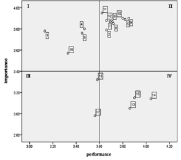
Purpose The purpose of this study was to find out what young amateur golfers consider the most when purchasing golf apparel and to find out the Importance-Performance attributes when choosing golf apparel. Methods Amateur golfers in their 20s through 40s who have purchased golf clothing directly were selected as the subject. A total of 350 questionnaires were distributed using the purposive sampling method, and 331 copies as a final validity sample. For data analysis exploratory factor analysis Cronbach’α, frequency analysis, and Importance-Performance analysis by using SPSS 21.0. Results First, except for ‘fancy design’, ‘water-proof function’, ‘elasticity comfort’, ‘brand name’ there were significant differences between importance and satisfaction of selection attribute. Second, ‘harmonic colors’, ‘has its own characteristics’, ‘expressing beauty’, ‘elasticity comfort’ were analyzed to be situated in quadrant Ⅰ. Third, ‘fancy design’, ‘water-proof function’, ‘temperature maintenance function’, ‘elasticity and durability’, ‘brand name’, ‘high-priced yet popular brand’, ‘popular brand’ were analyzed to be situated in quadrant Ⅱ. Fourth, ‘comfortable to wear’, ‘convenient for physical activity’ were analyzed to be situated in quadrant Ⅲ. Fifth, ‘can be also worn for outdoor wear’, ‘wear for gathering’, ‘wear as daily attire’ were analyzed to be situated in quadrant Ⅳ. Conclusions The results will be the basis for effective target marketing on young amateur golfers who are rapidly emerging and will be able to grasp the characteristics of golf apparel that they really want.
Purpose This study examines legal and institutional aspects of FA Compensation System (FACS) which was introduced by Korean professional football league in 2013. Methods This legal analysis reviews the current FACS in lights of several provisions of human rights in the Constitution and other relevant rules of law. Results First, the FACS violates Article 15 of the Constitution that protects 'freedom of choice to workplace' arguably implied under the 'freedom of occupation' provision since the system restricts a player's transfer within the league by requiring a transfer fee paid by the destination team even if the player has acquired the free agency status and his current contract is expiring. Second, the FACS would likely be unconstitutional according to precedents decided by the Constitutional Court and the National Human Rights Commission on the ground that 'freedom of occupation' is closely related to the rights to pursue happiness under Article 10 of the Constitution. Conclusions Based on the legal interpretations, the study argues complete abolition or significant revision of the FACS. This project calls for follow-up studies and further policy-making efforts given the practical magnitude and scholarly merits of the issue.
Purpose This research aims to find out factors affecting policy at the agenda setting phrase. In order to analyze, Multiple Streams Framework(MSF) was adopted. Based on the frame, policy problem stream, policy alternative stream, political stream, window of policy change, and policy entrepreneur were applied for analytical framework. Methods The research conducted qualitative research with triangulation. Data were collected by in-depth interview and literature review including newspaper and previous researches. Content analysis was done for deriving factors. Then categorization and itemization were conducted. Results For the result, factors derived from the study were not different from factions mentioning at MSF. For policy problem stream perspective, this study draw International Sports Event Result, Hosting International Sports Event, Elite Sports Athletic Recruiting, Athletic and Sports Category Supporting System, Student Study Right/Student Human Right/Sports Academy, Policy Reality, Sport Expert/Institute Capability, Perception of Elite Sport Origin. factors. In the case of Policy Alternative Stream, This study finds Sports Related Administrative Organization Restructure, Supporting Policy of Elite Athletic Promoting Restructure, Parent Policy of Elite Athletic Promoting Policy, Parent Institution of Elite Athletic Promoting Law, Incentive Institution for Elite Athletic, Supporting Institution for Elite Athletic, Value of Policy Community for Sports Category Feature, Value of Policy Community for Sports Category Fairness, Budget, International Sports Event Hosting Policy factors. Lastly, in the political perspective, this study figures out Elite Sports for Nation Integration, Elite Sports for Enhancing National Prestige (North and South Replacement), Elite Sports for Inter Korean Reconciliation and Cooperation, Sports Related Administrative Organization Restructure Following Regime Change, Parent Policy Change of Elite Sports Following Regime Change factors. Conclusions The research has academic implication for generating elite sport policy agenda setting model as well as practical implication for urging effective participation of various practitioners concerning elite sport.
Purpose The purpose of this study was to understand student athletes coaches’ occupational challenges from the dual perspectives(social relationship-political system), to analyze the nature of the coping strategies for the challenges, and to provide implications for building a human rights-friendly student athletes club culture. Methods Five coaches(n=5, average career length= 19.2 years) were selected through purposeful sampling. Data were collected by semi-structured interviews with participants. The collected data were inductively analyzed(Patton, 2015). Results First, participants struggled with informal roles demanded by the interested parties(principals, athletic directors, parents, and university coaches). Second, the system for protecting student athletes’ learning rights, the 52-hour work system and the human rights system added difficulties to the coaches’ work environment. Third, the disharmony between interested parties’ demands and government agencies’ institutional ideals pushed participants to choose anti-institutional, un-ethical, un-educational coping strategies. Conclusion The findings suggest that the government, academia and the community should empower coaches as ‘the subject of reform’ who can solve the problem together rather than regarding them as ‘the object of reform.’ Furthermore, this conclusion is expected to provide implications to alleviate disharmony between interest parties’ demands and government agencies’ systems.’
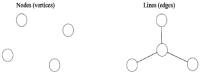
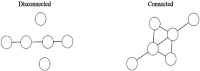
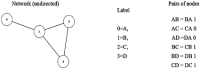
Purpose The primary purpose of this study is to show and guide how to construct a large variety of behaviors in systems dynamic for sport science. Methods By applying a simple algorithm to networked agents, which could, conceivably, offer a straightforward way out of the complexity, computational mechanism which along with its dynamics (payoff, failure, and strategy) involved. Results The model starts with the probability that systemic risk potential such as failure spreads. Even in a very random structure commonly used in sports field, propagation of the potential is guaranteed by an arbitrary network property of a set of elements. Despite the intensive systemic potential, the opposite type of potential like absence of failure could also be driven when there has been a strong investment in protection through a heuristically evolved protection level. Conclusion The implementation still needs to be polished against what happens in the real sports world, but in general, applied conceptual principle and methodological techniques behind the network-agent based mechanisms could be useful for researchers those who need to use systemes dynamic to guard in sport science.


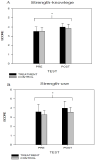
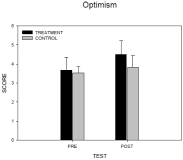
Purpose The goal of this study was to investigate the application effect of strength-based positive psychology intervention to elite archers. Methods Total of 20 elite archers participated in this study. Treatment group consisted of 10 elite archers participated in the strength-based positive psychology intervention for 8 weeks. Each individual responded the questionnaires in pre- and post-treatment sessions. Data were analyzed by repeated-measure ANOVA. Furthermore, archers participated in the program responded to in-depth interviews. Results According to the results, participants in strength-based positive psychology intervention showed that significantly increased strength knowledge, strength use, and optimism in the post–treatment compared to the pre-treatment session while control group did not show significant changes. In addition, archers perceived that there were positive effect on thinking ·coping and their self-confidence and self-esteem enhanced after participating the program. Conclusion The results of this study suggested that strength-based positive psychology intervention has positive impact on athlete’s wellbeing and perception of individuals strength and can be applicable to different sports field.
Purpose The purpose of this study is to examine the location, rate, cause, and types of injuries according to the injured area by age and sports in female athletes. Methods The subject of the study was 426 female athletes who were registered as combat sports(Judo, Taekwondo, Fencing) athletes at the Korean Sports & Olympic Committee. We collected the data via online questionnaires, and conducted a frequency analysis using R statistics program. Results As a result, 51.4% of athletes experienced injuries in the past year, and the highest injury rate was shown in Taekwondo-University(0.43) during competition and Taekwondo-Professional(5.55) during training. The cause of injuries during competition was mainly due to 'as a result of me or the opponent's hittings, skills, or fouls' among internal factors, and 'recurrent injuries' among external factors. Among internal factors during training except for torso area and professional athletes, most of the injuries were also caused by ‘as a result of me or the opponent's hittings, skills, or fouls’ and ‘recurrent injuries’ among external factors. The frequency of injury was the highest in the lower extremity area across all age groups. The most frequently injured area, in the case of Judo, is skin-bleeding in the head, skin-bruise, muscle-inflammation, bone-fracture, spondylopathy(disc, stenosis, etc.) in the torso, muscle-inflammation in the upper extremity, ligament-sprain, rupture in the lower extremity. Taekwondo athletes had skin-bruise in the head, upper and lower extremities, and muscle-inflammation in the torso area, as the frequent injury cases, and Fencing athletes had all skin-bruise regardless of injuries. Conclusions The results of this study will be used to take measures for preventing injuries or to change training programs.
