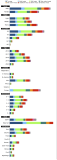
Purpose Based on the match data of major judo world competitions in the last five years, this study identifies differences in general characteristics and environmental factors according to scoring technique and scoring times. And by exploring the factors associated with scoring technique, I would like to present a practical strategy that can be used to establish guided tactics. Methods 50,828 points were used for analysis of the entire men and women who competed from 2016 to 2020. Differences in the characteristics of the world's leading athletes according to their types of technique were used in conjunction with the chi-square test and the one-way ANOVA with Sceffe test to produce results. Results The results of this study showed that the type of skill by foot technique was the most common, and the ratio of hand skill to female player to push and foot skill was relatively high. The higher the weight class, the lower the ratio of hand technique, the higher the press rate, and the frequency of skill types also increased. At the Olympic Games, the ratio of hardening technique was higher than that of other competitions, and as the year progressed, the ratio of hand and waist technique increased, and the number of mat-hold decreased. The ratio of hardening technology was relatively high, and the ratio of hand-to-foot technology was relatively high as the semi-final and final rounds were higher. As for technical time, the male athlete's skill time appeared to be about 12 seconds longer on average, with the lowest in the heavyweight class and the longest in the lightweight class. Athletes from the Asian continent appeared to have the longest technical time, which is believed to have resulted from the characteristics of excellent physical strength, good endurance, and strong hardening technique. The skill time leading to the score by pressing and hand skill was the longest, and the waist skill and grip skill time were relatively short. Half of them appeared about 5 seconds shorter on average compared to the first round, and the more important the game (the 4th round, semi-final, and final) the longer the skill time. Conclusion In conclusion, through this study, the characteristics of the world judo players' skill types and time were confirmed, and based on this, it is necessary to analyze and systematize the technical types of the world's best athletes, including Korean athletes, in order to improve their judo performance.
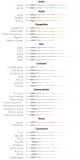

Purpose The purpose of this study was to compare the official world records of UIPM in the last 3 years to find out the relationship between the score characteristics of fencing, swimming, equestrian, and laser-run events in the final rankings and to analyze the relative importance of each event. Methods For 3 years, from 2017 to 2019, a total of the data were collected, the final rankings, fencing conversion scores, swimming conversion scores, equestrian scores, and laser-run conversion scores for all male and female athletes who participated in the UIPM Level 1 World Cup and World Championships(1,197 finals and 2,173 qualifiers). The Multiple regression analysis was used to establish the relationship between the response(subjective) variable and the conversion score of the four explanatory(independent) variables. Results The results were compared by qualification (n = 2173) and final (n = 1197) by dividing into male (n = 1179) and female (n = 1591), and the fencing score was qualifications (male β= -.691, female β= -.533) and the finals (male β= -.632, female β= -.632), it showed the greatest influence in all. On the other hand, the swim score showed the lowest impact on both qualifications (male β=-. 021, female β=-.196) and finals (male β=-. 087, female β=-. 207). The fencing event plays a major role in passing the qualifiers and is a big variable for good performance in the finals. On the other hand, in the case of swimming scores, both men and women had the lowest impact on the final ranking, and there is a limit to the final performance of swimming scores in both qualifiers. Conclusion In conclusion, it is necessary to analyze and systemize the fencing skills of the world’s best athletes, including Korean athletes, to improve the Korean fencing athletes' performance, and through such scientific analysis, a system that enables fast and flexible responses to the upcoming Olympic. Additionally, even though the importance of all sports should be levelled due to the characteristics of modern pentathlon, relative importance is biased toward fencing and swimming events are neglected. Therefore, it is deemed necessary to conduct a follow-up study on whether the scoring system in modern pentathlon consists of a scoring system that supports the records of each event and the upper and lower scoring system.
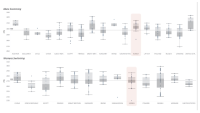


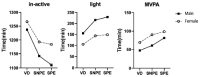
Purpose The purpose of this study is to measure the daily physical activity of male and female middle school students according to the period (VD: vaction day, SNPE: school day no PE, SPE: school day with PE) by using 3-axis accelerometer, and to compare the characteristics of adolescent physical activity according to gender and period. Methods The subjects were 130 middle school students (68 male, 62 female students). Data collection was performed using a 3-axis accelerometer(GT3X model, ActiGraph). Collected data were converted into time by intensity and rate using physical activity analysis program (Actilife v6.11.9) and analyzed by statistical program (SPSS 25.0). One-way ANOVA and independent sample t-test were used for statistical analysis. Tukey's HSD was used as a post analysis. The statistical significance level was .05. Results As a result, during each periods(VD, SNPE, and SPE), except for MVPA(moderate to vigorous physical activity) time on SPE, sedentary and MVPA time were significantly higher in female students, and low intensity and total physical activity time were significantly higher in male students. For male students, total physical activity time was higher in the order of SPE, SNPE, and VD, and for female students, physical activity time during the semester(SNPE and SPE) was significantly higher than VD. For male students, MVPA time was significantly high in order of SPE, SNPE, and VD, and for female students, it was high in order of SPE, SNPE, and VD but only significant difference occurred between SPE and VD. For both male and female students, sedentary time was high in the order of VD, SNPE, and SPE, but the sedentary time during vacation was significantly higher than during the semester. Conclusions When summarizing the results, first, it was confirmed that school and physical education classes as a physical activity space play a significant role in physical activity, especially MVPA, of male and female middle school students, second, the physical activity effect of physical education class was found to be more effective in male students. Based on the results of this study, it is necessary to conduct studies on various grades and to explore various factors affecting physical activity in a complex way.

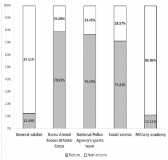
Purpose The purpose of this study is to identify the negative effects of long-term exercise (training and competition) suspension of male elite athletes due to compulsory military service on athletic performance, and to provide a basis for enhancing the importance of providing support systems and social conditions for maintaining athletic performance. Methods In this study, 17,418 male athletes aged 18 to 21 who were registered as athletes for the Korean Sports & Olympic Committee from 2003 to 2005 were enrolled. The athlete registration data includes information about the athlete's gender, age, sport and affiliation. According to the continuity of registration and belonging information, the compulsory military service type was classified into a manipulator. According to the form of Compulsory military service performed by male elite athletes, the return rate was confirmed and the career (year) was calculated. Results As a result of the survey, 12.49% of the athletes who served as general soldiers returned to the athletes after compulsory military service, showing a relatively low return rate compared to 78.91% of the Korea Armed Forces Athletic Corps, 76.55% of the National Police Agency's sports team, and 71.43% of the social service. Also, Athletes who served as general soldiers had a career of 2.46 years (± 1.94), while the Korea Armed Forces Athletic Corps was 10.21 years (± 3.58), the National Police Agency's sports team was 9.45 years (± 3.26), and the social service was 5.86 years (± 4.06), The exemption was 11.08 years (± 2.27), and the compulsory military service exception was 9.79 years (± 5.55). Conclusions Male elite athletes' decrease in athletic performance after compulsory military service is a natural result, as confirmed through the results of this study, and it is necessary to seek a support system between compulsory military service to maintain athletic performance.
Purpose This study was designed to examine the effects of a single corrective exercise (CEX) and corrective kinesio taping (CKT) on gait patterns, plantar pressure, balance, and pain in 20~30s female patients with moderate hallux valgus. Methods Twenty-one participants (age: 30.1±5.1 yrs; height: 164.1±4.8 cm; body weight: 56.7±6.8 kg; body mass index: 21.2±5.7 kg·m-2; hallux valgus angle: 27.2±6.1°) with hallux valgus was recruited and participated in three trials, i.e., CEX trial, CKT trial, and combined CEX and CKT (CEX+CKT) trial, repeatedly in a counter-balanced order. One week of wash-out period was placed between the trials to minimize the effect of the previous treatment on the next treatment. Variables related to gait pattern, plantar pressure, balance, and pain were measured during each treatment. We carried out repeated two way ANOVA on measured variables. Results 1) Regarding gait patterns, CEX treatment and CEX+CKT treatments showed significant increases in the length of patients strides, the single support line during the stance phase, and significant reduction of the cadence. 2) Regarding gait cycle, CEX treatment and CEX+CKT treatments showed significant reductions in the contact times of forefoot, midfoot, and heel. There was a significant reduction of double stance phase in CEX treatment. 3) Regarding foot pressure on gait, CEX+CKT treatments significantly increased the maximum pressure of midfoot and heel. CEX treatments significantly increased the maximum pressure of forefoot. 4) Regarding balance, CEX treatment and CKT treatments significantly increased one leg standing with eyes closed. 5) Pain was significantly reduced in CKT treatment and CEX+CKT treatments. Conclusions According to the aforementioned results, it was concluded that a single CKT treatment was effective in reducing pain when walking and that plantar pressure, gait pattern, gait cycle, and balance were improved through a single bout of CEX treatments. Therefore, treatments by stage, starting with CKT treatments to reduce the pain, and then treating CEX to improve the gait pattern, gait cycle, foot pressure when walking, and balance ability, would be effective. Future research is warranted to identify the effects of long-term treatments.
Purpose The purpose of this study was to evaluate the moderate to vigorous physical activity(MVPA) and sedentary time measured by accelerometer. Furthermore, the level of physical activity and adherence rate of physical activity guideline(PAG) were compared with the self-reported questionnaire. Methods The MVPA, sedentary time, and adherence rate of PAG according to age and sex were examined to people who agreed to wear accelerometers among the participants of the 2014-2015 Korea National Health and Nutrition Examination Survey. To compare the relationship between accelerometer and self-reported questionnaire, Chi-squared test and Spearman correlation analysis were performed. Results The MVPA of the accelerometer-total(AT) was 40.6 minutes/day for men and 31.1 minutes/day for women. Sedentary time was 502.9 minutes/day for men and 498.9 minutes/day for women. The MVPA of accelerometer-bout(AB) estimates was 16.4 minutes/day for men and 14.2 minutes for women. On the other hand, the MVPA of the self-report was 95.8 minutes for men and 64.3 minutes for women, and the sedentary time was 471.2 minutes for men and 455.2 minutes for women. The adherence rate of PAG was 55.6% of the self-report, 56.1% of the AT, and 21.4% of the AB. The correlation between self-report and accelerometer was statistically significant(p < 0.01), but showed a weak correlation coefficient(rho=0.112-0.351). There was no association between AB and self-report(p < 0.01). The sensitivity and specificity of the self-report were 71.3% and 48.6%, respectively. The positive and negative predictive values of the self-report were 27.5% and 86.1%, respectively. Conclusions As a result of this study, self-reported physical activity level by questionnaire had more MVPA and less sedentary time than the accelerometer-determined physical activity. In addition, the adherence rate of the PAG differed from accelerometer and self-report. The difference was significantly increased when comparing AB with the self-report. Therefore, great care must be taken when interpreting accelerometer and self-report questionnaire. Further research will be needed on specific methods that can be used by complementing the two measurement tools.
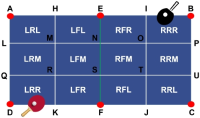
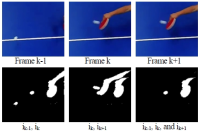
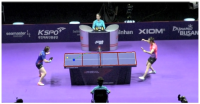
Purpose The purpose of this study was to develop algorithms and software that can track the trajectory of table tennis balls using image-processing algorithms to obtain information quickly for under and establish tactics used in table tennis. Methods The algorithms used in the field of computer vision were applied on two matches played by novice and two matches during international competitions by elite athletes. Reliability analysis was performed by comparing the table tennis ball bounce frequency in each zone obtained through the automatic method and the manual method. Results The mean reliability of the two novice games was only 85.1 ± 3.69%, total error was 14.9 ± 3.69%, overestimation error was 52.2 ± 9.78%, and underestimation error was 47.8 ± 9.78%. While the mean reliability of the two international tournaments was 71.8 ± 0.87%, the total error was 28.2 ± 0.87%, overestimation error was 82.0 ± 8.03%, and underestimation error was 19.2 ± 7.75%. Conclusions Although the target reliability of algorithms and software developed in this study was achieved only in novice competitions with 80%, the over-estimation errors were generally high in international competitions, showing the potential for further improvement.


Purpose The current study investigated the effects of exercise information using social network service(SNS) to identify changes of physical activity and psychological variables among inactive college students. Methods Inactive college students(30 experimental group, 30 control group) were voluntarily participated in the 12-weeks intervention. During this period, the experimental group received exercise information through SNS. And all study participants’ physical activity, stages of physical activity, self-efficacy, motivation, and perceived benefits and barriers were measured at the pre, mid and post intervention. Frequency analysis, chi-square test, 2-way ANOVA RM were conducted to analyze data obtained in the study. All procedures were performed by using SPSS 23.0. Results The exercise information intervention using SNS during 12 weeks had a positive effect on the stages of physical activity of inactive college students, and there were statistically significant differences. In addition, physical activity, perceived benefits and barriers, self-efficacy, motivation positively improved after the intervention, but there were no statistically significant differences between experimental and control group. Conclusions The present study suggests that psychological strategies using various SNS programs have positive effects for inactive college students to increase physical activity and its related psychological variables.
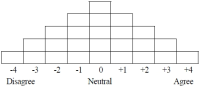
Purpose The purpose of this study was to conduct a typological classification of female college students in sport studies regarding perceived career barriers. Methods Q-methodology was used to identify female college students’ viewpoints on carrier barriers. The Q sample was distilled from 76 statements (64 from literature reviews and 12 in-depth interviews) to 25 statement after conducting literature review, in-depth interviews and surveys with open-ended questions. The P sample for this study was 30 students around Seoul and PQmethod software was used for data analysis. Results Three distinct views were extracted: First type of ‘career opaque’, revealed that students have failed to find their own aptitude and interest. Second type of ‘sexual discrimination-male centered’, implied students’ concerns about discriminating factors in relation to marriage and pregnancy for the job they desire. Third type of ‘Insufficient experience and qualification’, indicates students perceive their lack of experience or qualification required for their career. Conclusions The identification of these three viewpoints could provide insights that can be used to design more segmented and detailed career policies for female college students in sport studies.
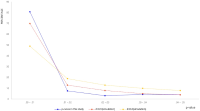
Purpose This study was aimed at laying out criticism regarding statistical hypothesis testing and presenting realistic alternatives focused on published studies of sports management in Korea. Methods Among 202 studies compiled by the Korean Society for Sport Management, vol. 19, no. 1 through vol. 23, no. 6, 115 studies which used the null hypothesis significant testing were finally selected. After data coding for selected studies, p-curve, the distribution of p-values which reported in individual studies, was schematized, and than adequacy about the sampling method and result descriptions were analyzed. Results The ratio of p-values close to zero was relatively very high in p-curve although there was no clear evidence of p-hacking. Also, approximately 82% of the studies used convenience sampling method, and incorrect descriptions in part of result and discussion due to lack of understanding of statistical hypothesis testing was found in some studies. In conclusion, the shortcomings of statistical hypothesis testing which commonly used in academic field were depended on not a defect in the method itself but researchers who misused statistical hypothesis testing. Conclusions Researchers in sport management field need to understand the advantages and disadvantages of statistical hypothesis testing and consider to use both confidence interval and effect sizes to compensate the disadvantages of p-value.
