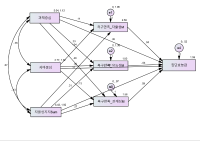
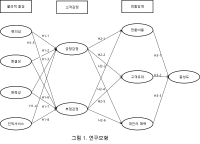
In sport context, the motivational climate created by significant others (e.g., coachs and peers) has been influences on the athletic-student's motivation, engagement, performance, and skill development. Collective efficacy is important for team performance because it influences a group's task choice, effort expenditure, persistence in the face of failure, and resistance to discouragement. This study was to examine the influence of peer motivational climate (i.e., task-involving and ego-involving motivational climate) and coach autonomous support for basic psychological need satisfaction and collective efficacy. In the study, participants were 289 athletic-students' of team sports. In the study then, questionnaire was assessed using by the correlation and path analysis. The results showed that task-involving motivational climate significantly predicted of collective efficacy, while ego-involving motivational climate were negatively predict to the collective efficacy. The results suggest the importance of considering peer influence in addition to coach influence when examining motivational climate in team sport.
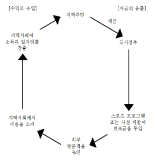
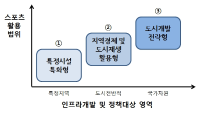
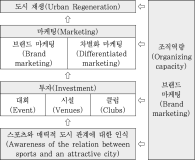
A number of global cities and local cities facilitate local economies and development by utilizing sports. However, their strategy is likely to be a short-term and one-time policy, which does not continuously strengthen their development. Therefore, the use of sports needs to be considered as more specific and longer term strategies for local development. This study examines the concept and role of sports city focused on cases of overseas sports cities, and successful and ideal cases of background and features of sports cities were analyzed to promote and lead the direction of improvement of sports cities in Korea. Consequently, strengthening a city’s sport capability and connecting it to local development need to be met to become a city into a successful sport city. To do so, it should premise recognition that sports cannot be treated separately from other urban policy area and it needs to invest in sports facilities, hosting sports events and competitions, and sports clubs based on the recognition for the importance of sports. Moreover, it needs a marketing strategy for branding and differentiation through sports of a city’s expertise. Finally, to make sports act as a catalyst to strengthen the process of an integrated city’s competitiveness, it requires a local government’s strong leadership and organization capacity of stakeholders.





The purpose of the study is to find the impact of social and economic factors in physical activity of children and youth. This study utilized the data from 4th Korean Children and Youth Panel Study(KCYPS), and the analysis were carried out based on the starting sample of 2,009 from ‘the elementary 4 panel’ and 1,978 from the ‘middle school 1 panel’ and 1,984 from the ‘high school 1 panel’, 5,971 full data were used in the final analysis. Data were processed using hierarchical regression analysis and it was statistically validated at the significance level of 0.05. First, Pearson r and Spearman ρ showed that all variables are statistically significant correlations. Second, among the first factors of personal and family characteristics, household income level(B=.113), family composition(B=-.049) and parental education (B=.060) were found on a significant impact on the movement of physical activity time, parental education (B=.027) was found on a significant impact on the subjective evaluation of physical education grades. Third, among the second factors of community-level characteristics, Gini coefficient (B=-.810), wealth concentrating (B=.120) were found on a significant impact on the movement of physical activity time, the Gini coefficient (B=-0.315) was found on a significant impact on the subjective evaluation of physical education grades. Additional factors that determine the coefficient of variation in the level 2 were found to be 0.623 and 0.001 respectively. Therefore, second factors of community-level characteristics are added such as Gini coefficient, wealth concentrating were explained to children and youth exercise time during physical activity 62.3%(p<.01) and subjective evaluation of physical education in grades 0.1%(p<.01). predictive power to

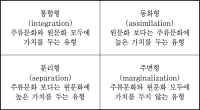
The purpose of this study is to examine acculturation strategies of expatriates in Korea in relation to spectator sport involvement. Berry's(1997) bi-dimensional model of acculturation was used as a theoretical framework to categorize the type of acculturation strategies of expatriates in Korea. Acculturation strategies of expatriates were classified into four types: integration, assimilation, separation, and marginalization. To be specific, there were 79 participants using the integration strategy, 28 using the assimilation strategy, 53 using the separation strategy, and 20 using the marginalization strategy. Research hypotheses were established to analyze differences on spectator sport involvement of expatriates between Korean spectator sport and their original cultural sport. There were significant differences in spectator sport involvement among foreigners in Korea. Firstly, the spectator sport involvement of the participants using the integration strategy was higher than that of marginalization. Second, participants categorized as using assimilation strategy were found to have lower sport involvement with Korea's spectator sport and had a higher involvement with their original cultural sport. Third, participants categorized as using separation strategy were found to have higher involvement with their original cultural sport than Korea's. Fourth, participants categorized as using separation strategy did not show significant differences with assimilation participants in comparing original cultural spectator sport. In conclusion, the result of the research indicated that expatriates living in Korea showed similar characteristics of Berry's (1997) acculturation strategies. Thus, It indicated that Berry's (1997) acculturation strategies are useful theoretical tools predicting psychological preference of expatriates in Korea. However, participants showed little difference in that all expatriates of four categories showed higher involvement with their original cultural spectator sport. Therefore, unlike Berry's (1997) theory, people with high level of acculturation showed higher levels of involvement with their original cultural spectator sport. It may provide useful information for Korean sport marketers regarding s foreign sport consumers in order to develop a market.
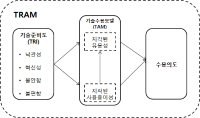
The current study was aimed to examine acceptance intention of sports Wearable products using the Technology Readiness and Acceptance Model. Data were drawn from 271 consumers in their 20s and 30s. Data were analyzed through frequency analysis, exploratory factor analysis, confirmatory factor analysis, reliability analysis, correlation analysis, simple regression analysis and multiple regression analysis using SPSS 20.0 and AMOS 20.0 program. The results were as follows: First, optimism had a positive effect on perceived usefulness but innovativeness, discomfort and insecurity did not affect perceived usefulness. Second, optimism and innovativeness had a positive effect on perceived ease of use and discomfort had a negative effect on perceived ease of use but insecurity did not affect perceived ease of use. Third, perceived ease of use had a positive effect on perceived usefulness. Fourth, perceived usefulness and perceived ease of use had a positive effect on acceptance intention.
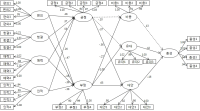
The purpose of this study was to investigate the relationship between physical environment, customers' emotions, switching barriers and loyalty among water ski resort users in Gyeonggi-do and Gangwon-do province. Convenience sampling method was used, 277 of the questionnaires were selected as the ultimately valid sample. Data were analysed by SPSSWIN 18.0 and AMOS 18.0 program using frequency analysis, reliability analysis, correlation analysis, confirmatory Factor Analysis(CFA) structural equation model(SEM). The research findings are as follows. First, relations between physical environment and customers' emotions, attractiveness, cleanliness, convenience and human service had a significant positively impact on positive emotional response. convenience, attractiveness, human service, and cleanliness had a significant negatively impact on negative emotional response. Second, relations between customers' emotions and switching Barriers, positive emotional response did not have a significant impact on switching cost and interpersonal relationship, but positive emotional response had a significant impact on attractiveness of alternatives. negative emotional response had a significant impact on switching cost, interpersonal relationship and attractiveness of alternatives Third, relations between switching barriers and loyalty, switching cost did not have a significant impact on loyalty. but interpersonal relationship and attractiveness of alternatives had a significant impact on loyalty.
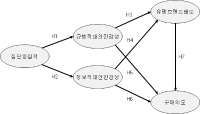
The objective of the current study is to empirically reveal the impact of self-recognized group cohesiveness and interpersonal susceptibility (normative interpersonal susceptibility and informative interpersonal susceptibility) on mountain bikers’ attitude toward name brand and purchase intents using structural equation model. In order to achieve this goal, the researchers surveyed 217 mountain bikers in six mountain bikers’ clubs in Chungcheong-do province area in South Korea. In order to validate the proposed structural model, SPSSWIN version 21.0 and AMOS 18.0 were utilized. The results showed that first, group cohesiveness had a positive influence on the bikers’ normative and informative interpersonal susceptibility. Second, normative and informative interpersonal susceptibility positively influenced attitude toward name brand. Third, normative interpersonal susceptibility did not positively influence the purchase intent, but informative interpersonal susceptibility did. Fourth, attitude toward name brand positively influenced the purchase intent.
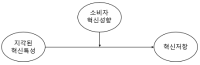
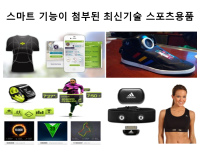
The purpose of this study was to identify the effect of sportwearable device's innovation attribute on innovation resistance and moderating effect of consumer innovativeness between sportwearable device's innovation attribute and innovation resistance. Samples were the 20, 30s who registered on undergraduate and graduate college students. They were extracted from three different universities, in Seoul. After 125 questionnaires were removed, 375 samples were used in the actual analysis; frequency analysis, reliability analysis, confirmatory factor analysis, correlation, and structural equation modeling. The results were as follows. First, perceived innovation attributes of sportwearble devices had a negative effect on innovation resistance. Second, consumer innovativeness was moderated in the relationship between perceived innovation attributes and innovation resistance.


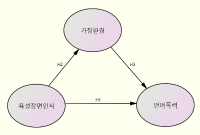
The purpose of this study is to analyse that the college students' recognition on abuse scene of sport broadcasting influences verbal violence. The subjects were college students in P municipality and this study distributed 230 questionnaires among them. And 203 questionnaires were collected except some questionnaires that didn't fill in them properly. To analyze them, this study used SPSS Win 20.0 and AMOS 20.0 and came to a conclusion as follows. First, the College students' negative recognition on abuse scene of sport broadcasting had negative influences on verbal violence. Second, home environment wasn't affected by the college students' negative recognition on abuse scene of sport broadcasting. Third, the verbal violence also wasn't much effected by the home environment of the college students. Finally, the home environment didn't intervene in the relationship between the college students' recognition on abuse scene of sport broadcasting and the verbal violence. Therefore this study considers that the abuse scene in the game on the live broadcasting needs to apply sanction properly by a broadcasting station for TV viewers, although the college students with a higher negative understanding of this abuse scene use less verbal violence.
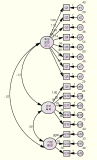
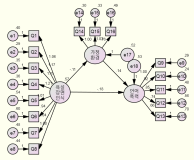
The purpose of this paper is to map how sport sociologists and sport historians have engaged in the study of race and/in sport. Focusing on scholars with two communities of the North American Society for Sport Sociology & Sport History, it investigates themes, historical/sociological philosophy, theoretical/methodological issues that underpin their works. To be more specific, mainly four types of research are detailed: 1) popular narratives that mostly celebrate black athletes’ success in sport, 2) so-called the early academic works that highlight the positive role of sport in advancing the issue of race in relation to social justice, unification, equality, and so on, 3) a group of researches informed by the positivism, which attempt to discover, investigate, identify racially problematic phenomena, incidents, policies, or incidents and explain why they happen, what makes them problematic, and how to solve such matters, and 4) critical paradigm that orients cultural studies based researches that attempt to explore the relationship between sport and race with focus on interpretive, theoretical, and reflective approaches. In conclusion, it is discussed why I pay attention to the critical paradigm, what it’s emergence means to the sporting academy, and in what ways we can embrace it into the Korean sporting academy.
