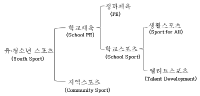
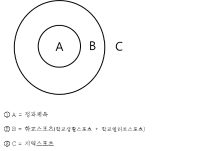
Purpose and Methods The purpose of this study is to clarify the concepts of ‘youth sport policy’ and policy areas as an alternative to school physical education concept and to provide a core conceptual framework for the development and implementation of youth sports policy in the future. Results The notion of youth sport policy is a process of seeking rational decision-making and optimal alternatives to solve the social problems associated with sports participation of youth in elementary school(aged 6 years) to high school(aged 18 years). The concept of 'youth sport' can reflect modern culture rather than 'school physical education' and it can be seen as more future oriented for lifelong participation in sports. The areas of youth sport policy are classified into physical education, school sport, and community sport. Physical education refer to the physical education classes operated by the Ministry of Education, and the school sport refers to the sports activities that take place throughout the school. Community sport is sports activities that are carried out outside the school by the choice of youth, which is the area where cooperation between the public sector and the private sector is needed. Conclusion In conclusion, healthy and active life for youth is required to establish cooperative governance of related organizations in order to ensure proper linkage between youth sport policy areas. Through this, it is necessary to solve the social problems of youth and promote their lifelong enjoyment of sport more consistently, efficiently and effectively.

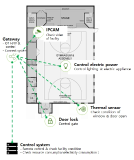
Purpose This study aims to suggest the application of IoT-based integrated management system to public sports facilities(PSF) in order to improve the utilization and management of PSF by analyzing the actual state of PSF empirically. Methods A survey was administered to managers(n=279) and users(n=500) of PSF in order to identify problems of current management and collect suggestions for improving the utilization and management of PSF. Previous research on establishing IoT-based system was also reviewed for considering the effectiveness of IoT technology. Results Generally, PSF are in low utilization and operate in a deficit. The deficit operation is caused by high labor costs and management expenses. The survey result shows that there are many problems in management and utilization such as lack of equipment, deteriorated facilities, shortage of manpower and funding, limited programs, difficulties in promotion. The result also shows that PSF need to consider developing local demand-based programs, reducing management costs, extending opening hours, improving online booking system. Conclusion To solve the problems of PSF in utilization and management, this study suggests that IoT-based integrated management system needs to be applied to PSF. It is expected that applying IoT-based integrated management system to PSF would improve operational effectiveness, ease of facility management, and user convenience.

Purpose The purpose of this study is to deeply understand what high school student athletes are doing as athletes and how they are transformed into student athletes from studying and exercising simultaneously. Through this, to understand the life of student wrestlers and to provide basic data for rational improvement of school athletic department. Methods Participants of the study selected one student in the second grade and two students in the third grade at Woosu high school in metropolitan. Data was collected through in-depth interviews, participant observation, and document analysis. The collected data was analyzed using Domain Analysis and Taxonomic Analysis by Spradley(1979). To assure the credibility of the data, additional checks and analysis were conducted with the participants, and the research process was examined by experts. Moreover, the common contents of the data were included in the research results with multilateral verification. Results Woosu high school wrestling student athletes were recognized as athletes as a training life to lose their dreams, a school life to stop their work. However, since student athletes have been studying and exercising together, they have been transformed from a trainee to a motivated active, a student who is reborn in the school community, and transformed a reflective student athlete to an immature player on a daily life. Conclusion The policy of the school athletic department to study and exercise together has a positive effect on student athletes and has a good effect. The introduction and practice of this system can expect true student athletes and establish elite physical education right away.
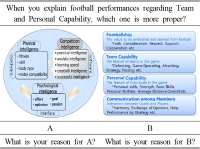
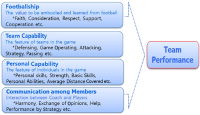
Purpose The following study was conducted to suggest and verify the validity of the concept of team performance, which has previously been considered as the total sum of individual performances. Method The concept of team performance was extracted by a conductive content analysis and an exploratory factor analysis of the data gathered from middle school football players. To verify the validity of the extracted concept, football experts' opinions were collected. Results The idea of team performance, categorized by Footballship, Team Capability, Personal Capability, Communication among Members, has been taken differently from the total sum of individual performances. Footballship is the virtue that should be materialized, and simultaneously earned during the game. Team Capability is a available resource for team's performance, Personal Capability is a available resource for a player's performance, and Communication among Members is the intimacy of communication between coaches and players. The conglomeration of experts' opinions on the concept of team performance and its components shows that team performance is evidently different from the total sum of individual performances. Conclusion The following study has been conducted to suggest and verify the validity of the concept of team performance. Team performance exists, standing distinct from the sum of individual performance, and understanding the concept of team performance will contribute not only to understanding performance, but also to improve the effectiveness of training and managing the team. Interest of the sport society is looked forward to.
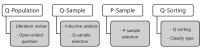
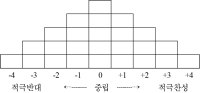
Purpose The purpose of this study was to investigate the badminton players psychological disturbance and coping strategies types and characteristics. Methods To achieve the purpose of this study, an open-ended questionnaires were used targeting 194 badminton players, 25 Q samples were selected by collected data as the self – statement. Q samples were classified depending on their subjective experience by P samples composed of active badminton players who had more than eight years of athletic career; this data were coded and analyzed by VARIMAX rotation. Results The results revealed by the Q methodology were below. First of all, the first type is named as (Internal Disturbance - Passive Coping) type. The first type is psychologically disturbed by internal factors, and negative about external coping strategies. Second, the second type showed the higher awareness of coping strategies than the other types; It was named as (Active Coping) type. Third, The third type recognized the burden of victory and self-confidence, and it was named as the type of (Victory Obsession). Conclusion In the badminton competition, the deterioration of concentration and judgment ability because of psychological disturbance has a serious effect on the performance. Therefore, based on the results of this study, it will be possible to improve the performance by appropriate psychological intervention through the characteristics of the athletes.
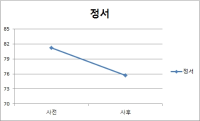
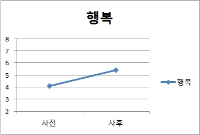
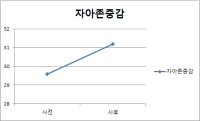
Purpose The purpose of this study was to examine the effects of positive psychological intervention program on mood state, self-esteem and happiness of university student athletes. Methods The participants were 10 university student athletes. The measures utilized the Profile of Mood States(POMS), self-esteem inventory and happiness questionnaire. Positive psychological intervention program was developed by previous studies, participants interview and expert discussion. The positive psychological intervention program were managing life, self-esteem enhancing program, being optimistic, positive emotion program, gratitude, forgiveness, communication skill training program, habit/routine making program and action strategy development. The data were analyzed by SPSS 20.0. Results These results were as followings. Firstly, positive psychological intervention program decreased total mood disturbance(TMD) of university student athlete. Secondly, positive psychological intervention program improved self-esteem of university student athletes. Lastly, positive psychological intervention program increased happiness level of university student athletes. Conclusion Training and education system should be established in which a positive psychological intervention program can be applied to university student athletes.
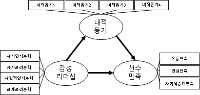
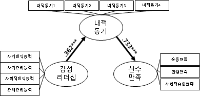
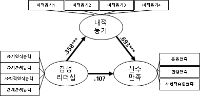
Purpose The purpose of this study was to examine the influence of coaches’ emotional leadership on athletic satisfaction and to investigate mediating effect of intrinsic motivation perceived by professional female basketball athletes in Korea and Japan. Methods 154 professional female basketball athletes in Korea and Japan participated in this study and responded to questionnaires which consisted of coaches’ emotional leadership, intrinsic motivation, and athletic satisfaction. The collected data were analyzed by frequency analysis, confirmatory factor analysis, reliability analysis, descriptive statistical analysis, correlation analysis, and structure equation analysis with using SPSS 23.0 and AMOS 23.0. Results The results of this study were as follows; Firstly, coaches’ emotional leadership had positive effect on athletic satisfaction. Secondly, coaches’ emotional leadership had positive influence on intrinsic motivation. Thirdly, intrinsic motivation had positively affect on athletic satisfaction. Lastly, intrinsic motivation completely mediated the relationship between coaches’ emotional leadership and athletic satisfaction. Conclusion In conclusion, these findings imply that coaches’ emotional leadership and intrinsic motivation are critical factors for improving athletic satisfaction.
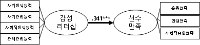

Purpose This study was designed to develop a team building program that helps freshmen student-athletes to adapt to college life and enhance team function and process and to examine the effects of this program. It could provide basic information of a team building program that effectively accelerates team function in the college team sports domain. Methods The program was developed through this process. First, an open-ended questionnaire was utilized to discover the needs of the program. Second, the results of needs of the program and important factors of team-building program were taken into consideration. Third, expert meetings were conducted. Consequently, the program consisted of three stages of total 10 sessions which was 90 min long. The questionnaires(Group Cohesion Questionnaire and Coach-Athlete Relationship Questionnaire), experience report, and program evaluation form were used as measures to identify the effects of the developed program. SPSS version 24.0 and inductive analysis were used to analyze the data. Results The results of this study are as follows. First, there was no statistically significant influence between developed program and the level of group cohesion. In contrast, the level of coach-athlete interaction was significantly increased. Second, the analysis of experience report revealed that this program reduced interpersonal conflict between team members and formed positive interpersonal relationship by mind of respect and consideration. Conclusion In conclusion, the hierarchical culture was strongly formed and team member suffered from the dual role of athlete and student in Korean college team sports. Thus, these should be resolved in order to enhance team function and process. As a results, this process could increase team performance as well as offer psychological stability to college student-athletes.
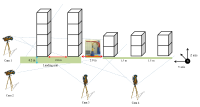
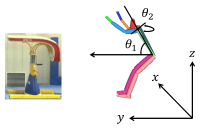
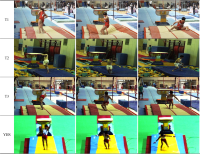
Purpose The purpose of the study was to perform a comparative analysis of the YANG Hak Seon technique carried out by "K" athlete with the kinematical data of "Y" athlete and propose a method to improve the YANG Hak Seon technique of "K" athlete. Method The subject recruited for the study was a male athlete from Korean national team (Age: 21, height: 1.65 m, body weight: 59.6 kg, and career: 11 years). Four high - speed cameras were used to analyze the 3D motion of the YANG Hak Seon technique performed by "K" athlete. The variables selected for analysis were the velocity of COM, displacement of COM, the rotational & torsional angle of the trunk and rotational & torsional angular velocity of the trunk. The results obtained were compared to the preexisting data of the "Y" athlete (data set from the published research). Results Firstly, the horizontal displacement of the YANG Hak Seon technique of the "K" athlete was observed to be shorter along with lower vertical displacement during landing compared to “Y” athlete. In addition, the overall horizontal velocity was low and vertical velocity was not generated which rises during the BC (board contact) phase. Although the rotational angular velocity of the trunk was lower during the BC, HC (horse contact) phase and LD (landing) phase, torsional angular velocity was higher during the LD. Conclusion In order to improve the completeness of the YANG Hak Seon technique of the K player, it is necessary to enter with a fast and low posture on the footplate during the initial phase. In the BC phase, it is essential to raise the COM simultaneously while landing on the footplate and increase the rotational angular velocity of the trunk.
Purpose The purpose of this study is to analyze the performance contents of men's floor exercise and to provide basic materials for achieving excellent results at world competitions. Methods Teams ranked 1 - 12 who participated in the World Championships' floor movement group competition selected a total of 59 players by the convenience sampling method and carried out technical statistics, frequency analysis, member variable variance analysis, and post hoc analysis. Results First, as a result of frequency analysis of the difficulty of each group, all the teams ranked 1 to 12 liked the most difficulty of C and found that they do not like the F difficulty the most. Secondly, there was a difference in average for each group's start score, ranking 1st to 4th> 5th to 8th> 9th to 12th place. Thirdly, there was a difference in average of difficulty levels for each group B, C, E, and it became very significant with E difficulty.Results of post hoc analysis B difficulty (9th to 12th> 1st to 4th, 5th to 8th), C difficulty (9th to 12th> 1st to 4th), E difficulty (1st to 4th> 5th to 8th ·9th to 12th). Conclusion These results show that in floor exercise, the art of more than C difficulty and the connection technology of A, B, C, difficulty, E and F, difficult difficulty such as difficulty, creative and dynamic performance composition is excellent It clearly states that it is a condition for getting results.
