Purpose Lock and Heere (2017) argued that two different theories of social identity theory(SIT) and role identity theory have been used in previous studies of team identification. However, they failed to provide why such phenomenon existed in the literature of team identification. Thus, the first purpose of the study is to provide the possible reasons why the two theories were used as the ground of team identification in the previous literature. In addition, the current study examined whether team identification was properly developed from SIT by incorporating the cases of organizational identification and consumer-company identification in business literature. Results & Conclusion There are two possible explanations on why the two theories have been used in team identification studies. First, in the initial studies of team identification, theoretical ground of team identification was lacking. Thus, without a firm theoretical guidelines, authors might have used the two theories as the ground of team identification. Second, as previous literature noted, the two theories are like the two different sides of a single theory. Thus, authors may have not recognized the need of differentiating the two theories and used the two theories as the ground of team identification. This study also examined whether team identification was properly developed from SIT. The social category in team identification includes two different social identities(team members and fans), which is quite different from a social category with single identity in it. The locus of social category of team was arbitrarily expanded to include fans in the same category. This case is quite similar with consumer-company identification in marketing literature. Future study needs to examine whether the locus of social category can be expanded to include two different social identities.
Purpose The purpose of this research is to provide implications for the study of the physical education curriculum in Korea and China by comparatively analyzing the revised high school physical education curriculum in the two countries. Methods Using Bereday(1964)’s four steps of comparison model in education, this study focuses on the format and content of the general high school physical education curricula of Korea and China, each curriculum having been revised respectively in 2015 and 2017. Results First, in terms of format, both countries consider PE a necessity and share similarities in regard to course structure, credit allocation and document format. Nevertheless, though both countries are oriented toward competency-centered education, there are some differences with respect to official education curriculum documents, numbers of subjects and hours of study based on the reality and situation of each country. Second, in terms of content, both countries present various teaching methods and evaluation principles for the sake of acquiring core competence. However, the Korean curriculum prefers to advocate learning of the value of physical activity to achieve core competencies, while the Chinese curriculum prefers to focus on acquiring athletic skills and health knowledge for achieving core competencies. Conclusions After comparing physical education curriculum in both countries, two implications could be obtained. One is that the consistency problem in Korea should be solved between the core competency, the teaching and learning methods and evaluation standards. The other is that, in China, integrated value of physical education should be paid more attention and core competency as well as teaching and learning methods should be considered.
Purpose The purpose of this narrative inquiry was to explore the educational meaning of managing a specialist physical education school (SPES) and to suggest policy supports. Methods Semi-structured interviews with a physical education teacher who had managed a SPES and document analysis were undertaken. Data collected were analysed using constructivist grounded theory. Results In telling, four themes were described, which include: backgrounds that the teacher took over the SPES, cases of reforming the SPES and its impacts, pressures from a private physical education alliance, and the SPES has a long road ahead. In re-telling, a need of re-conceptualizing public education based physical education career education and four policy supports were discussed. Conclusions Developing a range of models for SPES-community connection, exploring longitudinal effectiveness of managing SPES as physical education career education, and exploring effective SPES models for student-athletes are suggested as future research.
Purpose The goal of this article is to examine the unwritten law of sports - a moral law - in relation to the purposeful act of continuing to score, when winning has been already secured, in normative terms of sportsmanship. Methods To do this, this article analyzed previous debates on the unwritten law about overwhelming victory and looked at the pros and cons of this law. Then, I contemplated the reasons for these opposite views, as well as the values and theories underpinning these views from the perspective of the nature and morality of sports. Results My argument is that respect for sport should mean more than observing sporting rules and include respect for the tradition and practice of each sport: hence the necessity of the unwritten law regarding overwhelming victory. I also suggested that the mercy rule be applied in a heavily lopsided game in order to maintain sportsmanship in a rational way. Conclusion My discussion on the unwritten law about overwhelming victory from the viewpoint of sportsmanship may reveal the significance of the essence of sports, attitude towards competition as mutual request for excellence, and the importance of winning.
Purpose The purpose of this study was to develop a psychic energy management scale that construct a concept and based on extracted contents of structural validity and reliability of university athlete psychic energy management inventory. Methods To develop the scale, the researches were completed <research ⅰ; constructing sub-factors of Psychological Energy Management, ⅱ; developing scales of psychic energy management, ⅲ; verifying validity of psychic energy management>. The results shown are a follows. Results The psychic energy management inventory contents of the university athlete were categorized into five categories ; team energy, game energy, environment energy, leisure energy and body energy. Through statistical procedures and factor analysis, the psychic energy management inventory was developed with 4 factors 18 items (coach energy 4 question items, game/environment energy 6 question items, colleague energy 4 question items, body energy 4 question items). Conclusion Convergent validity and discriminant validity was demonstrated through the external validity, the multi-group analysis confirmed the structural equivalence of the scale between the school grades.
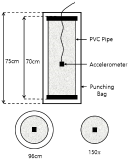
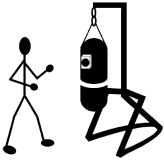
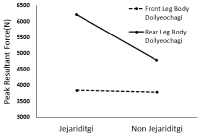
Purpose The purpose of this study is to investigate the comparison of peak resultant force in taekwondo body dollyeochagi in accordance with Jejariditgi existence and the position of kicking leg. Methods Twelve students who majored taekwondo participated in this experiment. They have a forth dan(degree) black belt in taekwondo. The peak resultant force was measured 12 times(2 jejariditgi existence × 2 position of kicking leg × 3 times). Two-way ANOVA with repeated measures was used to analyze the data. Results There was significant difference in interaction effect of peak resultant force in taekwondo in accordance with jejariditgi existence and the position of kicking leg. And there was significant difference in main effect of peak resultant force in taekwondo in accordance with jejariditgi existence and the position kicking leg. Higher peak resultant force was shown in body dollyeochagi with jeariditgi as compared with non jejariditgi. And higher peak resultant force was shown in rear kicking leg as compared with front kicking leg. Conclusions The results show that jejariditgi is a factor affecting the peak resultant force. Comparison of peak resultant force in taekwondo body dollyeochagi in accordance with jejariditgi existence and the position of kicking leg will provide strategies for coaches and athletes to perform improved taekwondo dollyeochagi.

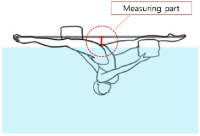
Purpose The purpose of this study is to compare the physical fitness levels among artistic swimmers in artistic swimmer national team trials. It is aimed to strengthen the physical fitness evaluation criteria of the national team and construct a physical fitness evaluation item suitable for an artistic swimming event. Methods A total of twenty two female elite artistic swimmers participated in this national team selection trial. Measurement list was performed body composition (Height, Weight, Body fat(%), Skeletal muscle mass, Lean body mass, BMI, Shoulder width, Arm span), Basic physical fitness (Push-up, Sit-up, Chin-up, Endurance of trunk backward extension and Sargent jump), Flexibility (Trunk backward extension, Shoulder flexibility, Frog position and Underwater split R, L) and Swimming test (100 m freestyle, 400 m freestyle). Data were analyzed by Independent t-test using SPSS Statistics ver 25.0. Results Age and skeletal muscle mass were significant difference between the two groups (p<.05). Also, 400 m swimming test was significantly different (p<.001). However, there were no significant differences in basic physical fitness and flexibility. Conclusions These results suggest that selected athletes are excellent not only in acting but also in physical fitness. Based on these results, it is necessary to construct a physical fitness items for the preliminary artistic swimming and to classify the physical fitness evaluation criteria according to the characteristics of the artistic swimmers.
Purpose The purpose of this study was to identify the effect of a power-specific weight training program in order to improve the muscle strength of Korean national team’s freestyle wrestlers. Methods Participants were 13 male athletes in the national freestyle wrestling team. The period of the program was 6 weeks. Muscle strength, muscular endurance, muscle power, flexibility, agility, cardiorespiratory endurance, anaerobic power and isokinetic muscle function were measured. Data were analyzed using IBM SPSS Statistics ver. 23.0 (IBM Co., Armonk, NY, USA). Paired t-test was conducted for comparison between pre-test and post-test score. Results There were significant difference and tendency in the leg isokinetic power and trunk isokinetic flexion strength. However, there was no significant difference in muscle strength, muscular endurance, muscle power, flexibility, agility and cardiorespiratory endurance. Conclusion The 6-week program focusing on the power-specific weight training indicated a significant difference not in every variable but in isokinetic muscle power, speed power and core strength. It is suggested that the training program was applied to the athletes less continuously and not in the long term because of frequent international games abroad and the need for losing weight. Consequently, a year-long training program with personalized methods should be developed to bring about more significant outcomes.
Purpose This study aims to contemplate the identity and significance of sport ethics as an independent academic field by examining how it began and developed, where it is now, and where it will or should be moving forward. Methods First, a history of sports philosophy which gave birth to sport ethics is surveyed. Second, the emergence of sport ethics in the historical development of sport philosophy is analyzed. Third, major methodologies and theoretical frames of sport ethics are introduced. Last, what needs to be done in South Korea in relation to sport ethics is suggested. Results Sport ethics in the future is expected to resort to interdisciplinary approaches which combine a variety of academic disciplines and methodologies. In addition, sport ethics must relate its theory to practice. The pressing task for sport ethics in South Korea is to establish its identity as a separate academic field. In order to do this, we should figure out what to study in sport ethics, and continue to study about the range, methodology, and theoretical frame of sport ethics. Conclusions The establishment and development of an academic field becomes only possible when fully supported by numerous scholars’ work, practical achievement of the field, and a diversity of policy and institution, and a continued discussion and agreement on the content and methods of the discipline. In order to enhance its status as well as professionalism of sport ethics scholars, researchers of various academic backgrounds should study sport ethics, exchange ideas on theory and methodology, and spread results of studies through education, guiding through the development of sports.
Purpose The purpose of the study was to determine difference of body composition, bone mineral density and health-related fitness by physical activity level in young women. Methods A total of 90 women aged 19-29 years participated in this study. The subjects were divided into three groups (low, middle, and high level) according to the physical activity level estimated by bone-specific physical activity questionnaire(BPAQ). Body height and weight were measured. Body composition parameters including four sites of bone mineral density(BMD) were estimated by DXA (Hologic, QDR-4500, USA). Health-related fitness tests was assessed using sit & reach, grip strength, sit-ups, and VO2max. Statistical analysis was performed using SAS version 9.4. All data were presented in terms of means and standard deviations. One-way ANOVA was applied to determine difference of dependent variables by physical activity level. Duncan's multiple range test was used as a post-hoc test. The statistical significance level was set at p < .05. Results There were significant differences on body weight(F = 4.867, p = .01), body mass index(F = 5.053, p = .008) and fat-free mass(F = 8.364, p = .0001) among the three groups. Significant differences were found on whole body BMD(F = 16.730, p = .0001), lumbar BMD(F = 11.480, p = .0001), femur BMD(F = 42.182, p = .0001) and forearm BMD(F = 5.560, p = .005) among the three groups. There were also significant differences on sit and reach(F = 11.433, p = .0001), sit-ups(F = 17.972, p = .0001), VO2max(F = 3.106, p = .05) and duration of GXT(F = 7.479, p = .001). Conclusions There were differences on body composition, bone mineral density and health-related physical fitness by physical activity levels. Nevertheless, the questionnaire used in this study was not able to judge participation in various exercise types including aerobic exercise or resistance exercise. Therefore, in the future study, longitudinal study considering various types of physical activity and dietary intake will be needed.
