Purpose The aim of this study is to find how the pyruvate intake and aerobic exercise effect on the body composition, exercise performance ability, blood factor and obesity related hormone, and to verify the effect of pyruvate intake and aerobic exercise as an effective substance for obesity improvement. Methods This study selected 20 obese men in their twenties who has more BMI than 25kg/m2, and are applicable in 25% of the body fat, and randomly sampled group of 10 people for pyruvate intake and aerobic exercise (PYA), and 10 people for placebo intake and aerobic exercise (PLA). Intake of pyruvate and placebo was implemented for 10 weeks, 6 g a day, and aerobic exercise, treadmill exercise in the intensity of 50 ~ 60%’s target heart rate, was conducted for 10 weeks, 3 times a week, 60 minutes a day. To demonstrate the effect of pyruvate intake and aerobic exercise, all of the body composition, exercise performance ability, Lactate, and blood factor and hormone related to obesity were measured before and after the test in the same manner. Results The main results from this study are as follow; 1) In the case of body composition, in PYA, weight(p < .01), BMI(p < .05), body fat percentage(p < .01), and body weight without fat(p < .001) are reduced meaningfully. 2) In the exercise performance ability increased significantly in both PYA(p < .01) and PLA(p < .001) for V˙O2max, Also, in the case of distance during the exercise, PYA(p < .01) and PLA(p < .05) increased significantly in 15 minutes and PYA(p < .01) and PLA(p < .05) 30 minutes, but only in PYA from 45 minutes(p < .01) to 60 minutes(p < .05) 3) In case of Lactate, the significant decrease in PYA during stabilization and the significant increase in PYA after 30 minutes of exercise was not seen after 45 minutes 4) In the case of blood factor, HDL-C showed a meaningful decrease in PLA(p < .05) and Leptin showed a meaningful decrease in PYA(p < .001). Conclusions To sum up these results, it was more effective for the group of PYA which ingested pyruvate in improving obesity, even when the same aerobic exercise is conducted.

Purpose The study examined the effects of a 12-week high intensity circuit training (HICT) on abdominal fat, physical fitness, blood lipids, and insulin resistance in middle-aged obese women. Methods Thirty obese women, aged 32-48 yrs, were recruited and randomly assigned to either HICT group (TR; n = 15) or control group (CON; n = 15). Subjects in the TR group participated in HICT of which resistance exercise and aerobic exercise were performed with a duration of 40 min/session and 3 sessions/wk for 12 weeks, whereas subjects in the CON group were asked to maintain their normal life patterns. Dependent variables included abdominal fat area, body composition, physical fitness, blood lipids profiles, and insulin resistance index. Analysis of variance with repeated measures with Bonferroni corrections was used to compare the outcomes between two groups. Results Main findings of the present study were as follows: 1) compared to the CON group, the TR group had significant reductions in overall (i.e., body mass index and percent body fat) and abdominal obesity (i.e., waist circumference, total abdominal fat area, visceral fat area, subcutaneous fat area, and visceral fat area-subcutaneous fat area ratio), 2) compared to the CON group, the TR group had significant improvements in health-related physical fitness (i.e., muscular strength, muscular endurance, muscle power, flexibility, balance, and cardiorespiratory endurance), and 3) compared to the CON group, the TR group had significant improvements in fasting lipids, glucose, insulin, and insulin resistance. Conclusions The current findings of the study suggested that HICT would be an effective exercise intervention to improve metabolic complications associated with obesity and poor physical fitness in obese middle-aged women.


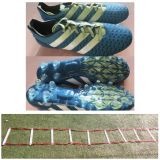
Purpose The purpose of this study was to investigate the lower extremity muscles activity during forward side step by soccer field ground types. Methods Fifteen elite high school soccer players participated in this study. Muscle activation patterns were recorded at 2000 Hz during forward side step task. Surface EMG of the tibialis anterior(TA), soleus(SOL), medial gastrocnemius(MG), lateral gastrocnemius(LG), peroneus brevis(PB) muscle was recorded, and the root mean square of the EMG was normalized, using a maximum voluntary isometric contraction(%MVIC). One-way repeated ANOVA was used for comparison among three soccer field ground types(natural grass, artificial turf, hard ground). Results Artificial turf displayed greater soleus and peroneus brevis activities compare to natural grass during forward side step task. Conclusions The relationship between increased soleus and peroneus brevis activation and greater incidence of injury in artificial turf versus natural grass requires further study. Soccer players routinely training on artificial turf for prolonged periods should be carefully monitored.

Purpose The purpose of this study was to investigate characteristics of levels of physical activity in considering gender and different types of competition-oriented physical activity classes using three-dimensional accelerometers. Methods A total of 981 students(505 male students, 476 female students) in six different types of physical education classes were participated in this study. All of the six different types of physical education classes were competition-oriented classes, and levels of physical activity were accessed by three-dimensional accelerometers. Data were analyzed using t-test and ANOVA. Results First, descriptive analyses of participation time of levels of physical activity showed that MVPA of physical education classes is 10.26 mins (22.89%) on average, and, MVPA showed differently in different types of physical education classes in the order of T ball(14.61 mins), flying disk(12.61 mins), soccer(10.78 mins), volley ball(10.56 mins), basketball(9.64 mins), and table tennis(5.73 mins). Second, female students showed significantly lower levels of MVPA in all the different types of physical education classes. Third, post-hoc analyses showed that significantly higher levels of MVPA were found in T ball physical education classes and significantly lower levels of MVPA were found in table tennis physical education classes, compared to other types of physical education classes. Conclusions MVPA in physical education classes is not satisfied with recommended MVPA, and MVPA in Korean physical education classes is lower than MVPA in same types of physical education classes in other countries. In addition, significant mean differences of MVPA are found between male and female students, and new sports physical education classes show higher levels of MVPA compared to classic sports physical education classes. These results indicate that competition oriented physical education classes widely used in Korea need to find ways to increase MVPA and to overcome different levels of MVPA between male and female students.
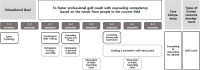
Purpose This study was designed to develop a curriculum for pre-service golf coaches at universities to enhance the coaches’ competencies to counsel athletes on the field. Methods This study was conducted in accordance with the revised and supplemented procedures for the national competency standard (NCS) based curriculum development outline under the level of application of individual instruction-level classes among the types of curriculum development. Results The results were as follows: First, the elements of the counseling competence were guided by conflict resolution counseling, psychological skills training, guidance counseling, coordination and Intervention, and relationship formation. Second, the curriculum was adopted as a curriculum for sports psychology, theory and practice of counseling, counseling practice and super-vision, and psychological skills training, and non-disciplinary activities were participation in group and personal counseling, and an open counseling case study. Third, the feasibility of the curriculum was calculated in the range of 0.8 to 1.0 for all areas to be reasonable. Conclusions The results of this study have structured the counseling competencies required for pre-service golf coaches. Based on this, the results of the study suggest counseling courses in the curriculum of university. This is expected to ultimately seek to improve the coaching field by enhancing the capacity of the coaches.

Purpose The purpose of this study is to examine effects of professional baseball home fans' perception of the community on their recognition of stadium spaces. Methods The subjects of the survey were home fans of baseball. A total of 600 questionnaire(100 fans each team: DOOSAN, LG, SK, LOTTE, HANHWA and KIA) were collected and 510 copies were used as the final analysis data. Collected data was processed by using SPSS 21.0 program. T-test, one-way ANOVA, correction analysis and multiple regression analysis were conducted to test hypothesis. Results There were significant differences of perceptions on community such as perceptions on sense of belonging; favored teams, perceptions on active involvement; gender and favored teams, perceptions on pride of the home town; gender, favored teams and glasses for viewing, and perceptions on classification; educational level and favored teams. There were significant differences of perceptions on stadium spaces such as perceptions on historicity; favored teams and viewing experience, perceptions on authenticity; favored teams and viewing experience, and perceptions on symbolism; age, favored teams and glasses for viewing. Among home fans' perceptions of their community, sense of belonging and pride of the home town had positive effects on their perceptions on historicity among perceptions of stadium spaces, while perceptions of classification had negative effects on them; sense of belonging and pride of the home town had positive effects on both perceptions of authenticity and symbolism. Conclusions The findings indicate that there is a close relationship between the community and professional baseball stadiums, and it is necessary to commonly enhance sense of belonging and pride of the home town for the community in order to promote positive perceptions on stadiums.
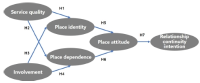
Purpose The purpose of this research is to empirically analyze the relationship between a indoor swimming pool on service quality and involvement, place attachment, place attitude & relationship continuity intention through structural equation model analysis. Methods For this purpose, this study set 241 members at the five private indoor swimming pools located in Seoul as the research subjects. In an effort to verify the proposed structural model, this study used IBM SPSS WIN Ver. 21.0 and AMOS 18.0. Results As a result, First, the results showed that service quality had a positive effect on place identity. Second, it was found that service quality had a positive effect on place dependence. Third, the results showed that involvement didn't have a positive effect on place identity. Fourth, involvement didn’t have a positive effect on place dependence. Fifth, the results showed that place identity had a positive effect on place attitude. Sixth, the results showed that place dependence had a positive effect on place attitude. Seventh, place attitude was found to had a positive effect on relationship continuity intention.

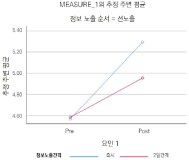
Purpose The purpose of the study was to examine the effect of exposure sequence and time gap between two exposures in image transfer in the context of sport sponsorship. Methods To accomplish the purpose of the study, one preliminary study and one main study were performed. The sample was drawn using a convenience sampling (33 for preliminary study and 120 for the main study). The data were analyzed using one sample t-test, repeated measure ANOVA(mixed design). Results The data for the main study indicated that the mean of the post-test was statistically higher than that of pre-test, which indicated that the image of the sporting event was transferred to the image of the brand Dell. This indicated that the image transfer actually took place although image similarity between sporting events and sponsoring brand was not conditioned. The hypotheses of the study were tested using a mixed design with exposure sequence and time gap between exposures as two between subject factors. The results indicated that the interaction was statistically significant. When two sponsorship information were given consecutively, the first sport event’s image was transferred more than the image of the secondly presented sport event, which indicated primacy effect. However, when the two sponsorship information was given with two days time gap, the image of the second sport event was transferred more than the first sport event’s image, which indicated a recency effect. Conclusions Two meaningful findins were delivered through the current study. First, even when there was no image similarity between sport event and brand, image transfer took place through sponsorship arrangement. Second, if primacy and recency effects are properly incorporated, image transfer can be achieved in a more effective way in sponsorship context.


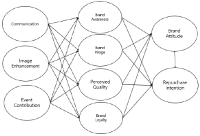
Purpose The purpose of this study was to provide title sponsorship marketing strategies by defining the relationship between professional volleyball title sponsorship, brand equity, brand attitude, and repurchase intention. Methods This study distributed 390 questionnaires to 2018-2019 V-League audiences and a total of 313 questionnaires were used as final validity sample. For data analysis, SPSS 21.0 and Amos 18.0 were used for frequency analysis, reliability analysis, confirmatory factor analysis, and structural equation analysis. Results First, title sponsorship had significant influence on brand equity, therefore hypothesis 1~3 were accepted, except for 1-3(perceived quality) and 1-4(brand loyalty). Second, among brand equity subfactors, hypothesis 4-1(brand awareness) and 4-4(brand loyalty) had significant influence on brand attitude which made hypothesis 4 partially accepted . Third, among brand equity subfactors, only brand image(hypothesis 5-2) had significant influence on repurchase intention which made hypothesis 5 partially accepted. Lastly, brand attitude had significant influence on repurchase intension, which made hypothesis 6 accepted. Conclusions It is anticipated that based on the result of the study, effective marketing strategy can be developed for title sponsorship companies in the future.
Purpose This study conducted legal, institutional and pedagogical consideration on C0rule in Korean collegiate sport. Methods (1) Systematically examined the unconstitutional elements of C0rule in terms of the basic rights of student-athletes, and (2) reviewed pedagogical validity in terms of higher education, college credit system and physical education. Results First, C⁰rule adopted the result (the credit) of the uniform education as the standard of sanctions. Providing discriminatory educational opportunities according to academic credit is regarded as the infringement of equal rights. Second, since the college sports league is the only place to prepare for vocational education and employment for student-athletes, restricting their opportunities according to the credit is also against the freedom of happiness and choice of profession. Third, C0 credit, the minimum standard, overlooked purpose and level of higher education and rigorous evaluation. Last, C0rule has resulted in overlooking the academic significance and status of college education, especially physical education. Conclusions This study is meaningful in that it brought the subjects to discourse field and provided opportunities to review the fundamental problem of the school sport and the basic rights of student-athletes. At the present stage of the transition of the school sport system due to the introduction of various regulatory systems, we should be careful about oligopoly and unilateral flow of knowledge and production of other alienation.
