Purpose The purpose of this study is to suggest issues needed in the process of developing the next national physical education curriculum. Methods Data were collected from three different physical education curricula including the 2007 revised physical education curriculum, the 2011 physical education curriculum based on the 2009 revised curriculum and the 2015 revised physical education curriculum. Results Three findings emerged. Firstly, there was no clear conceptual relationships between physical activity value and subject competency. Secondly, the way in which physical activity value works as learning content area cannot offer helps to set the level of subject competency and to design physical education lessons that based on the subject competency. Lastly, the 2015 revised physical education curriculum has low level of clarity, usability and readability. Conclusions This study suggests the three different findings as issues that should be discussed in the development of the next physical education curriculum.

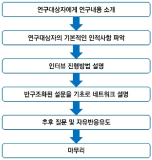
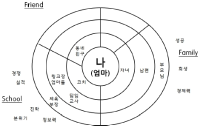
Purpose The purpose of this study was to investigate how the educational zeal of mothers with winter sports students in secondary schools appears on the network charts. Methods It lasted 28 days from February 6 to March 5, 2017. Starting with a description of the QNA, all interviews were recorded on a tape recorder to carry out the project. Data analysis were divided into four areas(Family, Friend, School, etc.) and 13 associative words(enthusiasm, intelligence, performance, entry, success, sacrifice, atmosphere, polarity, competition, vicarious, satisfaction, economic power, anxiety, stress) to attach associative word stickers according to color. Results As a result of inducing arbitrary interpretation of the network subject's educational network, it was possible to analyze the factors affecting mothers' sports education in three dimensions. In addition, although there is not much difference in areas around "I" on sports education charts, the distance between associative words and network charts has gradually moved away from the same person as their children go on to school. Conclusions The methodological significance of this study has been found to be very useful in visualizing an individual's educational network by utilizing qualitative network analysis and in understanding the characteristics associated with education.


Purpose The purpose of this study is to identify why and how sports docudrama is one of the unique objects for the scholarship of sport history. Methods As a review study, this paper pays attention to, collects, and critically reviews three dimensions of the literatures: 1) ones that claim and argue for a-historicity of historical sport films by pointing out how they are full of actual errors, mistakes, and misrepresentation, and why they are problematic, 2) ones that belong to so called ‘the study of docudrama’ with specific focus on the themes of definition, mode of representation, and cultural memory, and 3) ones that attempt to envision the possibility of visual history or filmic history from the perspective of historiography and some other epistemological issues. Results Following the above review method, the result of this paper is also divided into three parts: 1) how sport historians respond to and criticize historical sport films from the sense based on the modern historiography, 2) how a group of historians argue why historical sport films can be one of the promising way of doing histories, 3) review of the study of docudrama, focusing on what is docudrama, why it can be a mode of representation, and how it resonates to cultural memory. Conclusions As a conclusion, this paper argues that a more collectively academic concerns to sport docudrama paves way for developing and envisioning the scholarship of sport history.

Purpose The purpose of this study is to look into the life of MTB college athletes before and after their college entrances through long-term longitudinal narrative inquiry and investigate how the career exploration after graduation is conducted in a contextual way. Methods For this study, four MTB college athletes who entered the university as specialists are selected as research participants, and their life and career are examined through a long-term longitudinal narrative inquiry. Results As a result, the life and career of MTB college athlete appear as follows. First, MTB college athletes entered MTB because of 'self - will' or 'influence of family and acquaintances' and the motivation is 'extension of hobbies', 'college entrance', etc. Second, the MTB college athletes' training and goals are set in the 'college entrance examination', which means the entrance to higher college. Third, MTB college athletes' college life is closely related to 'management and support system for college athletes', and the career search for them is based on 'the prospect as a player' and 'professional prospect of MTB athletes’. However, MTB college athletes showed their plan B to prepare for their uneasy future or to retire. Conclusions In the end, the MTB college athletes came to think about life and career on the narrow stage of unpopular sports and was seen coming down from the narrow stage of unpopular sports. Based on these results, this study presents critical discussions about their life and career of MTB college athletes and seeks implications for the school elite sports in Korea.

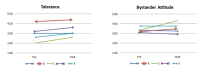
Purpose The purpose of this study was to apply the Self-Assertiveness Training based on Solution-Focused to student-athletes caused by violence in sports. Methods Participants were five Taekwondo athletes in this study. They were consisted of offenders, a accuser, and a victim. The head coach of the team asked for counseling to resolve the conflict. Data was collected with quantitative, qualitative data, and group dynamics. The group counseling program was conducted for 90 minutes a week for eight weeks. Results The results are as follows. First, (application process) the 8-week Self-Assertiveness Training based on Solution-Focused was assessed to be applied step by step and systematically. Second, (qualitative evaluation) as a result of analyzing the observation journal and the interview data, the participants experienced the change of attitude and thought of group members in a short period of time by focusing on enhancing self-assertiveness. Third, (quantitative evaluation) self-assertiveness and attitude of school violence measured by questionnaires were higher in post-survey than pre-survey. In addition, participants' satisfaction with the program was found to be very positive. Discussions and Suggestions Self-Assertiveness Training based on Solution-Focused was found to have a significant effect on conflict resolution among the student-athletes who have experienced violence in sport. This programs was expected to increase the value of use in the sport field. Based on this case study, We suggested for future research.
Purpose The purpose of this study is to compare the maximal strength, isokinetic muscle function and anaerobic capacity according to the position of college and professional rugby players. Methods Subjects for this study were 54 athletes and randomly divided into 4 groups: the forwards group in college rugby players (FCRP, n = 10), backs group in college rugby players (BCRP, n = 16), forwards group in professional rugby players (FPRP, n = 16), and backs group in professional rugby players (BPRP, n = 12). Physical fitness was consisted of squat, bench press, bilateral grip strength. Isokinetic knee and trunk muscle functions were measured by Humac Norm device, and anaerobic pedaling power was analyzed by Wingate test. Significant differences between groups were determined with one-way repeated ANOVA. Results As the result of this study, there was no statistically significant difference between the absolute and relative values of the squat and bilateral grip strengths, but bench press was significantly higher in FPRP and BPRP compared to other groups. Isokinetic knee and trunk extensor and flexor muscle strength showed stronger in FPRP and BPRP than those in FCRP and BCRP. In addition, the anaerobic pedaling power was also the highest in FPRP and BPRP. Conclusions Our findings suggest important information that the college rugby players and forwards in professional rugby team should be given scientific training to improve their maximum strength, isokinetic strength and anaerobic power.
Purpose Sperm quality and function are reduced by environmental factors (e.g., obesity), leading to increased infertility worldwide. Therefore, the purpose of this review paper was to investigate the effects of obesity and exercise training on sperm quality and function in animal and human models. Methods In order to determine the effects of obesity and exercise on sperm quality, motility, morphology, testosterone, oxidative stress, inflammation, we reviewed previous literatures with MEDLINE, PubMed, and Scopus databases. Results The most important factor to control the sperm motility is calcium ion, which is performed by the protein of CatSper (Cation Channel of Sperm). Obese men showed the decrease of number, concentration, motility, and volume in sperm, resulting in delayed or failed fertility. However, regular exercise training increased sperm-mediated factors including number, motility, and morphology, and festicular function-mediated factors including sperm concentration and serum testosterone. Conclusions While obesity exacerbates sperm quality and function in men, regular exercise training with moderate intensity increases sperm number and motility and reduces oxidative stress and inflammation, leading to the improvement of men’s fertility.
Purpose The purpose of this study was to investigate the differences in physique and physical fitness according to maturity between primary and middle school baseball players. Methods Participants were 112 elite youth baseball players (49 primary school; 63 middle school). Skeletal age estimated maturity. Physique (height, arm span, thigh volume), body composition (weight, muscle mass and body fat), physical fitness (strength, power, agility, flexibility, coordination, anaerobic power and aerobic power) were measured. An independent sample t-test was used to conduct verify the difference between physique and physical fitness according to maturity. Results The results of analyzing physical and physical fitness according to maturity showed that there was a significant difference (p<.05) between the early maturation group and on-time group in primary school baseball players, body fat percentage, muscle mass percentage, sit-up, anaerobic power and reaction time. There was a significant difference between the early maturation group and the on-time group in the middle school baseball players, weight (p<.05), thigh volume (p<.05), fat mass (p<.05), muscle strength (p<.01), power (p<.05) and coordination (p<.05). Conclusions In conclusion, the maturity of a growing baseball player may be influenced by the performance, so maturity status should be considered when judging the performance of a growing baseball player, especially a middle school baseball player.
Purpose The purpose of this study was to develop a Korean Life Skills Scale for Sports (KLSSS) that original version is the LSSS developed by Cronin and Allen (2017). Methods The subjects were 899 middle school and high school students. The measurement tool was used with LSSS. The validation of KLSSS followed a three-stage of validation procedure; substantive stage, structural stage, and external stage. The result is as follows. Results First, In the substantive stage, KLSSS consisted of 47 items with 8 factors. As a result of the item clarity test, it was confirmed that all the items were appropriate. Second, in the structural stage, KLSSS was explored and confirmed as 5 factors and 18 items. Third, in the external stage, KLSSS showed discrimination and convergent validity. Conclusions KLSSS is composed of 5 factors and 18 items. The factors are teamwork (TW), goal setting (GS), time management (TM), social skills (SS), and leadership (LD). This scale can be used to obtain information on life skills in school physical education or sports.
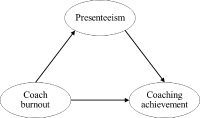
Purpose The purpose of this study was to examine the relationship among burnout, presenteeism, and coaching achievement perceived by athlete coaches in the sport field, and to identify the mediating effect of the presenteeism on the relationship between burnout and coaching achievement. Methods For this purpose, data were collected from 151 athlete coaches in South Korea through the survey. Measurement tools consisted of questionnaires on the coach’ burnout and presenteeism (SPS-13) that were designed in line with the research purpose. Collected data were analyzed using reliability testing, descriptive statistics, correlation analysis and simple mediation effect test. Results First, burnout level perceived by coaches was positively related to presenteeism, and not associated with coaching achievement. And presenteeism negatively correlated with coaching achievement. Second, the burnout level of the coach was negatively related to the coaching achievement through the presenteeism, the mediating variable. Conclusions Burnout of the athletes' coaches in the sports field has been confirmed to decrease the coaching achievement by increasing the presentations which is the work impairment due to their health problems.
