Purpose The purposes of this study were to examine the influence of a formal sports mentoring program on mentors(pre-service PE teachers), and to identify main factors affecting educational growth of the pre-service teachers. Methods Data were generated in this study using: In-depth interviews, mentoring observations, and document resources from 4 mentors and their mentees as research participants. The collected data were inductively analyzed as an iterative process of working back and forth between the data and the categories(Miles & Huberman, 1994). Results The key findings of this study are as follows. First, mentors developed pre-service teachers’ practical knowledge including teaching knowledge, environment knowledge, student knowledge within teaching contexts. Furthermore, they practiced mentee-centered education through sports mentoring not only by mentees but also for mentees. Second, with respect to the factors impacting mentors’ educational growth, there were two main factors; the systematic structure of a program and mentors’ reflexivity. Mentors improved practical knowledge through the circular ‘experiential learning’ phases the sports mentoring program provided. In addition, mentor had valuable opportunities to learn how to care mentees by reflecting on positive and negative influences deriving from interactions with their mentees. Conclusion Potential benefits were embedded in inherent nature of sport and the unique structure of mentoring. sports mentoring can provide experience of learner-friendly teaching distinct from classes of lecture type. It is necessary to be reconsidered as pre-service PE teacher education program with opportunities of other teaching practice.


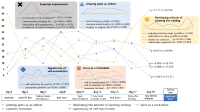
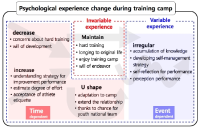
Purpose The current study aimed to identify national youth cyclist`s experience and change tendency of experience during camp training. Methods A total of 35 cyclists who participated in 2017 Korea youth national cycling camp training provided the data. The survey was conducted 9 times during the 20 days of camp training using open-ended questionnaire by diary method. The collected data were analyzed based on inductive categorization and response rates. This study was conducted in the order of formation rapport, data collection, and data analysis. Results Youth cyclists experiences during camp training to growing pains as an athlete, developing the attitude of savoring training, serve as a motivation, expertise formation and opportunity of self-examination. Based on the change in response frequency of the survey data, camp training experience falls into two categories: variable and invariable. Conclusions Youth national cyclist were growing their growth power through various experiences during the training camp, and these experiences changed to specific inflection points from the beginning to the end of the camp. Understanding changes in psychological experience can provide the design of timely psychological support and coaching method. This study will be used as a material for the design of the camp training program for the youth cyclist, as well as an opportunity to increase the interest of continuity reflection on the psychological experience.
The purpose of this study was to conduct an in-depth exploration of Korean national badminton players’ psychological momentum strategies. Data were collected using an open-ended questionnaire and group interviews of 66 badminton players, including 40 members of the 2018 Korean national badminton team and 22 college and semi-pro badminton players who each had badminton careers of 10 or more years and were registered in the Badminton Korea Association. The data were analyzed using inductive content analysis and the deductive process based on the inductively categorized results. The results are as follows. First, regarding strategies for maintaining positive momentum, 188 raw data were collected and classified into three category (keeping pace, dominating the play, and psychological facilitation) and 10 sub-category (including speedy resumption of the game, attacking weak points, and fighting shout). The results suggest that badminton players maintain positive momentum by using strategies to control the speed and tempo of the game at their preferred pace, implement special techniques, exploit their opponent’s weaknesses, and cheer or talk amongst themselves to motivate each other and communicate with their partners and coaches. Second, regarding strategies for overcoming negative momentum, 293 raw data points were collected and classified into three category (time outs, psychological reminders, and changes in plays) and 11 sub-category (including delaying the game, seeking social support, and play change). The data demonstrate that badminton players overcome negative momentum using strategies to intentionally delay the game and exchange equipment, focus on performance cues, and interact with their coaches and partners to change plays and prevent errors. It is hoped that these study findings will inform efforts to provide psychological support that is effective in increasing the odds of winning for the national badminton players in the Asian Games and the Olympic.
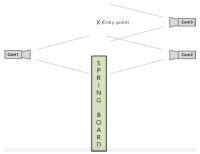
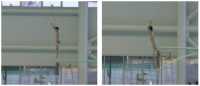
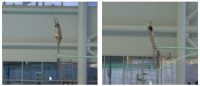
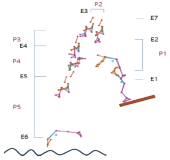
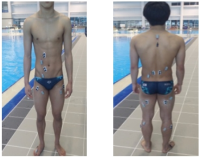
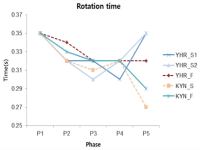
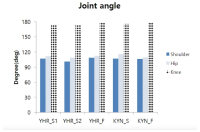
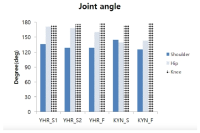
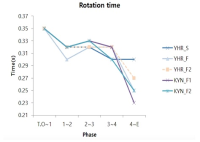
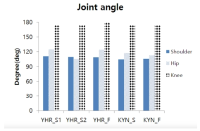
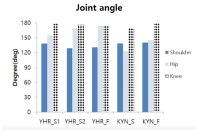
Purpose The purpose of this study is to overcome the shortcomings of 109C(Forward 4 ½ somersault) skill(Level 3.7) for two members of the men’s national diving team(YHR, KYN). Methods For qualitative analysis of the performed skill, three high-speed cameras and water-attached EMGs consisting of a total of ten placements were used. We instructed the two players to perform single-leg jump and double-leg jumps a total of three times each. Results The results of this study indicate that YHR and KYN appeared to increase their time or maintain the same time compared to the previous phase and displacement appeared higher when skill success occurred after the double-leg jump. The Shoulder & hip joints of YHR, KYN appeared larger in E2 and the hip joint of KYN appeared to increase in E1. Single-leg jump appeared similar or decreased the performed time of the previous phase in the last P5. YHR appeared larger only at a hip joint angle and KYN appeared smaller at the hip joint. The muscle activity(iEMG) of the two players appeared greater during skill failure than most of the muscles. Conclusions When perfectly performing 109C skills, the acquisition of medals in international competitions is possible. Therefore, in the future, it is necessary to study all of the variables that pertain to 109C.

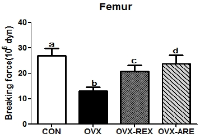
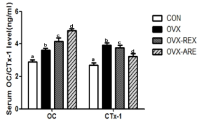
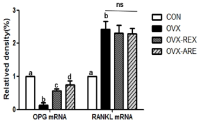
Purpose Osteoporosis is a systemic metabolic bone disease characterized by gradual decrease of bone mass and damage of the bone microstructure. In particular, postmenopausal osteoporosis is the most common type in women after menopause. This study aims to investigate the effects of combined exercise training on bone mineral density (BMD) and OPG/RANKL mRNA levels in ovariectomized rats. Methods A total of 40 Sprague-Dawley female rats were randomly divided into four groups: (1) CON (sham-operation, n=10), (2) OVX (ovariectomy, n=10), (3) OVX-REX (ovariectomy-resistance exercise, n=10), and (4) OVX-ARE (ovariectomy-combined aerobic and resistance exercise, n=10). Combined exercise training was performed on a treadmill and ladder adapted to rats in alternate days (4 days/wk, for 12 wk). Results Compared to the OVX group, all exercise treatments increased BMD and bone breaking force(p<0.05). In the bone turnover markers, serum C-terminal telopeptides of type-1 collagen (CTX-1) was significantly decreased in the exercise groups compared with OVX group and osteocalcin (OC) level was increased in the exercise groups (p<0.05). Additionally, in the exercise groups, expression of OPG mRNA was significantly increased compared with OVX group (p<0.05), and RANKL mRNA was slightly decreased but no significant between groups. Furthermore, OVX-ARE group showed more effects than OVX-REX group. Conclusions These results suggest that combined exercise may be a more effective therapeutic strategy to prevent and delay postmenopausal osteoporosis than resistance-only training.

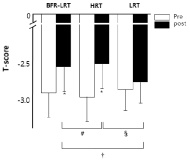
Purpose The purpose of this study was to investigate the effects of low-intensity resistance training with blood flow restriction on serum VEGF, bone markers and bone mineral density in elderly women. Methods The subjects were divided into three groups: low-intensity resistance training with blood flow restriction(BFR-LRT, n=8); high intensity resistance training(HRT, n=8); low- intensity resistance training (LRT, n=5). Both the BFR-LRT and LRT groups worked out knee extension and leg curl exercises at 20% of each estimated one-repetition maximum(1RM) and HRT group worked out knee extension and leg curl exercises at 70% of each estimated 1RM 3 days per week for 12 weeks. Results As a result after 12 weeks, serum VEGF level have increased significantly among BFR-LRT group compared to HRT and LRT groups. Serum Bone ALP level have increased significantly among BFR-LRT and HRT groups compared to LRT group. Calcaneus BMD have increased significantly among BFR-LRT and HRT groups compared to LRT group. Conclusions In conclusion, despite using low-intensity load, BFR-LRT is a efficient training alternative to HRT for improving bone metabolism in older women.
Purpose The purpose of this study was to examine the effects of 16 weeks’ combined exercise training on insulin resistance, inflammatory markers, oxidative stress, leukocyte telomere length, body composition, and daily living fitness in elderly women with type 2 diabetes mellitus (DM). Methods Twenty-eight participants were randomly assigned into one of two groups, i.e., exercise training group (EX: n=14) and control group (CON: n=14). Subjects in EX participated in 3 sessions of 60 min-combined exercise for 16 weeks, whereas subjects in CON were asked to maintain their normal life pattern during the same period. The variables regarding insulin resistance, inflammatory markers, oxidative stress, leukocyte telomere length, body composition, and daily living fitness were measured and compared between two groups as well as between pre-post test utilizing a repeated two-way ANOVA. Results Main results were as follows: 1) Fasting plasma insulin and HOMA-IR tended to decrease in EX, whereas increased significantly in CON. 2) IL-6, TNF-α, hs-CRP decreased in EX, but the changes were not statistically significant. 3) MDA increased significantly and GPx decreased significantly in both EX and CON. 4) Leukocyte telomere length increased significantly in EX. 5) Fat-free mass increased in EX, whereas fat mass and percent body fat decreased significantly in EX. 6) Arm curl, chair stand, sit & reach, tandem test, 10m walking speed, and up & go improved significantly in EX. Conclusion It was concluded that the combined exercise for 16 weeks had a positive effect on improving insulin resistance, increasing leukocyte telomere length, as well as enhancing body composition and daily living fitness in elderly women with type 2 diabetes.
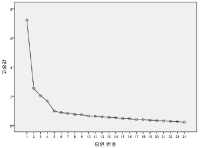
Purpose The purpose of this study was to develop the sport 5C scale of the Korean version. Methods The participants were 772 high school students from 17 to 19 who participated in sport regularly. The validation of Sport K-5C followed a three-step validation procedure through substantive stage, structural stage, and external stage. Results First, In the substantive stage, Sport K-5C consisted of 50 items with 5 factors. Second, in the structural stage, although Sport K-5C was explored as 24 items with 4 factors by EFA, but as a result of CFA, Sport K-5C was confirmed as 24 items with 5 factors. Third, the external stage provided additional validity through correlations of tests with other questionnaires which are similar concept and opposite concept, and group differentiation. Conclusions Sport K-5C is composed of 5 factors and 24 items. The factors are Caring, Character, Confidence, Competence, Connection. This scale can be used to provide an objective evaluation of positive development of youth in sport and physical education context.

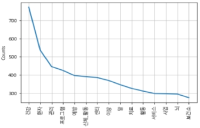
Purpose The purpose of this study is to introduce the basic concepts and procedures for topic modeling and to explain topic modeling to news articles about dementia-related physical activities. And it is also to discuss the possibility of using topic Modeling in the field of physical education. Methods In this study, the LDA algorithm of topic modeling is explained and the analysis procedure is summarized step by step by text preprocessing, text formatting, and topic number determination. The application cases were selected from 274 news articles about dementia-related physical activities reported in 13 major daily newspapers from 2000 to 2018. Results When the number of topics is 3, the Coherence Score figure is the highest. Topic 1 is about welfare services for dementia patients, Topic 2 is about prevention of dementia, and Topic 3 is about dementia research. The ratio by each subject is Topic 2 (46.0%), Topic 3 (33.2%) and Topic 1 (20.8%) in order of high ratio. Conclusion Topic modeling is an effective methodology to extract potential information excluding subjectivity of researchers. It is expected to be used when searching for information in massive texts in the field of physical education.



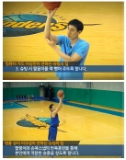
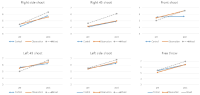
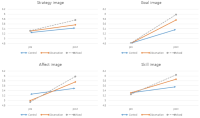
Purpose In general, motor imagery and action observation have been distinguished from each other. Recently, several studies demonstrated that combined approach to motor imagery and action observation can be more effective in motor learning. The present study examined the effects of observation learning combined motor imagery and action observation during acquisition basketball shooting skills. Methods We divided with control group, action observation group and observation learning group combined mental image and action observation in the three middle school. Action observation group provided the action observation program, and observation learning group was performed observation learning combined mental image and action observation training. All groups were perform basic basketball skills. Experimental intervention was performed for 10 weeks, and data analysis was performed 3 groups × 2 time repeated ANOVA. Results The results indicated that all group were improve after intervention, and subjects who participated in combined mental image and action observation was significant in the interaction effect on the front shoot. Moreover, the interaction effect on the motor imagery ability was significant. Conclusions These findings suggest that the use of observation learning combined mental image and action observation strategy potentially optimizes motor skills performance and motor image ability by incorporating motor imagery, especially when observing movements with intent to imitate.