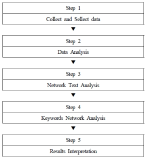
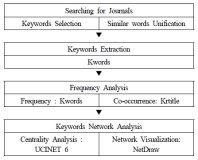
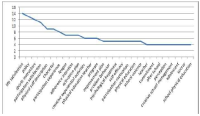
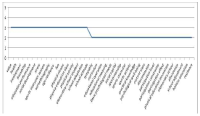
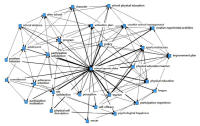
The purpose of this study was to investigate the research trends on school sports clubs using the Content Analysis and Network Text Analysis. Data included 137 journal articles published from 2007 to 2016 and were analysed using SPSS 20.0, KrKwic software and the NetDraw of UCINET 6 program.The results were as follows. First, the number of research articles on school sports clubs were increased since 2012. Second, research studies using mixed subjects were most popular in comparison to more narrow target population. Third, the mixed methods approach was less utilised in comparison to quantitative and qualitative research methods. Fourth, correlational studies were more frequently used while multivariate analyses were less common in terms of statistical methods. Fifth, satisfaction, policy, and leader were the most frequently used keywords among the keywords provided by journal articles. Lastly, the results of Network Text Analysis indicated that school sports clubs and user satisfaction showed the highest degree centrality, closeness centrality, and betweenness centrality.
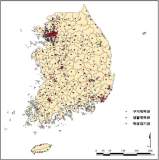
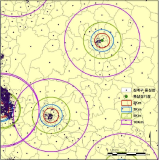
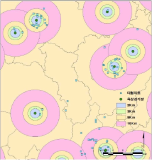
Based on public sports facilities’ census data, this study attempts to empirically analyze to the factors affecting the operating balance and use of public sports facilities(PSF). Analysis was carried out through multiple regression analysis using SPSS and location characteristics analysis using GIS. The total floor area and population was confirmed to influence operating balance and use(DV). Management body influence differed for DV (use and operating balance of PSF) by type of PSF. Consequently, this requires diversification of the management body. The size of facilities and location characteristics(population and zoning) are positive effect on the operating balance and Use of PSF. In order to solve the problem of location restriction and security of marketability, it is possible to take into account the integrated management and sports club’s use of large-scale sports facilities.
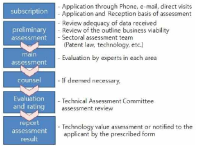
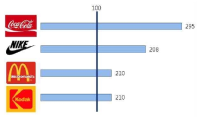
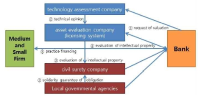
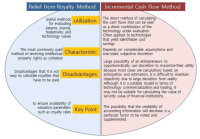
This research intends to present a new model development for properly evaluating intangible assets of sports companies. To accomplish the purpose of this research, cases where observable data such as costs are used to determine value and the application of such evaluation models were explored. Also overseas cases of Patent Litigation Fund, Patent Portfolio Fund, Intellectual Property Incubation Fund and existing loan programs were analyzed. The model development provided by this research utilizes numbers from financial statements in assessing intangible assets, thereby uniting the financial statements with actual value. And more accurate corporate evaluation method would be possible by evaluating intangible assets based on numbers from financial statements was suggested. Therefore, suggested model development first calculates the total goodwill and then divides this among the different types of intangible assets. The criteria of such division is based on the cost involved. This is much more persuasive than estimating future profits or comparing similar companies because it is based on actual cost spent and not vague numbers. This is not completely different from existing profit approach, but rather an evolved form of it. In other words, suggested model development tries to translate goodwill into tangible numbers as much as possible.
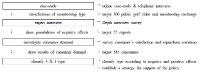
The purpose of this study was to identify problems that consumer and golf expert faced with and determine types of similar golf membership in Korea through analysing status of golf semi-membership. In addition, as the law related to golf facility was examined, current issues to improve management system of golf semi-membership were diagnosed, some improvements were deducted. In order to achieve the purpose of this research, case-study, expert interview, survey, examination of typical legal-system and expert advisory meeting were conducted. The results were as follows: First, the type of golf semi-membership was classified by 7. Second, the result of survey from consumer who experienced in purchasing golf semi-membership revealed that the number of experienced respondents was more than the unexperienced. Also, awareness of golf semi-membership brings positive effect to development of golf industry. According to the result of IPA, it was required that the current situation of golf semi-membership market would be improved and managed properly. Third, the results from investigating legal system in Korea showed that provision for reducing property loss associated with illegal contracts might be needed. Eventually, in order to minimize the property loss, complementary of membership contract, mandatory of information discloser, enacting provisions against violation and introduction of cooling-off system would be required.
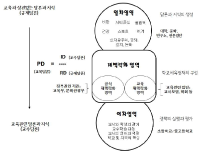
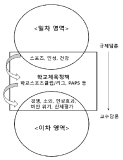
Drawing on Bernstein theory (1990, 1996) of pedagogic discourse, this study is aimed at exploring the construction of pedagogical meaning in physical education policy in Korea and providing critical implications for the development of policies for physical education and school sport. Both open-ended questionnaires (n=22) and in-depth interviews (n=9) were conducted. The collected data was commissioned by an inductive data analysis to look at patterns of regulative discourses embedded with physical education policy influencing on teachers’ educational practice. This study identified three main discourses constructing and constituting policies; sport, moral, and health. Sport discourse was the most dominant through the policy, in which two sub-discourses were central: ‘competition’ and ‘exclusion.’ Moral discourse had a strong connection with ‘crime reduction’ and ‘academic achievement.’ The structure of health discourse alleged increase in youth physical inactivity associated with sedentary living leads to an obesity epidemic. This study argued that there were significant dangers which dominant regulative discourses created a limited universe of possibilities for physical education. Therefore, we must not lose sight of the powerful discourses produced in the primary field, which have an impact on shaping forms of policy and practice in physical education. Furthermore, we need to examine in detail forms of physical education practice in order to achieve alignment in the school practice with current dominant discourses.
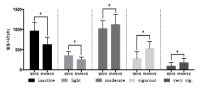
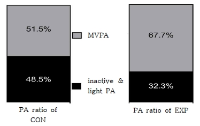
Active participation in Moderate to Vigorous Physical Activity(MVPA) is the indicator of healthy development for adolescents. However, Korean adolescents’ MVPA have continuously declined, and Korean adolescents have lower levels of MVPA compared to adolescents in other countries. Considering this issue, the purpose of this study is to examine the effectiveness of SPARK M-SPAN program to promote adolescents’ MVPA in P.E. classes and to understand how the promotion of adolescents’ MVPA occurs. To collect data, this study used Sequential Mixed Method and GT3X accelerometers. A total of 168 adolescents (84 in an experimental group and 84 in a control group) participated in this study for the quantitative data analysis, and six students and a teacher were interviewed for the qualitative data analysis. Paired t-test showed that students in SPARK P.E. classes experienced the significant decreases of sedentary behaviors(-339.6 sec) and low intensity P.A.(-96.9 sec) at p<.05 and the significant increases of moderate(+99.3 sec), vigorous(+252.4 sec), and very vigorous intensity P.A.(+84.7 sec) regardless of gender difference at p<.05 except for female students’ moderate intensity P.A.. The qualitative data analysis showed that SPARK classes gave students positive learning environments and led them to experience enjoyment and achievement-orientated learning Key teaching strategies of SPARK program and future research suggestions were provided in the discussion section.
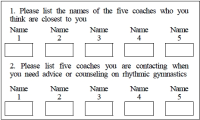
Previous work has shown that coaches sought information from several sources; however, there was a strong reliance on learning from other coaches within their social networks. There has been limited research examining the nature of these social networks with other coaches (Trudel and Gilbert 2004). Thus the purpose of this study was to examine the structures of coaches’ social networks of Korean rhythmic gymnasts. Research questions were: (1) What are the network structures of Korean rhythmic gymnasts’ coaches? (2) What structural parameters contribute to coaches’ network structures, and (3) Is there an association between coaches’ network and flow of information in their networks? A total of 37 coaches of youth rhythmic gymnasts (6-18 years old) participated in this study. Each of those coaches was asked to complete a Name Generator Questionnaire (i.e., list four names that you have a close relationship with) and general socio-demographic survey. Data were analyzed using social network analysis tools such as UCINET, p-net, and Quadratic Assignment Procedure. Analysis of network centrality, density, and strong components showed that (1) homophily was identified in the structure of coaches’ social networks (2) homophily (e.g., by gymnasts’ ranking, mentor coaches) contributed to the total social network of coaches, and (3) interacting only with close coaches in the network, coaches received information about coaches/coaching from the strong ties rather than weak ties (Granovetter, 1973). This study also has strong links to Wenger’s (1998) community of practice which posited that groups of people share a common characteristic in practice.
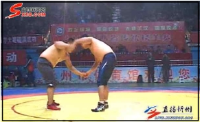
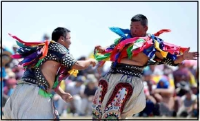
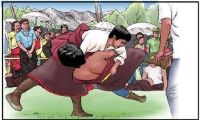
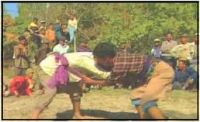
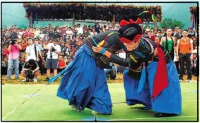
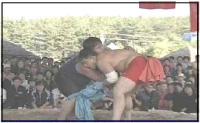
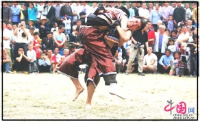
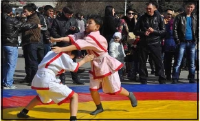
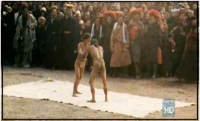
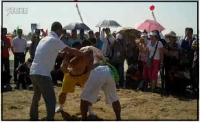
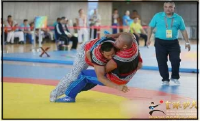
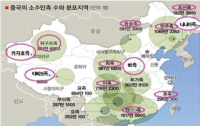
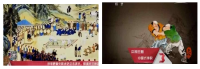
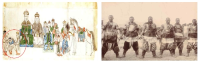
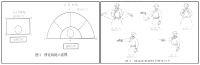
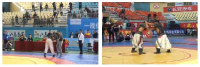
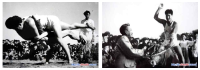
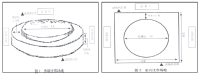
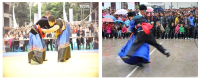
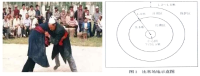
This research begins from the awareness that even though there are different forms of wrestlings in the ethnic minority groups in China, the study on their morphological aspects has reached the limit. Based on the documents and VOD data about these wrestlings of each ethnic group, their morphological characteristics can be verified as follows. First, The postures of Han and Mongolian people take the way of two players standing and playing, and Korean-Chinese people and Hui people take a saddle stance using a thigh band. Second, as for the arenas for the wrestlings, owing to some geographical features and natural environments, they were set up at a specific area during the traditional era using natural objects(grass, lawn, soil, sand). Yet, in the modern times, they have been changed as being installed and run in modernized gyms, sports fields, or parts following the standard of stadium facilities supervised by each organization. Third, with regard to the play wear of wrestling, some parts of the traditional costumes have been transmitted and worn. However, in case of most of the traditional costumes, it has been found out that modernized clothes which take the forms of garments developed since the modern era into consideration are being used. Fourth, in terms of the game equipments of wrestling, certain clothes(uniform, vest), running shoes and a band(a thigh band) should be worn.
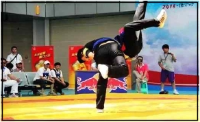
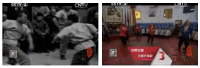
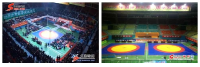
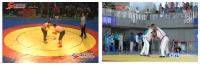

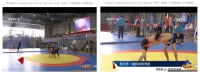
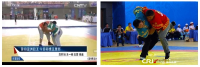
The purpose of this study was to investigate the level of factors associated with points and the difference among weight categories after the revision of wrestling competition rules from video images. Factors associated with points were average point per a game, average points according to playing type, the occurring frequency of point according to the skills, the frequency and successful ratio of Parter, and the time zone of points occurred. The video contents were concerned on athletes ranked in 1 - 5 (6 person) at 59, 66, 75 Kg categories of Greco-Roman style in the 2014, 2015 World Wrestling Championship. The analysis was done by watching TV monitor several times. Five quantitative factors were tested between weight categories. As the results, no significant difference was found in average obtained point, but significant difference was found in average lost point (p<.05). Average obtained point showed significant difference in cross effect of the type of game and weight category. And average lost point showed significant difference in the type of game (p<.01) and weight category (p<.05), too. The frequency of point by skills of stand and ground wrestling showed significant difference in weight category (p<.001). However, no significant difference was found in frequency of point by time zone among weight categories. In conclusion, the point obtained and lost and the frequency of it are associated with the type of game and skills included in it of Greco-Roman style wrestling. New training program focused on enforcing the correct type of game and skills in it might be useful for developing the performance.
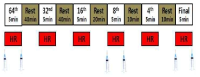
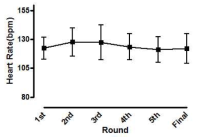
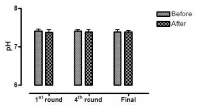
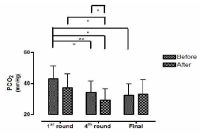
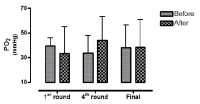
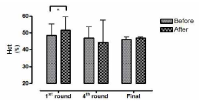
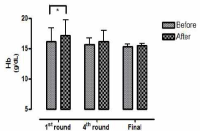
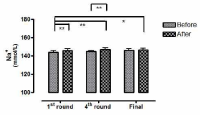
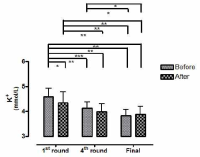
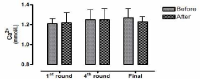
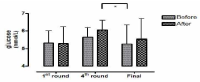
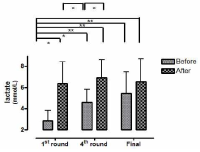
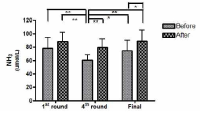
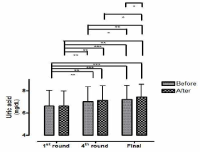
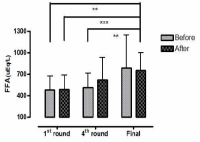
This study aimed to examine the change of the indices in blood gas, ions, and by-products of fatigue substances and components in collegiate elite Kumdo competitors, who carry out a number of competitive games during one day tournament event. Subjects were carried out total 6 simulated, but followed same conditions and rules of actual competition, with providing similar inter-game break time. Eight well trained male competitors, who had awarded from national wide competitions, voluntarily participated in this study and revealed 51.5(±8.8) mL·kg-1min-1 of maximal oxygen consumption and 12.4(±5.1) % body fat. TWOWAY ANOVA (tournament round vs. pre & post each game) was adopted to test whether the mean differences were existed, and the interaction between individual factors and main effect within each factors were analyzed. Statistical significance was set at Alpha (α) = .05. While there were no significant changes in blood hydrogen ion concentration (i.e., pH) and partial pressure of oxygen (PO2), partial pressure of carbon dioxide (PCO2) significantly decreased as the tournament games were repeated. The level of hemoglobin and hematocrit were significantly elevated only during the 1st round of tournament. Na+ was significantly increased but K+ was decreased. Ca2+ concentration however, was not significantly altered. Although the changes of blood glucose level did not show any consistent patterns, free fatty acid (FFA) concentration was increased after completed each game compared to prior to initiate the each game. Blood NH3, lactic acid, and uric acid concentration increased at immediately after each game, and the pattern was maintained throughout the tournament round continued. These results reflected that the repeated participation of the tournament may cause the accumulation of the by-products of fatigue substances in blood and alteration of various ion components and energy substrates. Accordingly, the ways of reducing the physical fatigue and providing adequate energy source inter-tournament games needs to be necessarily considered for successful Kumdo competition. Data obtained from this study could valuable for searching the effective training and management methods to improve the performance and reduce the fatigue of the professional elite Kumdo competitors.